

Pharos Production collaborated with a taxi aggregator platform to develop a high-load ride-hailing application that connects passengers and drivers in real time. This platform consolidates various fleets and independent drivers into a single system, ensuring quick ride matching, live tracking and transparent pricing. Built on a cloud-native infrastructure, the solution offers low-latency interactions, reliable trip processing and scalability for operations at the city and regional levels.
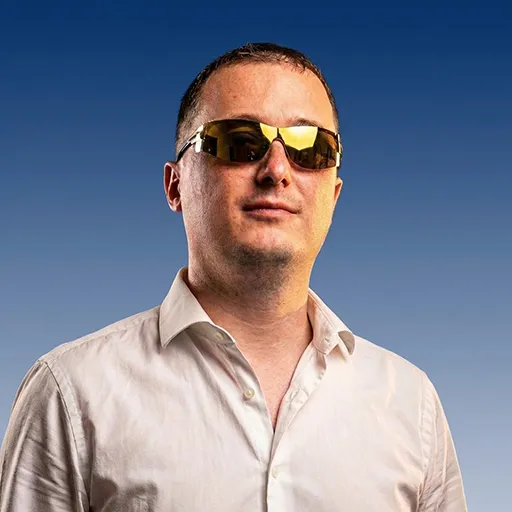
Reviewed by Dr. Dmytro Nasyrov, Founder and CTO
Software Development
- 90+ engineers
- 18 industries
- 13+ years in business
What is custom software development?
Authoritative citations 5 sources
-
Grand View Research
Custom software development services market size, growth rate and end-use segmentation
grandviewresearch.com 2024
-
ISO and IEC
ISO/IEC 25010 software product quality model defines functional suitability, reliability, performance, security and maintainability characteristics
iso25000.com 2023
-
Heroku
The Twelve-Factor App methodology defines best practices for cloud-native, language-agnostic, scalable services
12factor.net 2017
-
OWASP
Application Security Verification Standard provides three-level framework for software security verification
owasp.org 2024
-
Google
Site Reliability Engineering books document SLO design, error budgets, incident response and operational excellence at scale
sre.google 2024
- Template websites and WordPress customization (we recommend specialized agencies)
- No-code MVPs where Bubble, Webflow or Glide would deliver the same outcome cheaper
- Marketing or design-only work without engineering scope
- Projects under $10,000 budget or under 4 weeks timeline
- Fixed-price contracts without paid discovery sprint validation
Custom software build vs SaaS / no-code: which is better?
Custom software gives you exact-fit workflows and full ownership of the code, while SaaS and no-code platforms ship faster and cheaper for standardized use cases. According to a 2024 Gartner survey, 70% of new business applications will use low-code by 2025, but the same report notes that workflows with regulatory, integration or unit-economics constraints continue to ship on custom builds.
| Factor | Custom software build | SaaS / no-code |
|---|---|---|
| Workflow fit | 95-100% requirement coverage; tailored to your business rules and operational reality | 60-80% coverage typical; 1-2 critical workflows require manual workaround |
| Ownership | Full source code ownership; no vendor lock-in | Vendor controls roadmap, pricing, deprecation |
| Integration | Native integration with your core systems, ledger, identity, <a href="https://opentelemetry.io/" target="_blank" rel="noopener nofollow">OpenTelemetry</a> observability | Webhook/API only; deep integration limited |
| Compliance | HIPAA, PCI DSS, SOC 2 controls baked in from day one | Inherited from platform; some workloads ineligible |
| Cost (year 1) | $10,000-$80,000+ engineering investment | $50-$2,000/month subscription |
| Cost at scale | $0.50-$3 per MAU at 100K+ scale on Pharos infra; marginal cost falls 60-80% from year 1 to year 3 | $8-$25 per MAU on SaaS pricing tiers; cost scales linearly with no marginal-cost relief |
| Time to launch | MVP 2-4 months (Pharos) vs 6-12 months (offshore body-shop) vs 9-18 months (in-house build) | 1-7 days for basic setup; 4-8 weeks for serious integration work |
| Upgrade path | Refactor at will; move to new stack on your terms | Bound by vendor roadmap and deprecation timeline |
Software development at Pharos Production at a glance
- Delivered: 70+ production applications since 2013 across FinTech, healthcare, crypto, e-commerce and 14 other industries
- Team: 90+ engineers covering full-stack web, mobile, backend, DevOps, QA and architecture
- Stack: Node.js, Python, Go, Java, TypeScript, React, Next.js, React Native, Flutter, PostgreSQL, Kafka, AWS, Kubernetes - cloud-native services follow the 12-factor methodology
- Pricing: MVP from $10,000-$25,000; mid-size builds $25,000-$80,000; enterprise platforms $80,000-$400,000+
- Timeline: Discovery 2-4 weeks; MVP 2-4 months; production platform 6-12 months with agile 2-week sprints
- Engagements: Paid discovery, fixed-fee per milestone, time-and-materials sprints, staff augmentation, dedicated team
- Compliance: aligned with ISO 27001, SOC 2 controls, GDPR, HIPAA-ready for healthcare, PCI-DSS-ready for FinTech, security testing against OWASP ASVS
- Honest scope: We recommend SaaS (Shopify, Retool, Webflow) when it fits and decline sub-$10K scope or fixed-price without discovery
Our Custom Software Development Expertise
Our custom software practice builds for differentiation, not for ticking boxes. A dedicated engineering team across backend (Node, Java, Go, Python, Kotlin), frontend (React, Vue, Next.js), mobile (native iOS / Android, React Native, Flutter) and DevOps / SRE, with 70+ production applications shipped since 2013 and Clutch-verified delivery across FinTech, healthcare, e-commerce, crypto and 14 other industries. We work the full stack: discovery and scope, architecture spec against ISO/IEC 25010 quality characteristics, build with TDD / BDD test pyramids, code review gates, SAST and dependency scanning, security against OWASP ASVS and production reliability with OpenTelemetry observability and Google SRE error-budget discipline. We do not start fixed-price contracts without a paid discovery sprint. We routinely advise clients to NOT build custom when a SaaS or no-code tool wins on cost and speed, and we say so before quoting. Below are selected projects from our case studies across FinTech, e-commerce and enterprise modernisation engagements.
-
-
Pharos Production has partnered with Sagas to create a location-aware social platform that enables users to capture, publish, and explore geo-located timelapses over time. This system combines real-time data ingestion, large-scale media processing, and map-centric discovery to transform physical locations into dynamic digital stories. Leveraging cloud-native infrastructure and event-driven architecture, Sagas allows users to document urban changes, natural evolution, and personal moments tied to specific places. The result is a scalable social network where time and location are central to content discovery.
-
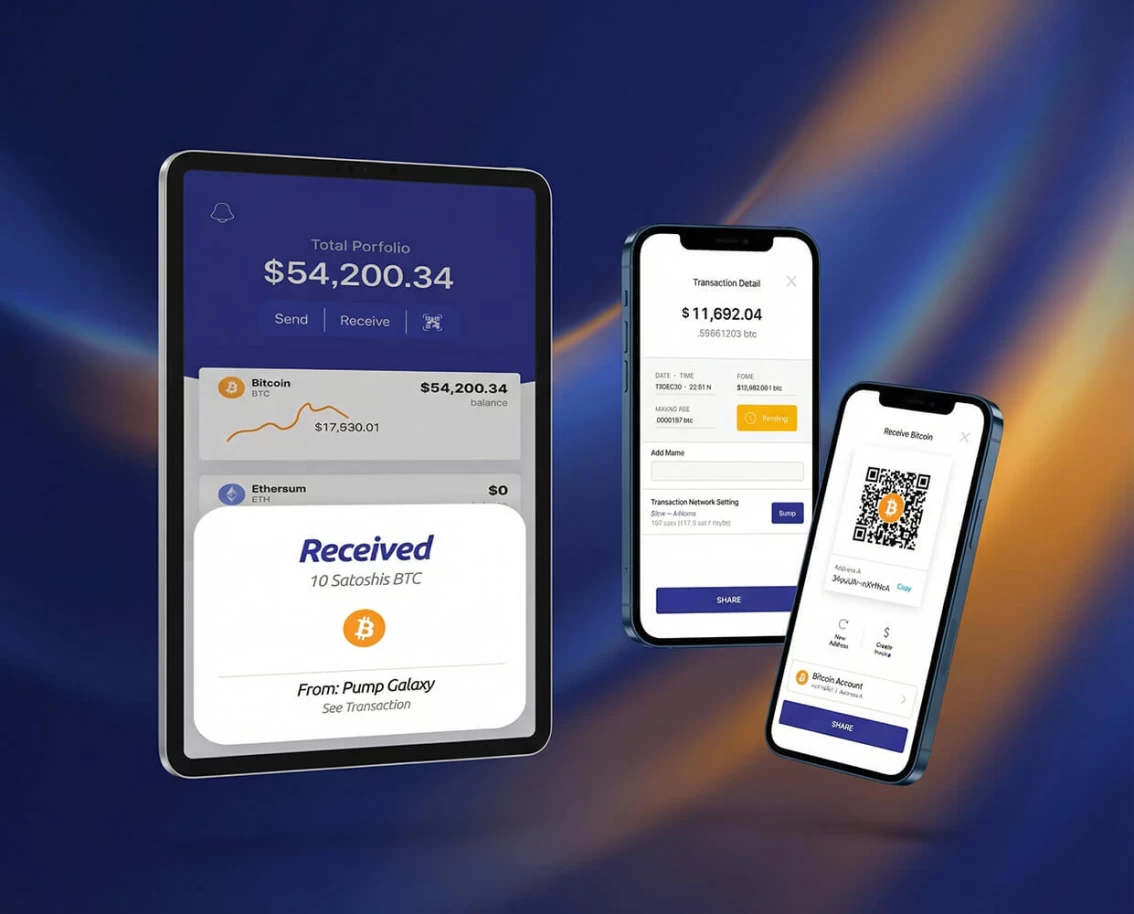
Pharos Production has partnered with PumpTap to develop a secure, high-performance crypto wallet tailored for everyday Web3 interactions. PumpTap lets users store, send and manage digital assets across multiple blockchains through a simple, intuitive interface. Built on a scalable, event-driven architecture, the wallet delivers real-time transaction updates, robust security and seamless integration with decentralized applications.
-
Pharos Production has partnered with Pulse to create a community-driven social network that connects users with local stores through challenges, engagement activities, and real-world prizes. This platform transforms everyday local interactions into interactive experiences, enabling users to earn rewards from participating merchants. Built on a scalable, event-driven architecture, Pulse facilitates real-time interactions between users and businesses and supports rapid growth across cities and regions.
-
Pharos Production partnered with Pro Gambling to build a high-load sports forecasting platform focused on data-driven predictions, real-time analytics and scalable delivery of betting insights. The platform aggregates large volumes of sports data, odds movements and historical statistics to generate forecasts that help users make informed betting decisions. Built on a cloud-native, event-driven architecture, Pro Gambling delivers fast updates, transparent analytics and consistent performance during peak sports events.
-
Pharos Production has partnered with Pleenk to build a secure, scalable payments platform for fast transactions, fraud prevention and seamless integration with digital products. The platform processes payment flows in real time while maintaining high levels of security, transparency and reliability for both businesses and end users. Built on cloud-native infrastructure and an event-driven architecture, Pleenk provides a strong foundation for modern digital payments.
-
Pharos Production partnered with NoMoreBets to develop a worldwide one-tap live betting platform focused on speed and scalability. The system handles real-time odds and instant bets effortlessly. The result is a smooth, engaging betting experience that increased player retention, reduced drop-offs during live matches, and positioned NoMoreBets for global growth since 2022.
-
Pharos Production partnered with Nextcheck to replace outdated, manual onboarding with a secure, automated KYC/AML platform. Built on AWS, Kubernetes, Istio, Elixir, RabbitMQ, PostgreSQL and NextJS, the platform provides real-time biometric and document verification, risk assessment and compliance reporting. Since 2019, Nextcheck has reduced onboarding time by 60%, cut manual labor by 70% and expanded to support thousands of checks at once. Today, it powers global banks, fintechs and crypto firms with a cloud-native, regulation-ready, growth-oriented compliance platform.
About Founder and CTO
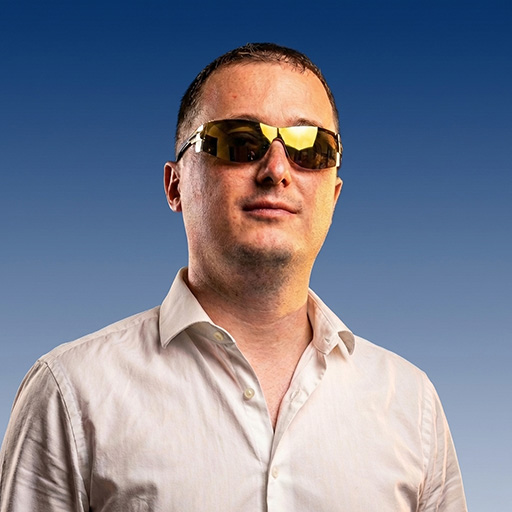
Founder and CTO Pharos Production
I design and build reliable software solutions – from lightweight apps to high-load distributed systems and blockchain platforms.
PhD in Artificial Intelligence, MSc in Computer Science (with honors), MSc in Electronics & Precision Mechanics.
-
13 years in architecture of great software solutions tailored to customer needs for startups and enterprises
-
23 years of practical enterprise customized software production experience
-
Lecturer at the National Kyiv Polytechnic University
-
Doctor of Philosophy in Artificial Intelligence
-
Master’s degree in Computer Science, completed with excellence
-
Master’s degree in Electronics and precision mechanics engineering
Pharos Continuous Verification Pipeline
The Pharos Continuous Verification Pipeline is our four-step delivery cycle for production custom software: Discovery and Scope, Architecture Spec, Build with Continuous Verification and Production Reliability.
-
1
Discovery and Scope
2-4 weeksvalidates technical assumptions, surfaces hidden integrations and produces a written fixed-fee proposal
Artifacts:- scope memo
- decline-or-proceed gate
- risk register
- target stack selection across backend (Node
- Java
- Go
- Python
- Kotlin)
- frontend (React
- Vue
- Next
-
2
Architecture Spec
1-3 weekswrites the system spec against ISO/IEC 25010 software quality characteristics and the 12-factor methodology for cloud-native services
Artifacts:- ADRs
- C4 diagrams
- threat model against <a href="https://owasp
-
3
Build with Continuous Verification
4-12 weeks per incrementships under TDD / BDD test pyramids, conventional commits with semantic-release, code review gates on every PR, SAST and dependency scanning in CI, ephemeral preview environments and 2-week sprints with CTO review at milestones
Artifacts:- coverage report
- static analysis report
- change log
-
4
Production Reliability
1-3 weeks then ongoinginstalls OpenTelemetry traces, metrics and logs, error budgets and alerting per the Google SRE handbook and ships a documented incident-response runbook
Artifacts:- SLOs
- dashboards
- on-call rota
- post-incident review template
The pipeline is named because verification never stops at code-complete: every commit, release and production change re-enters the loop across the engagement lifetime.
-
Phase 01 / 04 Paid Discovery
2-4 weeks- Technical validation
- Architecture proposal
- Scope refined estimate
-
Phase 02 / 04 Iterative Build
2-week sprints- Working demos every sprint
- CTO review at milestones
- ADRs documented
-
Phase 03 / 04 Production Readiness
- Monitoring and alerting
- Security audit Pen test
- Runbooks and rollback
-
Phase 04 / 04 Support
Ongoing- Security patches
- Performance tuning
- 4h SLA response
Pharos Verified Delivery applied to 70+ production applications since 2013
Real client transformations
Anonymized before/after snapshots from production projects. Metrics measured against client-reported pre-engagement baselines.
15-year-old PHP monolith. Deployments took 4 hours and required weekend windows. Engineering team afraid to touch core modules.
Strangler-fig migration to Node.js microservices. Deployments now under 12 minutes via CI/CD. Feature velocity increased 4x. Zero downtime during 8-month migration.
We extracted services one bounded context at a time, kept the legacy monolith as the source of truth until each new service had been running clean for two weeks, then flipped the read path. The cutover for each service was a five-line config change.
Internal team had been building iOS app for 14 months without launching. App store rejections, performance issues, no Android version.
React Native rewrite shipped to App Store and Play Store in 11 weeks. 4.6/5 rating. 85% code shared between platforms. Original iOS team retained for native modules.
We kept the original iOS team on the native modules (camera, biometrics, deep links) while Pharos engineers built the cross-platform JS layer in parallel. The two codebases met at a thin native bridge defined in week one.
Operations team used 14 spreadsheets and 3 SaaS tools. Daily reconciliation took 2 hours. Errors caused weekly reporting delays.



Custom internal tools dashboard with role-based access and audit trail. Reconciliation reduced to 8 minutes. Zero reporting errors in 6 months. Operations headcount stable as company doubled.

Built on a single PostgreSQL ledger so every spreadsheet and SaaS source pushed into one canonical truth. The dashboard is a thin React layer over the database; every action is row-level audited and reversible.
Client names anonymized under NDA. Full case studies at /cases/.
When custom software is not the answer
We decline roughly 30% of RFPs we receive. Forcing a bad fit costs both sides 3-6 months and damages outcomes. Here is how we think about scope:
- Standard CRM workflows where Salesforce, HubSpot or Pipedrive cover 90% of needs
- Marketing sites where WordPress, Webflow or Framer deliver in days not months
- Internal dashboards where Retool, Airtable or Notion would suffice
- E-commerce stores where Shopify covers requirements
- Project management where Linear, Jira or Asana fit the team
Not every business problem needs custom code. We have recommended Shopify over custom e-commerce, Retool over custom dashboards and Webflow over custom marketing sites. Custom software is the right call when off-the-shelf cannot handle your workflows, integrate with your systems or scale with your traffic.
Read before you commit
Detailed service page covering process, team, engagement models, cost ranges and case studies for custom software projects across all complexity tiers.
- Custom software is justified for differentiation, not for parity with off-the-shelf SaaS. For non-strategic capabilities (CRM, helpdesk, billing, marketing site, project management) packaged tools usually win on total cost of ownership and time to value. We routinely advise clients to NOT build custom when SaaS or no-code covers the workflow.
- Total cost of ownership scales with code surface area. Multi-year maintenance, security patching, dependency updates, mobile platform breakage and infrastructure drift often exceed the initial build cost over a 3-5 year horizon. Quality criteria across maintainability, reliability and security are defined in ISO/IEC 25010 and should be priced into the project from day one, not deferred.
- Mobile platforms (iOS, Android) ship breaking changes annually through new SDK requirements, store-policy updates and OS-level API deprecations. Custom mobile apps require ongoing investment in platform parity, accessibility and store-review cycles. Static MVP budgets do not capture year-2 and year-3 platform-tax obligations.
- Cloud and infrastructure choices (AWS / Azure / GCP, managed databases, queue services, identity providers) introduce vendor lock-in. Cost, reliability and exit risk should be modelled at architecture-spec time, not after launch. The 12-factor methodology reduces but does not eliminate vendor coupling. We document a written exit plan for any major vendor commitment.
- Data residency, GDPR, CCPA, HIPAA and PCI DSS obligations vary by jurisdiction and by data category. Pharos is not a law firm. Clients must obtain qualified privacy and regulatory counsel before cross-border architecture, regulated-data processing or consumer-data analytics. Security controls are scoped against OWASP ASVS and reliability against the Google SRE handbook.
Reviews
Independent reviews from Clutch, GoodFirms and Google - verified client feedback on our software projects
Based on 8 verified client reviews
Platforms We Work With
Trusted by Coinbase, Consensys, Core Scientific, MicroStrategy, Gate.io and 10+ more Web3 and enterprise platforms
16+ partnersOur 16 technology partners include:
- Consensys
- Gate Io
- Coinbase
- Ludo
- Core Scientific
- Debut Infotech
- Axoni
- Alchemy
- Starkware
- Mara Holdings
- Microstrategy
- Nubank
- Okx
- Uniswap
- Riot
- Leeway Hertz
-
Consensys
-
Gate Io
-
Coinbase
-
Ludo
-
Core Scientific
-
Debut Infotech
-
Axoni
-
Alchemy
-
Starkware
-
Mara Holdings
-
Microstrategy
-
Nubank
-
Okx
-
Uniswap
-
Riot
-
Leeway Hertz
Partnerships & Awards
Recognized on Clutch, GoodFirms and The Manifest for software engineering excellence
Reviewed by Dmytro Nasyrov
Founder and CTO
23+ years in custom software development. Led 70+ projects across FinTech, healthcare, Web3 and enterprise. aligned with ISO 27001 team.
Choose your cooperation model
Core software architecture, initial UI/UX, working prototype in 3 months
Software architecture, UI/UX, customized software development, manual and automated testing, cloud deployment
Comprehensive software architecture and documentation, UI/UX design layouts, UI kit, clickable prototypes, cloud deployment, continuous integration, as well as automated monitoring and notifications.
Prices vary based on project scope, complexity, timeline and requirements. Contact us for a personalized estimate.
Or select the appropriate interaction model
Request staff augmentation
Need extra hands on your software project? Our developers can jump in at any stage – from architecture to auditing – and integrate seamlessly with your team to fill any technical gaps.
Hire dedicated experts
Whether you’re building from scratch or scaling fast, our engineers are ready to step in. You stay in control, and we handle the code.
Outsource your project
From first line to final audit, we handle the entire development process. We will deliver secure, production-ready software, while you can focus on your business.
| Model | Best for | Team setup | Budget range |
|---|---|---|---|
| Staff Augmentation | Existing teams needing extra engineers at any project stage | 1-2 weeks | From $5,000/month |
| Dedicated Team Popular | Long-term projects requiring full ownership and control | 2-4 weeks | From $15,000/month |
| Project Outsourcing | Full-cycle development from idea to production launch | 1-2 weeks | $10,000-$80,000+ |
Technologies, tools and frameworks we use
Our engineers work with 187+ technologies across blockchain, backend, frontend, mobile and DevOps - chosen for production reliability and performance.
AI and Machine Learning
LLM Providers 8
AI Frameworks 15
Vector Databases 7
MLOps and Infrastructure 11
AI Agent Tools 4
Blockchains
Private and Public Blockchains 33
Cloud Blockchain Solutions 4
DevOps
DevOps Tools 15
Clouds
Clouds 6
Databases
Databases 15
Brokers
Event and Message Brokers 7
Tests
Test Automation Tools 6
UI/UX
UI/UX Design Tools 12
An approach to the development cycle
-
Team Assembly
Our company starts and assembles an entire project specialists with the perfect blend of skills and experience to start the work.
-
MVP
We’ll design, build, and launch your MVP, ensuring it meets the core requirements of your software solution.
-
Production
We’ll create a complete software solution that is custom-made to meet your exact specifications.
-
Ongoing
Continuous Support
Our company will be right there with you, keeping your software solution running smoothly, fixing issues, and rolling out updates.
Frequently asked questions about custom software development
Type to filter questions and answers. Use Topic to narrow the list.
Showing all 9
No matches
Try a different keyword, change the topic, or clear filters
-
A paid discovery sprint runs 2-4 weeks and delivers a validated scope plus a fixed-fee proposal. A typical MVP takes 2-4 months from discovery close to production deploy.
A full production platform runs 6-12 months with agile 2-week sprints. Enterprise platforms with compliance reviews (HIPAA, PCI DSS) typically add 1-3 months for audit coordination.
-
Typical Pharos engagements: MVP $10,000-$25,000 for startups validating an idea; mid-size builds $25,000-$80,000 for companies scaling a proven concept; enterprise platforms $80,000-$400,000+ for complex systems with compliance and integrations. Final pricing depends on scope, integration count, data volume and compliance requirements. Every engagement starts with a paid discovery sprint that produces a written fixed-fee proposal. See our State of Custom Software TCO 2026 for detailed cost analysis and ROI modeling.
-
Buy SaaS when your problem is solved by Shopify (e-commerce), Salesforce (CRM), Retool (internal tools), Airtable (light database), Webflow (marketing site), Notion (docs/wiki). Build custom when your workflow is a competitive moat, when SaaS forces painful workarounds, when data residency or regulation rules out cloud vendors, or when the cost of SaaS at your scale exceeds the cost of building.
We have closed engagements with “Retool + Stripe will solve this in 2 weeks” as the entire deliverable.
-
The right stack depends on your team, hiring pipeline and existing systems, not on what is trendy. Defaults for greenfield: TypeScript + Node.js/Next.js for full-stack web; Go or Python for high-throughput backend; PostgreSQL for transactional data; Kafka for event-driven; React Native or Flutter for mobile; AWS with Kubernetes or managed services for infrastructure.
We recommend a different stack if your team is already strong in Java/Spring, Ruby/Rails, Elixir/Phoenix or .NET.
-
Both, with a preference for fixed-fee per-milestone after a paid discovery sprint. Discovery (2-4 weeks, $4,000-$8,000) produces a written fixed-fee proposal with scope, team, timeline and milestones.
Time-and-materials engagements get weekly invoicing with sprint-by-sprint scope review. We do NOT accept fixed-price contracts without discovery - those fail roughly 80% of the time.
-
Pharos is aligned with ISO 27001. For client projects we minimize regulated-data scope (tokenization for PCI, de-identification for HIPAA), build controls (encryption, audit logs, access review) that meet the underlying frameworks, and coordinate with accredited auditors for certification. Reliability and operational practices follow the Google SRE handbook for SLO definition, error budgets and incident response. We are not a certification body - the attestations are issued by CPAs (SOC 2) or QSAs (PCI DSS), but we prepare the evidence and walk you through the audit.
-
Production support is a separate phase with its own SLA. Typical retainers: Tier 1 (bug fixes, security patches) from $3,000/month; Tier 2 (Tier 1 plus feature development and quarterly roadmap) from $8,000/month; Tier 3 (Tier 2 plus fractional CTO and on-call) from $15,000/month.
4-hour SLA on critical issues across all tiers. Clients can also hand off to their own team with a 30-day knowledge transfer period.
-
Yes. Staff augmentation embeds Pharos engineers in your team paired with a client engineer from day one.
Team-lead engagements have a Pharos architect lead a mixed team. Codebase audits ($8,000-$25,000) review an existing system, document the architecture, flag risks and deliver a prioritized improvement roadmap - useful before a refactor or acquisition due diligence.
-
We decline template websites, WordPress theme customization, sub-$10K MVPs, contracts under one month, product validation work before user discovery, non-technical staffing (marketing/design only) and fixed-price contracts without paid discovery. Strongest fit: FinTech, healthcare, blockchain and enterprise modernization where security, compliance and high-load architecture are critical.
Sources and references
Quality models, engineering frameworks and primary references for custom software practice.
- ISO/IEC 25010 Quality Model iso25000.com
- 12-Factor App 12factor.net
- OWASP ASVS owasp.org
- Google SRE Book sre.google
- OpenTelemetry opentelemetry.io
- Linux Foundation linuxfoundation.org
- Stack Overflow Developer Survey stackoverflow.co
- ThoughtWorks Technology Radar thoughtworks.com
- Cloud Native Computing Foundation cncf.io
- IETF RFC Index rfc-editor.org
- MDN Web Docs mozilla.org
Published record
Published Pharos research
Technical articles, comparison guides and methodology deep-dives we write from our own delivery experience.
Custom software project TCO estimator
Estimate dev cost, Year-1 TCO, time-to-launch and engineer-months for SaaS, mobile-app, web-app, marketplace, ERP/CRM, data platform and IoT projects. Directional only.
Last reviewed . Rates reflect Pharos internal benchmarks (12+ years delivery, 70+ apps), Standish Group CHAOS, ISO/IEC 25010 quality model and Google SRE engineering economics. See disclaimer below.
Your business results matter
Achieve them with minimized risk through our bespoke innovation capabilities
What happens next?
-
Contact us
Contact us today to discuss your project. We’re ready to review your request promptly and guide you on the best next steps for collaboration
Same day -
NDA
We’re committed to keeping your information confidential, so we’ll sign a Non-Disclosure Agreement
1 day -
Plan the Goals
After we chat about your goals and needs, we’ll craft a comprehensive proposal detailing the project scope, team, timeline and budget
3-5 days -
Finalize the Details
Let’s connect on Google Meet to go through the proposal and confirm all the details together!
1-2 days -
Sign the Contract
As soon as the contract is signed, our dedicated team will jump into action on your project!
Same day
Our offices
Headquarters in Las Vegas, Nevada. Engineering office in Kyiv, Ukraine.