




Backend Architecture Guide 2026: Patterns, Stack and Scaling
Backend architecture in 2026 covering monolith versus microservices patterns, REST and GraphQL API design, data layer scaling and how to choose the right backend stack for your product.

Reviewed by Dr. Dmytro Nasyrov, Founder and CTO • Last reviewed August 20, 2026
E-commerce platforms and marketplaces
Custom online stores with WooCommerce, Magento or headless Laravel back ends handling product catalogs, inventory management, payment processing and multi-vendor marketplace logic.
Enterprise CMS and content platforms
WordPress-based enterprise sites, headless CMS architectures with WPGraphQL or Strapi alternatives, multi-site networks and digital experience platforms for content-heavy organizations.
SaaS application back ends
Multi-tenant SaaS platforms built with Laravel featuring subscription billing (Stripe/Paddle), team management, API access, webhooks and usage-based metering.
FinTech and payment systems
Payment gateway integrations, invoice management, accounting dashboards, bank API connectors and PCI DSS-aligned transaction processing pipelines.
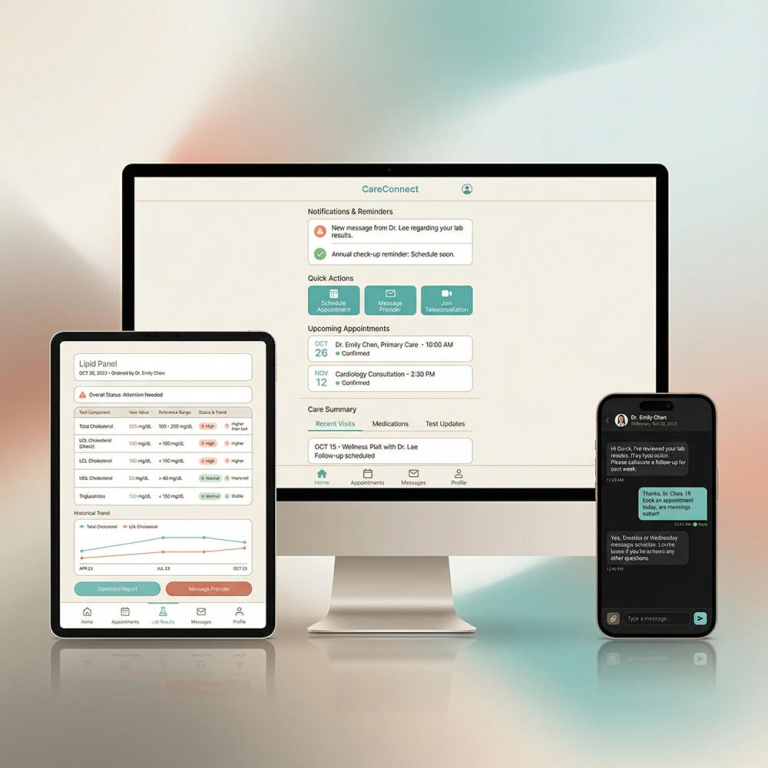
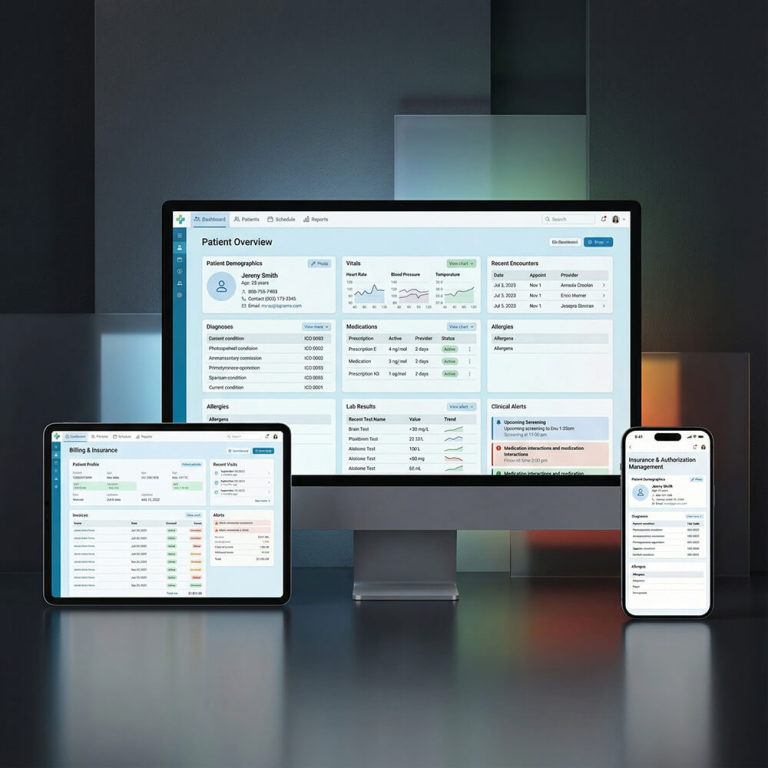
Healthcare portals and EHR integrations
Patient scheduling systems, HIPAA-aligned data handling, HL7/FHIR integration layers and telemedicine back ends connecting to existing hospital infrastructure.
RESTful and GraphQL API development
High-performance API layers with Laravel or Symfony serving mobile apps, SPAs and third-party integrations with OAuth2, rate limiting and comprehensive documentation.
| Factor | PHP | Node.js / Python |
|---|---|---|
| Web ecosystem | 77% server-side web share, WordPress, Laravel, Symfony | Node.js: Express, Next.js. Python: Django, Flask |
| Hosting cost | Cheapest hosting - shared, VPS, any provider supports PHP | Node.js: requires process manager. Python: WSGI/ASGI setup |
| CMS/E-commerce | WordPress (43% of all websites), WooCommerce, Magento | Node.js: headless options. Python: Wagtail (niche) |
| Performance | PHP 8.2 JIT brings 2-3x speedup, OPcache for bytecode | Node.js: V8 engine, fast I/O. Python: slower, asyncio helps |
| Hiring pool | Largest web developer pool globally, lowest cost | Node.js: large, JS-focused. Python: large, data-focused |
| Enterprise frameworks | Laravel (elegant), Symfony (enterprise-grade) | Node.js: NestJS. Python: Django (batteries-included) |
| Real-time | Laravel Reverb, Swoole for WebSockets | Node.js: native WebSocket. Python: Django Channels |
Pharos Production recommends PHP for content-driven platforms, e-commerce, CMS-heavy projects and SaaS applications where hosting cost and developer availability matter. Node.js suits real-time applications and full-stack JavaScript teams. Python is best for data science and ML workloads.
Limitations: PHP is not the best choice for CPU-intensive computation (ML training, video processing, scientific computing), real-time applications requiring persistent WebSocket connections at scale (Node.js or Go handle this better), mobile or desktop development (PHP is server-only) or low-latency microservices where Go or Rust significantly outperform.
Proprietary research based on 50+ PHP projects delivered by Pharos Production between 2012 and 2026. Dataset covers e-commerce platforms, SaaS applications, enterprise CMS builds and API back ends. Methodology (Pharos Verified Delivery): aggregated delivery metrics with production monitoring across deployments. Full report available on request.
Type to filter questions and answers. Use Topic to narrow the list.
Showing all 5
No matches
Try a different keyword, change the topic or clear filters
Absolutely. PHP powers 77% of server-side web, including WordPress (43% of all websites), Facebook, Wikipedia and Slack.
PHP 8.2+ with JIT compilation, fibers and modern type system makes it a competitive choice for web applications, APIs and SaaS platforms.
We use Laravel for most projects - it offers the best developer experience with built-in authentication, queues, real-time broadcasting and an elegant ORM (Eloquent). For enterprise projects requiring strict architectural patterns, we use Symfony components.
A PHP MVP takes 6-12 weeks. A full e-commerce platform or SaaS application with payment processing, multi-tenancy and third-party integrations typically takes 4-8 months.
Yes. PHP with OPcache, Redis caching, database optimization and a CDN handles millions of requests per day. WordPress.com, Etsy and Slack all run on PHP at massive scale. For extreme concurrency, we use Swoole or Laravel Octane.
PHP MVPs start from $35,000-$70,000. E-commerce platforms range from $70,000 to $210,000.
Enterprise SaaS applications with multi-tenancy and complex integrations cost $150,000 to $350,000+. PHP hosting is 30-50% cheaper than Node.js or Python alternatives.
Independent reviews from Clutch, GoodFirms and direct client testimonials - verified feedback on our software projects
Based on 342 verified reviews
Pharos Production scopes engagements in three tiers, Proof of concept, MVP build and Enterprise platform, with typical budgets from $10,000 to $500,000+ depending on scope and complexity.
Focused validation of your riskiest technical assumption with a working spike and a clear build-or-pivot recommendation.
Production-ready first version with core flows, real backend and the integrations to onboard first paying users.
Full-scale build with architecture, DevOps, QA, security and long-term evolution.
Prices vary based on project scope, complexity, timeline and requirements. Hourly rates range from $50 to $99 depending on role and seniority. Contact us for a personalized estimate.
Our company starts and assembles an entire project specialists with the perfect blend of skills and experience to start the work.
We'll design, build and launch your MVP, ensuring it meets the core requirements of your software solution.
We'll create a complete software solution that is custom-made to meet your exact specifications.
Our company will be right there with you, keeping your software solution running smoothly, fixing issues and rolling out updates.
Recognized on Clutch, GoodFirms and The Manifest for software engineering excellence










65+ industry awards
Backend architecture in 2026 covering monolith versus microservices patterns, REST and GraphQL API design, data layer scaling and how to choose the right backend stack for your product.

Legacy system modernization guide. Strangler fig pattern, replatforming, rebuild strategies with cost comparison table, budget planning and implementation best practices.

Headless commerce stopped being a buzzword and became a build decision. Splitting the storefront a shopper sees from the commerce engine that runs catalog, cart and orders gives teams freedom and speed, but it also adds cost and moving parts. This guide explains headless commerce in 2026: what it is, the real architecture, when it […]
90+ engineers ready to deliver your PHP Development project on time and within budget
Contact us today to discuss your project. We're ready to review your request promptly and guide you on the best next steps for collaboration
Same dayWe're committed to keeping your information confidential, so we'll sign a Non-Disclosure Agreement
1 dayAfter we chat about your goals and needs, we'll craft a comprehensive proposal detailing the project scope, team, timeline and budget
3-5 daysLet's connect on Google Meet to go through the proposal and confirm all the details together!
1-2 daysAs soon as the contract is signed, our dedicated team will jump into action on your project!
Same dayHeadquarters in Las Vegas, Nevada. Engineering office in Kyiv, Ukraine.
We also work with clients through dedicated local teams in Las Vegas, New York and San Francisco.
Thanks for the request!
We typically reply within 24 hours