



Skip to content

Elixir Development Services

Pharos Production delivers expert Elixir development services for real-time, high-concurrency and fault-tolerant systems. Our Elixir team builds gaming platforms, financial engines and distributed systems on the BEAM VM.

  • 20+ Elixir projects
  • 8+ Elixir engineers
  • 8+ years with Elixir

Your business results matter

Achieve them with minimized risk through our bespoke innovation capabilities

Your contact details
Please enter your name
Please enter a valid email address
Please enter your message
* required

We typically reply within 4 hours. Prefer email? [email protected]

Key facts: Pharos Production has been building Elixir/Phoenix systems since 2016, specializing in real-time applications, high-concurrency backends and fault-tolerant distributed systems. 8+ Elixir engineers. 20+ Elixir projects including casino platforms and payment systems. Last reviewed: July 2026. Editorial policy.

What is Elixir development?

Elixir is a functional programming language built on the Erlang/OTP virtual machine (BEAM), designed for building scalable, fault-tolerant and maintainable applications. Elixir inherits Erlang's 30+ years of battle-tested distributed systems infrastructure originally built for telecom. It powers WhatsApp (2 million connections per server), Discord (5 million concurrent users), Pinterest and Pepsi. Elixir development includes real-time web applications with Phoenix, distributed systems, IoT platforms, event processing pipelines and high-concurrency back ends. The BEAM VM provides lightweight processes (millions per node), built-in fault tolerance via supervisors, hot code upgrades and distributed clustering.

What we build with Elixir

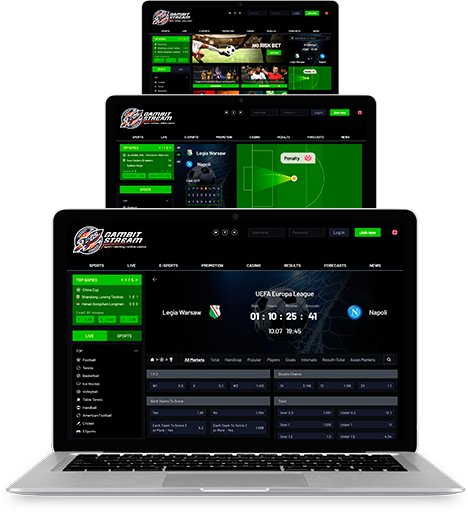
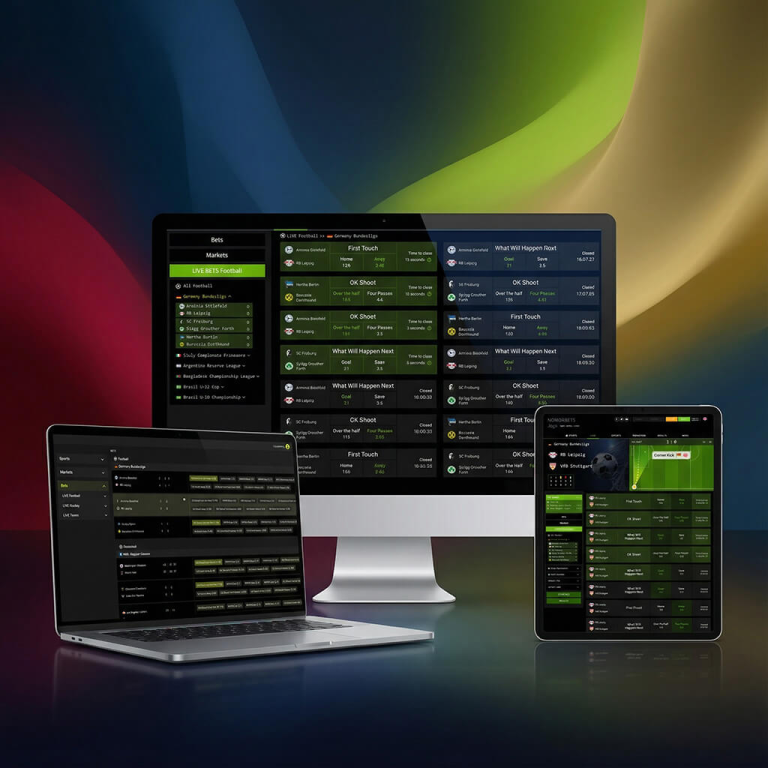
Online gaming and betting platforms

Real-time multiplayer game servers, live odds engines, bet processing with sub-millisecond latency, concurrent user management and regulatory compliance for gaming.

Real-time communication

Chat systems, live streaming infrastructure, push notification engines and WebSocket servers handling millions of persistent connections with Phoenix Channels.

FinTech transaction processing

High-throughput payment processors, real-time fraud detection pipelines, order matching engines and financial event sourcing with guaranteed message delivery.

IoT data ingestion

Sensor data aggregation from millions of devices, MQTT broker integration, real-time alerting and time-series data processing with Broadway pipelines.

Distributed systems

Multi-node clusters with automatic failover, distributed caching, CRDT-based state synchronization and split-brain resolution for globally distributed applications.

Event-driven microservices

Event sourcing with Commanded, CQRS patterns, saga orchestration and reliable message processing with backpressure using GenStage and Broadway.

Elixir vs Node.js vs Go for real-time systems

Factor Elixir/BEAM Node.js / Go
Concurrency model Millions of lightweight processes, preemptive scheduling Node.js: single-threaded event loop. Go: goroutines
Fault tolerance Built-in supervisors, self-healing processes Node.js: process crash = restart. Go: manual recovery
Hot code upgrades Deploy without disconnecting users Node.js: rolling restart. Go: rolling restart
WebSocket scale 2M+ connections per server (proven at WhatsApp) Node.js: 100K-500K. Go: 500K-1M
Distributed clustering Native node clustering, built into BEAM VM Node.js: external tools. Go: external tools
Latency consistency Predictable sub-ms due to preemptive scheduling Node.js: event loop blocking. Go: GC pauses
Ecosystem size Smaller (Hex), but battle-tested for its niche Node.js: largest (npm). Go: growing (Go modules)

Pharos Production recommends Elixir for real-time systems requiring persistent connections, fault tolerance and predictable latency at scale - gaming, chat, IoT and financial event processing. Node.js suits general-purpose APIs. Go suits CPU-bound microservices.

Limitations: Elixir has a smaller talent pool than Node.js or Python - hiring takes longer and rates are higher. The BEAM VM is not optimized for CPU-intensive computation (number crunching, ML inference). For standard CRUD APIs without real-time requirements, Elixir adds unnecessary complexity over Node.js or Go. Library ecosystem is smaller than npm or PyPI, so niche integrations may require writing custom bindings.

Elixir Development Benchmark 2026

Proprietary research based on 10+ Elixir/Phoenix projects delivered by Pharos Production since 2017. Dataset covers gaming platforms, real-time betting engines, financial event processing and IoT systems. Methodology (Pharos Verified Delivery): aggregated delivery metrics with BEAM VM telemetry and connection stress testing. Full report available on request.

10 weeks Average time to MVP for real-time Elixir platforms
2M+ Concurrent WebSocket connections per server (tested)
< 1ms Process restart time after crash (OTP supervisor)
$40K-$350K+ Project cost range depending on concurrency needs
99.95% Average platform uptime across gaming deployments
10+ Elixir projects delivered since 2017

Pharos Production - Get your Elixir project estimate in 48h. Share your requirements for real-time, high-concurrency or fault-tolerant systems and our Elixir team will deliver a detailed estimate with architecture recommendations. Get a project estimate.

Elixir development cost range
Elixir backend development starts from $35,000-$70,000 for real-time APIs. High-concurrency platforms (chat, gaming, trading) cost $85,000-$250,000. Elixir developers command 15-25% premium due to smaller talent pool but deliver superior concurrency.
Key takeaways
  • Elixir/BEAM handles 2M+ concurrent connections per server, proven at WhatsApp and Discord scale.
  • Built-in fault tolerance via OTP supervisors means crashed processes restart automatically without affecting other users.
  • Hot code upgrades allow deploying new features without disconnecting active users - critical for gaming and financial platforms.
  • Pharos Production has delivered 10+ Elixir projects including casino platforms, sportsbooks and real-time gaming engines.
  • An Elixir back-end MVP starts from $40,000-$85,000 and takes 8-14 weeks depending on real-time and concurrency requirements.
Limitations and considerations
  • Elixir has a small talent pool compared to Python, JavaScript or Go - hiring experienced BEAM developers takes 2-3x longer and costs 20-40% more, making team scaling a real constraint for growing projects.
  • The Elixir ecosystem has significantly fewer libraries than Node.js or Python - common integrations (payment gateways, CMS connectors, analytics SDKs) often require writing custom wrappers or using Erlang NIFs with C code.
  • Functional programming with immutable data and pattern matching requires a mental model shift that slows onboarding for developers coming from object-oriented backgrounds - expect 4-8 weeks of ramp-up time per developer.
  • CPU-bound workloads (image processing, video transcoding, ML inference) block BEAM schedulers and degrade throughput for all concurrent processes - these tasks must be offloaded to NIFs, Rust ports or external services.
Skip glossary

Key Elixir and BEAM terms 7

BEAM VM
The Erlang virtual machine on which Elixir runs, designed for massive concurrency, low-latency message passing and fault-tolerant distributed systems.
OTP
Open Telecom Platform - a set of libraries, design principles and behaviors built into the BEAM ecosystem that standardize how concurrent and fault-tolerant applications are structured.
GenServer
An OTP behavior module that abstracts a generic client-server process, managing state and handling synchronous calls and asynchronous casts through callback functions.
Supervision tree
A hierarchical arrangement of supervisor and worker processes in OTP where supervisors monitor children and automatically restart failed processes according to a defined strategy.
Phoenix LiveView
A Phoenix Framework library that enables real-time, server-rendered interactive UIs over a persistent WebSocket connection without writing client-side JavaScript.
Actor model
The concurrency paradigm used by the BEAM where isolated processes communicate solely through asynchronous message passing, eliminating shared mutable state.
Pattern matching
A fundamental Elixir control mechanism that binds variables and branches execution by structurally comparing values against declarative patterns in function heads and case expressions.

Frequently asked questions

Last updated:

  • Copy link Copies a direct link to this answer to your clipboard.

    Elixir handles millions of concurrent connections with predictable latency thanks to BEAM's preemptive scheduling. Node.js event loop can block under heavy compute.

    For gaming, chat and financial systems, Elixir provides fault tolerance that Node.js cannot match.

  • Copy link Copies a direct link to this answer to your clipboard.

    The Elixir talent pool is smaller than Node.js or Python but highly skilled. Pharos Production has maintained an in-house Elixir team since 2017 with experience across gaming, FinTech and real-time platforms.

  • Copy link Copies a direct link to this answer to your clipboard.

    Yes. Elixir services communicate via REST, GraphQL, gRPC or message brokers (Kafka, RabbitMQ).

    We commonly deploy Elixir as a real-time layer alongside Node.js or Python services in a microservices architecture.

  • Copy link Copies a direct link to this answer to your clipboard.

    Phoenix for web applications and APIs, LiveView for real-time UIs without JavaScript, Broadway for data processing pipelines, Commanded for event sourcing and Nx for machine learning.

  • Copy link Copies a direct link to this answer to your clipboard.

    Real-time back-end MVPs start from $40,000-$85,000 (8-14 weeks). Full gaming or financial platforms with clustering and fault tolerance range from $110,000 to $350,000+.

Reviews

Independent reviews from Clutch, GoodFirms and Google - verified client feedback on our software projects

Based on 323 verified client reviews

5 out of 5 stars
Web3 & Blockchain

Integrated blockchain into CRM workflows improving customer experience.

Sebastian Wolfgang
5 out of 5 stars
Web3 & Blockchain

Delivered secure blockchain infrastructure with strong precision and reliability, enabling confident product launch.

Pavel Rybas
5 out of 5 stars
Web3 & Blockchain

Delivered blockchain infrastructure with strong execution, clarity, and professionalism.

TJ Denevy
5 out of 5 stars
Web3 & Blockchain

Delivered multi-chain launchpad with KYC/AML and investor protection mechanisms.

Volodymyr Nosov
5 out of 5 stars
Software Development

End-to-end mobile development with strong collaboration and high-quality delivery.

Myles Lazarevic
5 out of 5 stars
Software Development

Built decentralized social platform with token economy and scalable architecture.

Salvatore Riccardo Curatolo
5 out of 5 stars
Web3 & Blockchain

Transparent communication and flexible collaboration led to a strong final outcome.

Sergei Grishenko
5 out of 5 stars
Web3 & Blockchain

Built high-performance NFT marketplace with scalable architecture and strong UX.

Kevin Ballard
5 out of 5 stars
Web3 & Blockchain

Delivered blockchain cashback solution with clear communication and usability.

Matteo Martino
5 out of 5 stars
Web3 & Blockchain

Improved insurance workflows with blockchain, increasing transparency and efficiency.

Rachel Bechtel
5 out of 5 stars
Healthcare

Delivered VR healthcare training platform integrated with blockchain infrastructure.

Heather Gervais
5 out of 5 stars
Web3 & Blockchain

Delivered secure code and exceeded expectations with strong responsiveness.

Anonymous

Choose your cooperation model

Pharos Production works in three engagement models, from a focused PoC to a production MVP to a full enterprise platform, with typical budgets from $10,000 to $400,000+ depending on scope and complexity.

PoC
Proof of concept

Focused validation of your riskiest technical assumption with a working spike and a clear build-or-pivot recommendation.

$11,000 - $35,000
Popular choice
MVP
MVP build

Production-ready first version with core flows, real backend and the integrations to onboard first paying users.

$50,000 - $150,000
Enterprise
Enterprise platform

Full-scale build with architecture, DevOps, QA, security and long-term evolution.

$160,000 - $420,000+

Prices vary based on project scope, complexity, timeline and requirements. Hourly rates range from $35 to $75 depending on role and seniority. Contact us for a personalized estimate.

An approach to the development cycle

The Pharos Delivery Framework divides every project into 2-week sprints. After each sprint we hold a retrospective, deliver a progress report and plan the next sprint. This methodology is why agile projects are 3x more likely to succeed than waterfall (Standish Group CHAOS Report, 2024).
  1. Team Assembly

    Our company starts and assembles an entire project specialists with the perfect blend of skills and experience to start the work.

  2. MVP

    We'll design, build and launch your MVP, ensuring it meets the core requirements of your software solution.

  3. Production

    We'll create a complete software solution that is custom-made to meet your exact specifications.

  4. Ongoing

    Continuous Support

    Our company will be right there with you, keeping your software solution running smoothly, fixing issues and rolling out updates.

Trusted & Certified

Partnerships and awards

Recognized on Clutch, GoodFirms and The Manifest for software engineering excellence

  • Partner1
  • Partner2
  • Partner3
  • Partner4
  • Partner5
15+ industry awards

Elixir engineering insights

Dmytro Nasyrov, Founder and CTO at Pharos Production
Dmytro Nasyrov Founder & CTO Let's work together!

Build with Elixir

90+ engineers ready to deliver your Elixir project on time and within budget

Your contact details
Please enter your name
Please enter a valid email address
Please enter your message
* required

We typically reply within 4 hours. Prefer email? [email protected]

What happens next?

  1. Contact us

    Contact us today to discuss your project. We're ready to review your request promptly and guide you on the best next steps for collaboration

    Same day
  2. NDA

    We're committed to keeping your information confidential, so we'll sign a Non-Disclosure Agreement

    1 day
  3. Plan the Goals

    After we chat about your goals and needs, we'll craft a comprehensive proposal detailing the project scope, team, timeline and budget

    3-5 days
  4. Finalize the Details

    Let's connect on Google Meet to go through the proposal and confirm all the details together!

    1-2 days
  5. Sign the Contract

    As soon as the contract is signed, our dedicated team will jump into action on your project!

    Same day

Our offices

Headquarters in Las Vegas, Nevada. Engineering office in Kyiv, Ukraine.

We also work with clients through dedicated local teams in Las Vegas, New York and San Francisco.

Las Vegas, United States

Headquarters PT
5348 Vegas Dr, Las Vegas, Nevada 89108, United States

Kyiv, Ukraine

Engineering office EET (UTC+2)
44-B Eugene Konovalets Str. Suite 201, Kyiv 01133, Ukraine