








































Mobile App Development Cost in 2026: Pricing by Complexity and Platform
Mobile app development cost in 2026: native vs cross-platform pricing, cost by app complexity, what drives the budget and how to estimate yours.

Reviewed by Dr. Dmytro Nasyrov, Founder and CTO • Last reviewed August 20, 2026
Mobile app development is the process of designing, building and shipping software for iOS and Android, from native Swift and Kotlin apps to cross-platform builds on a single codebase.
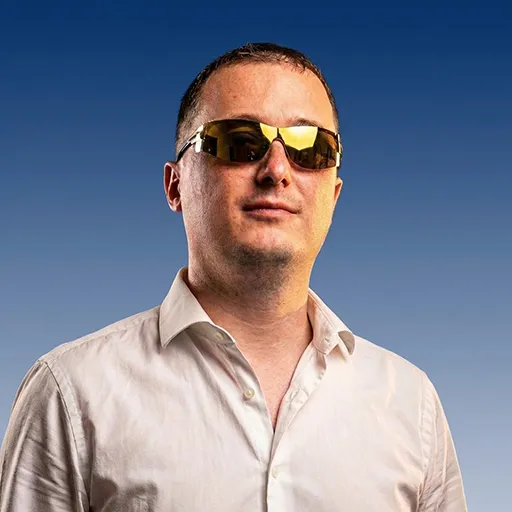
Practice led by Dmytro Nasyrov
Founder and CTO
23+ years in custom software development. Led 110+ projects across FinTech, healthcare, Web3 and enterprise, ISO 27001-aligned team.
Cross-platform frameworks ship 70-90% shared code across both stores at 30-50% lower cost, while pure native gives best-in-class performance and deep platform integration. According to a 2024 Statista mobile developer survey, 38% of new mobile projects use React Native or Flutter, and 52% use a mixed approach where native modules cover the hot paths.
| Factor | Cross-platform (RN / Flutter) | Pure native (Swift + Kotlin) |
|---|---|---|
| Code share | 70-90% shared across iOS and Android | 0% shared; two parallel codebases |
| Performance | Native-equivalent for 95% of UIs; native modules for hot paths | Best-in-class for graphics, AR/VR, hardware-bound work |
| Cost (year 1) | $40,000-$210,000+ for both stores | $60,000-$300,000+ for two parallel teams |
| Time to market | 2-4 months for an MVP on both stores | 3-6 months per store, often staggered |
| Hiring pool | Smaller pool of senior RN/Flutter engineers | Larger pool of native iOS and Android engineers |
| Native APIs | Most APIs covered; bridge code for the 5% edge cases | Full native SDK access on day one |
| Long-term maint | One codebase to maintain, ship, debug | Two codebases double maintenance load |
| Best fit | Most consumer + B2B apps where 95% feature parity is acceptable | Apps requiring deep AR/VR, gaming, hardware control, accessibility extremes |
Mobile projects follow Pharos Verified Delivery with mobile-specific gates: discovery validates platform mix and native API needs, build ships TestFlight/internal-track builds every sprint, production readiness covers App Store/Play Store submission with crash-free baseline, support includes OTA updates, crash monitoring and store-rejection response.
Pharos Verified Delivery applied to 110+ production applications since 2013
Three mobile engagements from the last 12 months with the architectural call that made the difference.
Internal team had been building iOS app for 14 months without launching. App store rejections, performance issues, no Android version.
React Native rewrite shipped to App Store and Play Store in 11 weeks. 4.6/5 rating. 85% code shared. Original iOS team retained for native modules.
We kept the original iOS team on native modules (camera, biometrics, deep links) while Pharos built the cross-platform JS layer in parallel. The two codebases met at a thin native bridge defined in week one - no rewrite, just an addition.
iOS-only wallet built in Swift with custom crypto. Locked out of 60% of the addressable market. Code review found 12 security findings in the custom signing code.
Flutter rewrite using audited cryptography libraries. Both stores launched in 14 weeks. Zero security findings on external pen test. Daily active users grew 4x in 90 days post-launch.
We replaced the custom signing path with battle-tested libraries (libsodium, secp256k1) and pushed all key material into platform secure enclaves. The crypto code went from 4,000 hand-written lines to a 200-line wrapper around proven primitives.
Web-only portal hostile on mobile. 67% of patients used mobile, 31% completion rate on appointment booking flows.
Native iOS + Android apps with HIPAA-aligned biometric auth and offline-first scheduling. Booking completion up to 89%. Push notification show rate +18 percentage points.
Offline-first was the key choice - patients in poor coverage areas could finish a booking, then sync when they regained signal. We modeled the local cache as a CRDT to avoid merge-conflict prompts that would scare non-technical users.
Client names anonymized under NDA. Full case studies at /cases/.
We decline roughly 30% of RFPs we receive. Forcing a bad fit costs both sides 3-6 months and damages outcomes. Here is how we think about scope:
Native apps are the right call when you need offline-first behavior, deep platform integration (camera, biometrics, ARKit, payments), reliable background work or App Store distribution as a marketing channel. Otherwise, a Progressive Web App ships in 1/3 the time and skips the store rejection lottery. We have closed engagements with "PWA for now, native when you hit 100K MAU" as the recommendation.
Three shifts are reshaping mobile app engineering for consumer and B2B products.
Consumer apps without embedded AI capabilities (chat, recommendation, search, summarization) see 2-4x lower day-7 retention versus AI-augmented peers.
Aggregate signals (crash-free users, star rating, review velocity) now weight more in App Store and Play Store ranking than keyword optimization[7].
Flutter 4.x and React Native new architecture ship platform-API parity on critical paths (payments, biometrics, background tasks), shifting the choice toward cross-platform for time-to-market[5][6].
Every mobile app we ship runs against the same four-dimension readiness evaluation before launch.
Sign-up completion, first-action completion, day-1 retention
Sign-up completion above 70%; first-action completion above 50%; day-1 retention above 40% on mature consumer apps[9].
Crash-free users, ANR rate, P1 bug SLA
Crash-free users above 99.5% on Android and 99.7% on iOS[7]; ANR rate under 0.3%; P1 bug SLA under 48 hours[8].
Event schema coverage, funnel instrumentation, qualitative feedback capture
Core-action events instrumented before launch; funnel dashboards for 5 key flows; in-app feedback capture with category tagging[9].
Release cadence, rollback time, feature flag coverage
Weekly app store release cadence minimum; feature flag coverage above 80% of new features; rollback executable within 1 hour[10].
Production post-mortem
A consumer app shipped its first paid feature in September 2025 without feature flag infrastructure. A bug in the paywall flow gated legitimate subscribers behind a broken verification check. Every user hit it; rollback required a full app store resubmission cycle (48 hours on iOS, 6 hours on Android).
Feature flag infrastructure now required from sprint 1 on every mobile app engagement. Paywall and account-state flows specifically wrapped in kill-switch flags. Server-side remote config used as fallback where native flag systems are not yet in place.
Published record
Technical articles, comparison guides and methodology deep-dives we write from our own delivery experience.
Trusted by Coinbase, Consensys, Core Scientific, MicroStrategy, Gate.io and 10+ more Web3 and enterprise platforms
16+ partnersOur 16 technology partners include:



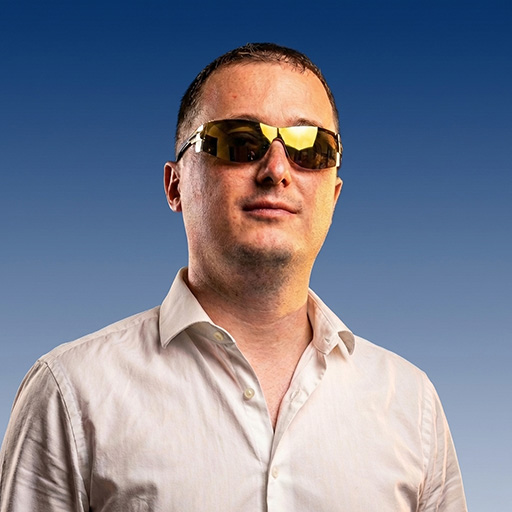
Founder and CTO Pharos Production
I design and build reliable software solutions - from lightweight apps to high-load distributed systems and blockchain platforms.
PhD in Artificial Intelligence, MSc in Computer Science (with honors), MSc in Electronics & Precision Mechanics.
13 years in architecture of great software solutions tailored to customer needs for startups and enterprises
23 years of practical enterprise customized software production experience
Lecturer at the National Kyiv Polytechnic University
Doctor of Philosophy in Artificial Intelligence
Master's degree in Computer Science, completed with excellence
Master's degree in Electronics and precision mechanics engineering
Pharos Production scopes engagements in three tiers, Proof of concept, MVP build and Enterprise platform, with typical budgets from $10,000 to $500,000+ depending on scope and complexity.
Focused validation of your riskiest technical assumption with a working spike, a clean codebase and a clear build-or-pivot recommendation.
Production-ready first version with core user flows, real backend, authentication and the integrations you need to onboard first paying users.
Full-scale build covering architecture, DevOps, QA, security and long-term evolution across teams and regions.
Prices vary based on project scope, complexity, timeline and requirements. Hourly rates range from $50 to $99 depending on role and seniority. Contact us for a personalized estimate.
Need extra hands on your software project? Our developers can jump in at any stage - from architecture to auditing - and integrate seamlessly with your team to fill any technical gaps.
Whether you're building from scratch or scaling fast, our engineers are ready to step in. You stay in control, and we handle the code.
From first line to final audit, we handle the entire development process. We will deliver secure, production-ready software, while you can focus on your business.
Our engineers work with 187+ technologies across blockchain, backend, frontend, mobile and DevOps - chosen for production reliability and performance.
Our engineers work with 187+ technologies across 10 categories: Frameworks, AI, Blockchains, DevOps, Clouds, Databases, Brokers, Tests, Programming, UI/UX.
























































Recognized on Clutch, GoodFirms and The Manifest for software engineering excellence









65+ industry awards
Our company starts and assembles an entire project specialists with the perfect blend of skills and experience to start the work.
We'll design, build and launch your MVP, ensuring it meets the core requirements of your software solution.
We'll create a complete software solution that is custom-made to meet your exact specifications.
Our company will be right there with you, keeping your software solution running smoothly, fixing issues and rolling out updates.
Mobile app development cost in 2026: native vs cross-platform pricing, cost by app complexity, what drives the budget and how to estimate yours.

Flutter vs React Native comparison for 2026. Performance benchmarks, developer experience, ecosystem maturity, cost analysis and decision framework for mobile development.

Synthesis of published software economics data: build cost ranges by project type, Year-2 maintenance cliff, mobile breakage tax, cloud lock-in cost trajectories - drawn from Flyvbjerg and Budzier (Harvard Business Review), ISO/IEC 25010, the Google SRE Book and ThoughtWorks Technology Radar.
A public-data synthesis of cross-platform versus native adoption, app store economics and fees, mobile AI feature adoption, release cadence and mobile DevOps plus app quality and retention benchmarks in 2026, drawn from Statista, data.ai/Sensor Tower, JetBrains, Stack Overflow, Apple/Google published fee structures and Bitrise/Codemagic research.

On-demand app development in 2026 covering delivery, ride-hailing and home-services marketplaces, the three-sided architecture behind them, build versus buy and real cost and timeline ranges by scope.
Type to filter questions and answers. Use Topic to narrow the list.
Showing all 8
No matches
Try a different keyword, change the topic or clear filters
For most consumer and B2B apps, cross-platform (React Native or Flutter) ships 70-90% shared code at 30-50% lower cost. Use pure native when you need deep platform integration (ARKit, advanced graphics, hardware control), best-in-class accessibility or your engineering org is already strong in Swift and Kotlin and hiring native is cheap. Pharos builds both, and roughly 70% of our recent mobile work is React Native or Flutter.
A mobile MVP typically takes 8-14 weeks from discovery close to TestFlight: 2 weeks discovery + design system, 6-10 weeks build with TestFlight every sprint, 1-2 weeks store submission and review. Production apps with payments, deep links, push and offline-first run 4-9 months. App Store and Play Store review adds 1-7 days depending on category and submission cycle.
Pharos engagements: cross-platform MVP $40,000-$110,000; production cross-platform app $110,000-$350,000+; pure-native dual-track app $85,000-$420,000+. Cost drivers: backend complexity (does the app need its own API?), real-time features (chat, live updates, sync), offline-first behavior, platform integrations (payments, biometrics, AR), App Store / Play Store rejection cycles and post-launch support tier.
We submit early (during the build phase) on TestFlight and internal tracks so the first store interaction is well before launch. We maintain a checklist of common rejection reasons (privacy nutrition labels, IDFA prompts, in-app purchase routing, restricted API usage, sign-in-with-Apple compliance) that the build is reviewed against before submission.
When rejections happen, we manage the response cycle with Apple/Google directly. Pharos apps have a >95% first-submission acceptance rate.
Yes. Push: APNs + FCM with topic-based segmentation and quiet-hours respect. Payments: Apple Pay, Google Pay, Stripe SDK, in-app purchase routing, subscription management. Biometric auth: Face ID, Touch ID, Android BiometricPrompt with secure enclave key storage. Deep links + universal links for marketing and account recovery. AppsFlyer / Branch for attribution.
Every release ships with Crashlytics or Sentry instrumented and a 30-day post-launch crash-free target of 99.5%+ on both platforms. We block release branches when the crash-free baseline drops below the target.
Memory profiling (Xcode Instruments, Android Profiler) is part of every release candidate. Automated UI tests cover the top 10 critical user journeys via Detox or Maestro.
Yes - offline-first is one of our specialties for healthcare, logistics and field-service apps. We model the local data store as a CRDT or operation log, sync to the backend on reconnection with conflict resolution rules baked in and surface sync state via a simple "synced / pending / conflict" badge. Users see no merge prompts unless we explicitly need their input.
We decline wrapper apps that just embed an existing website (PWAs do this faster), apps with no engagement strategy (low-frequency B2B tools), apps that depend entirely on a third-party SDK (no real engineering scope) and apps with no plan for the App Store / Play Store rejection cycle. We also recommend PWAs over native for many internal B2B tools.
Mobile apps reward teams that ship with instrumentation, feature flags and stability targets baked in rather than bolted on after launch[12]. Activation measurement, crash-free thresholds, feedback loop instrumentation and deploy velocity are the four areas that separate apps with fast learning loops from apps that stall in feedback silence.
Book a 30-minute mobile app readiness call
Achieve them with minimized risk through our bespoke innovation capabilities
Contact us today to discuss your project. We're ready to review your request promptly and guide you on the best next steps for collaboration
Same dayWe're committed to keeping your information confidential, so we'll sign a Non-Disclosure Agreement
1 dayAfter we chat about your goals and needs, we'll craft a comprehensive proposal detailing the project scope, team, timeline and budget
3-5 daysLet's connect on Google Meet to go through the proposal and confirm all the details together!
1-2 daysAs soon as the contract is signed, our dedicated team will jump into action on your project!
Same dayHeadquarters in Las Vegas, Nevada. Engineering office in Kyiv, Ukraine.
We also work with clients through dedicated local teams in Las Vegas, New York and San Francisco.
Thanks for the request!
We typically reply within 24 hours