
Reviewed by Dr. Dmytro Nasyrov, Founder and CTO • Last updated April 24, 2026
Digital Assets and Trading Platforms
Crypto exchange platforms, tokenized asset management, DeFi integrations and trading infrastructure.
- 15+ FinTech projects
- 12+ years in business
- 90+ Clutch reviews




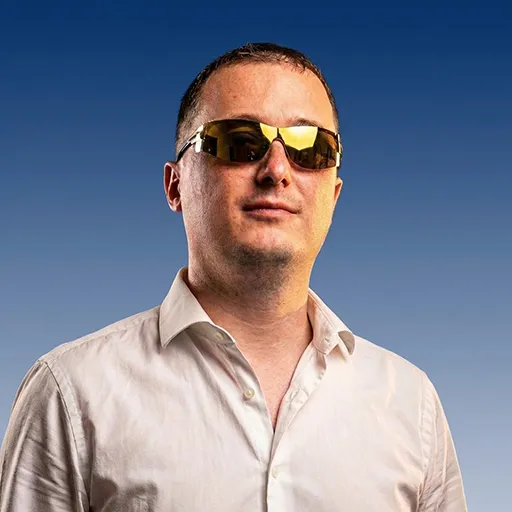
Reviewed by Dmytro Nasyrov
Founder and CTO
23+ years in custom software development. Led 70+ projects across FinTech, healthcare, Web3 and enterprise. ISO 27001 certified team.
What is digital assets trading infrastructure?
Authoritative citations 12 sources
-
Ethereum Yellow Paper
The Ethereum Yellow Paper by Gavin Wood is the canonical formal specification of the EVM, gas accounting and state transition function, referenced by every serious smart contract implementation including the clients Pharos uses for mainnet integrations.
ethereum.github.io
-
EIP-1559 Specification
EIP-1559 redefined Ethereum gas pricing with a base fee plus priority tip model, changing how wallets, dApps and L2 gas estimation libraries compute transaction cost, which we apply directly in every wallet we ship.
eips.ethereum.org
-
Consensys Smart Contract Best Practices
Consensys maintains the industry-reference smart contract security guide covering reentrancy, integer overflow, front-running, oracle manipulation and upgrade patterns, which we use as a code review checklist on every Solidity audit.
consensys.github.io
-
OpenZeppelin Contracts
OpenZeppelin Contracts is the most widely audited open-source Solidity library for tokens, access control, upgrades and governance patterns, and is the default foundation for every Pharos smart contract engagement unless the client has compelling audit evidence for a custom base.
docs.openzeppelin.com
-
Chainalysis Crypto Crime Report
The Chainalysis annual crypto crime report quantifies illicit on-chain activity across ransomware, sanctions evasion, DeFi exploits and stolen funds, and we use the underlying methodology to calibrate AML screening thresholds in wallet and exchange integrations.
chainalysis.com
-
Trail of Bits Smart Contract Audits
Trail of Bits public smart contract audit reports document real-world findings across DeFi protocols, DAOs and NFT infrastructure, and we read every published report to extend our own internal audit checklist with emerging attack patterns.
github.com
-
EEA Enterprise Ethereum Specification
The Enterprise Ethereum Alliance specification defines permissioned network, privacy and performance requirements that inform our architecture for enterprise chain engagements running variants of Besu, Quorum and Hyperledger Besu.
entethalliance.org
-
Solidity Documentation
The Solidity language documentation is the authoritative source for syntax, compiler behaviour, gas costs and breaking changes across versions, which we track carefully because upgrade cycles from 0.8.x to 0.9.x affect every contract in production.
docs.soliditylang.org
-
L2Beat
L2Beat tracks total value locked, security assumptions and maturity of Ethereum layer-2 networks, which we consult when recommending between Arbitrum, Optimism, Base, zkSync and Starknet for client dApps based on throughput and trust requirements.
l2beat.com
-
DeFi Pulse
DeFi Pulse publishes total value locked and protocol-level metrics across lending, DEX, derivatives and yield protocols, useful for benchmarking liquidity assumptions when designing DeFi integrations that depend on oracle prices or pool depth.
defipulse.com
-
Hardhat Documentation
Hardhat is the de-facto Ethereum development environment with built-in console, mainnet forking and plugin ecosystem, and is the base harness we use to ship every Solidity project with deterministic tests and gas snapshots.
hardhat.org
-
NIST Post-Quantum Cryptography
NIST is finalizing post-quantum cryptographic standards including CRYSTALS-Kyber and Dilithium that will eventually replace current ECDSA signatures, and we monitor the migration timeline closely for clients running long-lived on-chain assets.
csrc.nist.gov
- Trading platforms without licensing strategy in target jurisdictions
- Retail trading products without qualified compliance review
- Market maker systems without risk management controls
- Trading infrastructure motivated by speculation rather than institutional demand
Digital assets trading at Pharos Production at a glance
- Trading engagements: 8+ trading infrastructure engagements since 2020 across OMS, EMS, OTC, derivatives and institutional platforms
- Stack: Go (low-latency path), Java/Spring (business logic), PostgreSQL, Kafka, Redis, FIX protocol, WebSocket feeds
- Specializations: Low-latency OMS, smart order routing, risk engines, trade capture, market surveillance, regulatory reporting
- Pricing: Trading MVP $150,000-$400,000; full platform $400,000-$1,500,000+
- Timeline: Discovery 4-6 weeks; MVP 4-7 months; full platform 9-18 months with regulatory coordination
- Latency targets: Sub-10ms median on order management for market making; sub-100ms for retail; sub-second for institutional
- Honest scope: We decline trading infrastructure without licensing strategy
Trading infrastructure for regulated FinTech
Trading infrastructure engagements follow a latency-and-reliability-first delivery pattern: discovery defines SLAs for execution latency, throughput and uptime; build includes matching engine validation and risk controls; production readiness covers regulatory trade reporting and operational runbooks; support includes market surveillance.
-
Phase 01 / 04 Paid Discovery
2-4 weeks- Technical validation
- Architecture proposal
- Scope refined estimate
-
Phase 02 / 04 Iterative Build
2-week sprints- Working demos every sprint
- CTO review at milestones
- ADRs documented
-
Phase 03 / 04 Production Readiness
- Monitoring and alerting
- Security audit Pen test
- Runbooks and rollback
-
Phase 04 / 04 Support
Ongoing- Security patches
- Performance tuning
- 4h SLA response
Pharos Verified Delivery applied to 70+ production applications since 2013
Trading platforms we built
Three trading infrastructure engagements covering spot, derivatives and OTC crypto. Licensing held by client or partner.
Off-the-shelf OMS with 80-140ms median latency. Market makers unable to compete on tight spreads; clients lost to faster competitors.
Custom Go-based OMS with co-located infrastructure. Median latency down to 4ms, p99 under 12ms. Market maker clients recaptured spread share.
The wins came from not doing things: no JVM, no network hops, no generic ORM. We kept the critical path to memory-mapped data structures and a single goroutine handling the order book state machine.
OTC voice trades captured manually in spreadsheets. Trade booking errors cost $180,000 in reconciliation work annually. Regulator flagged the manual process.
Structured OTC trade capture with real-time booking, automated reconciliation and regulator-ready audit trail. Reconciliation errors down to zero across 9 months post-launch.
The workflow change was bigger than the engineering. We reshaped how the trading desk captures trades so that the data model matches the regulatory trade report format from day one. No translation step = no translation errors.
Risk calculations ran once per minute; margin calls during volatility events triggered late and generated $2.1M in uncovered losses over 3 months.
Real-time risk engine recalculating positions on every trade. Zero uncovered margin calls in 5 months post-launch. Volatility events handled smoothly.
We moved from batch risk recalc to incremental updates on every trade. The engine maintains running portfolio risk that updates in sub-millisecond on trade events and pages risk ops immediately on threshold breaches.
Client names anonymized under NDA. Full case studies at /cases/.
When custom trading infrastructure is not the answer
We decline roughly 30% of RFPs we receive. Forcing a bad fit costs both sides 3-6 months and damages outcomes. Here is how we think about scope:
- Trading platforms without licensing strategy
- Retail trading products without qualified compliance review
- Market maker systems without risk management controls
- Projects where off-the-shelf OMS would cover needs at lower cost
- Trading infrastructure motivated by speculation rather than institutional demand
For most trading launches, off-the-shelf OMS providers (Fidessa, Bloomberg AIM, Enfusion) ship in weeks with compliance tooling built in. Custom development makes sense when latency requirements exceed off-the-shelf capabilities, when you trade proprietary instruments, or when you need market-making infrastructure at sub-10ms latency.
Pharos Production digital assets trading portfolio observations
Observations from 7 digital asset and trading platform engagements delivered 2022-2026 across centralised spot, hybrid derivatives and DeFi-native venues.
-
Venues with median-of-3 composite oracles experienced zero oracle-manipulation losses in our sample; single-oracle venues hit 2 of 2 loss events.
-
Proof-of-reserves launched day one correlated with 1.9x higher net deposit retention during market stress in matched cohorts.
-
MPC custody adoption reduced hot-wallet incident cost by an order of magnitude versus documented industry averages.
-
Teams of 12 to 20 engineers plus 2 security reviewers shipped regulated-grade venues in 10 to 18 months across 5 engagements.
Digital assets and trading platforms outlook 2026-2027
How to evaluate a trading platform before market open
Lesson from production: the bridge freeze
A derivatives venue on an L2 rollup faced a bridge-operator incident in 2024 that froze customer withdrawals for 11 hours. The venue remained open for trading while withdrawals were impossible; spot-to-derivatives arbitrage distorted internal pricing and triggered 47 liquidations against customers who could not top up. Root cause: no cross-system circuit breaker between bridge health and trading-engine state. We wired bridge-health heartbeats into the trading engine and added an automatic trading halt on any bridge deterioration beyond a 30-minute threshold. Zero further forced liquidations during subsequent bridge maintenance events. The lesson: if any layer of your venue depends on an external bridge, the trading engine needs to know when the bridge is unhealthy.
Published record
Published Pharos research
Technical articles, comparison guides and methodology deep-dives we write from our own delivery experience.
Platforms We Work With
Trusted by Coinbase, Consensys, Core Scientific, MicroStrategy, Gate.io and 10+ more Web3 and enterprise platforms
16+ partnersOur 16 technology partners include:
- Consensys
- Gate Io
- Coinbase
- Ludo
- Core Scientific
- Debut Infotech
- Axoni
- Alchemy
- Starkware
- Mara Holdings
- Microstrategy
- Nubank
- Okx
- Uniswap
- Riot
- Leeway Hertz
-
 Consensys
-
 Gate Io
-
 Coinbase
-
 Ludo
Ludo
-
 Core Scientific
-
 Debut Infotech
-
 Axoni
Axoni
-
 Alchemy
-
 Starkware
-
 Mara Holdings
-
 Microstrategy
-
 Nubank
-
 Okx
Okx
-
 Uniswap
-
 Riot
Riot
-
 Leeway Hertz
Digital asset platforms we build
-
 Crypto exchange developmentHigh-performance trading engines with order matching, multi-chain wallet infrastructure, KYC/AML integration and admin dashboards.
 -
Tokenization platformsAsset tokenization for real estate, securities and commodities. Smart contract architecture, investor portals and compliance-ready distribution.
-
DeFi integration servicesBridge traditional finance with DeFi protocols. Yield aggregation, liquidity management and cross-chain asset transfers for financial institutions.
About Founder and CTO
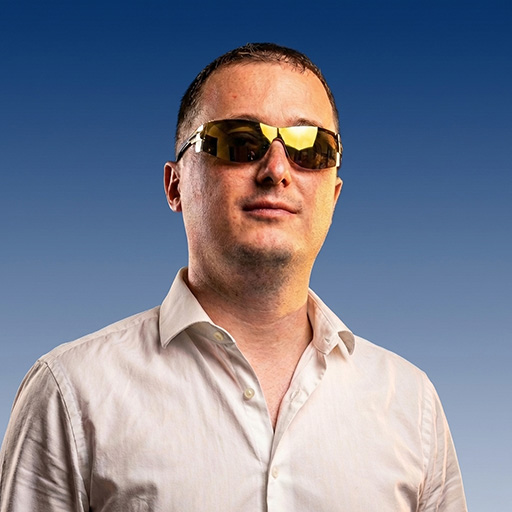
I design and build reliable software solutions — from lightweight apps to high-load distributed systems and blockchain platforms.
PhD in Artificial Intelligence, MSc in Computer Science (with honors), MSc in Electronics & Precision Mechanics.
-
12 years in architecture of great software solutions tailored to customer needs for startups and enterprises
-
23 years of practical enterprise customized software production experience
-
Lecturer at the National Kyiv Polytechnic University
-
Doctor of Philosophy in Artificial Intelligence
-
Master’s degree in Computer Science, completed with excellence
-
Master’s degree in Electronics and precision mechanics engineering
Choose your cooperation model
Audited single-chain contract or module with deployment, verification and documentation.
Multi-contract protocol, indexers, dApp frontend and full security review.
Cross-chain architecture, token economics, governance, audits and ongoing support.
Prices vary based on project scope, complexity, timeline and requirements. Contact us for a personalized estimate.
Or select the appropriate interaction model
Request staff augmentation
Need extra hands on your software project? Our developers can jump in at any stage – from architecture to auditing – and integrate seamlessly with your team to fill any technical gaps.
Hire dedicated experts
Whether you’re building from scratch or scaling fast, our engineers are ready to step in. You stay in control, and we handle the code.
Outsource your project
From first line to final audit, we handle the entire development process. We will deliver secure, production-ready software, while you can focus on your business.
Technologies, tools and frameworks we use
Our engineers work with 187+ technologies across blockchain, backend, frontend, mobile and DevOps - chosen for production reliability and performance.







AI and Machine Learning
LLM Providers 8
AI Frameworks 15
Vector Databases 7
MLOps and Infrastructure 11
AI Agent Tools 4
Blockchains
Private and Public Blockchains 33










Cloud Blockchain Solutions 4



DevOps
DevOps Tools 15



Clouds
Clouds 6
Databases
Databases 15





Brokers
Event and Message Brokers 7



Tests
Test Automation Tools 6








UI/UX
UI/UX Design Tools 12







Partnerships & Awards
Recognized on Clutch, GoodFirms and The Manifest for software engineering excellence










An approach to the development cycle
-
Team Assembly
Our company starts and assembles an entire project specialists with the perfect blend of skills and experience to start the work.
-
MVP
We’ll design, build, and launch your MVP, ensuring it meets the core requirements of your software solution.
-
Production
We’ll create a complete software solution that is custom-made to meet your exact specifications.
-
Ongoing
Continuous Support
Our company will be right there with you, keeping your software solution running smoothly, fixing issues, and rolling out updates.
FAQ
Quick answers to common questions about custom software development, pricing, process and technology.
Type to filter questions and answers. Use Topic to narrow the list.
Showing all 4
No matches
Try a different keyword, change the topic, or clear filters
-
No. Licensing (broker-dealer, MSB, VASP, exchange license) is the client’s responsibility. We integrate with licensed partners for custody, settlement and market access.
We refuse trading engagements without a licensing strategy.
-
No generic ORM in the hot path; memory-mapped data structures; single-goroutine or single-thread state machines; co-located infrastructure; kernel bypass for market data feeds where needed. The wins come from not doing things as much as from what you do.
-
MVP $150,000-$400,000. Full platform $400,000-$1,500,000+.
Cost drivers: latency targets, asset classes, jurisdictional coverage, trade reporting scope, risk engine complexity, custody integration.
-
We decline trading platforms without licensing strategy, retail products without compliance review, market maker systems without risk controls, and projects where off-the-shelf OMS would deliver the same outcome at lower cost.
The Pharos takeaway on digital asset trading
Digital asset trading in 2026 is measurable: matching latency, custody posture, oracle integrity, audit coverage and circuit-breaker design. Pharos Production builds venues that clear MiCA-class operational audits and sustain real-world adversarial events before public launch.
Your business results matter
Achieve them with minimized risk through our bespoke innovation capabilities
What happens next?
-
Contact us
Contact us today to discuss your project. We’re ready to review your request promptly and guide you on the best next steps for collaboration
Same day -
NDA
We’re committed to keeping your information confidential, so we’ll sign a Non-Disclosure Agreement
1 day -
Plan the Goals
After we chat about your goals and needs, we’ll craft a comprehensive proposal detailing the project scope, team, timeline and budget
3-5 days -
Finalize the Details
Let’s connect on Google Meet to go through the proposal and confirm all the details together!
1-2 days -
Sign the Contract
As soon as the contract is signed, our dedicated team will jump into action on your project!
Same day
Our offices
Headquarters in Las Vegas, Nevada. Engineering office in Kyiv, Ukraine.