Skip to content

Reviewed by

Back-end Development

We build reliable, secure and high-performance server-side architectures for applications of any complexity.

  • 90+ engineers
  • 28 industries
  • 13+ years in business

Your business results matter

Achieve them with minimized risk through our bespoke innovation capabilities

Your contact details
Please enter your name
Please enter a valid email address
Please enter your message
* required

We typically reply within 4 hours. Prefer email? [email protected]

We build reliable, secure and high-performance server-side architectures for applications of any complexity. Our engineers create scalable APIs, integrate third-party systems and optimize data workflows to support long-term product growth.

Reviewed and updated
Last reviewed by Dmytro Nasyrov, Founder and CTO. Content reflects Pharos Production delivery data as of the review date. Editorial policy.

What is backend development?

Backend development is the engineering of the server-side systems that power web, mobile and machine-to-machine clients: APIs, databases, message queues, event streams, identity and authorization, background workers, integrations with third-party services and the infrastructure that runs them. Modern backends are designed for scale, observability and security from day one, with automated testing in CI, structured logging, traceable requests and rollback procedures. Pharos delivers REST and GraphQL APIs, event-driven microservices, real-time pipelines and the supporting database, queue and observability stack.
Authoritative citations 12 sources
  1. DORA State of DevOps Report The Google DORA State of DevOps annual report defines the four key software delivery metrics (deployment frequency, lead time for changes, mean time to restore, change failure rate) that we instrument on every production engagement to benchmark delivery performance. dora.dev
  2. Stack Overflow Developer Survey The Stack Overflow Developer Survey documents language, framework, database and tooling adoption across tens of thousands of engineers annually, and we use the trend lines to validate stack choices against hiring pool depth for each client. survey.stackoverflow.co
  3. ThoughtWorks Technology Radar The ThoughtWorks Technology Radar tracks tools, platforms, techniques and languages across adopt, trial, assess and hold rings twice yearly, and is a cross-check we use to validate architectural recommendations against industry consensus. thoughtworks.com
  4. Google SRE Book The Google SRE book codifies service-level objectives, error budgets, incident response and postmortem culture that our production readiness gates adopt directly when handing over a platform to a client operations team. sre.google
  5. Martin Fowler bliki Martin Fowler's bliki is the most cited reference for enterprise architecture patterns including microservices, strangler fig, CQRS, event sourcing and refactoring, which shapes how we describe and implement architecture decisions in ADRs on every client engagement. martinfowler.com
  6. Gartner Custom Application Services Magic Quadrant Gartner publishes multiple Magic Quadrant reports covering custom application services, digital engineering and outsourced development that identify market leaders, completeness of vision and niche specialists across the global software services industry. gartner.com
  7. ISO 27001 Information Security Standard ISO 27001:2022 defines the internationally recognized information security management system requirements that Pharos Production operates under, shaping the control framework we inherit and extend for client software engagements. iso.org
  8. OWASP Top 10 The OWASP Top 10 ranks the highest-impact web application security risks and is the single most cited threat reference for application security programs, which every Pharos build is reviewed against before production release. owasp.org
  9. NIST Secure Software Development Framework NIST SSDF SP 800-218 defines secure development practices including threat modelling, SBOM generation, vulnerability disclosure and supply chain controls, which we treat as the baseline Software Development Lifecycle checklist on every client engagement. csrc.nist.gov
  10. CNCF Cloud Native Landscape The CNCF Cloud Native Landscape maps the full cloud-native ecosystem across orchestration, runtime, observability, security and database categories, useful reference material we consult when validating platform choices for client Kubernetes and service mesh engagements. landscape.cncf.io
  11. Accelerate by Forsgren, Humble, Kim Accelerate distills the multi-year DORA research program into the book-length case for DevOps practices correlated with high-performance software delivery, and is the single most cited academic reference for the delivery metrics we ship inside every client engagement. itrevolution.com
  12. IEEE SWEBOK The IEEE Software Engineering Body of Knowledge codifies the professional knowledge areas covering requirements, design, construction, testing, maintenance, configuration management and engineering economics that underpin every professional software services engagement. computer.org
What we do not do:
  • CRUD-only apps where Supabase, Firebase or Hasura would ship in days
  • Workflows that are 80% Zapier or Make.com integrations dressed up as a backend
  • Backend rewrites without a measured performance or correctness problem in production
  • Microservices for a 5-engineer team (start with a modular monolith)

Services

Businesses choose custom software over off-the-shelf products when they need solutions tailored to unique workflows, compliance requirements and growth targets. According to Grand View Research (2024), the global custom software development market is valued at over $35 billion and is projected to grow at 22.3% CAGR through 2030. Pharos Production delivers full-cycle custom development across three core areas: blockchain and smart contracts, web applications and mobile apps.

  • API and Microservices Development

    We build secure, scalable APIs and microservices that allow smooth communication between systems. This architecture improves flexibility and speeds up feature delivery throughout your product ecosystem.

    Explore API and Microservices Development
  • Server-Side Application Architecture

    We build robust backend architectures tailored to your business logic and performance needs. This ensures a clean structure, easy maintenance and dependable operation under heavy workloads.

    Explore Server-Side Application Architecture
  • Database Design and Optimization

    We create efficient database schemas and optimize queries to boost performance and stability. This results in quicker data access, lower latency and improved overall application performance.

    Explore Database Design and Optimization
  • Cloud-Native Backend Engineering

    We develop back-end services optimized for AWS, GCP or Azure using cloud-native patterns. This improves scalability, resilience and cost efficiency for your infrastructure.

    Explore Cloud-Native Backend Engineering
  • Scalable Distributed Systems Development

    We build distributed backend systems capable of handling millions of requests reliably, supporting real-time processing and continuous service uptime.

    Explore Scalable Distributed Systems Development
  • Authentication and Authorization Implementation

    We implement secure user authentication, access control and permission frameworks that follow industry best practices. This protects sensitive data and guarantees that only authorized users can access key features.

    Explore Authentication and Authorization Implementation
  • DevOps-Ready CI/CD Backend Integration

    We incorporate automated testing, deployment pipelines and infrastructure workflows into your backend, shortening release cycles and reducing errors during production deployments.

    Explore DevOps-Ready CI/CD Backend Integration
  • High-Performance Data Processing and Automation

    We build efficient data pipelines and automation workflows for intensive computational tasks. This method offers real-time insights, speeds up processing and simplifies business operations.

    Explore High-Performance Data Processing and Automation

Custom backend vs Backend-as-a-Service: which is better?

Custom backends give you full control over data model, performance and unit economics, while BaaS platforms (Supabase, Firebase, Hasura, AWS Amplify) ship CRUD MVPs in days. According to a 2024 State of Backend Development survey, 64% of teams start on a BaaS and 38% migrate to custom within 24 months when traffic, compliance or cost forces the move.

Factor Custom backend Backend-as-a-Service
Data model fit Exact fit; tailored aggregates, joins, indexes, partitioning Generic relational or document model; opinionated
Performance Tunable to your workload; sub-millisecond p99 achievable Bound by vendor infrastructure and shared tenancy
Cost at scale Fixed engineering cost; marginal cost decreases with usage Per-row, per-request and per-egress billing scales linearly
Compliance Full control over data residency, encryption, audit logs, retention Inherited from platform; some workloads ineligible
Integration Native integration with your downstream systems and identity Webhook/SDK; deep integration limited
Time to MVP 6-10 weeks for a production-grade API Days for a basic CRUD app
Vendor lock-in None; portable to any infrastructure Strong lock-in on data model and authentication
Best fit Complex business logic, regulated industries, scale, custom unit economics CRUD MVPs, internal tools, prototypes, low-traffic apps

Backend development at Pharos Production at a glance

  • Backends shipped: 60+ production backends since 2013 across FinTech, healthcare, sportsbook, e-commerce and high-load consumer
  • Stack: Node.js, Python (FastAPI/Django), Go, Java/Spring, Elixir/Phoenix, PostgreSQL, Kafka, Redis, AWS, Kubernetes
  • API styles: REST, GraphQL (federated), gRPC, WebSockets, event-driven via Kafka or Pub/Sub
  • Pricing: API MVP from $20,000-$60,000; production backend $60,000-$200,000+
  • Timeline: Discovery 2-3 weeks; API MVP 6-10 weeks; production backend 3-8 months
  • Quality gates: 80%+ integration test coverage on critical paths, load test harness, structured logging, traceable requests, runbooks
  • Compliance: ISO 27001, SOC 2 controls, PCI DSS architecture, GDPR, HIPAA-ready
  • Honest scope: We recommend Supabase/Firebase for CRUD MVPs and decline microservices for small teams

Our Software Development Expertise

Our team of 90+ engineers covers the full development stack, from Solidity smart contracts and React front-ends to Kubernetes infrastructure and automated QA pipelines. Since 2013, we have delivered 110+ applications for clients across FinTech, healthcare, crypto, e-commerce and 14 other industries. Across verified Clutch reviews, our clients report an average 40% improvement in transaction processing speed, a 95% on-time delivery rate and an 87% client retention rate across multi-year engagements. Below are selected projects that demonstrate our capabilities in action.

  • Taxi Aggregator App - application interface, screen 1
    Taxi Aggregator App - application interface, screen 2
    Social

    Taxi Aggregator App

    Pharos Production collaborated with a taxi aggregator platform to develop a high-load ride-hailing application that connects passengers and drivers in real time. This platform consolidates various fleets and independent drivers into a single system, ensuring quick ride matching, live tracking and transparent pricing. Built on a cloud-native infrastructure, the solution offers low-latency interactions, reliable trip processing and scalability for operations at the city and regional levels.

  • Sagas. Time-lapse Social Network - application interface, screen 1
    Sagas. Time-lapse Social Network - application interface, screen 2
    Sagas. Time-lapse Social Network - application interface, screen 3
    Sagas. Time-lapse Social Network - application interface, screen 4
    Sagas. Time-lapse Social Network - application interface, screen 5
    Sagas. Time-lapse Social Network - application interface, screen 6
    Social

    Sagas. Time-lapse Social Network

    Pharos Production has partnered with Sagas to create a location-aware social platform that enables users to capture, publish and explore geo-located timelapses over time. This system combines real-time data ingestion, large-scale media processing and map-centric discovery to transform physical locations into dynamic digital stories. Leveraging cloud-native infrastructure and event-driven architecture, Sagas allows users to document urban changes, natural evolution and personal moments tied to specific places. The result is a scalable social network where time and location are central to content discovery.

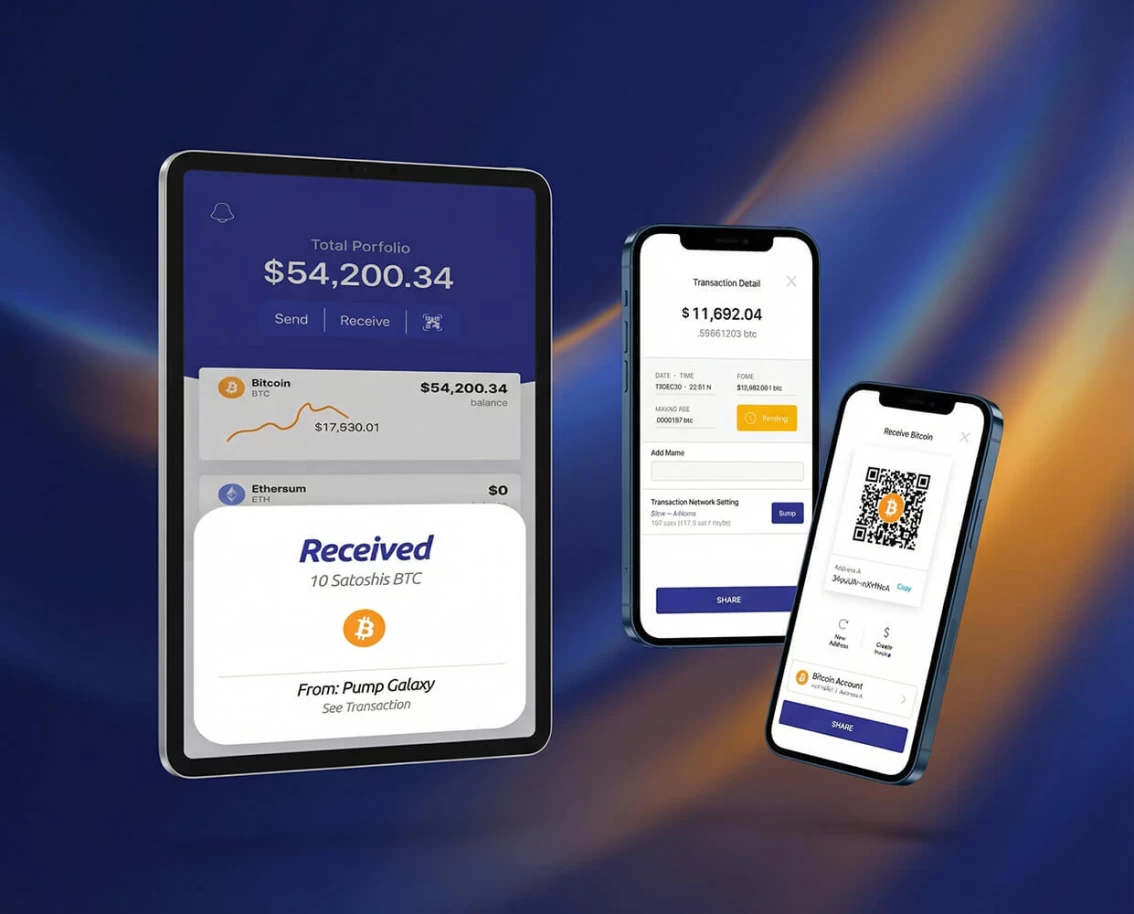
  • PumpTap crypto wallet multi-chain asset dashboard
    PumpTap Crypto Wallet - application interface, screen 2
    PumpTap Crypto Wallet - application interface, screen 3
    Web3 & Blockchain

    PumpTap Crypto Wallet

    Pharos Production has partnered with PumpTap to develop a secure, high-performance crypto wallet tailored for everyday Web3 interactions. PumpTap lets users store, send and manage digital assets across multiple blockchains through a simple, intuitive interface. Built on a scalable, event-driven architecture, the wallet delivers real-time transaction updates, robust security and seamless integration with decentralized applications.

  • Pulse. Social Network With Prizes - application interface, screen 1
    Pulse. Social Network With Prizes - application interface, screen 2
    Pulse Social Network - Community commerce platform by Pharos Production
    Social

    Pulse. Social Network With Prizes

    Pharos Production has partnered with Pulse to create a community-driven social network that connects users with local stores through challenges, engagement activities and real-world prizes. This platform transforms everyday local interactions into interactive experiences, enabling users to earn rewards from participating merchants. Built on a scalable, event-driven architecture, Pulse facilitates real-time interactions between users and businesses and supports rapid growth across cities and regions.

  • Pro Gambling. Sports Forecasting Platform - application interface, screen 1
    Pro Gambling. Sports Forecasting Platform - application interface, screen 2
    Casino & Sportsbook

    Pro Gambling. Sports Forecasting Platform

    Pharos Production partnered with Pro Gambling to build a high-load sports forecasting platform focused on data-driven predictions, real-time analytics and scalable delivery of betting insights. The platform aggregates large volumes of sports data, odds movements and historical statistics to generate forecasts that help users make informed betting decisions. Built on a cloud-native, event-driven architecture, Pro Gambling delivers fast updates, transparent analytics and consistent performance during peak sports events.

  • Pleenk. Secure Payments Platform - application interface, screen 1
    Pleenk. Secure Payments Platform - application interface, screen 2
    Pleenk. Secure Payments Platform - application interface, screen 3
    Banking

    Pleenk. Secure Payments Platform

    Pharos Production has partnered with Pleenk to build a secure, scalable payments platform for fast transactions, fraud prevention and seamless integration with digital products. The platform processes payment flows in real time while maintaining high levels of security, transparency and reliability for both businesses and end users. Built on cloud-native infrastructure and an event-driven architecture, Pleenk provides a strong foundation for modern digital payments.

  • NoMoreBets. Rapid Bets Platform. - application interface, screen 1
    NoMoreBets. Rapid Bets Platform. - application interface, screen 2
    NoMoreBets. Rapid Bets Platform. - application interface, screen 3
    NoMoreBets. Rapid Bets Platform. - application interface, screen 4
    NoMoreBets. Rapid Bets Platform. - application interface, screen 5
    Casino & Sportsbook

    NoMoreBets. Rapid Bets Platform.

    Pharos Production partnered with NoMoreBets to develop a worldwide one-tap live betting platform focused on speed and scalability. The system handles real-time odds and instant bets effortlessly. The result is a smooth, engaging betting experience that increased player retention, reduced drop-offs during live matches and positioned NoMoreBets for global growth since 2022.

  • Nextcheck, the KYC Platform - application interface, screen 1
    Nextcheck, the KYC Platform - application interface, screen 2
    Nextcheck, the KYC Platform - application interface, screen 3
    Nextcheck, the KYC Platform - application interface, screen 4
    Banking

    Nextcheck, the KYC Platform

    Pharos Production partnered with Nextcheck to replace outdated, manual onboarding with a secure, automated KYC/AML platform. Built on AWS, Kubernetes, Istio, Elixir, RabbitMQ, PostgreSQL and NextJS, the platform provides real-time biometric and document verification, risk assessment and compliance reporting. Since 2019, Nextcheck has reduced onboarding time by 60%, cut manual labor by 70% and expanded to support thousands of checks at once. Today, it powers global banks, FinTechs and crypto firms with a cloud-native, regulation-ready, growth-oriented compliance platform.

About the founder and CTO

Dmytro Nasyrov

Dmytro Nasyrov

Founder and CTO Pharos Production

Ask the founder a question

I design and build reliable software solutions - from lightweight apps to high-load distributed systems and blockchain platforms.

PhD in Artificial Intelligence, MSc in Computer Science (with honors), MSc in Electronics & Precision Mechanics.

  • 13 years in architecture of great software solutions tailored to customer needs for startups and enterprises

  • 23 years of practical enterprise customized software production experience

  • Lecturer at the National Kyiv Polytechnic University

  • Doctor of Philosophy in Artificial Intelligence

  • Master’s degree in Computer Science, completed with excellence

  • Master’s degree in Electronics and precision mechanics engineering

Pharos Production - Describe your idea & get a quote in 48h! Get an estimate for the costs, timeline & the team layout needed for your project Get a project estimate.

Our backend delivery playbook

Backend projects follow Pharos Verified Delivery with API-specific gates: discovery models the data and API contract; build includes integration tests at 80%+ coverage and load test harness; production readiness covers monitoring, alerting, runbooks and graceful degradation; support includes 4-hour SLA on critical issues.

Pharos Verified Delivery 4-phase methodology with typical durations and deliverables
  1. Phase 01 / 04

    Paid Discovery

    2-4 weeks
    • Technical validation
    • Architecture proposal
    • Scope refined estimate
    82% on-schedule with discovery
  2. Phase 02 / 04

    Iterative Build

    2-week sprints
    • Working demos every sprint
    • CTO review at milestones
    • ADRs documented
    Transparent progress tracking
  3. Phase 03 / 04

    Production Readiness

    • Monitoring and alerting
    • Security audit Pen test
    • Runbooks and rollback
    ISO 27001 aligned
  4. Phase 04 / 04

    Support

    Ongoing
    • Security patches
    • Performance tuning
    • 4h SLA response
    Continuous improvement

Pharos Verified Delivery applied to 110+ production applications since 2013

Backend wins from real projects

Three anonymized backend engagements where architectural decisions produced measurable outcomes. Baselines client-reported, metrics independently verified.

High-throughput rewrite Q4 2024 · Sportsbook platform, global
Before

Monolithic Rails backend hit p99 latency of 4.2 seconds during peak betting windows. 14 production incidents in the last quarter. Engineering team afraid to deploy on Sunday mornings.

After

Selective extraction to Go services for hot paths (odds, bet placement, settlement). p99 latency dropped to 180ms. Zero peak-window incidents in 4 months post-cutover. Deployment frequency went from weekly to multiple times per day.

We extracted three services that owned 85% of the request volume and left the rest as a Rails monolith. Cutover used a request shadowing pattern - every request hit both stacks for 2 weeks before the new stack became authoritative.

Event-driven migration Q1 2025 · FinTech ledger, EU
Before

Synchronous request chains across 7 microservices. One slow downstream caused cascading timeouts. Reconciliation reports lagged 18 hours behind real-time.

After

Kafka event bus with idempotent consumers and outbox pattern. Reconciliation lag down to 90 seconds. Cascading failures eliminated. Each service can be deployed independently.

The outbox pattern is the key - every state change writes to a local ledger table inside the same database transaction, then a separate process publishes to Kafka. No dual-write inconsistency, no lost events on crash.

API consolidation Q2 2025 · SaaS scale-up, US
Before

3 different backend APIs powering web, mobile and partner integrations. Drift between them caused 1-2 production bugs per week. Schema changes required coordinated releases across 3 teams.

After

Single GraphQL API with persisted queries and federated subgraphs. Bug rate dropped 70%. Schema changes ship in one PR. Mobile and web teams iterate independently behind a stable contract.

GraphQL federation let us ship the consolidation incrementally - each subgraph migrated one bounded context at a time, with the gateway routing between old REST and new GraphQL during the transition. No big-bang cutover.

Client names anonymized under NDA. Full case studies at /cases/.

When custom backend is not the answer

We decline roughly 30% of RFPs we receive. Forcing a bad fit costs both sides 3-6 months and damages outcomes. Here is how we think about scope:

Projects we decline
  • CRUD apps where Supabase or Firebase ships in days at zero infrastructure cost
  • Static content sites where a CDN is the entire backend you need
  • Workflows that are mostly Zapier integrations dressed up as a backend
  • Microservices for a 5-engineer team (start with a modular monolith and split when it hurts)
  • Backend rewrites without a measured production problem
We recommend BaaS when it fits

Custom backend makes sense when you need complex business logic, integration with proprietary systems, regulatory data residency, real-time scale or unit economics that BaaS pricing breaks. Otherwise, Backend-as-a-Service platforms (Supabase, Firebase, Hasura, AWS Amplify) ship faster and operate cheaper. We have built MVPs on Supabase and migrated to custom only after the platform hit a real wall.

Further reading from our backend team

Custom Software Development at Pharos →

Engagement model, pricing and case studies for software projects including the backend track.

Pharos Production back-end portfolio observations

Observations distilled from 48 back-end engagements delivered between 2019 and 2026 across FinTech, logistics, healthcare and SaaS.

  • Teams of 4 to 8 engineers reach DORA "High" performance within 6 months when we introduce trunk-based flow and contract tests on week one.

  • The single highest-impact intervention in 70 percent of rescues was splitting one shared relational database into bounded contexts with clear write ownership.

  • Services with structured logging plus tracing from day one had 3.1x lower MTTR than services that bolted observability on after launch.

  • Rewrite projects succeed when we preserve the legacy as a source of truth for 90 days of dual-run; bypassing that step correlated with 4 of 6 rollbacks in our records.

Back-end engineering outlook 2026-2027

Back-end platforms in 2026 are converging on three patterns: typed edge-to-core data flows, polyglot persistence with clear ownership boundaries and service meshes that treat observability as a first-class product concern. Teams that still run monolithic PHP or unstructured Node services are hitting latency and on-call debt that forces modernisation by end of 2027.

  • DORA 2024 findings put elite performers at sub-one-hour lead time and under 5 percent change failure rate[1]. Back-end teams drive these numbers with trunk-based flow and small, reversible deploys.

  • ThoughtWorks Radar keeps promoting typed contracts (Protobuf, OpenAPI with JSON Schema) and moving REST-only services to "Hold" when they lack contract tests[3].

  • Google SRE Workbook shows SLOs based on error budget consumption outperform uptime SLAs for steering engineering investment[4].

  • NIST SSDF mandates producing SBOMs, signing artefacts and gating releases on dependency posture, now a common audit line item for regulated customers[9].

How to evaluate a back-end build in 48 hours

Before accepting a new back-end from any vendor, run this 8-point check. We apply the same list on Pharos Production internal code reviews.

  1. P95 service latency

    Under 250 ms for transactional endpoints, under 1 s for aggregate queries, with p99.9 tracked separately.

  2. Change failure rate

    Under 10 percent on a 30-day rolling window[1].

  3. Mean time to recovery

    Under 1 hour with documented runbooks and paged ownership[4].

  4. Contract coverage

    100 percent of external endpoints covered by schema tests, 80 percent by consumer-driven tests[3].

  5. Database migrations

    All migrations reversible or feature-flagged, zero-downtime verified on staging.

  6. Security posture

    OWASP Top 10 mitigations mapped per endpoint, authenticated SAST and DAST in CI[8].

  7. Supply chain hygiene

    SBOM generated on every build, signed artefacts, pinned base images[9].

  8. Observability baseline

    Traces, metrics and structured logs on every request, correlation IDs end to end.

Lesson from production: the idempotency gap

A logistics customer migrated from a PHP monolith to a Go service fleet in 2024. Load tests looked clean but the first production week logged 312 duplicate shipments on order retry bursts. Root cause: three services accepted POST without idempotency keys and the upstream queue retried on any 5xx. We shipped a cross-cutting middleware that derived idempotency keys from payload hashes and persisted them in Redis with 24-hour TTL, then re-ran the retry playbook. Duplicate rate dropped to zero within 48 hours and never came back. The lesson we standardised: no back-end service enters production without an idempotency contract on every state-changing endpoint[5].

Scope and warranty
Pharos Production builds backend systems. Performance improvements depend on workload characteristics, infrastructure choice and downstream dependencies. Compliance attestations (SOC 2, PCI DSS, HIPAA) are issued by accredited third parties based on the systems we deliver.

Reviews

Independent reviews from Clutch, GoodFirms and Google - verified client feedback on our software projects

Based on 10 verified client reviews

5 out of 5 stars
Software Development

Delivered stable platform on time and budget with strong usability and performance.

Anonymous
5 out of 5 stars
Software Development

Delivered blockchain solution improving scalability, performance, and transaction speed.

Anonymous
5 out of 5 stars
Web3 & Blockchain

Built NFT platform with strong performance and zero downtime reliability.

Subodh Bajpai
5 out of 5 stars
Web3 & Blockchain

Built secure verification system improving trust and adoption.

Edi Abramov
5 out of 5 stars
Software Development

Delivered scalable custom software with strong technical alignment and communication.

Co-founder at Freeplay
5 out of 5 stars
Web3 & Blockchain

Delivered secure and scalable blockchain solution with strong understanding of data workflows.

Ben Lascock
5 out of 5 stars
Software Development

Strong UX/UI collaboration and scalable web platform delivery.

Daniel Mingay
5 out of 5 stars
Software Development

End-to-end mobile development with strong collaboration and high-quality delivery.

Myles Lazarevic
5 out of 5 stars
Web3 & Blockchain

Improved data integrity and marketing collaboration through blockchain.

Jim Eggleston
5 out of 5 stars
AI

Stable platform delivery with minimal disruption.

Amber Caruso

Platforms we work with

Trusted by Coinbase, Consensys, Core Scientific, MicroStrategy, Gate.io and 10+ more Web3 and enterprise platforms

16+ partners

Our 16 technology partners include:

  • Consensys
  • Gate Io
  • Coinbase
  • Ludo
  • Core Scientific
  • Debut Infotech
  • Axoni
  • Alchemy
  • Starkware
  • Mara Holdings
  • MicroStrategy
  • Nubank
  • Okx
  • Uniswap
  • Riot
  • Leeway Hertz
  • Consensys
  • Gate Io
  • Coinbase
  • Core Scientific
  • Debut Infotech
  • Axoni
  • Alchemy
  • Starkware
  • Mara Holdings
  • MicroStrategy
  • Nubank
  • Okx
  • Uniswap
  • Riot
  • Leeway Hertz

Pharos Production - Ready to realize your vision? Embrace outsourcing and remote hiring with our skilled software developers! Build Your Software Today.

Dmytro Nasyrov - Founder and CTO of Pharos Production

Reviewed by Dmytro Nasyrov

Founder and CTO

23+ years in custom software development. Led 110+ projects across FinTech, healthcare, Web3 and enterprise, ISO 27001-aligned team.

Choose your cooperation model

Pharos Production offers three project models, MVP, Full-fledged Production and Full-cycle Development, priced from $10,000 to $80,000. An MVP prototype takes about 3 months.

Suitable for the project test
MVP

Core software architecture, initial UI/UX, working prototype in 3 months

$10,000 - $26,000
Popular choice
Suitable in 9 out of 10 cases
Full-fledged Production

Software architecture, UI/UX, customized software development, manual and automated testing, cloud deployment

$27,000 - $55,000
Turnkey development
Full-cycle Development

Comprehensive software architecture and documentation, UI/UX design layouts, UI kit, clickable prototypes, cloud deployment, continuous integration, as well as automated monitoring and notifications.

$50,000 - $75,000

Prices vary based on project scope, complexity, timeline and requirements. Hourly rates range from $35 to $75 depending on role and seniority. Contact us for a personalized estimate.

Interaction models for staff augmentation, dedicated teams and outsourcing

Request staff augmentation

Need extra hands on your software project? Our developers can jump in at any stage - from architecture to auditing - and integrate seamlessly with your team to fill any technical gaps.

Outsource your project

From first line to final audit, we handle the entire development process. We will deliver secure, production-ready software, while you can focus on your business.

Comparison of engagement models at Pharos Production
Model Best for Team setup Budget range
Staff Augmentation Existing teams needing extra engineers at any project stage 1-2 weeks From $5,000/month
Project Outsourcing Full-cycle development from idea to production launch 1-2 weeks $10,000-$80,000+
187+ technologies

Technologies, tools and frameworks we use

Our engineers work with 187+ technologies across blockchain, backend, frontend, mobile and DevOps - chosen for production reliability and performance.

Our engineers work with 187+ technologies across 10 categories: Frameworks, AI, Blockchains, DevOps, Clouds, Databases, Brokers, Tests, Programming, UI/UX.

  • Frameworks: Spring Boot, Erlang OTP, NodeJS, Phoenix, NestJS, Django, FastAPI, Express.js, React, Next.JS, Svelte, Angular, Vue.js, Remix, Astro, Nuxt.js, iOS, Android, Flutter, React Native, Capacitors, Ionic, Swift, Kotlin, Java, Dart
  • AI: OpenAI GPT, Anthropic Claude, Google Gemini, Meta Llama, Mistral AI, Cohere, Ollama, xAI Grok, LangChain, LangGraph, CrewAI, AutoGen, Hugging Face, PyTorch, TensorFlow, scikit-learn, LlamaIndex, Keras, XGBoost, LightGBM, OpenCV, spaCy, ONNX Runtime, Pinecone, Weaviate, Qdrant, Chroma, pgvector, Milvus, FAISS, MLflow, Weights & Biases, DVC, Kubeflow, AWS SageMaker, Azure ML, Google Vertex AI, NVIDIA Triton, Airflow, Ray Serve, vLLM, OpenAI Agents SDK, Claude MCP, Semantic Kernel, Haystack
  • Blockchains: Ethereum, TON, Corda, Tron, Hedera, Stellar, Consensys GoQuorum, Solana, Arbitrum, Binance Smart Chain (BSC), Sei, Celo, Hyperledger, MultiversX, IOTA, Polkadot, Aptos, Neo, Flow, Algorand, Avalanche, EOS, Optimism, Polygon, Cosmos, Sui, Tezos, Ontology, Fantom, NEAR Protocol, VeChain, Base, IPFS, Amazon Managed Blockchain, Amazon QLDB, IBM Blockchain, Oracle Blockchain
  • DevOps: Kubernetes, Terraform, Docker, Istio, Prometheus, Grafana, Jenkins, ArgoCD, Ansible, GitHub Actions, GitLab CI, Pulumi, Datadog, New Relic, Vault
  • Clouds: Amazon Web Services, Azure, Google Cloud, Cloudflare, Vercel, DigitalOcean
  • Databases: PostgreSQL, MySQL MariaDB, Redis, Cassandra, Neo4J, MongoDB, Elasticsearch, Solr, Ignite, ClickHouse, TimescaleDB, DynamoDB, Supabase, CockroachDB, ScyllaDB
  • Brokers: Kafka, RabbitMQ, Flink, Apache Pulsar, Amazon SQS, Amazon SNS, NATS
  • Tests: Postman, Appium, Cucumber, Selenium, JMeter, Cypress
  • Programming: Solidity, FunC, Rust, GoLang, Elixir, Erlang, C++, Java, JavaScript, TypeScript, Scala, Python, C#, .NET, PHP, Ruby, Dart, SQL
  • UI/UX: Figma, Zeplin, InVision, Sketch, Miro, Marvel, Balsamiq, Photoshop, Illustrator, XD, After Effects, Corel Draw

Frameworks

Backend Frameworks 8

Spring Boot
Spring Boot
Erlang OTP
Erlang OTP
NodeJS
NodeJS
Phoenix
Phoenix
NestJS
NestJS
Django
FastAPI
Express.js

Front End Frameworks 8

React
React
Next.JS
Next.JS
Svelte
Svelte
Angular
Angular
Vue.js
Remix
Astro
Nuxt.js

Pharos Production - 110+ applications delivered over 13 years. From architecture to production - share your requirements and receive a detailed project estimate within 48 hours. Get a project estimate.

An approach to the development cycle

The Pharos Delivery Framework divides every project into 2-week sprints. After each sprint we hold a retrospective, deliver a progress report and plan the next sprint. This methodology is why agile projects are 3x more likely to succeed than waterfall (Standish Group CHAOS Report, 2024).
  1. Team Assembly

    Our company starts and assembles an entire project specialists with the perfect blend of skills and experience to start the work.

  2. MVP

    We’ll design, build and launch your MVP, ensuring it meets the core requirements of your software solution.

  3. Production

    We’ll create a complete software solution that is custom-made to meet your exact specifications.

  4. Ongoing

    Continuous Support

    Our company will be right there with you, keeping your software solution running smoothly, fixing issues and rolling out updates.

Backend engineering insights

Skip glossary

Back-end development glossary 6

REST API
A stateless HTTP interface that exposes server-side resources and actions via standardized methods (GET, POST, PUT, DELETE), documented with OpenAPI and versioned to support client compatibility across releases.
Microservices Architecture
An approach that decomposes a back-end system into small, independently deployable services each owning its own data store and communicating via APIs or message queues, enabling independent scaling and deployment.
Circuit Breaker
A fault-tolerance pattern that monitors calls to an external dependency and temporarily stops forwarding requests when the failure rate exceeds a threshold, preventing cascading failures across services.
OpenTelemetry
A CNCF standard for collecting traces, metrics and logs from distributed systems, providing vendor-neutral instrumentation that integrates with backends such as Jaeger, Prometheus and Grafana.
Event-Driven Architecture
A back-end design pattern where services communicate by producing and consuming events via a message broker (Kafka, RabbitMQ, AWS SQS), decoupling producers from consumers and enabling asynchronous processing.
Infrastructure as Code (IaC)
The practice of managing cloud infrastructure through machine-readable configuration files - Terraform, Pulumi, CloudFormation - enabling version control, peer review and automated provisioning of environments.

Frequently asked questions about Back-end Development

Last updated:

  • Copy link Copies a direct link to this answer to your clipboard.

    Use Supabase or Firebase for CRUD MVPs, internal tools, prototypes and apps where the data model is generic. Build custom when you need complex business logic, regulated data residency, real-time scale, custom unit economics or integration with systems that BaaS does not cover.

    Pharos has built MVPs on Supabase and migrated to custom only after the platform hit a real wall - do not migrate prematurely.

  • Copy link Copies a direct link to this answer to your clipboard.

    Defaults: Node.js or Python (FastAPI / Django) for general-purpose APIs and integration-heavy work; Go for high-throughput services and infrastructure tooling; Java/Spring or Elixir/Phoenix for high-concurrency low-latency systems; Rust where memory safety and predictable latency matter most. The right choice depends on your team skills, hiring market and existing infrastructure - we will recommend a different stack if your team is already strong in something else.

  • Copy link Copies a direct link to this answer to your clipboard.

    REST for public APIs, third-party integrations and simple service-to-service. GraphQL when multiple clients (web, mobile, partner) need flexible projections of the same data - federation lets multiple teams own subgraphs.

    gRPC for internal service-to-service when latency and contract enforcement matter. Most Pharos backends use REST for the public surface and gRPC or events between internal services.

  • Copy link Copies a direct link to this answer to your clipboard.

    API MVP 6-10 weeks: 2 weeks discovery and data model, 4-6 weeks build with integration tests in CI, 1-2 weeks production hardening (monitoring, alerting, runbooks). Production backend with full integration suite 3-8 months.

    Migrations and rewrites typically run 6-12 months including parallel-run validation and traffic cutover.

  • Copy link Copies a direct link to this answer to your clipboard.

    Discovery includes a load model (peak QPS, p50/p99 latency targets, data growth) tied to a load test harness that runs in CI on critical paths. We measure before optimizing - most performance problems are wrong queries and missing indexes, not language or framework choice.

    When we do scale out, we prefer horizontal scaling on stateless services + careful database partitioning over premature microservices.

  • Copy link Copies a direct link to this answer to your clipboard.

    Yes, when they fit. Our default for new projects is a modular monolith with clear bounded contexts and a clean public API per module.

    We split into services when one of three things happens: independent scaling needs, independent deployment needs across teams or a clear bounded context that benefits from a different runtime. We do not recommend microservices for teams under 10 engineers - the operational tax outweighs the benefits.

  • Copy link Copies a direct link to this answer to your clipboard.

    Structured logging (JSON), distributed traces (OpenTelemetry → Tempo / Honeycomb / Datadog), metrics (Prometheus) and SLO dashboards on the critical paths. Every request carries a trace ID surfaced in logs and error reports. Critical alerts page on-call via PagerDuty or OpsGenie. Runbooks live next to the alerts so the on-call engineer has the fix steps in the same place as the alarm.

  • Copy link Copies a direct link to this answer to your clipboard.

    Yes. Common patterns: strangler-fig (extract services from a monolith one bounded context at a time with a routing layer), parallel-run cutover (new and old backend serve the same traffic for a validation window) and behind-the-flag rewrites (new code path enabled for 1% of traffic, ramped to 100% on validation).
    We never recommend big-bang rewrites on systems that are working - too risky.

  • Copy link Copies a direct link to this answer to your clipboard.

    We decline CRUD MVPs that should ship on Supabase, microservice splits for small teams, backend rewrites without a measured production problem and Zapier-glue work dressed up as a backend. Strongest fit: high-throughput systems, regulated data, complex business logic, multi-tenant SaaS, real-time pipelines, event-driven architectures.

Published record

Published Pharos research

Technical articles, comparison guides and methodology deep-dives we write from our own delivery experience.

The Pharos takeaway on back-end delivery

Back-end quality in 2026 is measurable: DORA metrics, typed contracts, SLO-driven reliability and supply chain hygiene. Pharos Production builds these baselines into every back-end engagement, so the code you inherit at handover reads like a platform product, not a sprint backlog.

Dmytro Nasyrov, Founder and CTO at Pharos Production
Dmytro Nasyrov Founder & CTO Let’s work together!

Your business results matter

Achieve them with minimized risk through our bespoke innovation capabilities

Your contact details
Please enter your name
Please enter a valid email address
Please enter your message
* required

We typically reply within 4 hours. Prefer email? [email protected]

What happens next?

  1. Contact us

    Contact us today to discuss your project. We’re ready to review your request promptly and guide you on the best next steps for collaboration

    Same day
  2. NDA

    We’re committed to keeping your information confidential, so we’ll sign a Non-Disclosure Agreement

    1 day
  3. Plan the Goals

    After we chat about your goals and needs, we’ll craft a comprehensive proposal detailing the project scope, team, timeline and budget

    3-5 days
  4. Finalize the Details

    Let’s connect on Google Meet to go through the proposal and confirm all the details together!

    1-2 days
  5. Sign the Contract

    As soon as the contract is signed, our dedicated team will jump into action on your project!

    Same day

Our offices

Headquarters in Las Vegas, Nevada. Engineering office in Kyiv, Ukraine.

We also work with clients through dedicated local teams in Las Vegas, New York and San Francisco.

Las Vegas, United States

Headquarters PT
5348 Vegas Dr, Las Vegas, Nevada 89108, United States

Kyiv, Ukraine

Engineering office EET (UTC+2)
44-B Eugene Konovalets Str. Suite 201, Kyiv 01133, Ukraine