AI Agent Frameworks Comparison 2026: Complete Guide
The AI agent framework landscape in 2026 has matured significantly from the early days of LangChain-or-nothing decisions. Today, developers choose from at least six production-viable frameworks, each with distinct strengths and tradeoffs. The right framework choice saves months of development time and prevents costly rewrites. The wrong choice locks you into patterns that fight your […]
 Updated
15 min read
486 views
Updated
15 min read
486 views
Technically reviewed by Victor Sineglazov, D.Sc.

Key takeaways 5
- Six frameworks cover the 2026 landscape LangChain/LangGraph, CrewAI, AutoGen, OpenAI Agents SDK, Anthropic Agent SDK and Mastra each address different architectural needs and production maturity levels.
- LangGraph is the sole Tier 1 framework With 90K+ GitHub stars and tooling including LangSmith, LangServe and LangGraph Cloud, LangGraph is the only production-proven choice for enterprise deployments.
- CrewAI builds multi-agent systems in 50 lines Its role-task-crew abstraction lets teams define a complete multi-agent workflow in under 50 lines of code, making it the fastest framework to prototype.
- Match framework to your primary constraint first TypeScript-only teams choose Mastra, OpenAI-locked projects use the OpenAI Agents SDK and Claude-native apps use the Anthropic Agent SDK before evaluating other factors.
- Build an abstraction layer from the start Defining your own agent interfaces and keeping the framework as an implementation detail behind them prevents costly rewrites as the landscape evolves.
The AI agent framework landscape in 2026 has matured significantly from the early days of LangChain-or-nothing decisions. Today, developers choose from at least six production-viable frameworks, each with distinct strengths and tradeoffs. The right framework choice saves months of development time and prevents costly rewrites. The wrong choice locks you into patterns that fight your requirements rather than support them.
This guide compares every major AI agent framework available in 2026 based on our direct production experience at Pharos Production. We cover LangChain/LangGraph, CrewAI, AutoGen, OpenAI Agents SDK, Anthropic Agent SDK and Mastra - with honest assessments of when each framework excels and when it struggles.
Framework comparison matrix
| Framework | Primary Language | Architecture | Multi-Agent | Production Readiness | Learning Curve | GitHub Stars | Best For |
|---|---|---|---|---|---|---|---|
| LangChain / LangGraph | Python, TypeScript | Graph-based state machines | Excellent | High | Steep | 90K+ | Complex custom workflows, enterprise systems |
| CrewAI | Python | Role-based crews | Excellent | Medium-High | Gentle | 25K+ | Business process automation, rapid prototyping |
| AutoGen (AG2) | Python, .NET | Conversational agents | Excellent | Medium-High | Moderate | 35K+ | Research automation, code-generation tasks |
| OpenAI Agents SDK | Python | Lightweight agent loops | Good | Medium | Gentle | 15K+ | OpenAI-native projects, quick agent setup |
| Anthropic Agent SDK | Python, TypeScript | Tool-use orchestration | Good | Medium | Gentle | 10K+ | Claude-powered agents, coding automation |
| Mastra | TypeScript | Workflow engine | Good | Medium | Moderate | 8K+ | TypeScript-native teams, workflow automation |
LangChain and LangGraph
Architecture overview
LangChain is the most comprehensive LLM application framework, providing modular components for prompts, models, output parsers, retrievers, memory and tools. LangGraph extends LangChain with a graph-based state machine paradigm for building complex agent workflows. In LangGraph, you define nodes (processing steps), edges (transitions including conditional routing) and state (shared data that flows through the graph).
The graph architecture gives you explicit control over every decision point in your agent's execution. You can define exactly when to use a tool, when to reflect, when to hand off to another agent and what conditions trigger each transition. Cycles in the graph enable iterative refinement loops. Conditional edges enable dynamic routing based on agent output or state conditions.
Strengths
LangGraph's explicit state management is unmatched. Every step in the agent's execution is observable, debuggable and testable. The state machine approach prevents the non-deterministic behavior that plagues simpler agent loops. Human-in-the-loop breakpoints can be inserted at any node. Checkpoint persistence enables fault-tolerant execution where agents can resume from the last successful step after a failure.
The integration ecosystem is massive - 700+ integrations with LLM providers, vector stores, document loaders, tools and monitoring platforms. LangSmith provides production-grade tracing, evaluation and monitoring. LangGraph Cloud offers managed deployment with streaming, persistence and built-in fault tolerance.
Weaknesses
The learning curve is steep. New developers face multiple layers of abstraction (Runnables, chains, agents, graphs, state schemas) and must understand when to use each. The framework evolves rapidly, which means code written six months ago may use deprecated patterns. Documentation is extensive but can be overwhelming for newcomers trying to find the right approach for their use case.
Simple agents require more boilerplate in LangGraph than in other frameworks. Defining a state schema, node functions and edge conditions for a straightforward tool-using agent feels like over-engineering compared to the simplicity of CrewAI or the OpenAI Agents SDK.
When to choose
Choose LangChain/LangGraph for production systems that require complex workflows, fine-grained control, comprehensive monitoring and the broadest possible integration ecosystem. Ideal for teams with LLM framework experience building enterprise-grade agent systems.
CrewAI
Architecture overview
CrewAI organizes AI agents using a team metaphor. You define Agents (with role, goal and backstory), Tasks (with description, expected output and assigned agent) and Crews (teams that execute tasks in sequence, parallel or hierarchical patterns). The framework handles inter-agent communication, task delegation and output passing automatically.
Strengths
CrewAI has the fastest time-to-prototype of any framework. The role-task-crew abstraction maps directly to how businesses think about work delegation, making it accessible to developers without deep LLM experience. A multi-agent system can be defined in under 50 lines of code.
The hierarchical execution mode is particularly powerful for business processes. A manager agent reviews and coordinates specialist agents, similar to how a human project manager delegates to team members. This pattern handles quality control naturally - the manager agent catches and corrects errors before passing results to the next stage.
CrewAI's latest versions added flow control features (conditional task execution, loops, branching) that address earlier criticism about limited workflow flexibility. The framework also supports custom tool creation through simple Python decorators.
Weaknesses
CrewAI's abstractions become constraints for non-standard workflows. If your agent system requires dynamic agent creation, real-time streaming between agents or complex state management beyond what the crew/task model supports, you may need to work around the framework rather than with it.
Production deployment tooling is less mature than LangChain's ecosystem. While CrewAI Enterprise offers managed deployments, self-hosted production systems require building your own monitoring, error handling and persistence layers. The Python-only limitation excludes TypeScript teams.
When to choose
Choose CrewAI for rapid prototyping, business process automation and projects where the team metaphor fits naturally. Ideal for teams new to AI agent development who need to demonstrate value quickly.

AutoGen (AG2)
Architecture overview
AutoGen models agent interactions as conversations. Agents send messages to each other, and complex behavior emerges from these conversational exchanges. The AG2 rewrite (version 0.4) introduced an event-driven architecture with improved modularity, better async support and production-oriented features.
Key components include AssistantAgent (LLM-powered agents that can generate and execute code), UserProxyAgent (human-in-the-loop agents) and GroupChat (multi-agent conversation orchestration with speaker selection). AutoGen Studio provides a visual interface for designing agent workflows without code.
Strengths
AutoGen's code execution capability is its strongest differentiator. Agents can write Python code, execute it in a sandboxed environment (Docker containers), observe results and iterate. This is exceptionally powerful for data analysis, research automation, mathematical reasoning and any task where computational verification improves output quality.
The conversational paradigm supports natural iterative refinement. An agent proposes a solution, another agent critiques it, the first agent revises - this mirrors how human teams improve work quality through feedback. Nested conversations allow sub-problems to be solved by specialized agent groups before results are returned to the main conversation.
Microsoft backing provides confidence in long-term support and enterprise integration capabilities. The AG2 rewrite demonstrated commitment to production readiness with improved error handling, observability and scalability.
Weaknesses
The conversational paradigm can be hard to control. Conversations between agents sometimes loop unproductively or diverge from the intended task. Speaker selection in GroupChat requires careful configuration to prevent agents from interrupting or dominating conversations. Setting up code execution sandboxing properly adds infrastructure complexity.
The AG2 rewrite, while a significant improvement, created a migration burden for existing AutoGen 0.2 users. Some community resources and tutorials still reference the older API, creating confusion for new developers.
When to choose
Choose AutoGen for research automation, data analysis pipelines, code generation tasks and scenarios where iterative agent-to-agent refinement adds value. Ideal for teams comfortable with the conversational paradigm and willing to invest in sandbox infrastructure.
OpenAI Agents SDK
Architecture overview
The OpenAI Agents SDK is a lightweight framework for building AI agents that use OpenAI models. Released in early 2025, it provides a minimal set of primitives: Agent (defined by instructions and tools), Runner (execution engine), Handoff (agent-to-agent transitions) and Guardrails (input/output validation). The SDK is designed to be simple enough to learn in an afternoon while supporting production-grade features.
Strengths
Simplicity is the primary advantage. The SDK has very few concepts to learn, and a working agent can be built in under 20 lines of code. Agent handoffs enable multi-agent workflows where specialized agents handle different conversation stages or topics. Built-in tracing provides visibility into agent execution without requiring external tooling.
Native integration with OpenAI's model ecosystem means you get immediate access to the latest OpenAI models, tools (web search, code interpreter, file search) and features. The SDK aligns closely with OpenAI's API design, making it familiar to anyone who has used the OpenAI API directly.
Weaknesses
The SDK is tightly coupled to OpenAI models. While it technically supports other providers through custom model adapters, the framework is designed and optimized for OpenAI. If you want to use Claude, Gemini or open-source models, other frameworks provide better support.
The feature set is deliberately minimal. Complex workflows that require state persistence across sessions, sophisticated memory management or custom orchestration patterns need to be built on top of the SDK's primitives. This is by design (simplicity over completeness) but means more custom development for advanced use cases.
When to choose
Choose the OpenAI Agents SDK when you are committed to the OpenAI ecosystem, need a simple framework that gets out of your way and want to build agents quickly without learning complex abstractions. Ideal for teams building OpenAI-native applications with straightforward agent requirements.
Anthropic Agent SDK
Architecture overview
The Anthropic Agent SDK provides tools for building agents powered by Claude models. It focuses on Claude's strengths: extended thinking for complex reasoning, precise tool use, large context windows and computer use capabilities. The SDK supports Python and TypeScript with a clean, well-documented API.
Strengths
Claude's extended thinking capability allows agents to reason through complex problems before taking action, significantly reducing errors in multi-step workflows. The tool use implementation is precise - Claude is notably reliable at calling the right tools with correct parameters, which matters enormously in production systems where incorrect tool calls have real consequences.
Computer use (the ability to control desktop applications through screenshots and mouse/keyboard actions) is unique to Anthropic's ecosystem. This enables agents that can interact with any software application, including legacy systems without APIs. For enterprise automation scenarios involving software that only has a GUI, computer use is a game-changer.
Claude's large context windows (up to 1M tokens with Opus) enable agents that can process entire codebases, long document sets or extensive conversation histories without summarization or chunking. This simplifies agent architecture for use cases that involve large amounts of context.
Weaknesses
The SDK is Claude-specific. If you need multi-provider support or want to use models from other providers, you need a framework-agnostic solution. The agent SDK is newer than LangChain or AutoGen and has a smaller ecosystem of community extensions, tutorials and third-party integrations.
Multi-agent orchestration is possible but less structured than in CrewAI or LangGraph. Building complex multi-agent topologies requires more custom code than frameworks that specialize in agent coordination.
When to choose
Choose the Anthropic Agent SDK when Claude is your primary model, particularly for coding automation, document processing and tasks requiring precise tool use or extended reasoning. Ideal for teams building Claude-native applications that leverage Claude's unique capabilities like computer use and massive context windows.
Mastra
Architecture overview
Mastra is a TypeScript-native AI agent framework that provides workflows (directed acyclic graphs of steps), agents (LLM-powered autonomous actors) and a comprehensive set of built-in tools and integrations. Unlike LangChain.js which is a TypeScript port of a Python framework, Mastra was built from the ground up for the TypeScript ecosystem.
Strengths
Mastra is the best option for TypeScript-first teams. The framework leverages TypeScript's type system for compile-time safety in workflow definitions, tool parameters and agent configurations. Full type inference means your IDE catches integration errors before runtime. The workflow engine supports parallel step execution, conditional branching and error handling with TypeScript's native async patterns.
Built-in integrations with popular services (Slack, GitHub, Google, databases) reduce boilerplate for common enterprise scenarios. The RAG module provides document processing and vector search with a clean TypeScript API. The evaluation framework enables automated quality testing of agent outputs.
Weaknesses
Mastra is the youngest framework in this comparison and has the smallest community. TypeScript-only limits adoption from the Python-dominant ML community. The ecosystem of third-party tools, tutorials and production deployment guides is still developing. For teams that need Python for ML model integration or data science workflows, Mastra is not an option.
When to choose
Choose Mastra when your team is TypeScript-first, you are building within the Node.js/Deno ecosystem and you want a framework that feels native to your stack rather than a Python port. Ideal for web development teams adding AI agent capabilities to existing TypeScript applications.
Production readiness ranking
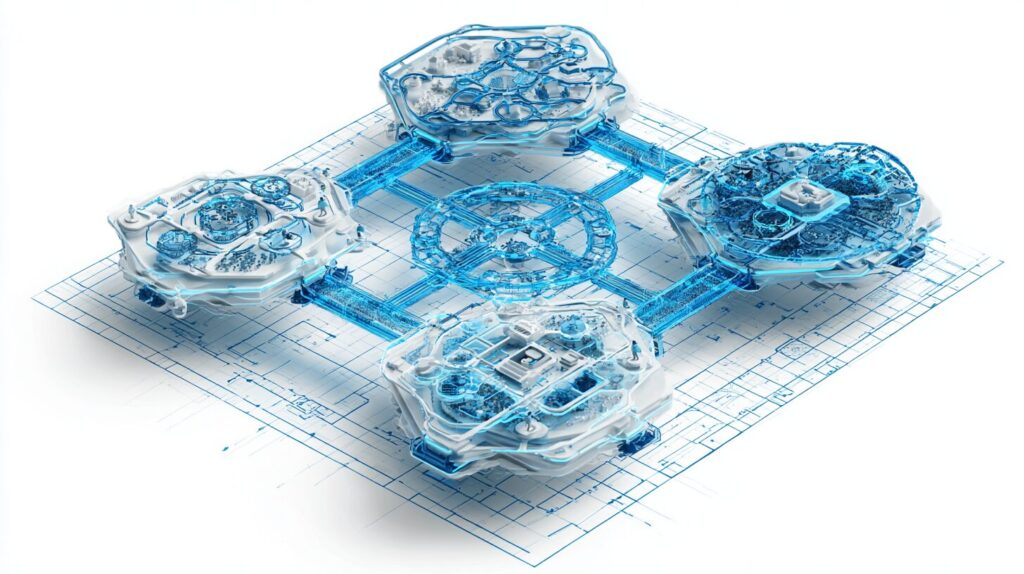
Based on our deployment experience across all six frameworks, here is our production readiness ranking for enterprise use cases in 2026.
Tier 1 - Production proven: LangChain/LangGraph. The most battle-tested framework with the most comprehensive production tooling (LangSmith, LangServe, LangGraph Cloud). Thousands of production deployments, extensive documentation on deployment patterns and enterprise support options.
CrewAI and AutoGen AG2 fall into Tier 2 - Production capable. Both frameworks have growing production deployment tracks. CrewAI Enterprise and AutoGen Studio provide deployment assistance. Production monitoring and error handling require more custom development than LangChain but are fully achievable.
Tier 3 - Production viable: OpenAI Agents SDK, Anthropic Agent SDK, Mastra. These frameworks work in production but are newer and have smaller production deployment communities. You will need to build more of the production infrastructure yourself. The tradeoff is simpler frameworks with fewer failure modes.
Framework selection flowchart
Use this decision path to narrow your framework choice based on your primary constraints.
Step 1: What is your primary programming language?
If TypeScript only, consider Mastra or LangChain.js. If Python or Python plus TypeScript, continue to Step 2.
Step 2: Are you locked into a specific model provider?
If OpenAI only, consider OpenAI Agents SDK. For Anthropic/Claude-only projects, consider Anthropic Agent SDK. If multi-provider or undecided, continue to Step 3.
Step 3: How complex is your agent workflow?
If simple (single agent, few tools, linear flow), consider CrewAI or OpenAI Agents SDK. If complex (multi-agent, conditional routing, state management, error recovery), continue to Step 4.
Step 4: Do your agents need to write and execute code?
If yes, consider AutoGen. If no, continue to Step 5.
Step 5: What is your priority - speed of development or production robustness?
If speed, choose CrewAI. If production robustness, choose LangGraph.
Common mistakes in framework selection
Mistake 1: choosing based on hype instead of requirements
Framework popularity on social media and GitHub stars do not predict which framework is right for your project. A framework with 90K stars that does not match your architecture needs is worse than a framework with 8K stars that fits perfectly. Always evaluate against your specific requirements, not community sentiment.
Mistake 2: over-engineering the first agent
Teams often choose the most powerful framework (LangGraph) for their first agent project and then struggle with the complexity. If your first agent is a customer support chatbot that uses three tools, you do not need a graph-based state machine. Start with a simpler framework, prove the concept and migrate to a more powerful framework only when the simple one cannot handle your growing requirements.
Mistake 3: ignoring the maintenance cost
The framework choice affects long-term maintenance as much as initial development speed. A framework with frequent breaking changes requires ongoing migration effort. A framework with poor observability makes debugging production issues expensive. A framework with a small community means slower answers to technical questions and fewer reference implementations. Factor maintenance into your decision alongside development speed.
Mistake 4: not building a framework abstraction layer
The AI agent framework landscape is evolving rapidly. Building your application logic directly against a framework's specific APIs creates tight coupling that makes switching costly. Instead, define your own agent interfaces and use the framework as an implementation detail behind those interfaces. This abstraction costs minimal upfront effort and provides significant flexibility as the landscape evolves.
Mistake 5: assuming one framework for everything
Different parts of your system may benefit from different frameworks. The orchestration layer might use LangGraph for its production tooling while individual agent implementations use CrewAI for simplicity or AutoGen for code execution. Framework composition is a valid and often optimal architecture pattern.
Getting started
The fastest path to a production AI agent in 2026 is to match your requirements to the right framework, build a focused prototype, validate with real users and iterate. Our AI agent development team helps organizations navigate framework selection, architecture design and production deployment. Whether you need help choosing a framework, building a prototype or scaling an existing agent system, we bring hands-on experience with every framework covered in this guide.
Explore our LangChain development services for LangGraph-based projects, learn about our broader AI development capabilities, or contact our team to discuss your agent framework requirements.
Key Takeaways
- Six frameworks cover the 2026 landscape. LangChain/LangGraph, CrewAI, AutoGen, OpenAI Agents SDK, Anthropic Agent SDK and Mastra each serve different architectural needs - from graph-based state machines to role-based crews to conversational agents.
- LangGraph is the only Tier 1 production-proven framework. With LangSmith monitoring, LangServe deployment and LangGraph Cloud, it offers the most comprehensive production tooling. CrewAI and AutoGen AG2 are Tier 2, while vendor SDKs and Mastra are Tier 3.
- Match framework to your primary constraint. TypeScript-only teams should choose Mastra. OpenAI-locked projects fit the OpenAI Agents SDK. Claude-native apps suit the Anthropic Agent SDK. Complex multi-provider workflows need LangGraph.
- Build a framework abstraction layer from the start. The AI agent framework landscape is evolving rapidly. Defining your own agent interfaces with the framework as an implementation detail behind them prevents costly rewrites when requirements or frameworks change.
- Do not use one framework for everything. Combine LangGraph for outer orchestration with CrewAI for business logic nodes and AutoGen for code execution nodes. Framework composition across different system layers is a valid and often optimal architecture pattern.
FAQ
Questions developers and CTOs ask when evaluating AI agent frameworks for their 2026 technology stack.
Type to filter questions and answers. Use Topic to narrow the list.
Showing all 5
No matches
Try a different keyword, change the topic or clear filters
-
What are the top AI agent frameworks in 2026?
The leading frameworks are LangGraph (stateful multi-step agents), CrewAI (role-based multi-agent teams), AutoGen (conversational multi-agent), Semantic Kernel (Microsoft enterprise integration) and Haystack (document-centric pipelines). LangGraph has the fastest-growing adoption with 45K+ GitHub stars as of early 2026.
-
How do I choose the right AI agent framework?
Match the framework to your primary use case. Choose LangGraph for complex workflows needing state management, CrewAI for team-based task delegation, AutoGen for human-in-the-loop conversations and Semantic Kernel if you are in the Microsoft/.NET ecosystem. Evaluate based on your language preference (Python vs TypeScript), debugging tools and community size.
-
Are AI agent frameworks production-ready in 2026?
LangGraph and Semantic Kernel are the most production-mature with enterprise support contracts, versioned APIs and backward compatibility guarantees. CrewAI and AutoGen are production-viable but evolving rapidly with breaking changes between minor versions. Always pin framework versions and maintain integration tests.
-
Do I need a framework or can I build AI agents from scratch?
For simple single-tool agents, direct API calls with 200-300 lines of custom code work fine and avoid framework dependency. For multi-step agents with tools, memory and error recovery, frameworks save 60-70% of development time.
The breakpoint is roughly 3+ tools or any need for conversation state persistence.
-
Can I switch AI agent frameworks later without rewriting everything?
Migration difficulty depends on how tightly coupled your business logic is to the framework. Keep tool definitions, prompts and business logic in separate modules from framework-specific code.
This abstraction layer lets you swap frameworks with 2-4 weeks of work instead of a full rewrite that could take 2-3 months.
AI agent framework glossary 5
- LangGraph
- A graph-based state machine extension of LangChain where nodes are processing steps, edges are transitions and shared state flows through the graph to build complex agent workflows.
- CrewAI
- A Python framework that organizes AI agents as role-based crews with Agents, Tasks and Crews executing work in sequential, parallel or hierarchical patterns.
- AutoGen (AG2)
- A Microsoft-backed framework that models agent behavior as multi-turn conversations, with an event-driven architecture added in the AG2 rewrite (version 0.4).
- LangSmith
- A production-grade tracing, evaluation and monitoring platform built for LangChain and LangGraph deployments, providing observability into agent execution.
- UserProxyAgent
- An AutoGen component that acts as a human-in-the-loop participant in agent conversations, enabling manual review or approval steps within automated workflows.

I work with startup founders who need a dedicated software development team but don’t want to gamble on hiring, random outsourcing, or opaque delivery.
Most founders face the same problem sooner or later.
Early technical and team decisions lock the product into tech debt, slow delivery, missed milestones and constant re-hiring. By the time this becomes visible, fixing it is already expensive.As a CTO and software architect, I help founders design, build and run dedicated development teams that work as a true extension of the startup. Not as a black-box vendor.
My focus is on complex products where mistakes are costly:
- Web3 and blockchain platforms
- FinTech and regulated products
- High-load startup systems
- MVP → scale transitions
We don’t do body-shopping.
We don’t sell generic outsourcing.Instead, we help founders:
- build the right team structure from day one
- keep technical ownership and transparency
- scale delivery without losing control
- avoid vendor lock-in and hidden risks
Teams are aligned with the product roadmap, business goals and long-term architecture. Not just short-term velocity.