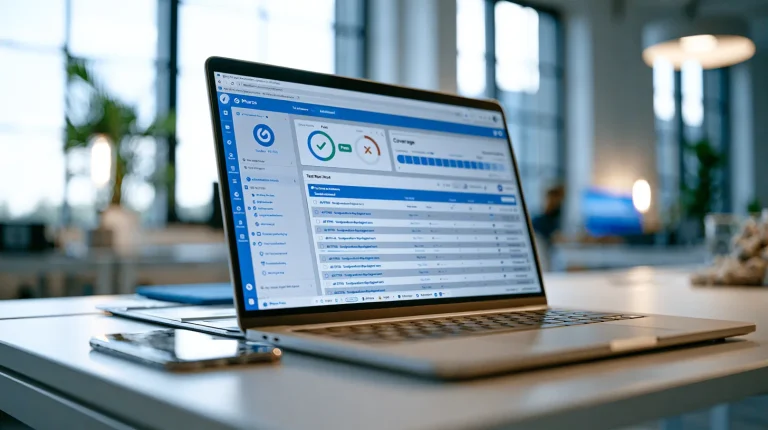
Pharos Production collaborated with a taxi aggregator platform to develop a high-load ride-hailing application that connects passengers and drivers in real time. This platform consolidates various fleets and independent drivers into a single system, ensuring quick ride matching, live tracking and transparent pricing. Built on a cloud-native infrastructure, the solution offers low-latency interactions, reliable trip processing and scalability for operations at the city and regional levels.
Reviewed by Dr. Dmytro Nasyrov, Founder and CTO
Security Testing Services
- 90+ engineers
- 28 industries
- 13+ years in business
Pharos Production delivers security engineering services - threat modeling, SAST, DAST, penetration testing and incident response - aligned to NIST CSF, OWASP ASVS and MITRE ATT&CK. The team embeds security across the development lifecycle, from architecture review and code scanning to remediation and monitoring.
What is security testing?
Authoritative citations 6 sources
-
Fortune Business Insights
Penetration testing market sizing, segmentation by testing type, deployment and end-use industry
fortunebusinessinsights.com 2024
-
NIST
SP 800-115 Technical Guide to Information Security Testing and Assessment defines review, target identification, vulnerability validation and penetration testing techniques
csrc.nist.gov 2008
-
OWASP
Web Security Testing Guide (WSTG) provides a comprehensive open methodology for testing web application and web service security
owasp.org 2024
-
OWASP
Top 10 catalogues the most critical web application security risks, used as the baseline scope for most gray-box engagements
owasp.org 2021
-
FIRST.org
Common Vulnerability Scoring System (CVSS) v4.0 specification defines the severity scoring standard used across our findings reports
first.org 2023
-
Immunefi
Crypto losses reporting tracks smart contract exploit categories and dollar losses across DeFi, including reentrancy and access-control classes
immunefi.com 2024
- Continuous SIEM, EDR or 24x7 monitoring - that is operational cybersecurity, not a testing engagement (see Cybersecurity Services)
- Compliance certification issuance - our reports feed a SOC 2, ISO 27001 or PCI DSS audit, accredited bodies issue the certificate
- Bug bounty program operation - we run structured, scoped assessments with a fixed timeline, not an open-ended public bounty
- Testing where the client is unwilling to share any source access - a pure black-box engagement finds materially less in the same budget

Gray-box penetration testing vs automated scanning: which do you actually need?
Automated SAST/DAST scanning is fast, cheap and catches the mechanical issues - injection patterns, outdated dependencies, missing headers - at every commit. Gray-box manual testing is slower and costs more but is the only approach that reliably finds business-logic flaws, authentication bypass and multi-step exploit chains a scanner has no concept of. Per NIST SP 800-115, a mature testing program layers both: continuous automated scanning in CI plus periodic manual gray-box engagements at major releases.
| Factor | Gray-box manual test | Automated SAST/DAST scan |
|---|---|---|
| Business-logic flaws | Found - a human tester chains steps a scanner has no concept of | Missed - scanners test patterns, not business workflows |
| Authentication/IDOR | Found - testers use real role credentials to probe access boundaries | Usually missed without valid session tokens configured |
| Known CVEs and patterns | Covered but not the focus - manual time is spent on what scanners cannot find | Comprehensive - this is exactly what scanners are built for |
| Cadence | Periodic: kickoff, major releases, pre-launch, compliance milestones | Continuous: every commit or pull request in CI |
| Cost | $10,000-$35,000 per gray-box engagement | $6,000-$20,000 one-time CI setup, low marginal cost after |
| Output | CVSS-scored report with proof-of-concept and reproduction steps | Findings list flagged at commit time, routed to the owning engineer |
| When to use which | Pre-launch, post-major-release, compliance evidence, after an incident | Every day, every commit, as the first line of defense |
Security testing at Pharos Production at a glance
- Methodology: Gray-box by default: partial source access, architecture diagrams and test credentials for every engagement
- Smart contract audits: Slither, Mythril and Foundry fuzzing plus manual review; reentrancy and access-control classes are the most common findings
- Tooling: Semgrep, CodeQL, Burp Suite Pro, OWASP ZAP, Slither, Mythril, Foundry, Echidna
- Coverage: Web and API penetration tests, mobile app tests, smart contract audits, SAST/DAST CI baselines, threat modeling sessions
- Pricing: Threat model session from $3,000; gray-box web/API test $10,000-$35,000; smart contract audit $7,500-$22,000; SAST/DAST CI baseline $6,000-$20,000
- Timeline: Threat model 3-5 days; SAST/DAST baseline 1-2 weeks; gray-box pen test 2-4 weeks; smart contract audit 1-3 weeks
- Remediation SLA: 30-day fix window from report delivery, one retest pass included at no extra cost
- Severity scoring: Every finding scored against CVSS so engineering and leadership read the same risk language
Our Software Development Expertise
Our team of 90+ engineers covers the full development stack, from Solidity smart contracts and React front-ends to Kubernetes infrastructure and automated QA pipelines. Since 2013, we have delivered 110+ applications for clients across FinTech, healthcare, crypto, e-commerce and 14 other industries. Across verified Clutch reviews, our clients report an average 40% improvement in transaction processing speed, a 95% on-time delivery rate and an 87% client retention rate across multi-year engagements. Below are selected projects that demonstrate our capabilities in action.
-
-
Pharos Production has partnered with Sagas to create a location-aware social platform that enables users to capture, publish and explore geo-located timelapses over time. This system combines real-time data ingestion, large-scale media processing and map-centric discovery to transform physical locations into dynamic digital stories. Leveraging cloud-native infrastructure and event-driven architecture, Sagas allows users to document urban changes, natural evolution and personal moments tied to specific places. The result is a scalable social network where time and location are central to content discovery.
-
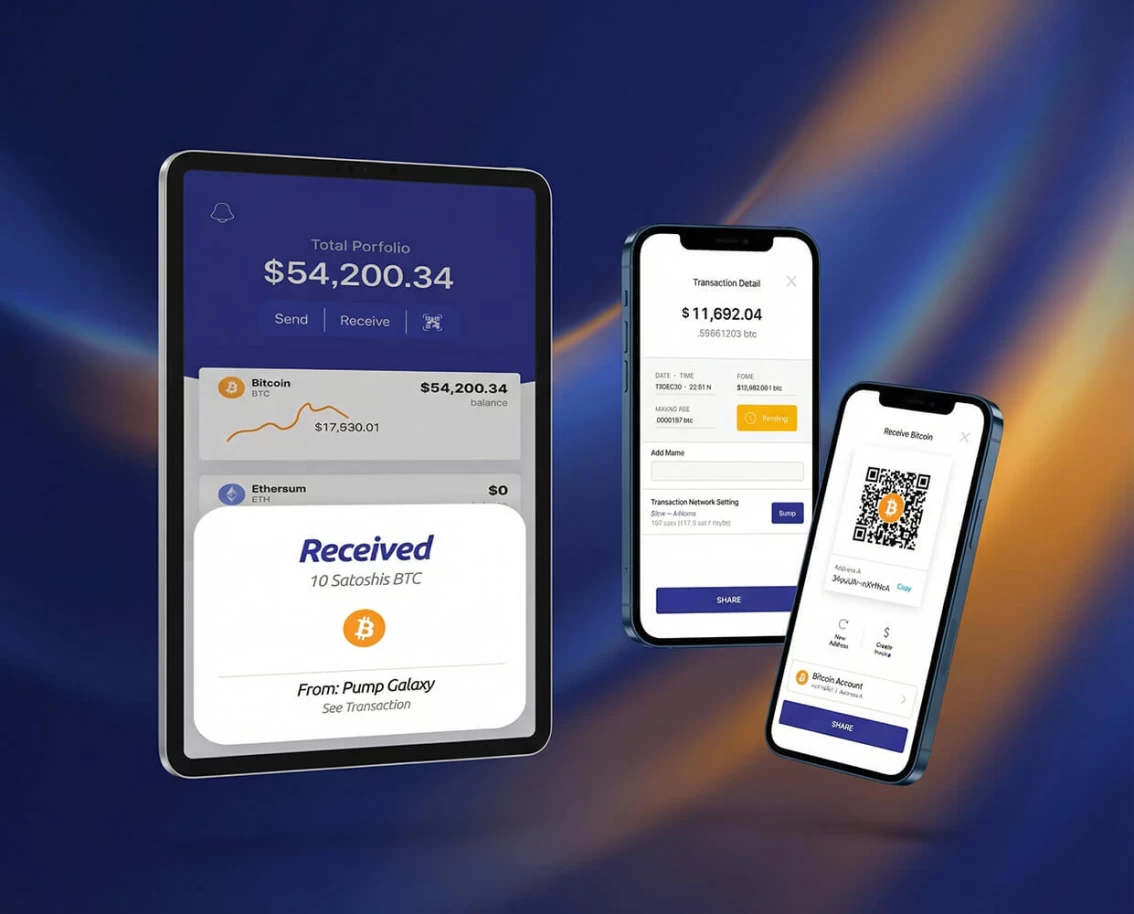
Pharos Production has partnered with PumpTap to develop a secure, high-performance crypto wallet tailored for everyday Web3 interactions. PumpTap lets users store, send and manage digital assets across multiple blockchains through a simple, intuitive interface. Built on a scalable, event-driven architecture, the wallet delivers real-time transaction updates, robust security and seamless integration with decentralized applications.
-
Pharos Production has partnered with Pulse to create a community-driven social network that connects users with local stores through challenges, engagement activities and real-world prizes. This platform transforms everyday local interactions into interactive experiences, enabling users to earn rewards from participating merchants. Built on a scalable, event-driven architecture, Pulse facilitates real-time interactions between users and businesses and supports rapid growth across cities and regions.
-
Pharos Production partnered with Pro Gambling to build a high-load sports forecasting platform focused on data-driven predictions, real-time analytics and scalable delivery of betting insights. The platform aggregates large volumes of sports data, odds movements and historical statistics to generate forecasts that help users make informed betting decisions. Built on a cloud-native, event-driven architecture, Pro Gambling delivers fast updates, transparent analytics and consistent performance during peak sports events.
-
Pharos Production has partnered with Pleenk to build a secure, scalable payments platform for fast transactions, fraud prevention and seamless integration with digital products. The platform processes payment flows in real time while maintaining high levels of security, transparency and reliability for both businesses and end users. Built on cloud-native infrastructure and an event-driven architecture, Pleenk provides a strong foundation for modern digital payments.
-
Pharos Production partnered with NoMoreBets to develop a worldwide one-tap live betting platform focused on speed and scalability. The system handles real-time odds and instant bets effortlessly. The result is a smooth, engaging betting experience that increased player retention, reduced drop-offs during live matches and positioned NoMoreBets for global growth since 2022.
-
Pharos Production partnered with Nextcheck to replace outdated, manual onboarding with a secure, automated KYC/AML platform. Built on AWS, Kubernetes, Istio, Elixir, RabbitMQ, PostgreSQL and NextJS, the platform provides real-time biometric and document verification, risk assessment and compliance reporting. Since 2019, Nextcheck has reduced onboarding time by 60%, cut manual labor by 70% and expanded to support thousands of checks at once. Today, it powers global banks, FinTechs and crypto firms with a cloud-native, regulation-ready, growth-oriented compliance platform.
About the founder and CTO
Founder and CTO Pharos Production
I design and build reliable software solutions - from lightweight apps to high-load distributed systems and blockchain platforms.
PhD in Artificial Intelligence, MSc in Computer Science (with honors), MSc in Electronics & Precision Mechanics.
-
13 years in architecture of great software solutions tailored to customer needs for startups and enterprises
-
23 years of practical enterprise customized software production experience
-
Lecturer at the National Kyiv Polytechnic University
-
Doctor of Philosophy in Artificial Intelligence
-
Master’s degree in Computer Science, completed with excellence
-
Master’s degree in Electronics and precision mechanics engineering
Pharos Gray-Box Testing Protocol
The Pharos Gray-Box Testing Protocol is our four-step engagement cycle: Scope and Threat Model, Static and Dynamic Analysis, Manual Exploitation, and Remediation and Retest.
-
1
Scope and Threat Model
2-5 daysmaps assets, trust boundaries and attacker goals against the OWASP threat modeling process before a single test case is written, so effort concentrates on what actually matters to the business
Artifacts:- asset inventory
- attack surface diagram
- test plan scoped to the <a href="https://owasp
-
2
Static and Dynamic Analysis
2-5 daysruns SAST against the shared source (Semgrep, CodeQL) and DAST against a running instance (Burp Suite Pro, OWASP ZAP), plus Slither, Mythril and Foundry fuzzing for smart contracts, to clear the mechanical findings before human time is spent
Artifacts:- tool findings baseline
- false-positive triage
- coverage map
-
3
Manual Exploitation
1-3 weeksis where a human tester chains logic flaws, business-logic abuse, authentication bypass and access-control gaps that no scanner catches, validated against the CVSS standard for severity
Artifacts:- proof-of-concept exploits
- CVSS-scored findings
- exploit chains
-
4
Remediation and Retest
30 dayshands engineers a fix-ready report with reproduction steps and compensating controls, then re-runs the exact test cases that failed
Artifacts:- retest report
- before/after CVSS deltas
- closure sign-off
The protocol is named because gray-box access is what separates a report that finds real risk from a scan that finds what is already public.
“A test that never sees the source code is a test that misses the bug hiding behind an access-control check three functions deep. Gray-box is not a compromise, it is what an actual insider threat looks like.”
-
Phase 01 / 04 Paid Discovery
2-4 weeks- Technical validation
- Architecture proposal
- Scope refined estimate
-
Phase 02 / 04 Iterative Build
2-week sprints- Working demos every sprint
- CTO review at milestones
- ADRs documented
-
Phase 03 / 04 Production Readiness
- Monitoring and alerting
- Security audit Pen test
- Runbooks and rollback
-
Phase 04 / 04 Support
Ongoing- Security patches
- Performance tuning
- 4h SLA response
Pharos Verified Delivery applied to 110+ production applications since 2013
Real client transformations
Anonymized before/after snapshots from production projects. Metrics measured against client-reported pre-engagement baselines.
Pre-audit staking contract allowed a user to re-enter the withdraw function before internal balances updated. Static analysis with Slither flagged the pattern; manual review confirmed a working exploit path.
Reentrancy fixed with a checks-effects-interactions rewrite and a permanent regression test. Contract re-audited clean and deployed with $6.4 million TVL across 10 months without incident.
Slither flagged the reentrant call pattern in under 4 minutes of automated analysis; the manual review pass then built a working proof-of-concept exploit to confirm severity before writing the finding, so the client engineering team could reproduce and verify the fix themselves.
Patient-scheduling API had passed an internal code review with no findings. No external testing had been performed before a planned public launch.
Gray-box test found an IDOR chain exposing patient records across 3 endpoints plus 2 high-severity authorization gaps. All fixed inside the 30-day remediation window; retest confirmed closure.
The IDOR chain only surfaced because we had a test account with real role permissions - a black-box scan without credentials would have stopped at the login wall. Fixes shipped with a shared authorization middleware pattern the team now applies to every new endpoint.
No automated security testing in CI. Each release relied on a developer manually remembering to check for common issues. Two prior incidents traced to dependencies with known CVEs.
Semgrep and CodeQL wired into every pull request, OWASP ZAP baseline scan on every staging deploy. Findings now caught before merge, zero dependency-CVE incidents in the 9 months since rollout.
Rules were scoped to the client codebase to cut noise from generic default rulesets, and findings route to the owning engineer through the existing pull-request review flow instead of a separate security dashboard nobody checks.
Client names anonymized under NDA. Full case studies at /cases/.
When security testing is not the right spend
We decline roughly 30% of RFPs we receive. Forcing a bad fit costs both sides 3-6 months and damages outcomes. Here is how we think about scope:
- Pre-MVP products with no live users and no external attack surface yet
- Requests for a "clean report" for marketing without intent to fix findings
- Budget that only covers a scan, not the engineer time to remediate what it finds
- Ongoing monitoring or incident-response needs - that belongs with Cybersecurity Services, not a scoped test
A $35,000 penetration test on a pre-revenue MVP is usually the wrong spend; a threat-model session for a few thousand dollars often catches the same architectural risk before code is written. We scope based on what is actually at stake - user data volume, transaction value, regulatory exposure - and recommend the depth that matches it, not the most expensive package we sell.
Read before you commit
30+ Pharos smart contract audits benchmarked: cost by project type, finding severity distribution and time-to-remediation data.
- A gray-box test covers the scope agreed at kickoff. New code shipped after the report is delivered, a new third-party dependency or a fresh CVE can introduce risk the report never saw. Retesting at each major release, not a single annual test, is the practical posture.
- CVSS severity scores describe technical impact, not business impact. A medium-CVSS finding on a system holding regulated data can carry more real-world risk than a high-CVSS finding on an internal tool with no external exposure - we contextualize both in every report.
- Smart contract audits reduce but do not eliminate exploit risk. Immunefi crypto-loss reporting shows exploited contracts that had passed a prior audit, usually because the exploited code path was added or changed after the audit scope closed.
- Pharos security testing does not replace compliance attestation. SOC 2 reports are issued by AICPA-licensed CPA firms; PCI DSS reports of compliance are issued by PCI-SSC-registered QSA firms; ISO 27001 certificates are issued by accredited certification bodies. Our reports are evidence those auditors can use, not a substitute for their signoff.
- A penetration test finding a low count of vulnerabilities is not proof of a secure system - it can also reflect a narrow scope, limited time budget or an engagement that excluded the riskiest components. Ask what was in scope, not just how many findings came back.
Reviews
Independent reviews from Clutch, GoodFirms and Google - verified client feedback on our software projects
Based on 9 verified client reviews
Platforms we work with
Trusted by Coinbase, Consensys, Core Scientific, MicroStrategy, Gate.io and 10+ more Web3 and enterprise platforms
16+ partnersOur 16 technology partners include:
- Consensys
- Gate Io
- Coinbase
- Ludo
- Core Scientific
- Debut Infotech
- Axoni
- Alchemy
- Starkware
- Mara Holdings
- MicroStrategy
- Nubank
- Okx
- Uniswap
- Riot
- Leeway Hertz
- Consensys
- Gate Io
- Coinbase
- Ludo
- Core Scientific
- Debut Infotech
- Axoni
- Alchemy
- Starkware
- Mara Holdings
- MicroStrategy
- Nubank
- Okx
- Uniswap
- Riot
- Leeway Hertz
Reviewed by Dmytro Nasyrov
Founder and CTO
23+ years in custom software development. Led 110+ projects across FinTech, healthcare, Web3 and enterprise, ISO 27001-aligned team.
Choose your cooperation model
Pharos Production offers three project models, MVP, Full-fledged Production and Full-cycle Development, priced from $10,000 to $80,000. An MVP prototype takes about 3 months.
Core software architecture, initial UI/UX, working prototype in 3 months
Software architecture, UI/UX, customized software development, manual and automated testing, cloud deployment
Comprehensive software architecture and documentation, UI/UX design layouts, UI kit, clickable prototypes, cloud deployment, continuous integration, as well as automated monitoring and notifications.
Prices vary based on project scope, complexity, timeline and requirements. Hourly rates range from $35 to $75 depending on role and seniority. Contact us for a personalized estimate.
Interaction models for staff augmentation, dedicated teams and outsourcing
Request staff augmentation
Need extra hands on your software project? Our developers can jump in at any stage - from architecture to auditing - and integrate seamlessly with your team to fill any technical gaps.
Hire dedicated experts
Whether you’re building from scratch or scaling fast, our engineers are ready to step in. You stay in control, and we handle the code.
Outsource your project
From first line to final audit, we handle the entire development process. We will deliver secure, production-ready software, while you can focus on your business.
| Model | Best for | Team setup | Budget range |
|---|---|---|---|
| Staff Augmentation | Existing teams needing extra engineers at any project stage | 1-2 weeks | From $5,000/month |
| Dedicated Team Popular | Long-term projects requiring full ownership and control | 2-4 weeks | From $15,000/month |
| Project Outsourcing | Full-cycle development from idea to production launch | 1-2 weeks | $10,000-$80,000+ |
Technologies, tools and frameworks we use
Our engineers work with 187+ technologies across blockchain, backend, frontend, mobile and DevOps - chosen for production reliability and performance.
Our engineers work with 187+ technologies across 10 categories: Frameworks, AI, Blockchains, DevOps, Clouds, Databases, Brokers, Tests, Programming, UI/UX.
- Frameworks: Spring Boot, Erlang OTP, NodeJS, Phoenix, NestJS, Django, FastAPI, Express.js, React, Next.JS, Svelte, Angular, Vue.js, Remix, Astro, Nuxt.js, iOS, Android, Flutter, React Native, Capacitors, Ionic, Swift, Kotlin, Java, Dart
- AI: OpenAI GPT, Anthropic Claude, Google Gemini, Meta Llama, Mistral AI, Cohere, Ollama, xAI Grok, LangChain, LangGraph, CrewAI, AutoGen, Hugging Face, PyTorch, TensorFlow, scikit-learn, LlamaIndex, Keras, XGBoost, LightGBM, OpenCV, spaCy, ONNX Runtime, Pinecone, Weaviate, Qdrant, Chroma, pgvector, Milvus, FAISS, MLflow, Weights & Biases, DVC, Kubeflow, AWS SageMaker, Azure ML, Google Vertex AI, NVIDIA Triton, Airflow, Ray Serve, vLLM, OpenAI Agents SDK, Claude MCP, Semantic Kernel, Haystack
- Blockchains: Ethereum, TON, Corda, Tron, Hedera, Stellar, Consensys GoQuorum, Solana, Arbitrum, Binance Smart Chain (BSC), Sei, Celo, Hyperledger, MultiversX, IOTA, Polkadot, Aptos, Neo, Flow, Algorand, Avalanche, EOS, Optimism, Polygon, Cosmos, Sui, Tezos, Ontology, Fantom, NEAR Protocol, VeChain, Base, IPFS, Amazon Managed Blockchain, Amazon QLDB, IBM Blockchain, Oracle Blockchain
- DevOps: Kubernetes, Terraform, Docker, Istio, Prometheus, Grafana, Jenkins, ArgoCD, Ansible, GitHub Actions, GitLab CI, Pulumi, Datadog, New Relic, Vault
- Clouds: Amazon Web Services, Azure, Google Cloud, Cloudflare, Vercel, DigitalOcean
- Databases: PostgreSQL, MySQL MariaDB, Redis, Cassandra, Neo4J, MongoDB, Elasticsearch, Solr, Ignite, ClickHouse, TimescaleDB, DynamoDB, Supabase, CockroachDB, ScyllaDB
- Brokers: Kafka, RabbitMQ, Flink, Apache Pulsar, Amazon SQS, Amazon SNS, NATS
- Tests: Postman, Appium, Cucumber, Selenium, JMeter, Cypress
- Programming: Solidity, FunC, Rust, GoLang, Elixir, Erlang, C++, Java, JavaScript, TypeScript, Scala, Python, C#, .NET, PHP, Ruby, Dart, SQL
- UI/UX: Figma, Zeplin, InVision, Sketch, Miro, Marvel, Balsamiq, Photoshop, Illustrator, XD, After Effects, Corel Draw
AI and Machine Learning
LLM Providers 8
AI Frameworks 15
Vector Databases 7
MLOps and Infrastructure 11
AI Agent Tools 4
Blockchains
Private and Public Blockchains 33
Cloud Blockchain Solutions 4
DevOps
DevOps Tools 15
Clouds
Clouds 6
Databases
Databases 15
Brokers
Event and Message Brokers 7
Tests
Test Automation Tools 6
UI/UX
UI/UX Design Tools 12
An approach to the development cycle
-
Team Assembly
Our company starts and assembles an entire project specialists with the perfect blend of skills and experience to start the work.
-
MVP
We’ll design, build and launch your MVP, ensuring it meets the core requirements of your software solution.
-
Production
We’ll create a complete software solution that is custom-made to meet your exact specifications.
-
Ongoing
Continuous Support
Our company will be right there with you, keeping your software solution running smoothly, fixing issues and rolling out updates.
Security Services Glossary 7
- Attack Surface
- The total set of entry points an attacker can use to interact with a system, including web endpoints, APIs, mobile app interfaces, cloud storage buckets and on-chain contract function selectors.
- CVSS Score
- The Common Vulnerability Scoring System numeric rating (0-10) that quantifies the severity of a security finding based on exploitability, impact and scope factors, used to prioritize remediation effort.
- Reentrancy
- A smart contract vulnerability where an external contract call is made before internal state is updated, allowing the callee to recursively re-enter the calling function and drain funds before the balance is decremented.
- Slither
- A Solidity static analysis framework that detects vulnerability patterns in smart contracts including reentrancy, uninitialized storage pointers and dangerous delegatecall usage without executing the bytecode.
- Threat Modeling
- A structured exercise that identifies assets, trust boundaries, data flows and likely attacker goals to produce a prioritized list of security controls before implementation begins, using frameworks such as STRIDE or PASTA.
- Gray-Box Testing
- A penetration testing approach where the tester has partial knowledge of the target system - typically valid credentials and API documentation but not source code - simulating an authenticated insider threat or compromised account.
- SAST (Static Application Security Testing)
- Automated analysis of source code or compiled bytecode for security defects without running the program, used during CI pipeline scans to catch vulnerabilities such as SQL injection sinks and hardcoded credentials early in development.
Frequently asked questions about security engineering
Type to filter questions and answers. Use Topic to narrow the list.
Showing all 6
No matches
Try a different keyword, change the topic, or clear filters
-
Gray-box testing gives the tester partial knowledge - architecture diagrams, a low-privilege test account, sometimes source access - instead of starting from zero (black-box) or full source and credentials (white-box). It mirrors what a real attacker with some reconnaissance, or a malicious insider, would actually have, so findings reflect realistic risk rather than what a blind scan happens to stumble on. We default to it because in our experience it finds materially more high-severity issues per dollar than pure black-box testing.
-
SAST (static analysis) scans source code without running it, catching issues like injection patterns, hardcoded secrets and insecure dependencies early, directly in the pull request. DAST (dynamic analysis) tests a running application from the outside, the way an attacker would, catching runtime issues like misconfigurations and authentication flaws that static analysis cannot see. We run both: Semgrep and CodeQL for SAST, Burp Suite Pro and OWASP ZAP for DAST.
-
From the day we deliver the findings report, the client team has 30 days to fix what they choose to fix, then one retest pass is included at no extra cost to confirm closure. We do not charge separately for verifying the fixes we found in the first place.
Findings the client accepts as risk (rather than fixing) are documented as such in the closure summary, not silently dropped.
-
CVSS (Common Vulnerability Scoring System) is an industry-standard 0-10 severity scale maintained by FIRST.org that scores exploitability and impact so engineering and leadership are reading the same risk language instead of a subjective “bad/really bad” label. Every finding in a Pharos report carries a CVSS score plus our own note on business context, since a technically medium-severity bug on a system holding regulated data can matter more than a high-severity bug on an internal tool.
-
Smart contract audits start with automated static analysis (Slither, Mythril) to catch known vulnerability classes fast, then move to Foundry invariant fuzzing that runs millions of randomized transaction sequences to surface unexpected state transitions, then a manual review pass reading every function against the intended economic design. Reentrancy, access-control gaps and oracle manipulation are the classes we see most often, consistent with Immunefi crypto-loss data.
-
When there is no live attack surface to test (pre-MVP, no users yet), when the budget only covers the test and not the engineer time to fix what it finds, or when the ask is really for a clean-looking report rather than an honest one. In those cases we recommend a cheaper threat-model session, or we say wait until there is something real to test.
Sources and references
Testing methodologies, severity-scoring standards and exploit-data sources referenced throughout this guide.
- OWASP Web Security Testing Guide owasp.org
- OWASP Top 10 owasp.org
- NIST SP 800-115 csrc.nist.gov
- FIRST.org CVSS first.org
- Immunefi Research immunefi.com
- Slither Static Analyzer github.com
Published record
Published Pharos research
Technical articles, comparison guides and methodology deep-dives we write from our own delivery experience.
- State of AI Development Costs 2026
- AI Agent Frameworks Comparison 2026
- Build vs Buy AI Agent: 2026 Decision Framework
- RAG vs Fine-Tuning: When to Use Each Approach
- How to Choose an AI Development Company
- State of Smart Contract Audits 2026
- State of Production AI Engineering 2026
- State of FinTech Compliance Cost 2026
- State of Custom Software TCO 2026
- State of AppSec 2026
- State of Tech Due Diligence 2026
- How to Choose a Blockchain Development Company
- How to Choose a FinTech Development Company
- FinTech Compliance Checklist 2026: PCI DSS, SOC 2, GDPR and Beyond
- AI in FinTech: Transforming Financial Services in 2026
- Software Development Cost Guide: What to Expect in 2026
- How to Choose a Software Development Company in 2026
- Cybersecurity Essentials for Startups and SMBs in 2026
- FinTech Trends 2026: How Top FinTech Trends are Shaping Digital Banking
Security engagement cost estimator
Estimate cost, Year-1 ops, time-to-deliverable and required expert headcount for pentest, red-team, SOC 2, ISO 27001, PCI-DSS, IR retainer and MDR engagements. Directional only.
Last reviewed . Engagement ranges reflect pricing posts from Trail of Bits, NCC Group, Cure53, Bishop Fox, AICPA SOC 2 cost surveys and ENISA Threat Landscape. See disclaimer below.
Your business results matter
Achieve them with minimized risk through our bespoke innovation capabilities
What happens next?
-
Contact us
Contact us today to discuss your project. We’re ready to review your request promptly and guide you on the best next steps for collaboration
Same day -
NDA
We’re committed to keeping your information confidential, so we’ll sign a Non-Disclosure Agreement
1 day -
Plan the Goals
After we chat about your goals and needs, we’ll craft a comprehensive proposal detailing the project scope, team, timeline and budget
3-5 days -
Finalize the Details
Let’s connect on Google Meet to go through the proposal and confirm all the details together!

1-2 days -
Sign the Contract

As soon as the contract is signed, our dedicated team will jump into action on your project!
Same day
Our offices
Headquarters in Las Vegas, Nevada. Engineering office in Kyiv, Ukraine.
We also work with clients through dedicated local teams in Las Vegas, New York and San Francisco.