Pharos Production collaborated with a taxi aggregator platform to develop a high-load ride-hailing application that connects passengers and drivers in real time. This platform consolidates various fleets and independent drivers into a single system, ensuring quick ride matching, live tracking and transparent pricing. Built on a cloud-native infrastructure, the solution offers low-latency interactions, reliable trip processing and scalability for operations at the city and regional levels.
Reviewed by Dr. Dmytro Nasyrov, Founder and CTO • Last reviewed August 20, 2026
UX/UI Design Services
UX/UI design services are the design of how a digital product works and looks: user research, information architecture, interaction flows (UX) and the visual interface, components and design system (UI).
- 90+ engineers
- 28 industries
- 13+ years in business
282 published client reviews across 3 platforms. Counts are summed; reviewers may appear in more than one source.
Profiles checked . Glassdoor: 46 employee reviews, 5.0/5, reported separately.
Case Study
See the products we built and the engineering work involved. Each case describes its scope and delivery context.
-
-
Pharos developed a B2B platform that brings keyword research and search visibility analysis together with search data APIs, public-web collection and access through AI assistants. Our responsibility covered the full product.
-
Pharos Production has partnered with Sagas to create a location-aware social platform that enables users to capture, publish and explore geo-located timelapses over time. This system combines real-time data ingestion, large-scale media processing and map-centric discovery to transform physical locations into dynamic digital stories. Leveraging cloud-native infrastructure and event-driven architecture, Sagas allows users to document urban changes, natural evolution and personal moments tied to specific places. The result is a scalable social network where time and location are central to content discovery.
Practice led by Dmytro Nasyrov
Founder and CTO
23+ years in custom software development. Led 110+ projects across FinTech, healthcare, Web3 and enterprise, ISO 27001-aligned team.
What is UX/UI design?
- One-off marketing landing pages (use a designer plus Webflow or Framer)
- Logo or brand identity in isolation (use a branding studio)
- Pixel polish on a product whose core problem is not yet validated (do discovery first)
- Design-only handoffs where no team will build the result the way it was drawn
UX/UI design at Pharos at a glance
- Model: Design plus build: UI/UX designers work in the same team as front-end and mobile engineers
- Platforms: Web applications, mobile apps for iOS and Android and cross-platform products
- Tooling: Figma for design and prototyping; code component libraries (React, Storybook) as the shared source of truth
- Design system: Reusable components and design tokens kept in sync with the front-end code
- Accessibility: WCAG 2.2 AA designed and built in: contrast, focus order, keyboard and screen-reader support
- Deliverables: Research findings, flows, wireframes, high-fidelity UI, a design system and the implemented front-end
Design-only agency vs design plus build: which should you buy?
| Factor | Design-only agency (Figma handoff) | Pharos design plus build |
|---|---|---|
| Handoff | Figma files handed to a separate dev team | Same team designs and implements |
| Fidelity in production | Drift between design and shipped UI | Pixel-accurate, design system enforced in code |
| Engineering constraints | Often ignored until build | Designed in from the start (performance, API, platform) |
| Accessibility | Frequently a later audit | WCAG 2.2 AA designed and built in |
| When to buy | You have a strong in-house engineering team | You want design and a shipped product from one team |
How we run a UX/UI design engagement
Pharos Verified Delivery applied to design: every screen ties to a validated flow, a real component in the design system and the engineering constraints it ships under. Designs are tested with users before build and implemented by the same team that drew them.
-
Phase 01 / 04 Paid Discovery
Week 0
2-4 weeks
- Technical validation
- Architecture proposal
- Scope refined estimate
82% on-schedule with discovery
-
Phase 02 / 04 Iterative Build
Week 2-4
2-week sprints
- Working demos every sprint
- CTO review at milestones
- ADRs documented
Transparent progress tracking
-
Phase 03 / 04 Production Readiness
Week 8-24
- Monitoring and alerting
- Security audit Pen test
- Runbooks and rollback
ISO 27001 aligned
-
Phase 04 / 04 Support
Launch day
Ongoing
In progress
- Security patches
- Performance tuning
- 4h SLA response
Continuous improvement
Pharos Verified Delivery applied to 110+ production applications since 2013
When UX/UI design is a waste of money
If the core problem is not validated, polishing the interface is premature. We tell clients to skip a design engagement when:
- The product has no users yet and no validated problem (do discovery and user interviews first)
- You need a single marketing page, not a product (use a designer plus a no-code tool)
- The real blocker is engineering or data, not the interface
- There is no team or budget to build whatever is designed
Before a full UX/UI engagement, run a short usability review of the current product or a few user interviews. If the data shows the problem is comprehension and flow rather than visuals, fix the structure first. A beautiful UI on a broken flow is a polished product nobody can use.
UX/UI design outlook 2026-2027
Three shifts are reshaping product design.
-
Design systems become the unit of work
Teams increasingly buy a component library and tokens rather than one-off screens, because the system is what keeps a product consistent and fast to extend as it grows.
-
Accessibility moves from audit to requirement
WCAG 2.2 AA is becoming a procurement and legal baseline rather than a nice-to-have, so contrast, focus and screen-reader support are designed in from the first screen.
-
Design and engineering converge
The handoff between a design agency and a separate dev shop is the main source of drift and rework. Buyers favour teams that design and build together so the shipped product matches the design.
Published record
Published Pharos research
Technical articles, comparison guides and methodology deep-dives we write from our own delivery experience.
- State of AI Development Costs 2026
- AI Agent Frameworks Comparison 2026
- Build vs Buy AI Agent: 2026 Decision Framework
- RAG vs Fine-Tuning: When to Use Each Approach
- How to Choose an AI Development Company
- State of Smart Contract Audits 2026
- State of Production AI Engineering 2026
- State of FinTech Compliance Cost 2026
- State of Custom Software TCO 2026
- State of AppSec 2026
- State of Tech Due Diligence 2026
- State of QA and Software Testing 2026
- State of DevOps and Cloud 2026
- How to Choose a Blockchain Development Company
- How to Choose a FinTech Development Company
- FinTech Compliance Checklist 2026: PCI DSS, SOC 2, GDPR and Beyond
- AI in FinTech: Transforming Financial Services in 2026
- Software Development Cost Guide: What to Expect in 2026
- How to Choose a Software Development Company in 2026
- Cybersecurity Essentials for Startups and SMBs in 2026
- FinTech Trends 2026: How Top FinTech Trends are Shaping Digital Banking
Platforms we work with
Technology platforms and company references shown for identification. A logo does not establish a commercial partnership or endorsement.
16 references-
Consensys
-
Gate.io
-
Coinbase
-
Ludo
-
Core Scientific
-
Debut Infotech
-
Axoni
-
Alchemy
-
StarkWare
-
MARA Holdings
-
MicroStrategy
-
Nubank
-
OKX
-
Uniswap
-
Riot
-
LeewayHertz
About the founder and CTO
Founder and CTO Pharos Production
I design and build reliable software solutions - from lightweight apps to high-load distributed systems and blockchain platforms.
PhD in Artificial Intelligence, MSc in Computer Science (with honors), MSc in Electronics & Precision Mechanics.
-
13 years in architecture of great software solutions tailored to customer needs for startups and enterprises
-
23 years of practical enterprise customized software production experience
-
Lecturer at the National Kyiv Polytechnic University
-
Doctor of Philosophy in Artificial Intelligence
-
Master's degree in Computer Science, completed with excellence
-
Master's degree in Electronics and precision mechanics engineering
Choose your project scope
Pharos Production scopes engagements in three tiers, Proof of concept, MVP build and Enterprise platform, with typical budgets from $10,000 to $500,000+ depending on scope and complexity.
Proof of concept
Focused validation of your riskiest technical assumption with a working spike and a clear build-or-pivot recommendation.
MVP build
Production-ready first version with core flows, real backend and the integrations to onboard first paying users.
Enterprise platform
Full-scale build with architecture, DevOps, QA, security and long-term evolution.
Prices vary based on project scope, complexity, timeline and requirements. Hourly rates range from $50 to $99 depending on role and seniority. Contact us for a personalized estimate.
Interaction models for staff augmentation, dedicated teams and outsourcing
Request staff augmentation
Need extra hands on your software project? Our developers can jump in at any stage - from architecture to auditing - and integrate seamlessly with your team to fill any technical gaps.
Hire dedicated experts
Whether you're building from scratch or scaling fast, our engineers are ready to step in. You stay in control, and we handle the code.
Outsource your project
From first line to final audit, we handle the entire development process. We will deliver secure, production-ready software, while you can focus on your business.
Technologies, tools and frameworks we use
We select the stack for your product, integrations and operating requirements.
UI/UX
UI/UX Design Tools 12
Partnerships and awards
Selected badges from Clutch, GoodFirms and The Manifest. Open the issuer profiles to review categories and dates.
An approach to the development cycle
-
Team Assembly
Our company starts and assembles an entire project specialists with the perfect blend of skills and experience to start the work.
-
MVP
We'll design, build and launch your MVP, ensuring it meets the core requirements of your software solution.
-
Production
We'll create a complete software solution that is custom-made to meet your exact specifications.
-
Continuous Support
Our company will be right there with you, keeping your software solution running smoothly, fixing issues and rolling out updates.
Design engineering insights

UX/UI Design Cost in 2026: Process, Pricing and Deliverables
UX/UI design cost in 2026 covering pricing by deliverable, engagement model, the UX versus UI split and how to reduce design cost without cutting quality.

European Accessibility Act Compliance
The European Accessibility Act never names WCAG or EN 301 549. This piece sorts a software company into the role that actually carries liability, and states plainly why the standard everyone cites carries no legal presumption here.

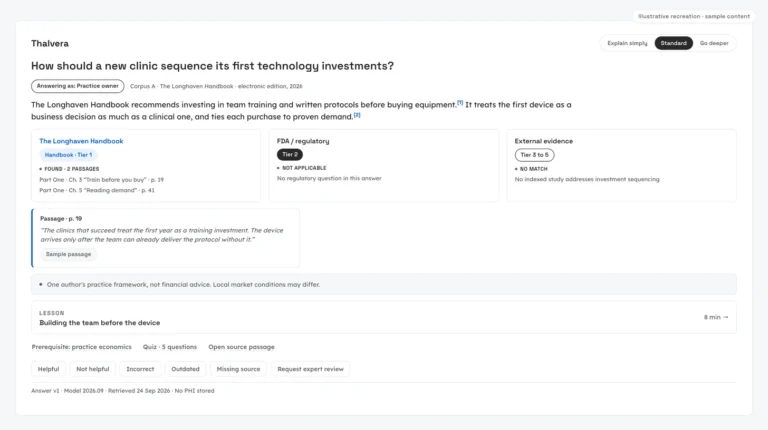
AI Citation UX for Aesthetic Medicine: Our Mockups Hallucinated Before the Model Did
Before any model wrote an answer, our own mockups had invented citations. We redesigned an aesthetic-medicine learning platform so that every claim cites a printed page and every gap in its knowledge becomes a designed screen.
UX/UI design glossary 8
- UX design
- User experience design: the research, information architecture and interaction flows that make a product useful, usable and easy to navigate.
- UI design
- User interface design: the visual layer of a product, including layout, typography, color, components, motion and interaction states.
- Design system
- A reusable library of UI components, design tokens, patterns and documentation that keeps a product visually and behaviorally consistent and speeds up design and development.
- Wireframe
- A low-fidelity layout that defines structure, content hierarchy and flow before visual design, used to validate a screen cheaply.
- Prototype
- A clickable, interactive model of a product used to test flows and usability with real users before engineering begins.
- Information architecture
- The structure and organization of a product's content and navigation so users can find what they need and understand where they are.
- Design tokens
- Named values for color, spacing, typography and other design decisions, shared between design tools and code so the interface stays consistent.
- WCAG 2.2 AA
- The Web Content Accessibility Guidelines level commonly targeted for compliance, covering contrast, keyboard access, focus and screen-reader support.
Frequently asked questions about UX/UI Design Services
Type to filter questions and answers. Use Topic to narrow the list.
Showing all 8
No matches
Try a different keyword, change the topic or clear filters
-
What do UX/UI design services include?
UX/UI design services cover UX research and discovery, information architecture, user flows and wireframes, high-fidelity UI design, design systems, prototyping and usability testing. At Pharos Production we also implement the design in front-end and mobile code, so UX/UI design and engineering ship together rather than as a handoff.
-
How much do UX/UI design services cost?
UX/UI design cost depends on scope and the number of flows and screens. A focused UX audit of an existing product is the typical entry point, a full product design engagement runs higher and ongoing design-system work is usually a retainer. We provide a fixed-price scope before any work begins, and design paired with build often costs less overall than a separate design agency plus a separate dev shop.
-
What is the difference between UX design and UI design?
UX design is how a product works: research, information architecture and flows that make it useful and easy to use. UI design is how it looks and responds: the visual interface, components, typography and interaction states. Both are needed, and Pharos delivers them together, anchored by a design system.
-
Do you design both web and mobile apps?
Yes. We design web applications, mobile apps for iOS and Android and cross-platform products.
Because our designers work alongside front-end and mobile engineers, the design respects platform conventions, performance budgets and the underlying API rather than ignoring them.
-
Do you build the design or only hand over Figma files?
We do both, and the design plus build model is our differentiator. The same team that designs your product implements it in React, Next.js, React Native or Flutter, pixel-accurate and accessible.
There is no lossy handoff between a design agency and a separate development team.
-
Do you create a design system?
Yes. We build reusable component libraries, design tokens and documentation, and keep them in sync with the front-end code. A design system keeps the interface consistent as the product grows and speeds up every later screen and feature.
-
What tools do you use for UX/UI design?
We design in Figma and validate with clickable prototypes and usability testing. Design systems are implemented as code component libraries (for example React with Storybook), so the design source of truth and the shipped product stay aligned.
-
Is accessibility included in your UX/UI design?
Yes. We design to WCAG 2.2 AA: color contrast, focus order, keyboard navigation and screen-reader support are part of the design and the build, not a later audit. Accessible products are easier to use for everyone and reduce legal and compliance risk.
The Pharos takeaway on UX/UI design
UX and UI are two jobs, and a product needs both, tied together by a design system. The Pharos approach validates flows before pixels, designs accessibility in and has the same team build the result, so design value survives contact with production.
Book a 30-minute product design call
Your business results matter
Achieve them with minimized risk through our bespoke innovation capabilities
What happens next?
-
Contact us
Contact us today to discuss your project. We're ready to review your request promptly and guide you on the best next steps for collaboration
Same day -
NDA
We're committed to keeping your information confidential, so we'll sign a Non-Disclosure Agreement
1 day -
Plan the Goals
After we chat about your goals and needs, we'll craft a comprehensive proposal detailing the project scope, team, timeline and budget
3-5 days -
Finalize the Details
Let's connect on Google Meet to go through the proposal and confirm all the details together!
1-2 days -
Sign the Contract
As soon as the contract is signed, our dedicated team will jump into action on your project!
Same day