
SEO Data Platform Development for Search and Web Intelligence
Pharos developed a B2B platform that brings keyword research and search visibility analysis together with search data APIs, public-web collection and access through AI assistants. Our responsibility covered the full product.
- Full product development Scope
- MarTech and Search Intelligence Industry
 5.0/5 · 108 reviews
 4.9/5 · 147 reviews
 5.0/5 · 27 reviews
282 published client reviews across 3 platforms. Counts are summed; reviewers may appear in more than one source.
Profiles checked . Glassdoor: 46 employee reviews, 5.0/5, reported separately.
Project overview
SEO teams use the web application to investigate rankings and site issues. Software teams request data through APIs. MCP clients bring supported research workflows into an AI assistant, while managed datasets serve teams with specific collection and delivery requirements.
The project combines SEO software development with the practical work of making search and web data available to different users. A ranking report, an API response and an assistant's research task each need an appropriate way to request work and understand the result.
| Project | Scope |
|---|---|
| Product category | B2B SaaS, SEO analytics and search intelligence |
| Pharos responsibility | Full product development |
| User interfaces | Web application, data APIs and MCP clients |
| Data workflows | Search results, keyword research, public-page collection and managed datasets |
| Audiences | SEO teams, agencies, software developers and research teams |
The product and its users
Search visibility changes with location and device. A domain can appear for a query in one market and be absent from the captured results elsewhere. Keyword demand adds another dimension, and a position alone does not explain which pages compete for that search.
The platform addresses these questions through related tools. An SEO specialist can move from keyword discovery to a tracking report, inspect a particular search result and investigate a page or link issue. An agency can organize work by campaign and return to reports for different websites. Developers can use search data in their own applications without working through the reporting interface.
Public-web acquisition extends the product beyond search results. It supports collection from public sources for product research, market analysis and datasets that feed other systems. Each workflow has its own source requirements and output format.
Our full-product scope brought these uses into the same product offering. It included the application experience and data interfaces, along with documentation and the account workflows surrounding them.
One platform across a web app, APIs and MCP
The web application gives people an interface for research and reporting. Users select a website or campaign, define a report and review its findings. Saved keyword lists help carry research into subsequent checks.
For software consumers, APIs expose search and keyword data through requests and result retrieval. Public-page collection provides another input when the information needed sits on a website rather than a search results page.
MCP adds access through an AI assistant. Supported tools let the assistant request search data or SEO reports and read public pages within the limits of the selected workflow. The MCP clients are offered in Beta.
Managed datasets provide a different delivery arrangement: sources, fields and refresh requirements are agreed around a particular use case. This gives teams a choice between interactive research, programmatic requests and an ongoing collection brief.
SEO research and monitoring workspace
-
Rank tracking across markets and devices
A rank tracking report starts with a defined target. Users can track a domain or page URL, supply keywords and choose the search engine, device and locations. Result depth determines how far the check looks into the captured results. From the overview, users can inspect improving or declining keywords, narrow the view to a location and open the available history for a search term. Report details retain the settings needed to interpret that view.
Recurring monitoring supports repeated checks. A user can select a schedule, change it later or disable an existing monitor. Returning to the same report gives the team a way to review changes without recreating its setup each time.
A missing position needs context. If a target is not found within the selected depth, the report does not establish that the entire website is absent from search. Comparing history also requires matching the engine, location and device.
-
Keyword discovery and reusable lists
Keyword research begins with a topic, a set of terms or a website. Users explore suggestions and compare available demand data for their selected market. Search volume trends help reveal changes over time, while CPC and bid information add advertising context. Useful terms can be saved as keyword lists for reuse across research and monitoring, with duplicate handling when terms are added. A shortlist can become the input for a ranking report or a closer inspection of the search results.
The distinction between metrics matters. Advertising competition describes advertiser activity; it does not measure organic ranking difficulty. Search volume is an estimate of demand in a market, rather than a forecast of visits to a particular website.
-
Competitor analysis and SERP snapshots
SEO competitor reports compare the domains appearing for selected searches across locations. They give teams a way to investigate where competitors overlap and where the result landscape differs between markets.
A SERP snapshot preserves a more specific view. It records the results captured for the selected query and settings, including available titles, URLs and snippets. Organic and paid views support different questions about visibility.
The competitor comparison and the snapshot serve distinct purposes. One helps locate a pattern across markets. The other lets a user examine the pages behind a particular search result.
-
On-page checks and broken links
OnSite Analysis provides page-level findings for mobile or desktop, including performance and technical SEO summaries. It helps a team identify issues to investigate on the submitted page.
Broken Links has a separate workflow. Users can check a page or run a bounded site crawl. Results connect the page containing a link with the checked destination, its response status and available link text. That connection tells a reviewer where a correction belongs.
Crawl depth and page limits define the reach of a site check. The resulting counts describe that collection, and a page analysis describes the page tested. These scopes remain relevant when a team turns the findings into a fix list.
-
Backlink intelligence
Backlink reports combine an overview with focused views of linking sites and pages. Users can inspect referring domains, anchor text and historical changes, then investigate new or lost links.
Target settings allow the analysis to focus on a domain or, for supported reports, a page URL. Subdomain settings and date filters help keep comparisons consistent. Separate reports expose the pages attracting links and domains sharing a backlink profile.
Where a score is unavailable, the report preserves that absence. A missing value does not become a zero score or a finding that a link profile is healthy.
Local visibility on a geographic grid
City-level tracking compares named locations. Local Heatmap answers a more granular question: how does search visibility vary around a particular point?
Users choose a geographic center and configure the grid and spacing. Each point represents a separate search location. The report combines these observations into a map while retaining access to the search results collected at an individual point.
Selecting a cell lets a reviewer investigate the results behind the displayed position. The accompanying table gives another way to compare locations, and the report summary shows the requested work before collection begins.
Organic website rankings and Google Local results are distinct modes. A local grid therefore needs an explicit search context. A map-based presentation alone does not make an organic domain position equivalent to visibility in the local pack.
This gives agencies and teams working across locations a route from an overall pattern to the underlying evidence. They can identify where a target appears, inspect competing pages and decide which locations deserve further investigation.
Search results and keyword data APIs
-
Location-aware requests and structured results
The search data API supports requests defined by query and market, with available controls for location, language and device. Supported search surfaces include organic and paid results as well as maps and other result features. Availability depends on the selected engine and request type.
Structured JSON lets an application work with returned records. Raw HTML is available for workflows that need the captured markup for their own processing. Keyword data requests provide another input for software that combines search demand with visibility analysis.
These interfaces support products and internal reporting systems that need to consume data directly. They also keep the collection request explicit: a country-wide query and a city-targeted mobile query are different observations.
-
Asynchronous work and result retrieval
The API exposes individual and batch request workflows. A request can create work whose result is retrieved using its identifier, allowing a consuming application to distinguish submission from completion.
That separation is important when data is not immediately ready. Retrieving an existing result continues the original workflow. Creating another request starts a different operation and may have different usage implications.
Realtime and asynchronous delivery options support different needs. The appropriate request mode depends on the consumer's timing requirements and the work being requested.
-
Developer documentation and onboarding
API documentation describes request parameters, examples and responses. An OpenAPI reference and playground help developers inspect the contract before connecting it to an application. The documentation also explains the request lifecycle, so an integration can distinguish a returned identifier from a finished dataset. Developers need both the shape of a result and the steps required to obtain it.
Public web data acquisition
Search results identify pages and summarize what a search engine presents. Some workflows need the page itself: a product offer, a business listing or a public document.
For pages whose content appears after the initial load, the public-web collection API supports JavaScript rendering. Location-aware routing supports collection where the market context affects what a source presents. Access remains dependent on the source and the supported collection setup.
The API offers HTML or Markdown output. HTML preserves markup for a consumer's own processing; Markdown provides page content for text-oriented workflows. A collection brief can define representative URLs and the required output before expanding the work. This supports research beyond the search results page, with public content available for comparison or delivery into another system and source requirements kept explicit.
MCP access for AI assistants
-
SEO and search research
The SEO and SERP MCP client brings supported search tasks into an AI conversation. An assistant can request search results, examine rankings and access keyword demand or SEO reports through the available tools. Domain WHOIS lookup provides a further source of domain information where returned data is available.
The assistant still needs a defined task. A ranking check depends on its target and market, just as a web application report does. Tool access changes how work is requested; the underlying search context continues to determine what the result means.
-
Public-page research
The Web Scraping MCP client supports retrieval from public pages, including supported pages that require JavaScript rendering. An assistant can use the returned text or HTML to examine a source and compare its contents with other information.
This is a bounded page-retrieval workflow. Its output contract differs from the collection API, so API formats and bulk collection capabilities cannot be assumed to apply to every MCP call.
Beta setup includes automatic installation enrollment without asking the user to enter a provider API key manually. Enrollment establishes access to the service; subsequent work remains subject to the applicable allowance and limits.
-
Pending results and repeated calls
The MCP workflows distinguish creating work from retrieving its result. Pending responses retain a job or report identifier and indicate the next retrieval action. The assistant can continue with that identifier instead of submitting the same task again.
A client timeout does not establish that server-side work stopped. Likewise, reusing completed data and requesting a fresh collection have different meanings. The reported state and retry guidance help the consumer decide what to do next.
Usage has its own context. Report admission units describe requested work, while provider credits and monetary prices refer to other parts of the service. The product documentation keeps these concepts separate.
Market intelligence and managed datasets
-
Competitors, channels and product evidence
Market intelligence connects search and public-web signals to a defined business question. A report can examine competitors and discovery channels, then investigate product and pricing evidence from relevant sources.
The output combines an executive interpretation with supporting records and proposed actions. Evidence can be marked as supported, missing or needing review, so an uncertain product match or incomplete price does not silently become a firm conclusion.
Channel visibility also needs a defined measure. The share of a collected search sample describes that sample. It is not a measurement of revenue or overall market share.
-
Datasets shaped around their destination
Managed collection starts with the sources and fields a team needs. The delivery brief can include search queries, markets and public URLs, along with the schema and refresh cadence for the resulting records.
Source references and collection timestamps preserve context. A downstream reviewer can trace content to its origin, while a consuming application can use the agreed fields. File or API delivery is defined around that destination.
For AI workflows, this provides source material that can be collected and refreshed as public information changes. The scope is the data supplied to the pipeline, including the context needed to evaluate it.
-
Brand, media and business discovery data
Brand monitoring uses search and public-source observations to show how names, products and offers appear across markets. The records support a brand team's investigation; collection alone does not determine authenticity or authorize a takedown.
Adverse-media workflows collect relevant public-source material for further review. Source coverage and available text fields define the dataset. Risk scoring and entity matching require their own confirmed capabilities.
Business discovery focuses on public company information by category and location. Required attributes and refresh needs are agreed as part of the collection brief. Personal contact details depend on source availability and are not assumed to be verified.
Campaigns, reports and account workflows
The application organizes research around campaigns and saved reports. A reports library helps users find prior work, filter the list and return to the result they need. Report status distinguishes ongoing work from a completed result or a failed run.
Within a report, filters and configurable columns support more focused review. Supported rank tracking tables can be exported as CSV for a spreadsheet or another analysis process. Keyword lists provide reusable inputs for subsequent work.
Account settings provide profile information, plan allowances and recorded usage. Monitoring settings control recurring ranking checks. These surrounding workflows let users manage the context of their research as well as the findings themselves.
Product behavior that keeps data interpretable
-
A ranking retains its search context
A position belongs to a particular query and collection setup. Engine, location and device settings appear alongside report details, giving a reviewer the context needed to compare observations. On a local grid, a map position comes from a search at a particular point. Access to that cell's results makes the visual summary reviewable.
-
Incomplete information remains visible
Missing values and unsuccessful matches have different meanings. A target outside the captured result depth, an unavailable backlink score and a product record needing review each call for a different next step.
Reports preserve those distinctions. A reviewer can investigate the source or settings before treating an incomplete observation as a conclusion.
-
Submission and completion are separate states
Asynchronous APIs and MCP tools expose work that may continue after the initiating call returns. Identifiers connect a pending task to later retrieval, while completion and failure states describe its progress.
This behavior matters to a consuming application or assistant. A returned identifier is a reference to work, and the next action depends on its current state.
-
Workload and output are explicit
Adding locations or keywords increases the scope of a rank check. A geographic grid adds collection points. Public-page retrieval introduces source and rendering requirements.
The product makes these dimensions part of the request. Its reports and documentation give users a way to understand what they asked for and what the returned data covers.
Reviewing report quality
The product supports inspection from summary to detail. A ranking change can be checked against report settings and available keyword history. A local pattern can be explored through an individual cell's search results. A broken link record identifies both its source page and destination.
Managed datasets retain the agreed source context, and market analysis distinguishes supported evidence from items that need review. API documentation explains the expected request and response contract.
Together, these features give a reviewer concrete places to check a finding. The appropriate question depends on the workflow: whether a comparison uses equivalent settings, a record refers to the intended source or a task has actually completed.
What Pharos delivered
Our work covered a full product with several ways to use search and public-web data. The application supports research and recurring monitoring. APIs make data available to software consumers. MCP clients add supported tasks to an AI assistant, and managed datasets address defined collection briefs.
For an SEO team, the product connects keyword selection with ranking evidence and further investigation. For a developer, it provides documented request and retrieval workflows. Research teams can define the public sources and records required for a dataset.
The scope illustrates the relationship between SaaS product development and data engineering: users need an application they can work in, while software consumers need data contracts they can integrate.
Technologies, tools and frameworks we use
We select the stack for your product, integrations and operating requirements.
Our engineers work with 41+ technologies across 4 categories: Frameworks, Databases, Brokers, Programming.
- Frameworks: Backend Frameworks: Spring Boot, Erlang OTP, NodeJS, Phoenix, NestJS, Django, FastAPI, Express.js; Front End Frameworks: React, Next.JS, Svelte, Angular, Vue.js, Remix, Astro, Nuxt.js
- Databases: Databases: PostgreSQL, MySQL MariaDB, Redis, Cassandra, Neo4J, MongoDB, Elasticsearch, Solr, Ignite, ClickHouse, TimescaleDB, DynamoDB, Supabase, CockroachDB, ScyllaDB
- Brokers: Event and Message Brokers: Kafka, RabbitMQ, Flink, Apache Pulsar, Amazon SQS, Amazon SNS, NATS
- Programming: Programming Languages: TypeScript, Python, SQL
A search data product spans application interfaces and backend services. It also needs appropriate ways to collect information and deliver it to other systems.
For a similar engagement, Pharos can assess the web application, data processing and integration work together. API contracts and output formats form part of that discussion, alongside the interfaces through which people and AI assistants request work.
Explore our backend development and software development services to define the capabilities your product needs.


Databases
Databases 15


Brokers
Event and Message Brokers 7


Programming
Programming Languages 3

Pharos Verified Delivery
Pharos Verified Delivery connects an agreed scope with acceptance criteria and reviewable work. Working increments give the client something concrete to assess as development progresses.
Production readiness and support responsibilities form part of the delivery discussion. The aim is to make the next decision clear: what is ready for review, what remains in scope and who owns the work after release.
-
Phase 01 / 04 Discovery
Confirm requirements, technical dependencies and the estimate.
-
Phase 02 / 04 Iterative build
Review working increments against agreed acceptance criteria.
-
Phase 03 / 04 Production readiness
Check deployment, monitoring, documentation and release ownership.
-
Phase 04 / 04 Support
Agree on maintenance coverage and responsibility after handover.
About the founder
Pharos Production is led by Dmytro Nasyrov, Founder and CTO. His work covers software architecture and the design and development of the company's software solutions. For a search data platform, the initial conversation can start with the users and information your product needs to serve. Bring an existing workflow or a product brief so the discussion can focus on the relevant application and integration boundaries.

Founder and CTO Pharos Production
-
13 years in architecture of great software solutions tailored to customer needs for startups and enterprises
-
23 years of practical enterprise customized software production experience
-
Lecturer at the National Kyiv Polytechnic University
-
Doctor of Philosophy in Artificial Intelligence
-
Master's degree in Computer Science, completed with excellence
-
Master's degree in Electronics and precision mechanics engineering
Choose your project scope
A complete SEO SaaS product
Define a web application around research, rank tracking and reporting, with the account workflows required to support its users. The scope can cover a connected product rather than a collection of isolated tools.
Search data APIs
Specify the sources and markets your consumers need, then define request parameters and result delivery. Include the integration documentation needed by the teams that will use the API.
A public-web data system
Start with representative sources and the records your destination needs. Agree collection behavior, output and refresh requirements around those sources.
MCP access for an existing product
Assess which existing capabilities should be available to an AI assistant. Define the supported tasks and how the assistant should handle returned results or unfinished work. Discuss your product scope
Interaction models
The appropriate model depends on the work you retain internally and how you want to organize ongoing product decisions.
Staff augmentation
adds specialists to your existing team when you already manage the product and delivery process.
A dedicated team
supports a sustained product scope that needs coordinated development across its parts.
Project outsourcing
places an agreed body of work with Pharos, with responsibilities and acceptance criteria defined for that engagement.
Partnerships and awards
Review the selected Pharos Production badges from Clutch, GoodFirms and The Manifest. Issuer profiles provide the categories and dates behind the recognition. These company credentials sit alongside the delivered projects you can review when selecting a development partner.


An approach to the development cycle
Discovery establishes the problem and the proposed scope. For a search or web data product, that includes intended users, representative sources and the output they need.
Iterative development creates working increments for review against the agreed acceptance criteria. Production readiness addresses the requirements for release, with support responsibilities made explicit.
These delivery stages give a similar engagement a structure for deciding what to build and how to review progress.
-
Discovery
Establish intended users, representative sources and the required output.
-
Iterative development
Review working increments against agreed acceptance criteria.
-
Production readiness
Address the requirements for release.
-
Support
Make support responsibilities explicit.
Related case studies
Explore other delivered projects to compare the product responsibilities and workflows involved:
- An insurance platform for underwriting, policies and claims shows a different business domain with connected operational workflows.
- A KYC platform provides another example of software organized around a defined review process.
- A secure payments platform offers further context for evaluating product development scope.
Use the published scope of each project to identify the responsibilities relevant to your own brief.
-
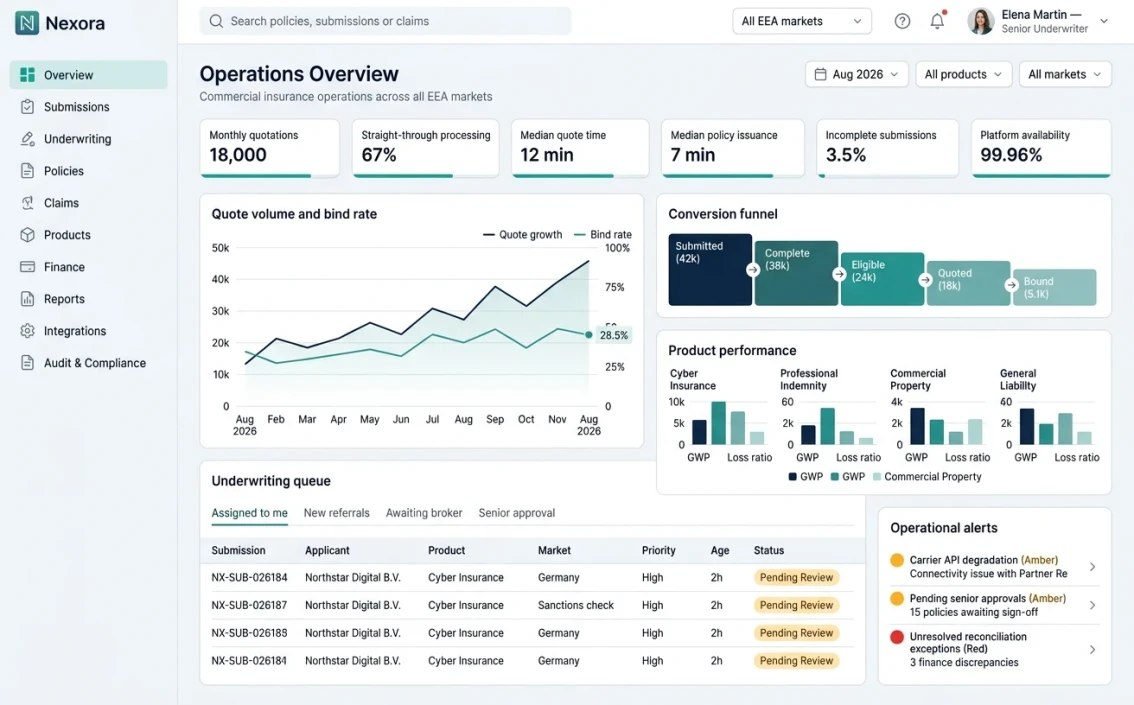
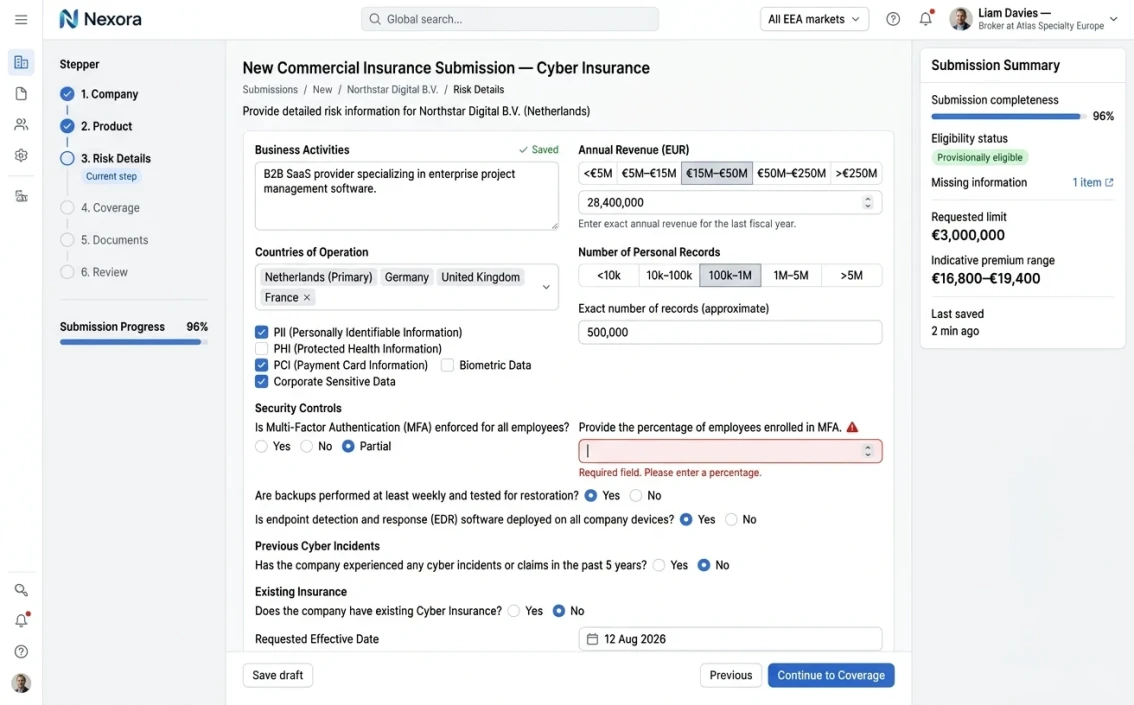
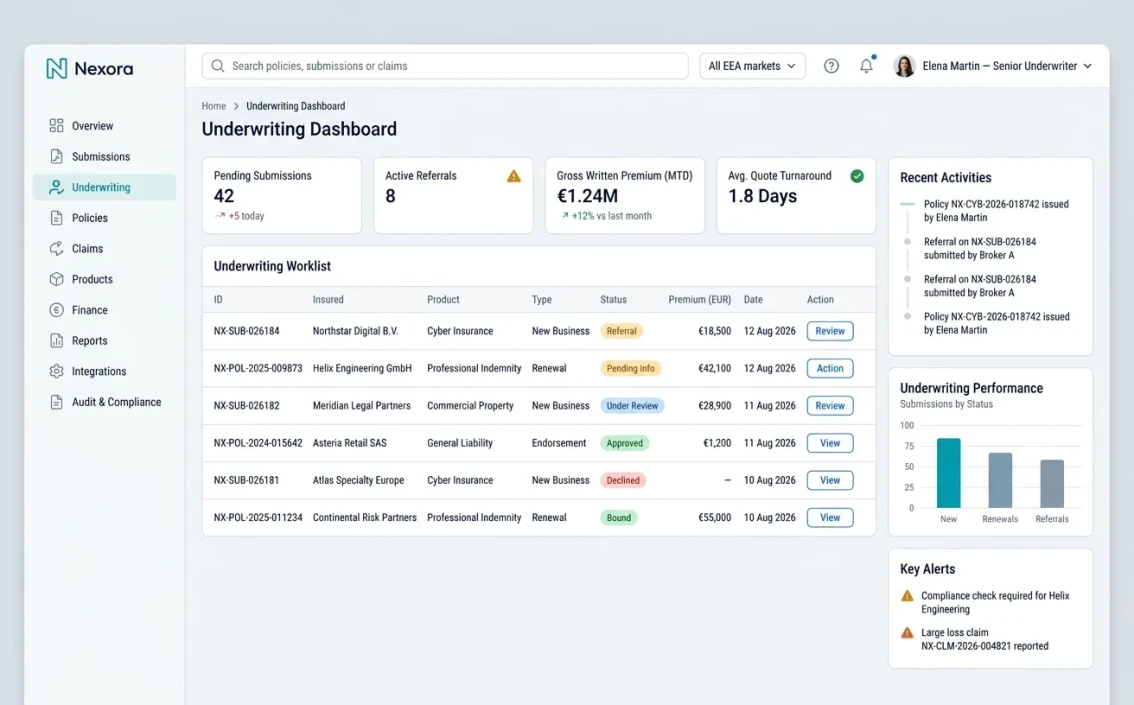
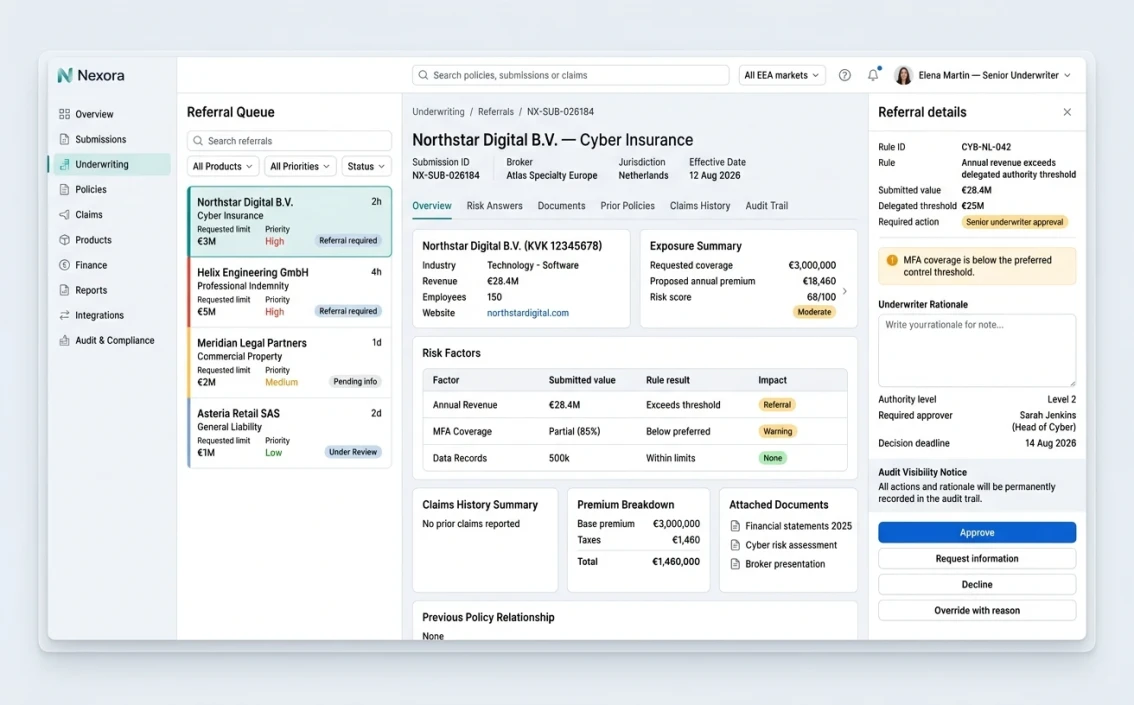
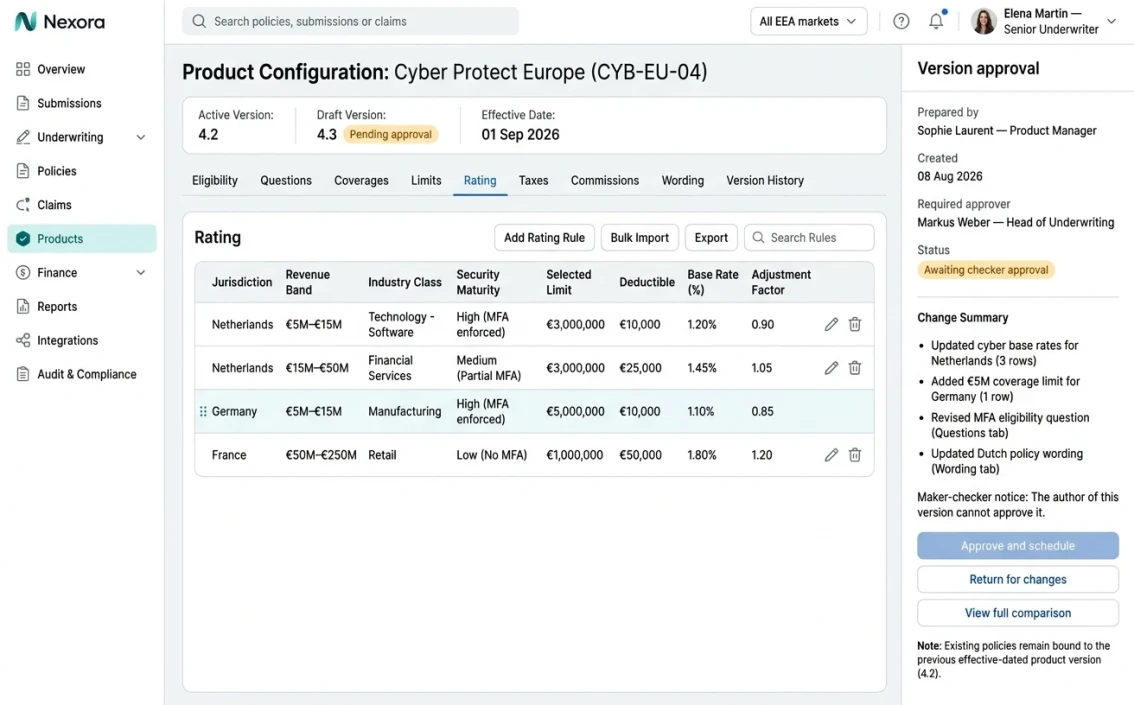
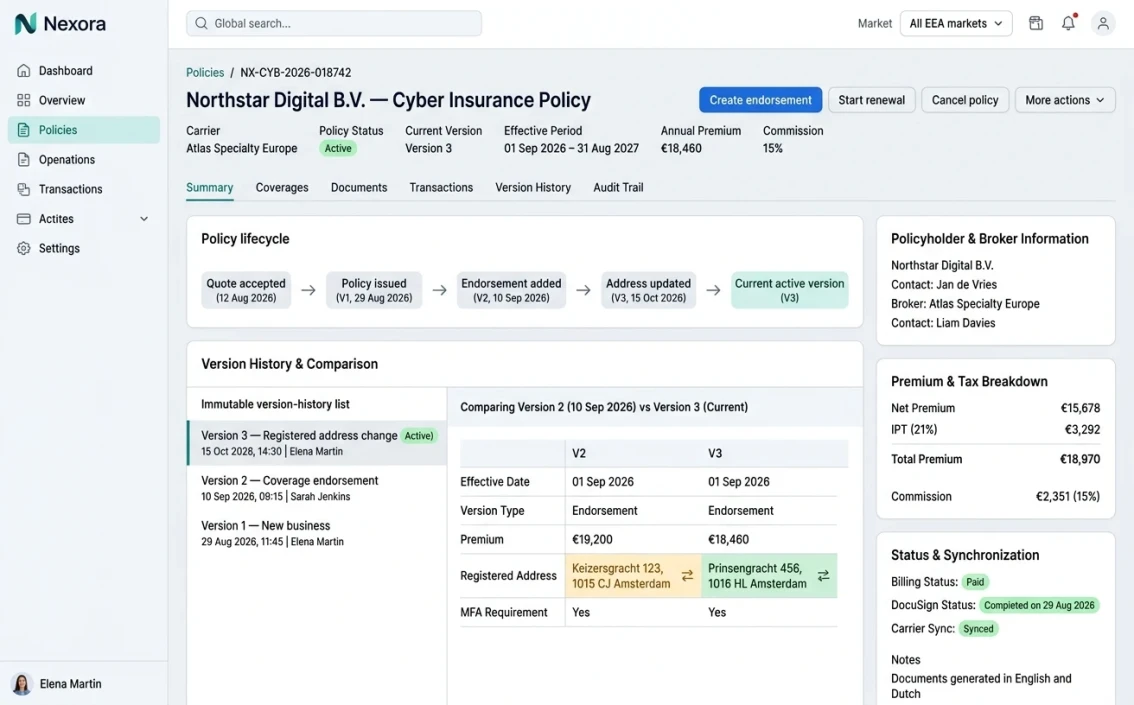
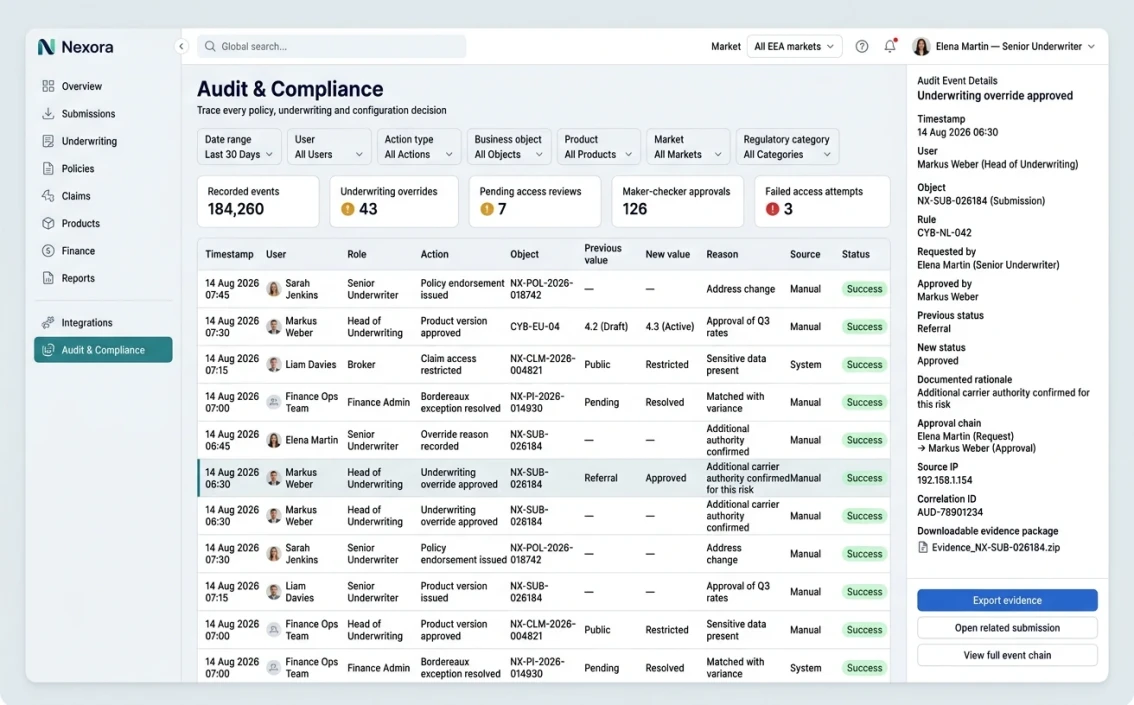
Four insurance product lines ran on spreadsheets, email and carrier portals until Nexora Insurance Platform, a single cloud platform, brought submission, underwriting, policy issuance and claims intake into one auditable workflow. Standard policies that once took up to a business day to issue now clear in minutes, and monthly quote volume has grown to 18,000 without a matching expansion of the operations team.
-


Pharos Production partnered with Nextcheck to replace outdated, manual onboarding with a secure, automated KYC/AML platform. Built on AWS, Kubernetes, Istio, Elixir, RabbitMQ, PostgreSQL and NextJS, the platform provides real-time biometric and document verification, risk assessment and compliance reporting. Since 2019, Nextcheck has reduced onboarding time by 60%, cut manual labor by 70% and expanded to support thousands of checks at once. Today, it powers global banks, FinTechs and crypto firms with a cloud-native, regulation-ready, growth-oriented compliance platform.
-


Pharos Production has partnered with Pleenk to build a secure, scalable payments platform for fast transactions, fraud prevention and seamless integration with digital products. The platform processes payment flows in real time while maintaining high levels of security, transparency and reliability for both businesses and end users. Built on cloud-native infrastructure and an event-driven architecture, Pleenk provides a strong foundation for modern digital payments.
Related reading
These articles can help prepare a brief for a similar engagement:
- MCP Server Development covers the development of tools for AI assistants.
- Multi-Tenant SaaS Architecture: Models, Isolation and Cost explores decisions for products serving separate customer accounts.
- Backend Architecture Guide 2026: Patterns, Stack and Scaling provides context for discussing backend responsibilities.

SERP API: A Product Guide to Search Data Integration
Use a response acceptance checklist to compare search APIs. Check location, result depth, empty responses and the evidence your product needs to retain.
Rank Tracking: How to Build Reliable Keyword Ranking History
A worked ranking history separates confirmed positions from missing checks. Define comparison rules before building reports or choosing a tracking API.
Local Rank Tracker: Geo-Grid Visibility and Product Requirements
A nine-point grid example shows how failed checks change coverage. Define map boundaries, business identity and comparable local visibility reports.
Web Scraping API: Designing Reliable Public-Web Data Collection
A record acceptance matrix separates successful page retrieval from usable data. Specify freshness, partial results and ownership before buying collection.
SEO MCP: Connecting AI Assistants to Search Data
Map SEO questions to permitted tools and dated source data. Use a test matrix for project access, missing metrics and expensive live collection.

MCP Server Development
A spec-current guide to MCP server development after the 2026-07-28 revision, covering the stateless protocol change, the modern-vs-legacy split, server primitives, transports, authorization and the named security failure modes, plus what a server actually costs to build and maintain.

Multi-Tenant SaaS Architecture: Models, Isolation and Cost
Multi-tenant SaaS architecture covering the silo, pool and bridge tenancy models, the shared control plane, cost per active user, cell-based blast radius and shuffle sharding for noisy neighbors.

Backend Architecture Guide 2026: Patterns, Stack and Scaling
Backend architecture in 2026 covering monolith versus microservices patterns, REST and GraphQL API design, data layer scaling and how to choose the right backend stack for your product.
Frequently asked questions
Type to filter questions and answers. Use Topic to narrow the list.
Showing all 6
No matches
Try a different keyword, change the topic or clear filters
-
How should we decide whether to build a complete platform or a smaller module?
Start with the workflow you need to support and the parts you already have. A complete product scope may be appropriate when users need related capabilities under one application. An existing product may need only a data interface, a reporting module or a new way to access its functions.
-
What should we bring to a first discussion?
Bring representative tasks and sources, together with the output a user or application needs. Useful context includes target markets, refresh requirements and any existing systems that must remain part of the workflow. A concrete example is more useful than a long feature list.
-
Can an existing product be extended with MCP?
The assessment starts with its current capabilities and interfaces. We need to establish which tasks an assistant should perform, what access is appropriate and how it will interpret results. Existing APIs can inform that scope, but each workflow needs its own review.
-
What determines the scope of a search data platform?
Source coverage and the dimensions of each request are major factors. History, refresh cadence, result formats and delivery channels add further requirements. The scope should also identify who operates the workflow and what happens when a source or result is unavailable.
-
Can we begin with a limited set of sources or workflows?
An initial scope can focus on representative sources and a defined user task. That gives the discussion a concrete basis for deciding which capabilities belong in the first delivery and which should be evaluated separately.
-
How can we discuss a project without naming our customers or exposing their data?
Describe the roles and required outputs using neutral examples. Redacted workflows and representative public sources can help explain the task. Agree what information is appropriate to share before sending private records or access credentials.
Contact the founder
Discuss your SEO SaaS, search data API or public-web data product with Pharos Production. Tell us who will use it and what they need to accomplish. Include representative sources, expected outputs and any existing application or API the work must connect to.