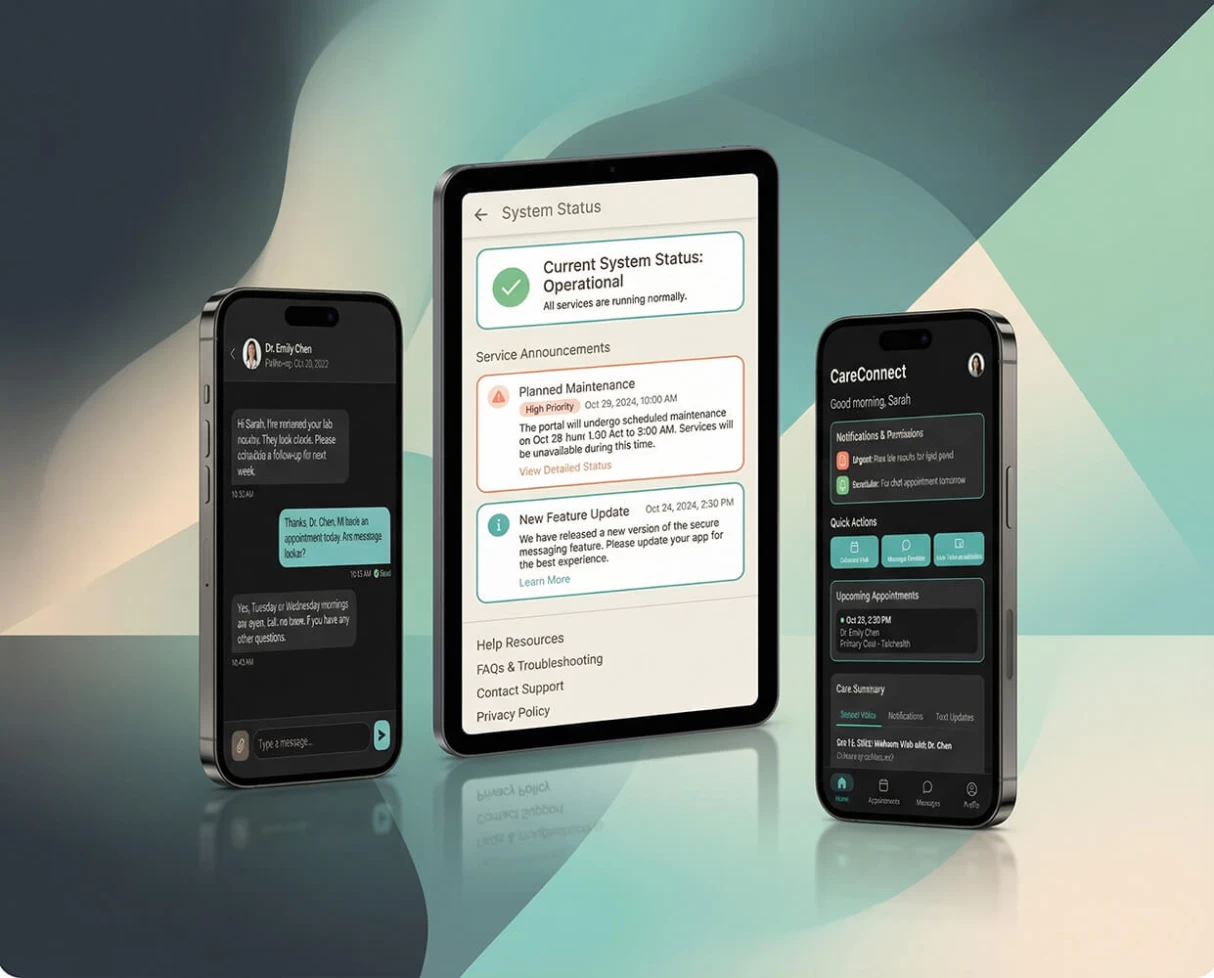
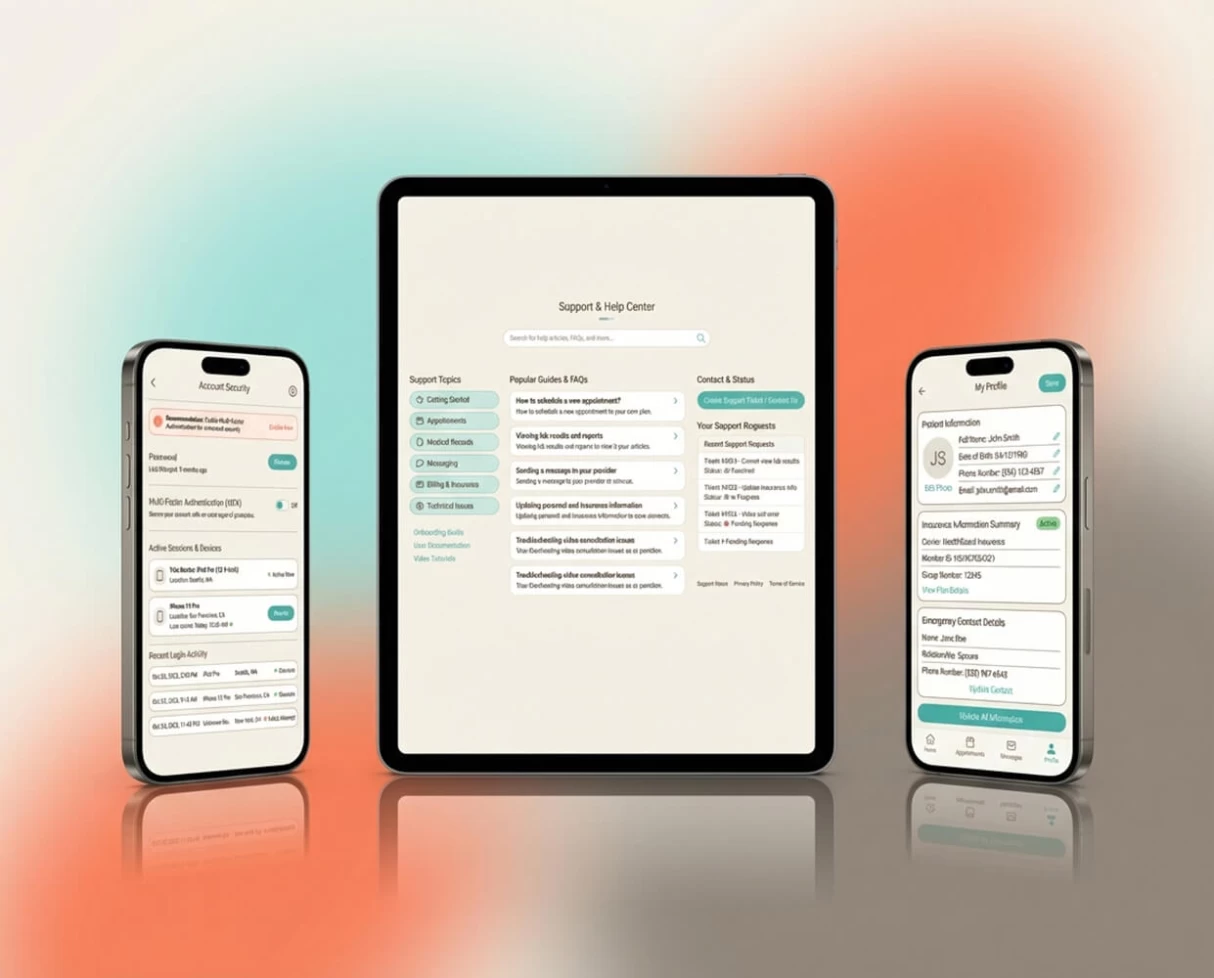
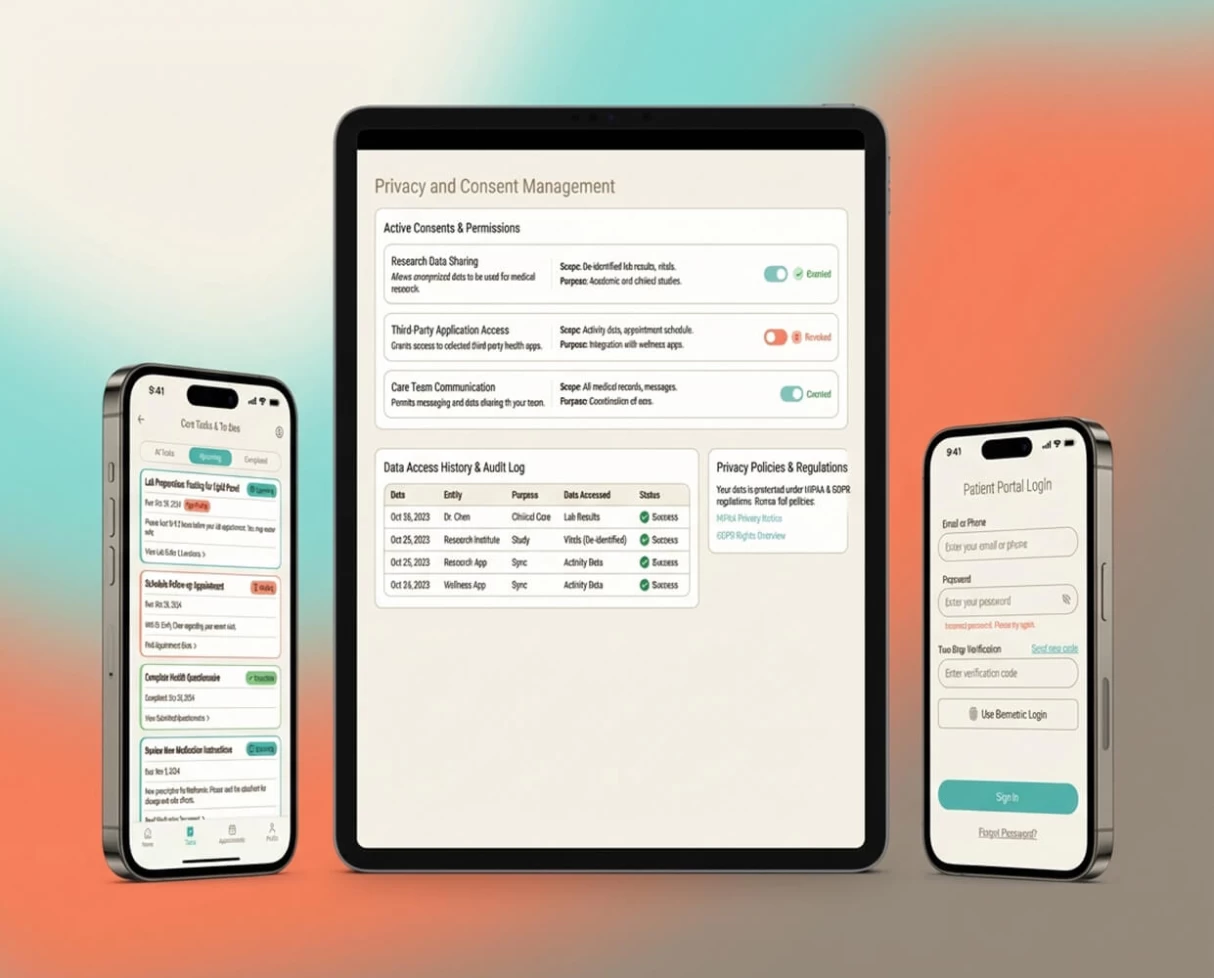
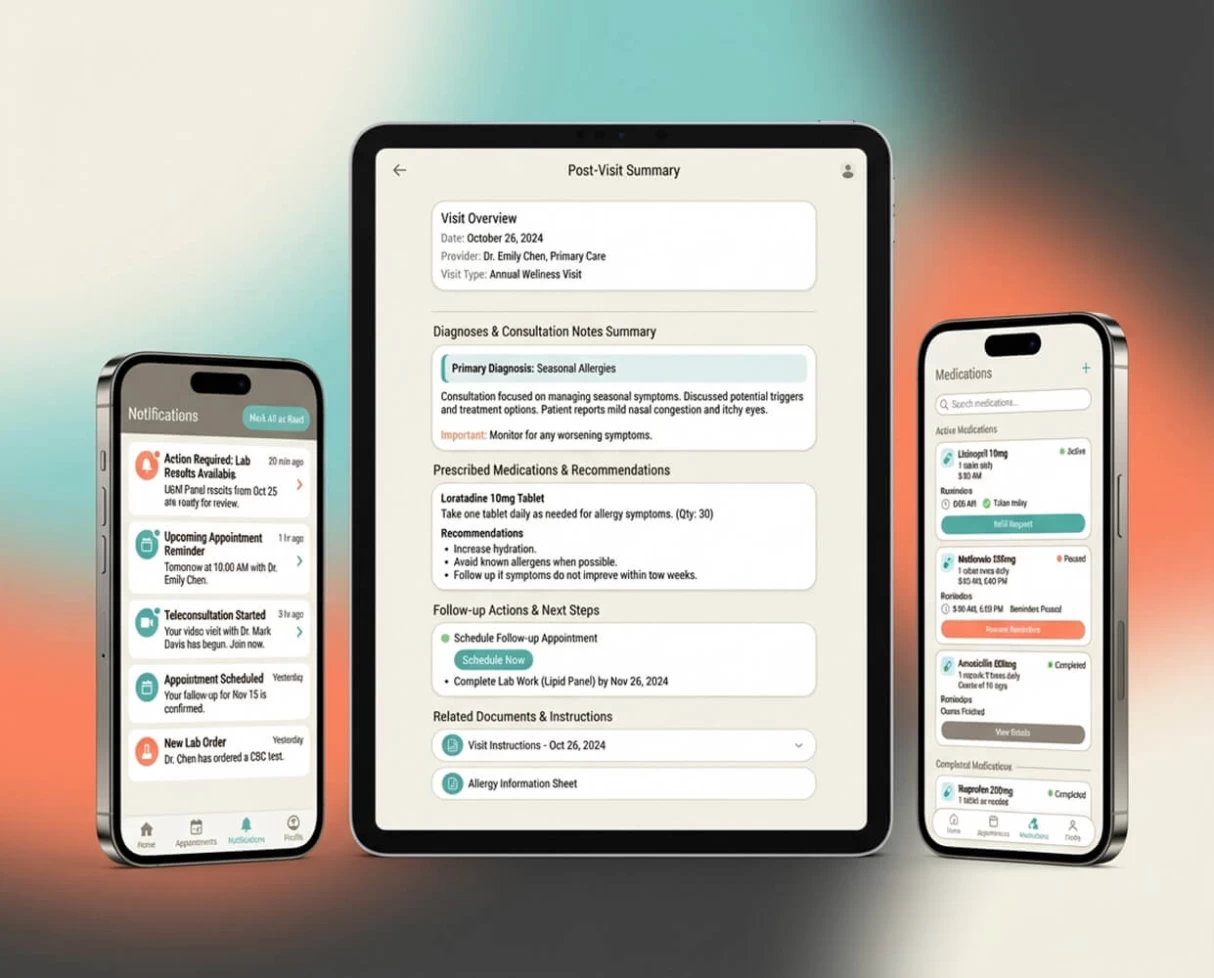
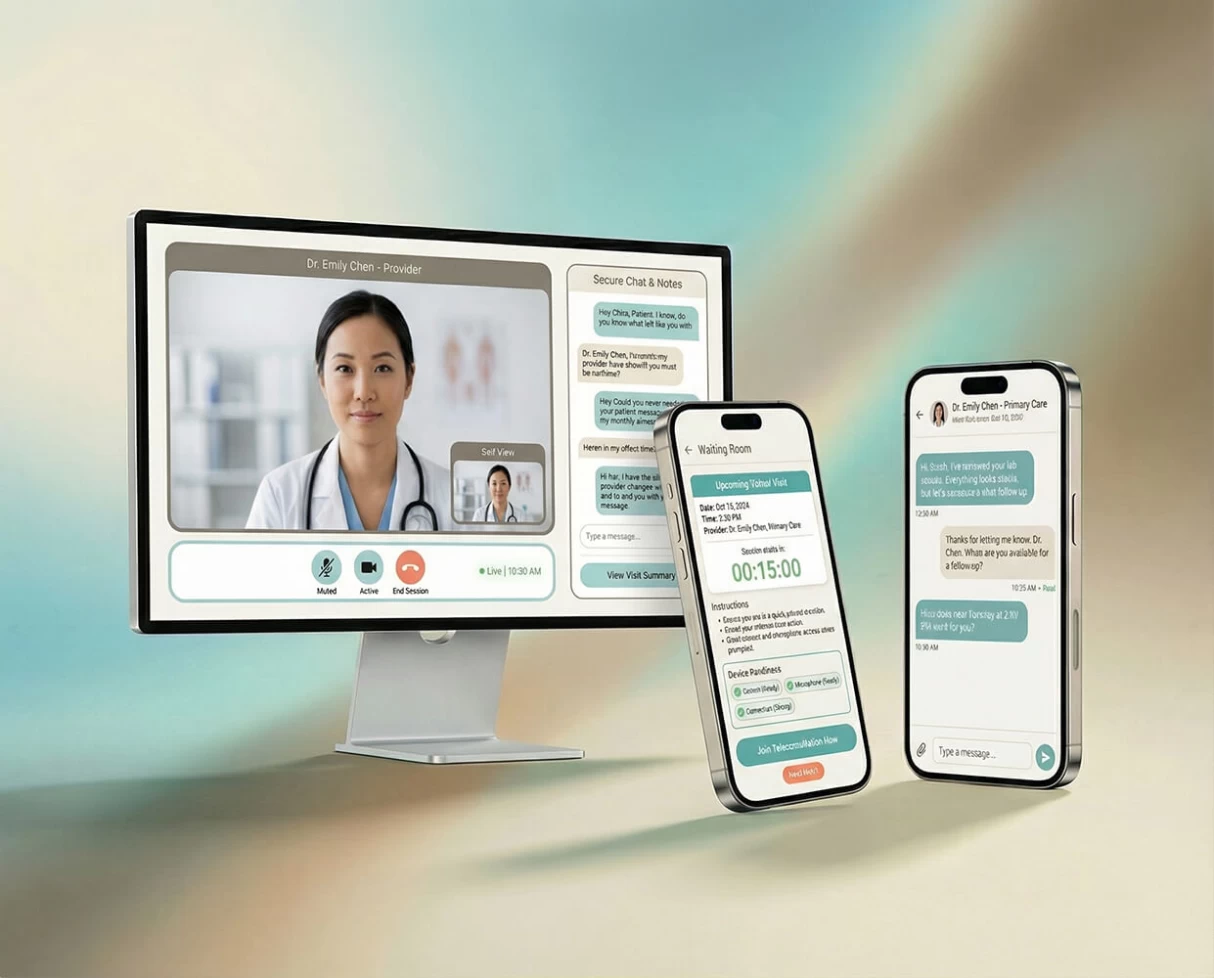
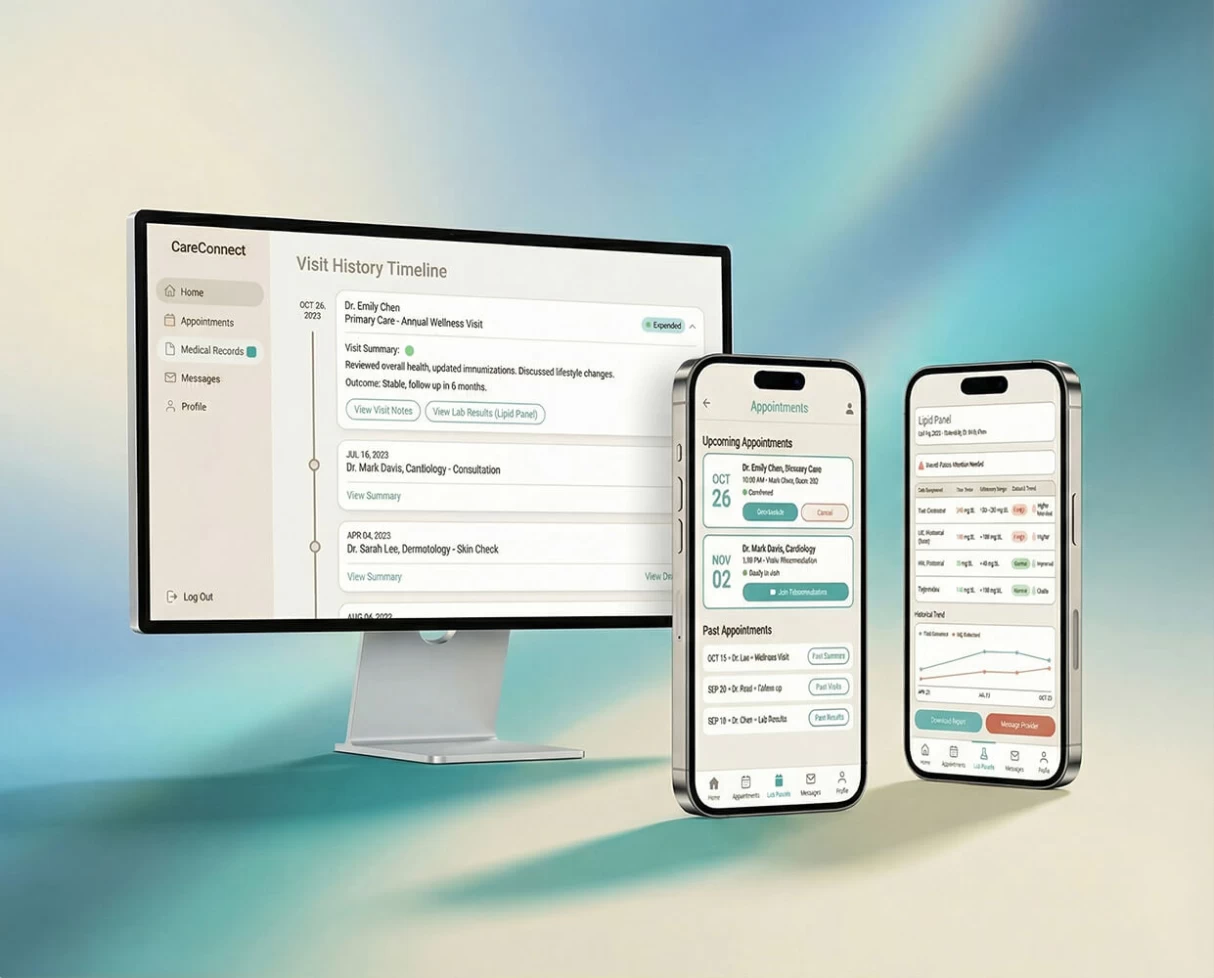
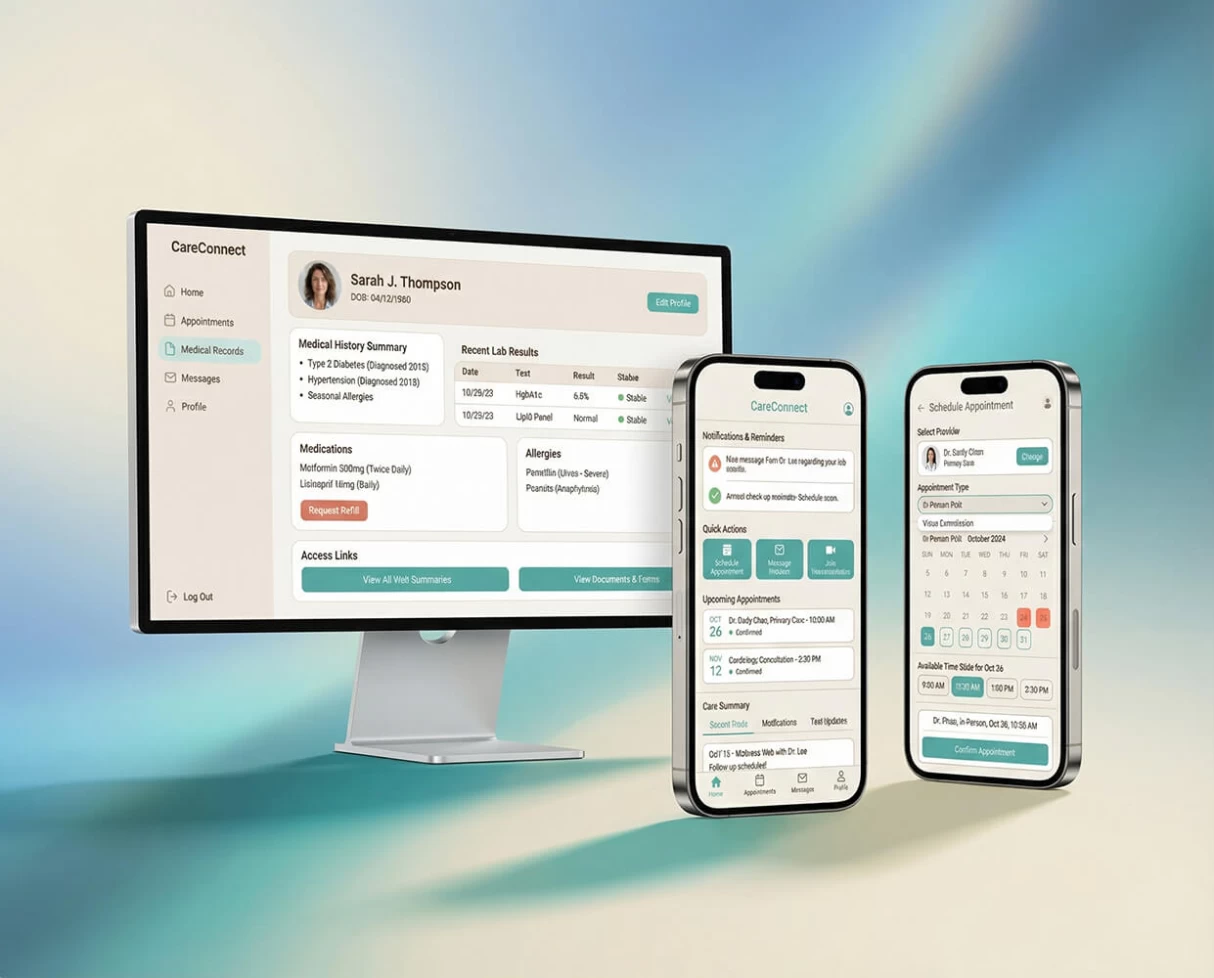
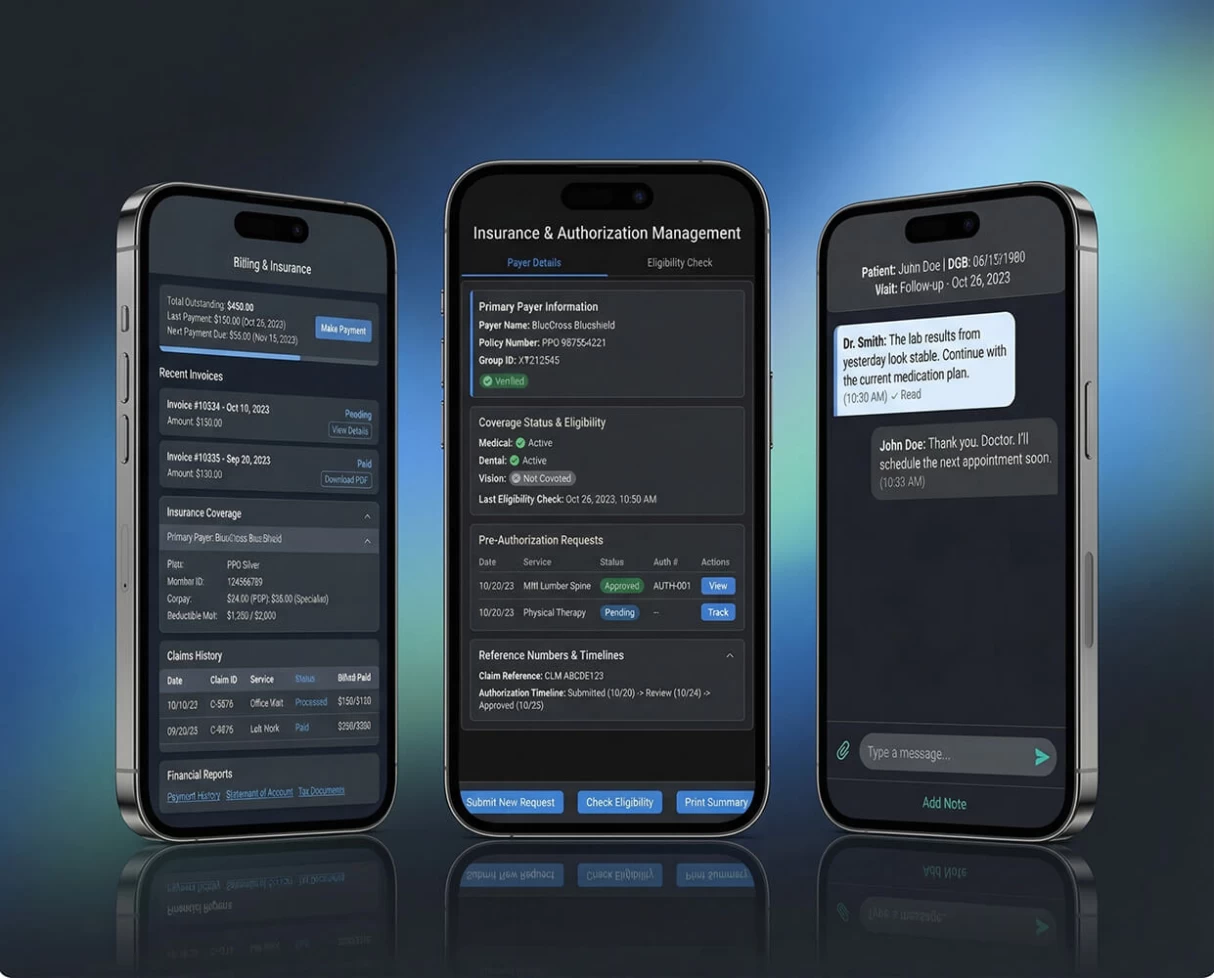
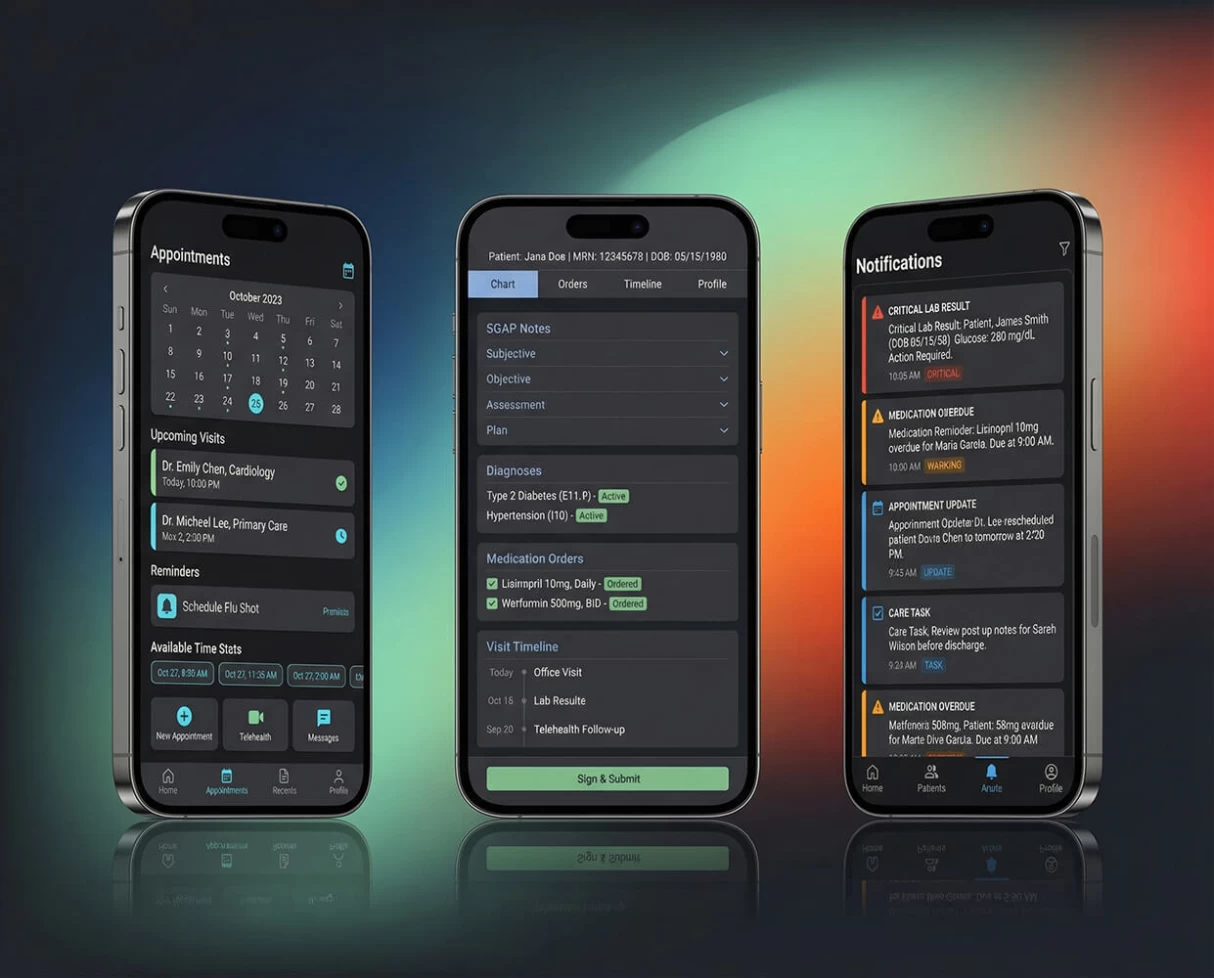
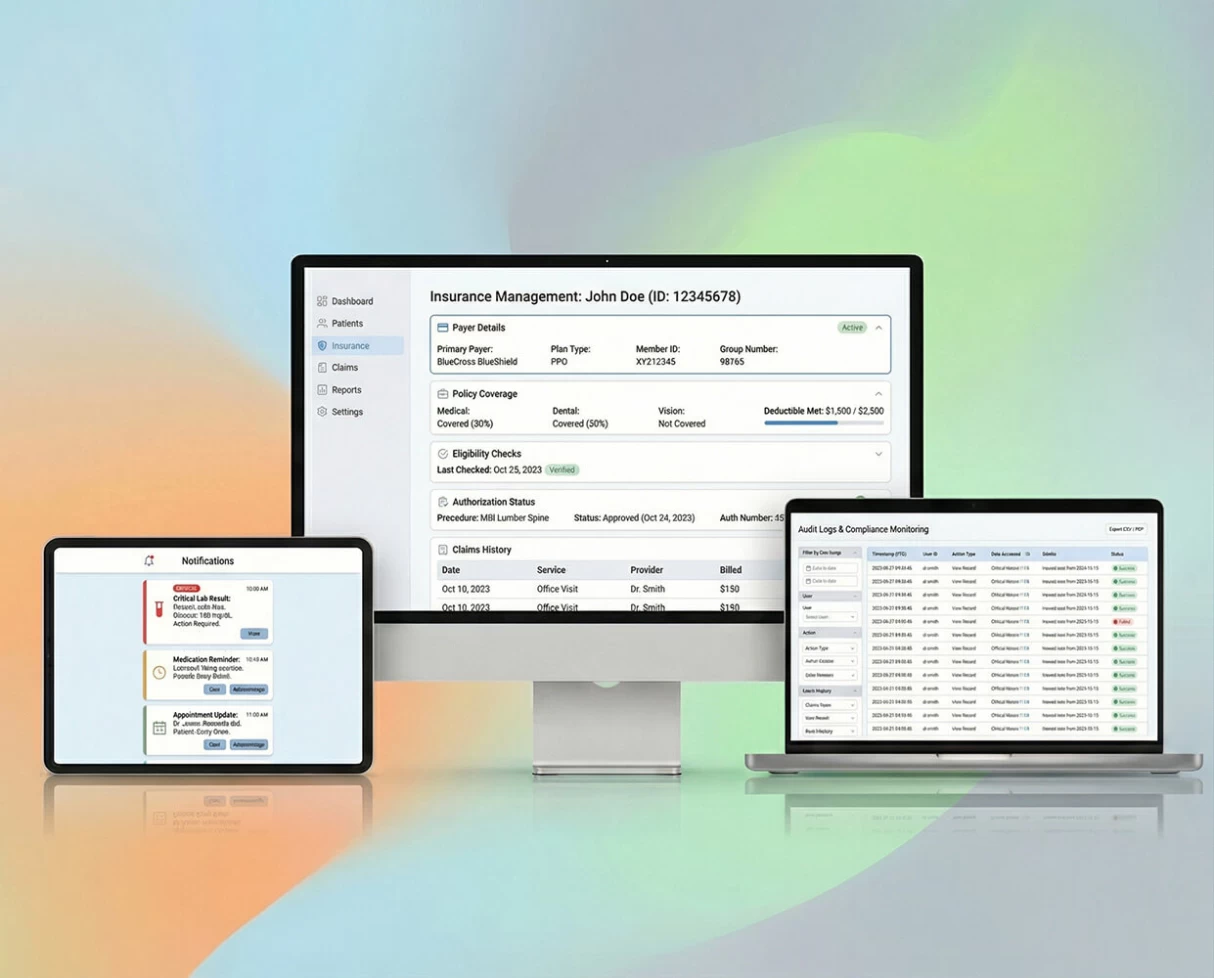
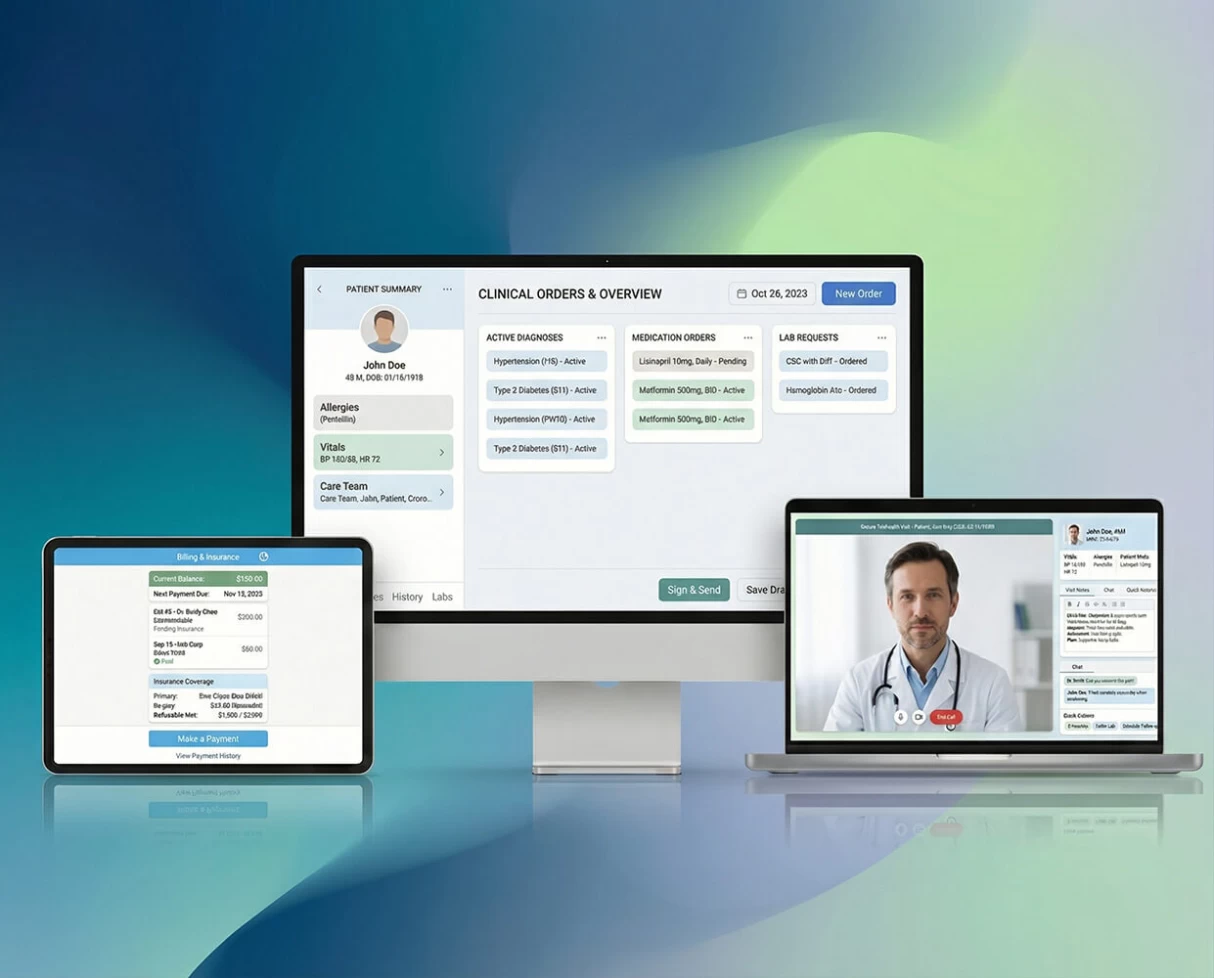
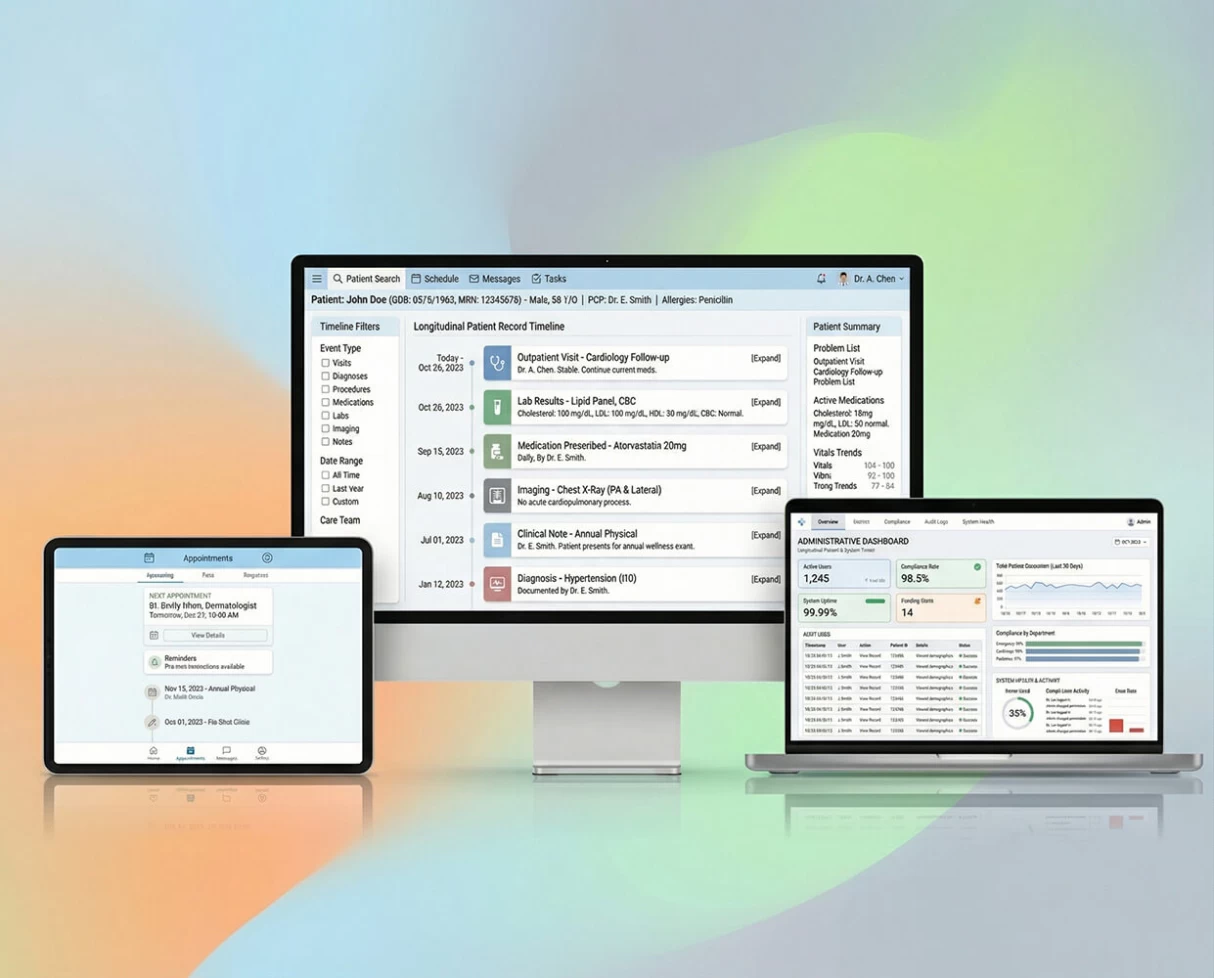
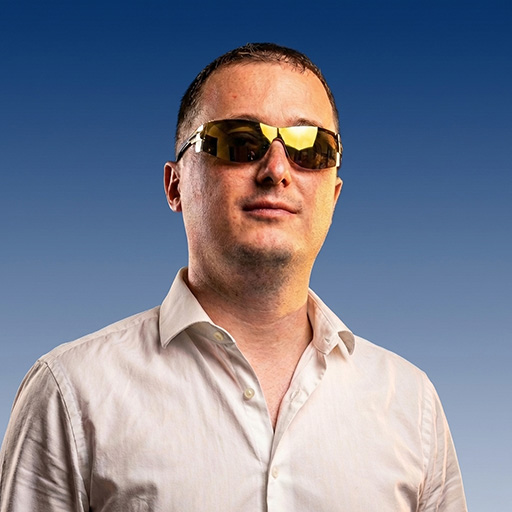
Pharos Production partnered with a healthcare organization to develop CareConnect, a secure patient engagement platform that connects patients with care providers through a unified digital interface. This solution enables patients to manage appointments, access medical records, participate in teleconsultations and communicate directly with healthcare professionals. Built on a scalable, cloud-native architecture, CareConnect enhances the patient experience while meeting strict security and regulatory standards.
Pharmaceutical Software Development Company
Pharos Production offers pharma software development services for pharmaceutical and biotech companies, CROs, CDMOs and pharma-tech vendors, built around the validated systems they already run.
Integrations, data platforms, AI layers and patient apps for regulated pharma work, designed to Part 11 and Annex 11 controls and delivered with the specifications, traceability and test evidence your QA team uses to validate them.
- 110+ applications across industries
- 24 hours first reply
- $5K-$15K paid discovery sprint
What does a pharmaceutical software development company do?
Pharos Production offers pharma software development services for pharmaceutical and biotech companies, CROs, CDMOs and pharma-tech vendors, built around the validated systems they already run. We build the integrations, data platforms, AI layers and patient or site apps that connect to those systems, and your QA team owns validation, using the evidence each sprint produces.
We have not delivered a pharmaceutical, biotech, CRO or lab system. Our closest evidence is two healthcare platforms: the MedCore EHR platform and CareConnect, a secure layer over the client's existing clinical systems per its case study.
What we build around your validated core
Across twelve areas of the pharma value chain, we extend your validated systems of record instead of replacing them:
Discovery and R&D
Instrument and lab notebook data pipelines, drug discovery platforms and MLOps. ELN, R&D LIMS and chromatography data systems stay the record.
Clinical operations
CRO oversight dashboards, decentralized trial components, eCOA apps and EHR data flows into EDC. CTMS, EDC, eTMF and IRT stay bought.
Clinical data and biostatistics
Clinical data pipelines, statistical computing environments and SDTM automation. EDC exports feed the pipeline unchanged.
Regulatory affairs
Regulatory information management migrations, IDMP data remediation and QC automation. RIM and eCTD publishing tools stay bought.
Safety and pharmacovigilance
Pharmacovigilance software around the safety database: E2B(R3) checks, gateway integration and intake automation. The safety database keeps the case.
Quality and validation
Audit-trail review tools and test automation that records validation evidence your QA team can use. The eQMS and document control stay in place.
Manufacturing and quality control
Manufacturing software integrations across MES, ERP and LIMS, OT data platforms and QC data capture. The MES core stays bought, with your master batch records inside it.
Supply chain and serialization
EPCIS repositories, DSCSA exception handling and cold chain monitoring for pharmaceutical supply chain software. Serialization and EU FMD verification keep their interfaces.
Commercial and medical affairs
HCP portals, consent data flows, pharmaceutical CRM migration and medical information assistants. CRM and promotional review systems stay bought.
Patient services
Support program portals, adherence apps and specialty pharmacy links that route adverse events to safety. Hub providers connect over their own APIs.
Real-world data and analytics
Real-world evidence platforms, OMOP pipelines and pharmaceutical data analytics. Claims, EHR and registry sources keep their own governance.
AI and GenAI layers
Intake and literature screening assistants, regulatory writing support and evaluation harnesses. Models reach validated systems only through controlled interfaces.
| Solution | Key capabilities |
|---|---|
| Discovery and R&D | ELN R&D LIMS SDMS +1 |
| Clinical operations | CTMS EDC eTMF +2 |
| Clinical data and biostatistics | CDISC SDTM ADaM Define-XML +1 |
| Regulatory affairs | RIM eCTD v4.0 ISO IDMP +1 |
| Safety and pharmacovigilance | E2B(R3) MedDRA ESG NextGen +1 |
| Quality and validation | GAMP 5 Part 11 Annex 11 +1 |
| Manufacturing and quality control | MES EBR ISA-95 +2 |
| Supply chain and serialization | GS1 EPCIS DSCSA EU FMD +1 |
| Commercial and medical affairs | CRM MLR review US Open Payments |
| Patient services | PSP platforms SaMD boundary HIPAA +1 |
| Real-world data and analytics | OMOP HL7 FHIR federated analytics |
| AI and GenAI layers | LLMs RAG AI agents +1 |
Part 11 and Annex 11 controls
US 21 CFR Part 11 applies to electronic records kept under FDA record requirements, and EU GMP Annex 11 to computerized systems used in GMP-regulated activities. FDA's scope and application guidance reads Part 11 narrowly and keeps predicate rules enforced, so design starts from the records those predicate rules require.
| Requirement | Engineering control | Evidence your QA team reviews |
|---|---|---|
| Validation: 21 CFR 11.10(a), Annex 11 principle and section 4 | Requirement IDs and risk-based automated tests | Requirement traceability and test reports |
| Copies: 11.10(b), Annex 11 section 8 | Human-readable and electronic exports with metadata | Sample exports |
| Retention: 11.10(c), Annex 11 sections 7 and 17 | Retention rules, immutable backups and restore drills | Restore test records |
| Access: 11.10(d) and (g), Annex 11 section 12 | Unique personal accounts (a draft Annex 11 proposal), role-based permissions, authority checks | Periodic access reviews |
| Audit trail: 11.10(e), Annex 11 section 9 | Append-only audit service storing old value, new value and reason | Audit-trail tests and a sample review |
| Checks: 11.10(f) and (h), Annex 11 sections 5 and 6 | Enforced step order, authenticated inputs, second checks on critical entries | Negative and interface tests |
| Signatures: 11.50, 11.70, 11.100 and 11.200, Annex 11 section 14 | Name, time and meaning shown, signature bound to the record version, two-component signing | Signature test cases |
| Change control: 11.10(k) for system documentation, Annex 11 section 10 for the system | Version control with approvals and configuration baselines | Change records per release |
| Time stamps: 11.10(e), Annex 11 section 12.4 | Synchronized clocks, times stored in UTC | Clock monitoring records |
Some Part 11 controls are procedural rather than technical, such as determining that people have the education, training and experience for their tasks and keeping written policies that hold individuals accountable for their electronic signatures; those stay with your organization.
From Part 11: "Record changes shall not obscure previously recorded information." From Annex 11: "For change or deletion of GMP-relevant data the reason should be documented. Audit trails need to be available and convertible to a generally intelligible form and regularly reviewed." Our reference design adds an audit-trail review screen.
For data integrity, PIC/S guidance asks companies to "ensure that data is attributable, legible, contemporaneous, original, accurate, complete, consistent, enduring, and available", known as ALCOA+. FDA's drug CGMP guidance uses the five-letter ALCOA, and neither appears in Part 11 or the Annex 11 in force. The draft revision cites ALCOA+, so for now it is our design checklist, not a legal test.
How validation works: GAMP 5, risk-based assurance and evidence
ISPE's GAMP 5 guide, industry guidance rather than a regulation, sorts software into categories 1, 3, 4 and 5, with validation effort growing toward custom code. Your QA team confirms each component's category.
| GAMP 5 category | Typical components in a pharma build | Our delivery role |
|---|---|---|
| 1, infrastructure software | Cloud services and databases | Landing zone defined as code, with configuration and test evidence for your qualification |
| 3, non-configured products | A bought tool used as supplied | Version, intended use and tests of the functions you rely on |
| 4, configured products | A configured CRM or workflow platform | Configuration in version control, retested on vendor releases under a support agreement |
| 5, custom applications | Integrations, portals and AI features we write | Specification, code review and tests traced to requirements |
Test depth follows risk. FDA's Computer Software Assurance guidance describes that approach for device makers' production and quality system software: "This guidance provides recommendations regarding computer software assurance for computers or automated data processing systems used as part of production or the quality management system for medical devices." Applying it to drug GMP systems is our interpretation by analogy. The drug-side anchor is ICH Q9(R1): "The level of effort, formality and documentation of the quality risk management process should be commensurate with the level of risk." We propose a test method per feature, and your QA team approves the split.
On pharma engagements, each release ships with a validation-ready pack: requirement IDs traced to design, code and tests, functional and design specifications, risk input per feature, automated test evidence and a generated trace matrix.
Who does what (R responsible, A accountable, C consulted, I informed):
| Activity | Your QA team | Your system owner and users | Pharos Production |
|---|---|---|---|
| Validation plan and approach | A, R | C | C |
| User requirements and GxP risk assessment | A | R | C |
| Functional and design specifications | A | C | R |
| Development testing and traceability | C | I | A, R |
| User acceptance and qualification | A | R | C |
| Validation report and release approval | A, R | C | I |
| Change control and periodic review | A | R | C |
With a pharma-tech product vendor, the split is usually drawn one level up: the vendor is itself the supplier its customers qualify, so it takes the regulated user's side of this table for its product, with us as its development partner.
Validation also fits sprints. ISPE's GAMP 5 page describes the Second Edition as "emphasizing that the GAMP specification and verification approach is not inherently linear but also fully supports iterative and incremental methods".
After go-live, changes run through your change control, and Annex 11 adds "Computerised systems should be periodically evaluated to confirm that they remain in a valid state and are compliant with GMP." The category 4 row above covers regression testing on vendor releases.
What your QA team receives for supplier assessment
On pharma engagements we support supplier assessment with a pack:
- A written description of our delivery lifecycle, from requirements to release and change control
- Project evidence as produced, such as traceability, test results and release notes
- Named team members, their roles and least-privilege access to your environments
- Our security posture: no ISO 27001 certificate and no SOC 2 report, plus the controls we apply, listed below
- Disclosure of any subcontracting or third-party hosting before signature, for your approval
- On request, a hosted supplier audit (remote or on site) and support during a regulatory inspection
- A documented exit plan
Annex 11 puts that assessment on the regulated user: "The regulated user should take all reasonable steps, to ensure that the system has been developed in accordance with an appropriate quality management system. The supplier should be assessed appropriately."
We offer a quality agreement next to the master services agreement that assigns validation, change control, incident notification, subcontracting approval and audit rights. Annex 11 section 3.1 requires formal agreements with third parties that provide, configure, validate or maintain a computerized system, and EU GMP Chapter 7 covers written contracts for outsourced GMP activities. FDA's Part 11 questions and answers recommend a written agreement with IT service providers in clinical investigations.
AI agents and LLMs under GxP
We build AI agents and generative AI features with the GxP impact, the human checkpoint and the retained evidence settled before any output reaches a GxP record. The non-binding EMA and FDA AI principles likewise assess the whole system, human-AI interaction included.
| Use case | GxP impact, our rating | Human checkpoint | Evidence retained |
|---|---|---|---|
| Case intake from emails | High: the output becomes a safety case | A case processor confirms each extracted field | Source document, model and prompt versions, reviewer edits |
| Literature screening | High: it decides which articles become cases | A reviewer confirms suspected cases and samples exclusions | Search strategy, model version, recall on a labeled test set |
| Deviation and CAPA drafting | Medium: a person still owns the GMP record | The QA owner edits and approves it | Draft, final text and approval in the eQMS audit trail |
| Medical information answers | Medium: an adverse event can surface in any inquiry | A specialist approves answers drawn only from approved content | Retrieved sources, the answer and any hand-off to safety |
The draft EU GMP Annex 22 covers only static, deterministic AI models in critical GMP applications and states "Following the above, the document does not apply to Generative AI and Large Language Models (LLM), and such models should not be used in critical GMP applications." The EMA workshop page adds: "EMA is still considering the implications of the stakeholder consultation results." Until a text is adopted, we keep GenAI out of critical GMP decisions.
FDA's draft guidance on AI for regulatory decision-making proposes a credibility assessment tied to a model's context of use, and "the use of AI for the purposes of drug discovery is not in the scope of this guidance". EU AI Act classification turns on Article 6 and Annexes I and III, so we assess each feature with your counsel (see our AI Act classification guide). Pharmacovigilance AI designs are reviewed against the seven principles of the CIOMS Working Group XIV report:
- Risk-based approach
- Human oversight
- Validity and robustness
- Transparency
- Data privacy
- Fairness and equity
- Governance and accountability
Reference architecture: a validated core behind one integration layer
Our reference design leaves your validated systems of record unchanged and puts everything we build behind one integration layer. Shared audit-trail, signature and identity services give each feature the same controls. Everything runs in a cloud landing zone deployable into your own cloud account, so you control the qualified environment. Annex 11 says "The application should be validated; IT infrastructure should be qualified."
Text version of the diagram
- Validated core: your systems of record, validated by you and reached only through the integration layer
- Integration layer: versioned APIs, an event bus and adapters for E2B(R3), EPCIS, HL7 FHIR and CDISC exchange with regulators and partners
- Audit-trail service: an append-only record of who changed what, when and why
- Signature service: signer, time and meaning, bound to the signed record version
- Identity and access: single sign-on, personal accounts and role-based permissions
- Master data: product, site and study data aligned with IDMP where EU rules apply
- Data platform: curated zones with lineage from each report to its source record
- AI gateway: prompt and output logging, redaction, version pinning and evaluation sets
- Non-GxP zone: research sandboxes and prototypes with no write path into the core
- Landing zone: network, encryption, logging and backup defined as code
- Data flow: systems of record publish events to the integration layer, which feeds the data platform
- Approval flow: AI drafts go to a human reviewer, and approved results return to the system of record, signed where required and logged in the audit trail
Integrations and data standards
Pharma landscapes can include Veeva Vault applications, Salesforce Life Sciences Cloud, SAP S/4HANA, LIMS, EDC and safety databases. We work through each vendor's documented interfaces and hold no Veeva, Salesforce or SAP partner status.
| Standard | Where it applies | What we build around it |
|---|---|---|
| CDISC SDTM, ADaM and Define-XML | Study data submissions. Per CDISC, "SDTM is one of the required standards for data submission to FDA (U.S.) and PMDA (Japan)" | SDTM mapping and Define-XML generation |
| CDISC ODM and CDASH | Clinical data collection and exchange | EDC imports, exports and metadata pipelines |
| ICH M11 and CDISC USDM | Structured protocols | Protocol authoring and study build tools |
| ICH E2B(R3), MedDRA and EDQM terms | Safety reports to FDA and EMA and, by agreement, to partners. EMA requires EDQM dose form and route terms; FDA accepts them or its SPL lists | Message checks and gateway integration |
| ISO IDMP with EMA SPOR | EU product data. Per EMA, "Commission Implementing Regulation (EU) No 520/2012 (articles 25 and 26) obliges European Union (EU) Member States, marketing authorisation holders and EMA to make use of the ISO IDMP standards." | Master data mapping and SPOR integration |
| GS1 EPCIS and GS1 Digital Link | Supply chain events and pack identifiers | EPCIS repositories and DSCSA exception handling in your trading partners' EPCIS version |
| HL7 FHIR | EHR data for trials and the EU ePI standard | FHIR APIs and EHR-to-EDC pipelines |
Regulatory changes that affect pharma software
Last reviewed
| Item | What changes for software | Date or status as of 2026-10-01 | Source | Re-check trigger |
|---|---|---|---|---|
| FDA E2B(R3) for postmarketing ICSRs | Postmarketing ICSRs sent through ESG NextGen must use E2B(R3). Safety Reporting Portal filers are unaffected. | Required since 2026-10-01. R2 was accepted only during the transition, which ended on 2026-09-30. IND safety reports that commercial sponsors send through ESG NextGen: required since 2026-04-01. | Federal Register notice: "For postmarketing ICSRs for human drug products, biological products, and drug- or biologic-led combination products submitted via ESG NextGen, beginning October 1, 2026, the ICSRs must be submitted to the AEMS database using ICH E2B(R3) data standards." Also FDA's AEMS page. | The AEMS page after 2026-10-01 |
| EU GMP Annex 11 revision and new Annex 22 | Drafts propose unique personal accounts, procedure-based audit-trail review and wider supplier and service management, and limit AI in critical GMP use to static, deterministic models, a limit EMA is reconsidering. | Consultation closed 2025-10-07. Neither text adopted, so the 2011 Annex 11 applies. EMA scheduled an Annex 22 expert workshop for 2026-06-30 and 2026-07-01 and expects a report, not found by 2026-10-01. | EudraLex Volume 4 index, still listing "Annex 11 Computerised Systems (revision January 2011)", plus the consultation and workshop pages | A new Annex 11 or any Annex 22 in the index, or the workshop report |
| FDA CSA guidance and QMSR | Risk-based assurance for device production and quality system software under 21 CFR Part 820, which now incorporates ISO 13485:2016. It reaches pharma through device-led products, SaMD and combination products; drug GMP systems use it only by analogy. | CSA current version issued 2026-02-03. QMSR effective 2026-02-02. | CSA page and QMSR page | A newer CSA version or a drug-side equivalent |
| ICH E6(R3) | Fit-for-purpose trial systems, for example through risk-based validation where appropriate. Annex 2 adds decentralized and pragmatic elements and real-world data. | Principles and Annex 1: EU effective 2025-07-23, FDA final September 2025. Annex 2 applies in the EU from 2027-01-15 and is still a draft at FDA. | EMA E6 page, FDA E6(R3) page and the Federal Register notice of FDA's draft Annex 2 | 2027-01-15 and a final Annex 2 at FDA |
| US DSCSA | Interoperable package-level tracing and verification. FDA recommends EPCIS in draft guidance, naming no version. | Enhanced requirements in effect since 2023-11-27. Exemptions for eligible manufacturers, repackagers, wholesale distributors and dispensers with 26 or more full-time employees ended between 2025-05-27 and 2025-11-27. Small dispensers exempt from certain requirements until 2027-11-27. | FDA exemptions page, 2023 compliance policies guidance, 2024 exemption letter and draft EPCIS guidance | A new exemption letter or 2027-11-27 |
| eCTD v4.0 | RIM and publishing tools will need v4.0 for new centralized marketing authorization applications in the EU. FDA accepts v4.0 for new applications without requiring it. | FDA: accepted for new applications since 2024-09-16. EMA: optional since 2025-12-22, strongly recommended from Q1 2027, mandatory for new CAP applications from Q1 2028. | EMA eSubmission page: "In preparation for the mandatory use of eCTD v4.0 for new CAP MAAs from Q1 2028, the strongly recommended use will start from Q1 2027." Also FDA's eCTD v4.0 page. | EMA news on the 2027 and 2028 steps |
| EU AI Act Digital Omnibus | High-risk obligations apply later than first set. The Annex I track, which lists the Medical Devices Regulation, moved back a year. | In force since 2026-07-27. Annex III systems from 2027-12-02, Annex I systems from 2028-08-02. | European Commission AI Act page and the consolidated text on EUR-Lex | A newer consolidated text |
| EU pharma package | Shortage monitoring and coordination, with shortage-management provisions expected six months after entry into force. EMA's board minutes call joint EU work on electronic product information essential to implementation. | Adopted by the Council on 2026-09-28, Parliament vote pending (forecast 2026-11-23, may move), not in the Official Journal. DG SANTE expects most provisions to apply 24 months after entry into force. | Commission page and EMA board minutes | The Parliament vote and publication |

Build, extend or integrate: where custom pharmaceutical software development fits
| Factor | Extend or build around it | Keep in the bought core |
|---|---|---|
| EDC, CTMS, eTMF and IRT | Oversight dashboards, eCOA apps, CTIS submission preparation and EHR data interfaces | Case report forms, randomization and the trial master file |
| Safety database | Case intake automation, literature screening and gateway integration | Case processing, coding and the submission record |

| eQMS and document control | Integrations that raise deviations and change requests from other systems | Quality workflows, SOP control and training records |
| MES, ERP and LIMS | Level 3 to level 4 interfaces, OT data and CDMO client portals | Batch execution, master batch records and test methods |
| CRM and promotional review | Migration tooling, HCP portals and AI pre-review of promotional material | Account management and the final approval |
| Data and AI across systems | A governed data platform and an AI gateway spanning several systems | Each platform's own analytics and AI, which stop at its boundary |
The rule for choosing a column closes the value-chain section above.
What drives the cost of pharmaceutical software development services
Case studies from healthcare
-
-
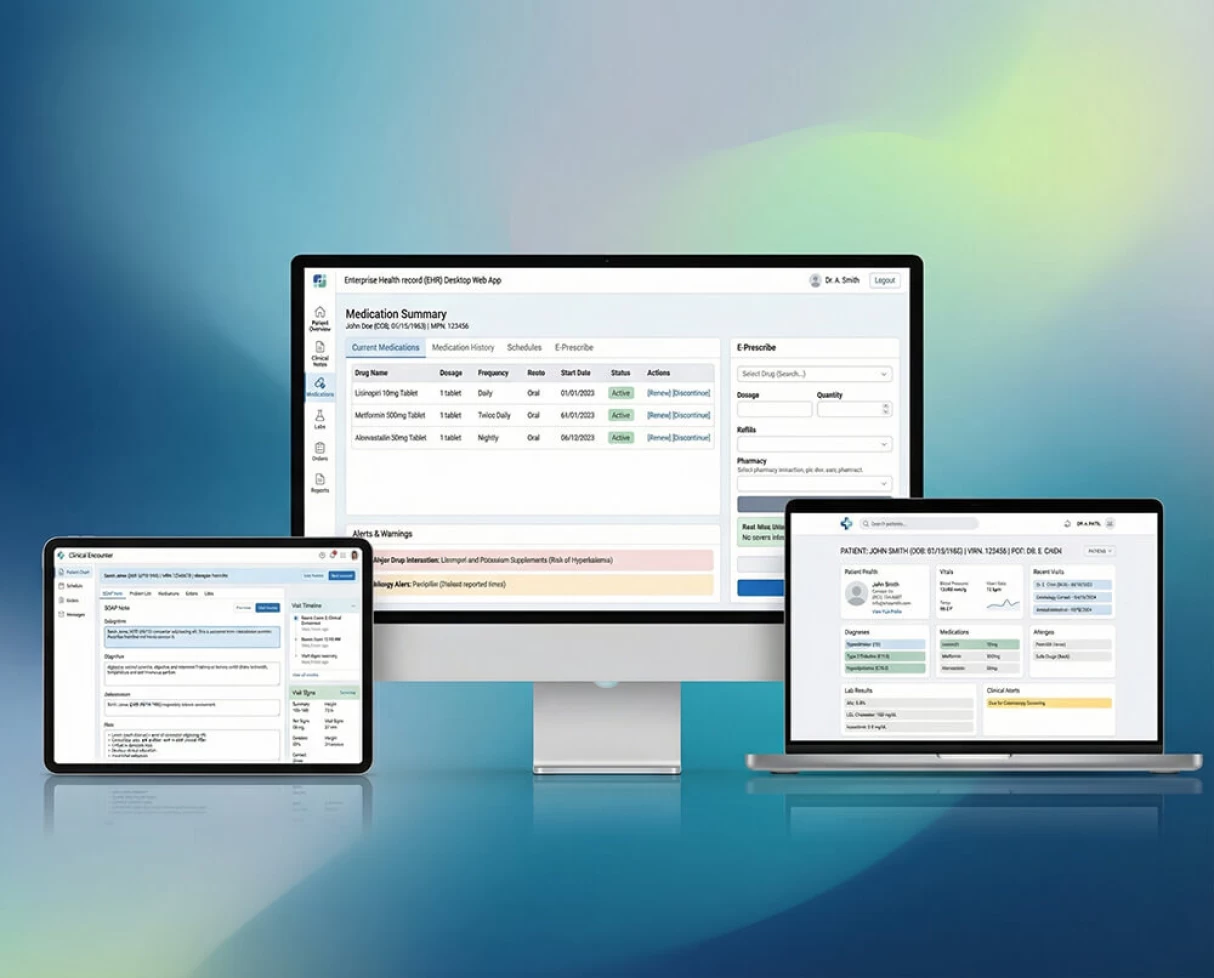
Pharos Production partnered with a healthcare organization to design and build MedCore, a comprehensive electronic health record platform that centralizes patient data, streamlines clinical workflows and ensures regulatory compliance. The system unifies medical records, clinical documentation, diagnostics and administrative processes within a secure, scalable digital environment. Built on a cloud-native architecture, MedCore delivers reliable performance, real-time data access and long-term scalability for healthcare providers operating at clinic, hospital and network levels.
We have no delivered pharmaceutical, biotech, CRO or lab system to show here. Our closest evidence is healthcare work, including an anonymized FHIR integration with a healthcare network's existing clinical systems, described on our healthcare software development page. For the CareConnect patient engagement platform, the team built the portal as a secure layer over the client's existing clinical systems, and the case study reports adoption reached 78% of active patients in six months. On the MedCore EHR platform, compliance validation ran inside every sprint with the client's clinical and regulatory teams, and the case study reports a 100% audit pass rate across three annual HIPAA and GDPR assessments. None of this work was GxP validation.
How delivery runs, with validation checkpoints
Our delivery cycle runs in two-week sprints. ICH E6(R3), in EMA's copy, asks the party responsible for a trial system to brief whoever builds it: "The responsible party should ensure that those developing computerised systems for clinical trials on their behalf are aware of the intended purpose and the regulatory requirements that apply to them." Our process gives GxP work five checkpoints where your QA team decides, starting with your briefing on intended use and requirements.
Security and privacy for pharma data
HIPAA reaches a pharmaceutical manufacturer through data it handles for a covered entity. Under 45 CFR 160.103, covered entities are health plans, clearinghouses and providers that transmit health information electronically in covered transactions, so a manufacturer is not one. A business associate acts "On behalf of such covered entity or of an organized health care arrangement (as defined in this section) in which the covered entity participates".
In the EU, GDPR makes health data a special category, processed only under an Article 9 exception, and a vendor processing it needs an Article 28 contract. Under NIS2, manufacturers of basic pharmaceutical products and preparations and medicinal product research entities are Annex I health types, and most device makers are Annex II types. Scope usually starts at medium size, but Article 2(2) and 2(3) cover some Annex I and II entities regardless of size, for example where disruption could significantly affect public health.
Related guides and services: NIS2 for software suppliers, NIS2 outsourcing, HIPAA development costs, EHDS conformity assessment and compliance engineering.
Controls we apply on pharma engagements: least-privilege access, no production patient data in development or test, encryption in transit and at rest, EU or US data residency, secrets management, security testing before release and a software bill of materials.
Reviews
Independent reviews from Clutch, GoodFirms and direct client testimonials - verified feedback on our software projects
Based on 342 verified reviews
Measurable results
- We build around your validated core instead of replacing it.
- Custom code pays off where a process crosses several validated systems or reaches patients, sites or partners; inside one platform, configuration usually wins.
- Your QA team owns validation and receives a validation-ready pack of specifications, traceability and test evidence with each pharma release.
- For your supplier assessment we offer a written lifecycle description, project evidence, a hosted audit on request and a quality agreement.
- Work starts with a paid discovery sprint ($5K-$15K).
Choose your project scope
Pharos Production scopes engagements in three tiers, Proof of concept, MVP build and Enterprise platform, with typical budgets from $10,000 to $500,000+ depending on scope and complexity.
Proof of concept
Focused validation of your riskiest technical assumption with a working spike and a clear build-or-pivot recommendation.
MVP build
Production-ready first version with core flows, real backend and the integrations to onboard first paying users.
Enterprise platform
Full-scale build with architecture, DevOps, QA, security and long-term evolution.
Prices vary based on project scope, complexity, timeline and requirements. Hourly rates range from $50 to $99 depending on role and seniority. Contact us for a personalized estimate.
Each model below can be set up for GxP work. Engineers placed through staff augmentation work inside your SDLC and QMS, which suits a pharma-tech vendor or CRO that already runs both. A dedicated team or an outsourced project runs on our delivery lifecycle.
Engagement models for pharma teams
Request staff augmentation
Need extra hands on your software project? Our developers can jump in at any stage - from architecture to auditing - and integrate seamlessly with your team to fill any technical gaps.
Hire dedicated experts
Whether you're building from scratch or scaling fast, our engineers are ready to step in. You stay in control, and we handle the code.
Outsource your project
From first line to final audit, we handle the entire development process. We will deliver secure, production-ready software, while you can focus on your business.
| Model | Best for | Team setup | Budget range |
|---|---|---|---|
| Staff Augmentation | Existing teams needing extra engineers at any project stage | 1-2 weeks | From $5,000/month |



| Dedicated Team Popular | Long-term projects requiring full ownership and control | 2-4 weeks | From $15,000/month |

| Project Outsourcing | Full-cycle development from idea to production launch | 1-2 weeks | $10,000-$80,000+ |
An approach to the development cycle
-
Team Assembly
Our company starts and assembles an entire project specialists with the perfect blend of skills and experience to start the work.
-
MVP
We'll design, build and launch your MVP, ensuring it meets the core requirements of your software solution.
-
Production
We'll create a complete software solution that is custom-made to meet your exact specifications.
-
Continuous Support
Our company will be right there with you, keeping your software solution running smoothly, fixing issues and rolling out updates.
Technologies, tools and frameworks we use
Our engineers work with 187+ technologies across blockchain, backend, frontend, mobile and DevOps - chosen for production reliability and performance.
Our engineers work with 187+ technologies across 10 categories: Frameworks, AI, Blockchains, DevOps, Clouds, Databases, Brokers, Tests, Programming, UI/UX.
- Frameworks: Backend Frameworks: Spring Boot, Erlang OTP, NodeJS, Phoenix, NestJS, Django, FastAPI, Express.js; Front End Frameworks: React, Next.JS, Svelte, Angular, Vue.js, Remix, Astro, Nuxt.js; Mobile Apps Frameworks: iOS, Android, Flutter, React Native, Capacitors, Ionic, Swift, Kotlin, Java, Dart
- AI: LLM Providers: OpenAI GPT, Anthropic Claude, Google Gemini, Meta Llama, Mistral AI, Cohere, Ollama, xAI Grok; AI Frameworks: LangChain, LangGraph, CrewAI, AutoGen, Hugging Face, PyTorch, TensorFlow, scikit-learn, LlamaIndex, Keras, XGBoost, LightGBM, OpenCV, spaCy, ONNX Runtime; Vector Databases: Pinecone, Weaviate, Qdrant, Chroma, pgvector, Milvus, FAISS; MLOps and Infrastructure: MLflow, Weights & Biases, DVC, Kubeflow, AWS SageMaker, Azure ML, Google Vertex AI, NVIDIA Triton, Airflow, Ray Serve, vLLM; AI Agent Tools: OpenAI Agents SDK, Claude MCP, Semantic Kernel, Haystack
- Blockchains: Private and Public Blockchains: Ethereum, TON, Corda, Tron, Hedera, Stellar, Consensys GoQuorum, Solana, Arbitrum, Binance Smart Chain (BSC), Sei, Celo, Hyperledger, MultiversX, IOTA, Polkadot, Aptos, Neo, Flow, Algorand, Avalanche, EOS, Optimism, Polygon, Cosmos, Sui, Tezos, Ontology, Fantom, NEAR Protocol, VeChain, Base, IPFS; Cloud Blockchain Solutions: Amazon Managed Blockchain, Amazon QLDB, IBM Blockchain, Oracle Blockchain
- DevOps: DevOps Tools: Kubernetes, Terraform, Docker, Istio, Prometheus, Grafana, Jenkins, ArgoCD, Ansible, GitHub Actions, GitLab CI, Pulumi, Datadog, New Relic, Vault
- Clouds: Clouds: Amazon Web Services, Azure, Google Cloud, Cloudflare, Vercel, DigitalOcean
- Databases: Databases: PostgreSQL, MySQL MariaDB, Redis, Cassandra, Neo4J, MongoDB, Elasticsearch, Solr, Ignite, ClickHouse, TimescaleDB, DynamoDB, Supabase, CockroachDB, ScyllaDB
- Brokers: Event and Message Brokers: Kafka, RabbitMQ, Flink, Apache Pulsar, Amazon SQS, Amazon SNS, NATS
- Tests: Test Automation Tools: Postman, Appium, Cucumber, Selenium, JMeter, Cypress
- Programming: Programming Languages: Solidity, FunC, Rust, GoLang, Elixir, Erlang, C++, Java, JavaScript, TypeScript, Scala, Python, C#, .NET, PHP, Ruby, Dart, SQL
- UI/UX: UI/UX Design Tools: Figma, Zeplin, InVision, Sketch, Miro, Marvel, Balsamiq, Photoshop, Illustrator, XD, After Effects, Corel Draw
AI and Machine Learning
LLM Providers 8
AI Frameworks 15
Vector Databases 7
MLOps and Infrastructure 11
AI Agent Tools 4
Blockchains
Private and Public Blockchains 33
Cloud Blockchain Solutions 4
DevOps
DevOps Tools 15
Clouds
Clouds 6
Databases
Databases 15
Brokers
Event and Message Brokers 7
Tests
Test Automation Tools 6
UI/UX
UI/UX Design Tools 12
Partnerships and awards
Recognized on Clutch, GoodFirms and The Manifest for software engineering excellence
65+ industry awards
FAQ
Quick answers to common questions about custom software development, pricing, process and technology.
Type to filter questions and answers. Use Topic to narrow the list.
Showing all 10
No matches
Try a different keyword, change the topic or clear filters
-
How much does pharmaceutical software development cost?
Cost follows the share of custom code and the validated systems involved, and a paid discovery sprint ($5K-$15K) turns that scope into an estimate.
-
How long does a pharmaceutical software project take?
Timelines depend most on your QA team's review cycles, then on the validated systems to integrate and retest, data migration and any AI evaluation work.
-
Who is responsible for validation, the pharma company or the vendor?
The pharma company. ICH Q10, published by FDA as guidance, says "The pharmaceutical company is ultimately responsible to ensure processes are in place to assure the control of outsourced activities and quality of purchased materials."
-
Which GAMP 5 category is custom pharmaceutical software?
Category 5 in ISPE's GAMP 5 guide, the category for custom applications, while a configured product is category 4.
-
How do you support a pharma supplier audit?
On request we host it remotely or on site, with your audit rights set in a quality agreement.
-
Can AI be used inside a validated system?
Yes, with a defined intended use, a human checkpoint, evaluation evidence and a pinned model version. For non-critical GMP uses, the draft Annex 22 says "personnel with adequate qualification and training should always be responsible for ensuring that the outputs from such models are suitable for the intended use".
-
How do you integrate with a validated platform without breaking its validated state?
We use the interfaces the vendor documents instead of direct database writes, and we specify each one for your change control. Under a support agreement, interface tests rerun on vendor releases that ship a pre-release environment, catching a breaking update before production.
-
Can GxP systems run in the public cloud?
Yes. Annex 11 asks for validated applications on qualified infrastructure, and FDA's Part 11 questions and answers say "Regulated entities can contract with IT service providers for IT services in a clinical investigation (e.g., data hosting, cloud computing software, platform and infrastructure services)."
-
Does HIPAA apply to pharmaceutical software?
Not by default: HIPAA applies where a manufacturer or its vendor handles protected health information on behalf of a covered entity, and patient support programs run with pharmacies, providers or health plans are the typical case to check.
-
Who owns the intellectual property?
You do. Clients own their source code, infrastructure credentials and roadmap artifacts from day one, as our about page states. PIC/S guidance asks regulated users to plan for a supplier failing where source code access is not guaranteed.
Build your Pharmaceutical Software platform
90+ engineers ready to deliver your Pharmaceutical Software project on time and within budget
What happens next?
-
Contact us
Contact us today to discuss your project. We're ready to review your request promptly and guide you on the best next steps for collaboration
Same day -
NDA
We're committed to keeping your information confidential, so we'll sign a Non-Disclosure Agreement
1 day -
Plan the Goals
After we chat about your goals and needs, we'll craft a comprehensive proposal detailing the project scope, team, timeline and budget
3-5 days -
Finalize the Details
Let's connect on Google Meet to go through the proposal and confirm all the details together!
1-2 days -
Sign the Contract
As soon as the contract is signed, our dedicated team will jump into action on your project!
Same day
Our offices
Headquarters in Las Vegas, Nevada. Engineering office in Kyiv, Ukraine.
We also work with clients through dedicated local teams in Las Vegas, New York and San Francisco.