
Persisting a Streaming Answer Through Stop, Retry and Concurrent Edits
Our chat-history implementation used an atomic answer claim, conditional terminal writes and conversation locks to handle Stop, Retry and concurrent edits.

Last updated
Our chat-history implementation used an atomic answer claim, conditional terminal writes and conversation locks to handle Stop, Retry and concurrent edits.
About 15 minutes after a successful two-tab refresh, one credential triggered reuse handling. Our grace-window fix made both tabs converge on the same pair.
A hosted model accepted our request format but leaked reasoning markers into citation parsing. The case traces capabilities, stream errors and separate speech.
The intended slide ranked first but fell below our retrieval cutoff. Earlier FDA calibration and a language probe explain why the threshold did not transfer.
A 5% frame-change threshold missed seven synthetic slide transitions; revised region rules found the boundaries while exposing seven clipped webinar inserts.
All 33 checked table rows had exact cells, but a live answer used the wrong device column despite good page-level OCR and retrieval scores
Our synthetic interview scored about 1.4% WER, while a separate FDA recording contained four FAIRS substitutions that the attention rules did not flag
Two readings flagged a unit error in our six-figure spike, while the later 22-figure run showed why numeric disagreement remained a limited inspection aid
A 31.3-second recording reported a 43.1-second bookmark, so our test generator needed checking before it could judge model timing and retrieval behavior
A patient-specific answer passed our citation parser while exceeding its sources, exposing the gap between source markers and claim support in a September test

Choose between fixed implementation, governed upgrades and migration from product requirements. Use a scenario matrix and permission register to record who can change the system and what remains unavailable.

Build operate transfer hands a vendor-built engineering team to the client, but for a team that is itself situated in Kyiv the EU and UK rules that move staff automatically do not apply. This guide explains how consent, a share purchase or Article 36-1 of the Labor Code decides who employs each engineer and how to keep the IP chain intact.

An ML model rollback restores the last validated release, but the previous model behaves as it did only if its features, preprocessing, threshold and serving runtime come back with it. The guide below covers the pin manifest, the choice between rollback, roll through, retraining and fallback, drift triggers calibrated by batch size and how to rehearse the path.

Authorize a mainnet release through a versioned manifest and ordered checks. The runbook assigns owners, required evidence and stop conditions before deployment and before enabling user activity.

Payment orchestration retry logic decides whether a declined payment is tried again, when, on which route and with what changes. This guide maps Visa's four decline categories to retry and routing decisions, explains why cascading is not settled by the rules, treats SCA soft declines as a step-up and keeps every attempt idempotent.

Popularity bias makes a recommender show already popular items more often than users' tastes justify, and retraining on the resulting clicks makes it worse. This guide computes popularity lift, exposure Gini, coverage, novelty and miscalibration from serving logs, ranks the fixes by engineering cost and covers what the DSA asks of recommender systems.
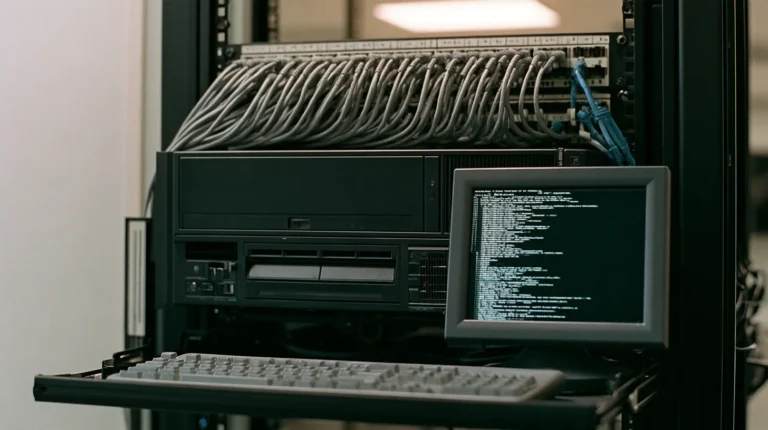
IBM i insurance integration connects mobile quote, policyholder portal, broker API, payment and analytics channels to a policy administration system on IBM i without a rewrite. This guide maps each channel to a native mechanism, keeps endorsements and payments inside the existing RPG or COBOL programs and names the risk each path carries under the documented constraints of IBM i and its integration tools.

Link each smart contract requirement to an expected result, evidence and reviewer. The escrow matrix covers permissions, terminal states, expiry, pause behavior, transfer failure and unpaid obligations.

LDAR software for an EU oil or gas operator is the system of record behind the leak detection and repair program that Regulation (EU) 2024/1787 requires. This guide sets out the component, survey, leak, repair, delay and flare records the Regulation implies, the 5-day and 30-day repair clocks and how versioned rule tables absorb implementing acts still to come.

EASA sets no single retention period for aircraft maintenance records. This guide maps each record class under Part-M, Part-145 and Part-CAMO to its rule, its holder and its clock, then turns the rules into build requirements for a records system: append-only corrections, CRS records bound to an identifiable signatory, per-record retention and exports that carry every clock through a change of operator or CAMO.

A payment reconciliation engine proves that every movement in a platform's ledger also happened at the bank and, where a PSP carried it, at the PSP. The design below normalizes all three legs into one event model, matches on references before tolerances, posts fees and chargebacks separately and turns every unexplained difference into a typed break with an owner.

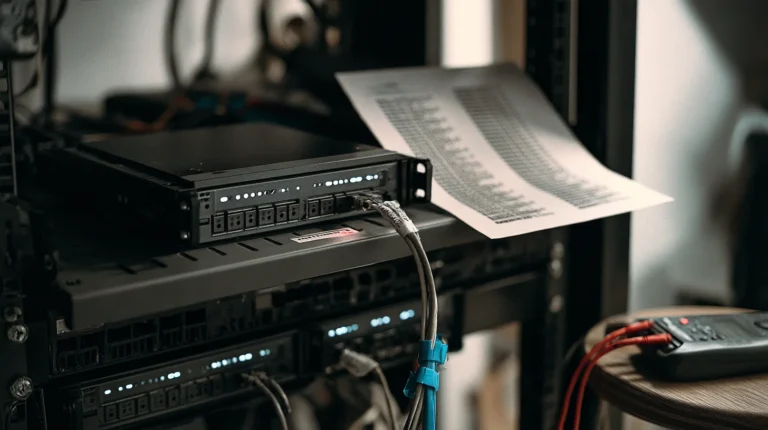
A build guide for the layer between a logistics platform and its carriers: one canonical shipment event model, a status mapping table that places generic parcel API statuses, LTL EDI 214 status messages and DCSA Track and Trace events side by side, per-carrier adapters, push delivery with a reconciliation poll, idempotent handling of duplicate and out-of-order events and detection of shipments that stop reporting.

A driver location tracking system carries a phone's location fix to two readers, the rider's map and the dispatch index. This guide follows the fix through background limits on Android and iOS, sampling by driver state, the transport and reconnect model, capacity sizing, an H3 cell index, map matching and nearest-driver lookup, and closes with what the EU Platform Work Directive means for collection and human review.
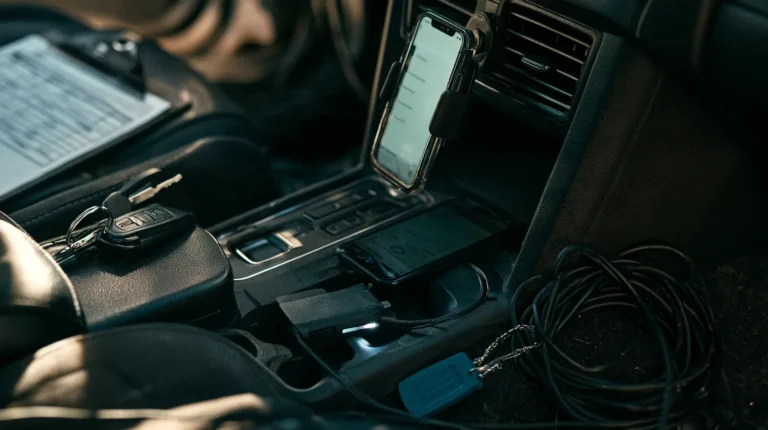
A vendor-neutral engineering comparison of the four ways a fleet or app platform gets vehicle data: dongle PIDs under SAE J1979, J1979-2 OBDonUDS vehicles, OEM connected-car APIs and raw CAN logging with DBC decoding, with a criteria matrix for choosing between them, the backend ingestion shape and data-quality traps of each, dongle security controls and the EU Data Act rule on who may ask for vehicle data.
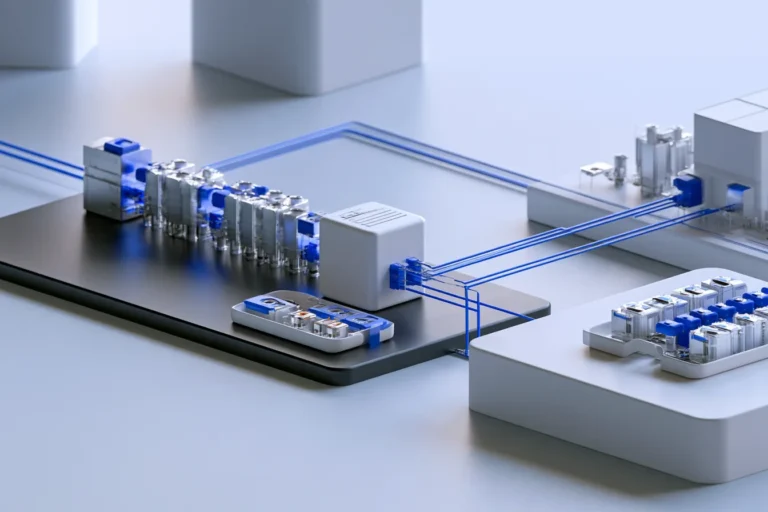
Build a smart contract estimate around accepted deliverables. A hypothetical escrow budget shows engineering effort, an upgrade option and the external costs that still need quotes before launch.

EIP-6963 does not replace window.ethereum, it adds a race-free discovery channel next to it. This guide works through what a dApp actually has to do at each layer of a wallet connection: EIP-1193's provider interface and its five events, a WalletConnect Sign v2.0 session whose granted namespace can differ from what was requested, a SIWE sign-in bound to an address and a domain, ERC-1271 and ERC-6492 signature verification for smart and counterfactual accounts, capability detection before a batched call and what EIP-7702 delegation means for a signature check written to assume every connected address is a plain externally owned account.

This guide treats a rate manual as a layered composite rather than a single document, drawing on the NAIC's own Product Filing Review Handbook, and works through the seven components a rating engine needs to make that composite queryable at run time, from effective-dated rate tables and factors keyed on the current term's effective date through the parity and regression testing that catches drift from the filed manual before a regulator or an audit does.
IPFS's own documentation is direct that a gateway URL is not the canonical address for NFT data, and EIP-4906 defines the events that tell a marketplace when metadata actually changed rather than merely moved. This guide works through where token metadata and media actually live, tokenURI under EIP-721 and uri with {id} substitution under EIP-1155, a five-option storage decision matrix (fully on-chain, IPFS with redundant pinning, Arweave, an HTTPS server, hybrid) and the failure modes a rushed build can run into: pin loss, gateway shutdown, mutable HTTPS metadata and a reveal whose rarity map can leak before it goes public.

ONE Record replaces sending a shipment record with publishing it once and granting access by URI, revocable at any time. This guide works through the model behind that standard: the logistics ontology and where its class hierarchy actually breaks, JSON-LD as the serialization, the API surface from creation to audit trail, subscriptions and access delegation, the published Cargo-XML migration path and the version and vocabulary conflicts a real integration hits inside the specification itself.

Article 77 of the EU Batteries Regulation requires an electronic record for LMT, industrial and electric-vehicle batteries, and the record is harder to design than it looks. This guide works through the decisions a platform makes when it implements it: why one passport belongs to one battery instance rather than one model, how three access tiers become an authorization model, where custody of the record moves across a battery's life and where a durability figure actually comes from.

Achieve them with minimized risk through our bespoke innovation capabilities
Contact us today to discuss your project. We're ready to review your request promptly and guide you on the best next steps for collaboration
Same dayWe're committed to keeping your information confidential, so we'll sign a Non-Disclosure Agreement
1 dayAfter we chat about your goals and needs, we'll craft a comprehensive proposal detailing the project scope, team, timeline and budget
3-5 daysLet's connect on Google Meet to go through the proposal and confirm all the details together!
1-2 daysAs soon as the contract is signed, our dedicated team will jump into action on your project!
Same dayThanks for the request!
We typically reply within 24 hours