







































































































Skip to content

Last updated October 8, 2026

Data Engineering Services

Build event pipelines and data integrations with explicit contracts, replay checks and an operations handover.

Who this service fits
  • Platform teams replacing fragile event consumers or manual exports
  • Product teams connecting live sources to reporting or application decisions
  • 90+ engineers
  • 28 industries
  • 13+ years in business

Your business results matter

Achieve them with minimized risk through our bespoke innovation capabilities

Your contact details
Please enter your name
Please enter a valid email address
Please enter your message

We use your details only to reply to your request. Data Privacy and Legal Notice

We typically reply within 24 hours

Last updated
by Dmytro Nasyrov, Founder and CTO. Content reflects Pharos Production delivery data as of that date. Editorial policy.
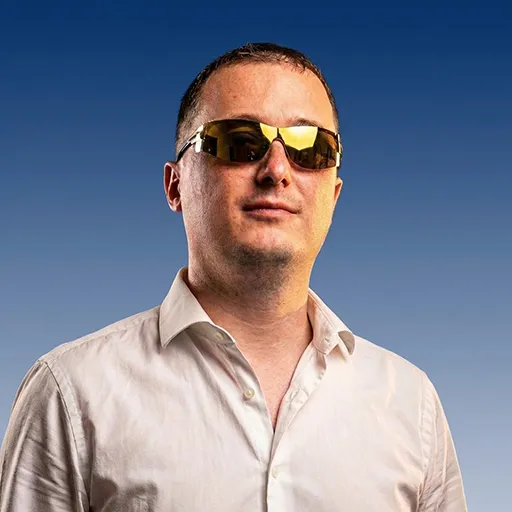
Dmytro Nasyrov - Founder and CTO of Pharos Production

Practice led by Dmytro Nasyrov

Founder and CTO

23+ years in custom software development. Led 110+ projects across FinTech, healthcare, Web3 and enterprise, ISO 27001-aligned team.

Data pipelines grounded in published delivery

The Pro Gambling case describes live match and odds ingestion with Kafka and Flink. Sagas applies event processing to uploads and location changes. These projects provide the delivery context for our data engineering offer: connect sources, process their events and expose data to applications or reporting.

Start with a single business decision and its required sources. We define the event contract, transformations and failure handling before choosing a processing stack. A new pipeline can sit beside an existing platform. A complete warehouse replacement is a separate scope.

What we do not do
  • Business owners approve definitions and data access. Engineering cannot infer an authoritative business metric from conflicting sources.
  • A warehouse migration, BI redesign or model-training program requires a separate specification.
  • Latency, retention and support commitments are agreed for the actual workload.

Define the pipeline before estimating it

  • Inputs: Source inventory, sample events, existing schemas and the receiving application or report.
  • Deliverables: Source adapters, transformation code, data contracts and an acceptance report, with deployment and recovery instructions.
  • Client decisions: System of record, field ownership, retention policy and an escalation owner for rejected records.
  • Cost drivers: Source access, schema differences, backfill size, change frequency and recovery requirements. Pricing is scoped after discovery.

Scheduled transfers or event processing?

Choose the simpler approach that meets the receiving system's freshness requirement. Live processing adds operational work. A daily report may not need it.

Factor Scheduled transfers Event processing
Business trigger A report can wait for an agreed refresh window. A new event must update an application or decision promptly.
Source access Exports, database reads or APIs can be sampled in batches. The source provides events or a suitable change stream.
Recovery Rerun a bounded transfer and compare the resulting totals. Replay from a checkpoint while preventing duplicate side effects.
Operating model Track completed runs and missed refreshes. Monitor consumer lag, rejected events and downstream availability.

An illustrative pipeline acceptance checklist

For a live odds feed, a review record can follow source_event_id -> event_time -> schema_version -> transformed_record -> consumer_result. This is an example of a test artifact, not a client dataset.

  1. Source and contract

    Supply valid and malformed samples. Verify required fields, timestamps and version handling. Unknown fields must follow a documented compatibility policy instead of silently breaking a consumer.

  2. Replay and correction

    Replay a known event window. Confirm that duplicates do not create extra downstream records. Include a late correction and show which value becomes authoritative.

  3. Partial failure

    Interrupt a consumer or source connection. Record the recovery position, retry behavior and rejected records. Demonstrate that an operator can identify the affected range.

  4. Reconciliation and ownership

    Compare an agreed source sample with the destination. Investigate missing or changed records and assign an exception owner. Deliver the mapping, test evidence and recovery runbook.

Published record

Published Pharos research

Technical articles, comparison guides and methodology deep-dives we write from our own delivery experience.

Platforms we work with

Trusted by Coinbase, Consensys, Core Scientific, MicroStrategy, Gate.io and 10+ more Web3 and enterprise platforms

16+ partners

Our 16 technology partners include:

  • Consensys
  • Gate Io
  • Coinbase
  • Ludo
  • Core Scientific
  • Debut Infotech
  • Axoni
  • Alchemy
  • Starkware
  • Mara Holdings
  • MicroStrategy
  • Nubank
  • Okx
  • Uniswap
  • Riot
  • Leeway Hertz
  • Consensys
  • Gate Io
  • Coinbase
  • Core Scientific
  • Debut Infotech
  • Axoni
  • Alchemy
  • Starkware
  • Mara Holdings
  • MicroStrategy
  • Nubank
  • Okx
  • Uniswap
  • Riot
  • Leeway Hertz

Commission the pipeline work you need

  • Source adapters
    Connect the agreed APIs, event feeds or exports. Document credentials handling and the limits imposed by each source.
  • Processing and quality
    Transform records into the receiving contract. Route malformed inputs to an inspectable exception flow and test schema changes.
  • Operations handover
    Provide deployment instructions, monitoring checks and a recovery runbook. Name the responsibilities shared with your platform team.

About the founder and CTO

Dmytro Nasyrov

Dmytro Nasyrov

Founder and CTO Pharos Production

Ask the founder a question

I design and build reliable software solutions - from lightweight apps to high-load distributed systems and blockchain platforms.

PhD in Artificial Intelligence, MSc in Computer Science (with honors), MSc in Electronics & Precision Mechanics.

  • 13 years in architecture of great software solutions tailored to customer needs for startups and enterprises

  • 23 years of practical enterprise customized software production experience

  • Lecturer at the National Kyiv Polytechnic University

  • Doctor of Philosophy in Artificial Intelligence

  • Master's degree in Computer Science, completed with excellence

  • Master's degree in Electronics and precision mechanics engineering

Choose your project scope

Pharos Production scopes engagements in three tiers, Pipeline assessment, Pipeline implementation and Modernization and backfill, with budgets tailored to scope and complexity.

Pipeline assessment

Inspect an existing flow or define a new source-to-consumer contract. Deliver a prioritized scope and an implementation proposal. Best for: Teams deciding what to repair or build.

Scoped after discovery

Modernization and backfill

Change an existing flow in stages. Agree a bounded historical dataset and compare the destination before retiring the old path. Best for: Platforms with an existing data workload.

Scoped after discovery

Prices vary based on project scope, complexity, timeline and requirements. Contact us for a personalized estimate.

Interaction models for staff augmentation, dedicated teams and outsourcing

Request staff augmentation

Need extra hands on your software project? Our developers can jump in at any stage - from architecture to auditing - and integrate seamlessly with your team to fill any technical gaps.

Outsource your project

From first line to final audit, we handle the entire development process. We will deliver secure, production-ready software, while you can focus on your business.

187+ technologies

Technologies, tools and frameworks we use

Our engineers work with 187+ technologies across blockchain, backend, frontend, mobile and DevOps - chosen for production reliability and performance.

Our engineers work with 187+ technologies across 10 categories: Frameworks, AI, Blockchains, DevOps, Clouds, Databases, Brokers, Tests, Programming, UI/UX.

  • Frameworks: Backend Frameworks: Spring Boot, Erlang OTP, NodeJS, Phoenix, NestJS, Django, FastAPI, Express.js; Front End Frameworks: React, Next.JS, Svelte, Angular, Vue.js, Remix, Astro, Nuxt.js; Mobile Apps Frameworks: iOS, Android, Flutter, React Native, Capacitors, Ionic, Swift, Kotlin, Java, Dart
  • AI: LLM Providers: OpenAI GPT, Anthropic Claude, Google Gemini, Meta Llama, Mistral AI, Cohere, Ollama, xAI Grok; AI Frameworks: LangChain, LangGraph, CrewAI, AutoGen, Hugging Face, PyTorch, TensorFlow, scikit-learn, LlamaIndex, Keras, XGBoost, LightGBM, OpenCV, spaCy, ONNX Runtime; Vector Databases: Pinecone, Weaviate, Qdrant, Chroma, pgvector, Milvus, FAISS; MLOps and Infrastructure: MLflow, Weights & Biases, DVC, Kubeflow, AWS SageMaker, Azure ML, Google Vertex AI, NVIDIA Triton, Airflow, Ray Serve, vLLM; AI Agent Tools: OpenAI Agents SDK, Claude MCP, Semantic Kernel, Haystack
  • Blockchains: Private and Public Blockchains: Ethereum, TON, Corda, Tron, Hedera, Stellar, Consensys GoQuorum, Solana, Arbitrum, Binance Smart Chain (BSC), Sei, Celo, Hyperledger, MultiversX, IOTA, Polkadot, Aptos, Neo, Flow, Algorand, Avalanche, EOS, Optimism, Polygon, Cosmos, Sui, Tezos, Ontology, Fantom, NEAR Protocol, VeChain, Base, IPFS; Cloud Blockchain Solutions: Amazon Managed Blockchain, Amazon QLDB, IBM Blockchain, Oracle Blockchain
  • DevOps: DevOps Tools: Kubernetes, Terraform, Docker, Istio, Prometheus, Grafana, Jenkins, ArgoCD, Ansible, GitHub Actions, GitLab CI, Pulumi, Datadog, New Relic, Vault
  • Clouds: Clouds: Amazon Web Services, Azure, Google Cloud, Cloudflare, Vercel, DigitalOcean
  • Databases: Databases: PostgreSQL, MySQL MariaDB, Redis, Cassandra, Neo4J, MongoDB, Elasticsearch, Solr, Ignite, ClickHouse, TimescaleDB, DynamoDB, Supabase, CockroachDB, ScyllaDB
  • Brokers: Event and Message Brokers: Kafka, RabbitMQ, Flink, Apache Pulsar, Amazon SQS, Amazon SNS, NATS
  • Tests: Test Automation Tools: Postman, Appium, Cucumber, Selenium, JMeter, Cypress
  • Programming: Programming Languages: Solidity, FunC, Rust, GoLang, Elixir, Erlang, C++, Java, JavaScript, TypeScript, Scala, Python, C#, .NET, PHP, Ruby, Dart, SQL
  • UI/UX: UI/UX Design Tools: Figma, Zeplin, InVision, Sketch, Miro, Marvel, Balsamiq, Photoshop, Illustrator, XD, After Effects, Corel Draw

Frameworks

Backend Frameworks 8

Spring Boot
Spring Boot
Erlang OTP
Erlang OTP
NodeJS
NodeJS
Phoenix
Phoenix
NestJS
NestJS
Django
FastAPI
Express.js

Front End Frameworks 8

React
React
Next.JS
Next.JS
Svelte
Svelte
Angular
Angular
Vue.js
Remix
Astro
Nuxt.js
Trusted & Recognized

Partnerships and awards

Recognized on Clutch, GoodFirms and The Manifest for software engineering excellence

  • Partner1
  • Partner2
  • Partner3
  • Partner4
  • Partner5
  • Clutch Global Leader, Spring 2025
  • Clutch Top Blockchain Company, Ukraine 2025
  • Clutch Top Web3 Development, Ukraine 2025
  • Clutch Top Smart Contract Development, Ukraine 2025
  • GoodFirms Review Award 2025
  • The Manifest Top Blockchain Company, Ukraine 2024

65+ industry awards

An approach to the development cycle

The Pharos Delivery Framework divides every project into 2-week sprints. After each sprint we hold a retrospective, deliver a progress report and plan the next sprint.
  1. Team Assembly

    Our company starts and assembles an entire project specialists with the perfect blend of skills and experience to start the work.

  2. MVP

    We'll design, build and launch your MVP, ensuring it meets the core requirements of your software solution.

  3. Production

    We'll create a complete software solution that is custom-made to meet your exact specifications.

  4. Ongoing

    Continuous Support

    Our company will be right there with you, keeping your software solution running smoothly, fixing issues and rolling out updates.

Related engineering guides

A migration team in a cutover war room watching a replication-lag dashboard, one engineer holding a phone ready to call a rollback.

Legacy Data Migration Strategy

Google Cloud's own migration guidance states the constraint every cut-over plan has to accept: genuinely zero downtime is impossible. This guide works through the decision a legacy data migration actually turns on, big bang against outbox-based trickle against log-based change data capture, why a dual write without a transactional outbox can silently diverge two databases, reconciliation tiered from row counts to field-level checks and the rehearsal and rollback discipline AWS's own cutover guidance describes.

Macro of a printed source document marked with cut lines at its section breaks and one exception clause bracketed back to the rule above it.

RAG Data Pipeline

A RAG corpus is a live system with state, not a build artifact. This piece traces one document through arrival, change, duplication, deletion and embedding model migration, and shows where five major vector stores document contradictory answers to the same event.

Questions that change a data engineering scope

Last updated:

  • Can you repair an existing pipeline instead of replacing it?

    Yes. Begin with a failing run or event sequence, the current code and access to a safe test environment.

    The assessment separates source defects from transformation and consumer failures. If a bounded repair meets the requirement, it can be commissioned without a platform rebuild.

  • Do Kafka and Flink have to be part of our stack?

  • How is data engineering different from software integration?

    Use this engagement when the main deliverable is a data pipeline with transformation, validation and recovery evidence. Choose software integration when the main requirement is an operational workflow between applications.

    The scope can include both, with separate acceptance criteria.

  • Can the same engagement include historical data?

    A backfill is included only when its source range and validation method are agreed. We identify records that can be reconstructed and exceptions that need business decisions.

    An unbounded historical migration is estimated separately from the live pipeline.

  • What is needed for a proposal?

    Provide the source systems, destination, representative schemas and the required refresh behavior. State who can grant test access and approve the data definitions.

    The proposal names deliverables and dependencies, with acceptance tests recorded separately. It does not assume a budget from source count alone.

Bring a source and a decision

Describe which data arrives, who needs it and what fails today. We will scope a pipeline or a bounded repair around that workload. For operational application workflows, see software integration.

Dmytro Nasyrov, Founder and CTO at Pharos Production
Dmytro Nasyrov Founder & CTO Let's work together!

Scope your data pipeline

Tell us the sources, destination and refresh requirement. Use representative schemas rather than confidential production records.

Your contact details
Please enter your name
Please enter a valid email address
Please enter your message

We use your details only to reply to your request. Data Privacy and Legal Notice

We typically reply within 24 hours

What happens next?

  1. Contact us

    Contact us today to discuss your project. We're ready to review your request promptly and guide you on the best next steps for collaboration

    Same day
  2. NDA

    We're committed to keeping your information confidential, so we'll sign a Non-Disclosure Agreement

    1 day
  3. Plan the Goals

    After we chat about your goals and needs, we'll craft a comprehensive proposal detailing the project scope, team, timeline and budget

    3-5 days
  4. Finalize the Details

    Let's connect on Google Meet to go through the proposal and confirm all the details together!

    1-2 days
  5. Sign the Contract

    As soon as the contract is signed, our dedicated team will jump into action on your project!

    Same day

Our offices

Headquarters in Las Vegas, Nevada. Engineering office in Kyiv, Ukraine.

We also work with clients through dedicated local teams in Las Vegas, New York and San Francisco.

Las Vegas, United States

Headquarters PT
5348 Vegas Dr, Las Vegas, NV 89108, United States

Kyiv, Ukraine

Engineering office EET (UTC+2)
44-B Eugene Konovalets Str. Suite 201, Kyiv 01133, Ukraine