Skip to content

Reviewed by

AI Consulting Services

Pharos Production offers AI consulting services that bridge the gap between business strategy and technical implementation.

  • 25+ AI projects delivered
  • 90+ engineers
  • 101 Clutch reviews

Your business results matter

Achieve them with minimized risk through our bespoke innovation capabilities

Your contact details
Please enter your name
Please enter a valid email address
Please enter your message
* required

We typically reply within 4 hours. Prefer email? hello@pharosproduction.com

SOC 2 Type II GDPR ISO 27001 NDA Protected

Aligned with these frameworks. Audit reports available on request.

Reviewed and updated
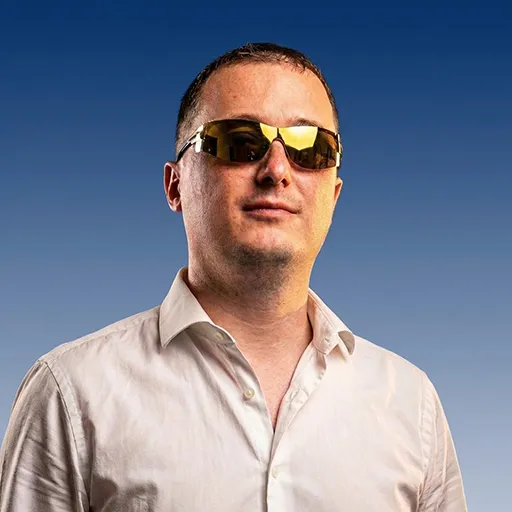
Last reviewed July 30, 2026 by Dmytro Nasyrov, Founder and CTO. Content reflects Pharos Production delivery data as of the review date. Editorial policy.
Dmytro Nasyrov - Founder and CTO of Pharos Production

Reviewed by Dmytro Nasyrov

Founder and CTO

23+ years in custom software development. Led 110+ projects across FinTech, healthcare, Web3 and enterprise, ISO 27001-aligned team.

What is AI consulting?

AI consulting is a paid assessment where an AI-fluent team evaluates whether a specific business problem can be solved with machine learning, scopes the smallest useful pilot and writes an honest go or no-go recommendation. It is not sales dressed up as advice.
Authoritative citations 12 sources
  1. Stanford AI Index The Stanford AI Index tracks multi-year movement on ML benchmarks, training compute, responsible AI metrics and enterprise adoption across industries, making it the most cited yearly reference for grounding ML investment cases. hai.stanford.edu
  2. Papers With Code Papers With Code maintains live state-of-the-art leaderboards for ML tasks across image classification, object detection, NLP and tabular prediction, which we use to pick baselines before committing to a model family. paperswithcode.com
  3. arXiv, Chen and Guestrin 2016 The XGBoost paper by Chen and Guestrin remains the most cited gradient boosting reference and underpins tabular ML baselines we still ship in FinTech and logistics systems a decade after publication. arxiv.org
  4. arXiv, LightGBM Microsoft Research LightGBM introduced leaf-wise tree growth and histogram-based splits, giving lower latency and memory footprint than XGBoost on wide tabular data, which is why our fraud detection stack defaults to it. arxiv.org
  5. McKinsey State of AI McKinsey documents annual enterprise ML adoption across functions like marketing, service operations and supply chain, and consistently reports that scaled ML correlates with higher EBIT contribution versus pilot-only organizations. mckinsey.com
  6. Gartner AI Hype Cycle Gartner maps enterprise ML techniques across the hype cycle phases, flagging which capabilities are production-ready for mid-market adoption versus still speculative, which we cross-check before recommending a build path. gartner.com
  7. IDC Worldwide AI Spending Guide IDC publishes the worldwide AI spending guide with multi-year forecasts by industry, use case and geography, which we reference when sizing three-year total cost of ownership for ML platform engagements. idc.com
  8. NIST AI Risk Management Framework The NIST AI RMF defines a govern, map, measure and manage lifecycle for AI systems that we apply to production ML including model cards, bias testing and incident response procedures for regulated deployments. nist.gov
  9. OWASP ML Security Top 10 OWASP maintains a ranked list of the top machine learning security risks including input manipulation, training data poisoning, model theft and adversarial attacks, which we use as a threat model checklist before exposing any ML endpoint. owasp.org
  10. O'Reilly AI Adoption in the Enterprise The O'Reilly AI adoption survey tracks ML maturity stages across enterprises, reporting on deployment percentages, skills gaps and the most common production blockers which consistently include data quality and monitoring rather than model choice. oreilly.com 2022
  11. Google Cloud MLOps Architecture Google Research published the canonical MLOps continuous delivery reference describing three maturity levels from manual to fully automated pipelines, which we use as the template for client MLOps roadmaps and capability gap assessments. cloud.google.com
  12. PyTorch Blog The PyTorch engineering blog tracks the 2.x production tooling surface including torch.compile, TorchServe updates and quantization workflows, which shape our default serving stack for sub-50ms p99 inference on GPU and CPU targets. pytorch.org
What we do not do
  • Pitch decks that conclude "buy AI from us" regardless of the problem
  • Generic AI readiness reports copy-pasted from a previous client
  • Multi-month strategy retreats with no working pilot
  • Engagements where the client wants validation, not assessment
  • Vendor comparisons for a RFP we are also competing in

AI consulting at Pharos at a glance

  • Engagements: 40+ AI consulting engagements since 2020 across SaaS, retail, insurance and manufacturing
  • Kill rate: Roughly 1 in 3 engagements ends in a kill or scale-down recommendation. We publish this on purpose.
  • Duration: 3-week standard assessment; 6-week deep dive with pilot scoping; 1-week vendor review
  • Team: Founder-CTO plus senior ML engineer; no junior staffing on consulting
  • Pricing: 3-week assessment from $18,000; 6-week deep dive from $42,000; vendor review $6,500
  • Deliverable: Written decision document + a baseline measurement + a kill criterion. Slides only as a summary, never the primary artefact.
  • Refund policy: Money-back if the engagement does not change a business decision; applied twice since 2020

AI consulting engagement vs pilot engagement: which should you buy?

Factor Standalone AI consulting assessment Consulting bundled into a pilot engagement
Cost $18K-$42K fixed fee Consulting folded into pilot budget
Outcome Written decision document Running pilot with measurable impact
Risk of fake progress Low (no code delivered) Medium (pilot can ship ugly)
When to buy You are not sure if AI fits the problem You already know AI fits and want to prove it
Independence High; no implementation incentive Lower; vendor benefits from recommending build

How we run an AI consulting engagement

Pharos Verified Delivery applied to consulting: every recommendation ties to a measurable baseline, a smallest-useful pilot and a written kill criterion. Nothing leaves the engagement without a decision owner.

Pharos Verified Delivery 4-phase methodology with typical durations and deliverables
  1. Phase 01 / 04

    Paid Discovery

    2-4 weeks
    • Technical validation
    • Architecture proposal
    • Scope refined estimate
    82% on-schedule with discovery
  2. Phase 02 / 04

    Iterative Build

    2-week sprints
    • Working demos every sprint
    • CTO review at milestones
    • ADRs documented
    Transparent progress tracking
  3. Phase 03 / 04

    Production Readiness

    • Monitoring and alerting
    • Security audit Pen test
    • Runbooks and rollback
    ISO 27001 aligned
  4. Phase 04 / 04

    Support

    Ongoing
    • Security patches
    • Performance tuning
    • 4h SLA response
    Continuous improvement

Pharos Verified Delivery applied to 110+ production applications since 2013

Consulting engagements that changed the decision

A 3-week consulting engagement should change a decision. If it does not, we refund the assessment fee. These engagements did.

Kill recommendation (Q2 2025)

Q2 2025 · Retail analytics, EU
Before

Client ready to invest $1.8M in a demand-forecasting ML pipeline.

After

Baseline analysis showed their existing SARIMA model was within 3% of what ML could deliver. Kill recommendation saved $1.8M; we proposed a 4-week feature engineering refresh instead at $28K.

We measured the baseline before scoping the solution. Most AI consulting skips this step because a kill recommendation ends the retainer.

Pilot definition (Q4 2024)

Q4 2024 · Insurance, UK
Before

"We want AI" with no specific workflow, no dataset inventory and no success metric.

After

Scoped a claims triage pilot with 4-week delivery and a single metric (median handling time). Pilot shipped in 5 weeks; handling time dropped 31% before any model was trained.

The model was a tiny part of the value. Workflow redesign and data cleanup did most of the work, which is the honest story almost no AI vendor tells.

Vendor selection (Q1 2025)

Q1 2025 · SaaS, US
Before

Evaluating 11 AI platforms with no clear selection criteria.

After

Reduced the shortlist to 2 platforms in a week using a weighted matrix tied to the client's actual workload. $220K annual license saved by rejecting the expected winner on TCO grounds.

We did not recommend our own platform. Independence is how AI consulting is supposed to work.

Client names anonymized under NDA. Full case studies at /cases/.

When AI consulting is a waste of money

If the answer is obvious before the engagement starts, the engagement is wrong. Examples where we tell the client to skip consulting altogether:

Projects we decline
  • The problem is clearly rules-based and a simple script would fix it
  • The dataset does not exist and there is no plan to collect it
  • Leadership wants a report to justify a decision they already made
  • The expected ROI is smaller than the cost of the consulting engagement
  • The team has no capacity to operate whatever we recommend
What we actually recommend first

Before hiring any AI consultant, run a 2-day internal audit: list the top 5 workflows consuming the most analyst time, then ask whether any of them would be fundamentally changed by perfect prediction. If the answer is no, AI is not the right tool and consulting will not change that.

Pharos AI consulting portfolio

Pharos AI consulting delivery portfolio observations, 2020-2026

Ranges we consistently see across 50+ consulting engagements.

  • Typical 2-4 weeks from kickoff to a documented build, buy or defer recommendation with cost estimate and data-readiness verdict.

  • Approximately 40% of discovery engagements end with a do-not-build or build-something-simpler recommendation citing data gaps or unclear success metric[2].

  • 55-65% of discovery engagements that pass the data-readiness gate proceed to a scoped build with Pharos in the following quarter.

  • Discovery and data-readiness audits $8,000-$25,000; architecture review and roadmap $15,000-$60,000; governance baseline setup $10,000-$35,000.

  • 70% of follow-on engagements include both a build tier and an MLOps or monitoring tier[11].

AI consulting outlook 2026-2027

Three shifts are reshaping AI consulting demand.

  • Enterprise buyers now hire AI consultants for risk classification, model cards and evaluation artifacts, not framework choice. Procurement cycles penalise vendors without published governance documentation[8].

  • Most enterprise AI budgets allocate to structured-data prediction and retrieval-augmented generation over foundation model training. Consultants who default to frontier models lose deals to teams that lead with the cheapest sufficient technique[5].

  • Procurement teams require model cards, evaluation reports and bias audits as deliverables. AI consultants without structured evaluation templates fail enterprise review regardless of technical strength[6].

Our four-dimension AI consulting evaluation template

Every AI consulting engagement we ship runs against the same four-dimension readiness evaluation before handover.

Production post-mortem

When a data-readiness audit saved a client from a six-month wasted build

A FinTech client engaged us in Q2 2025 for a fraud detection ML build with an estimated 18-month timeline and $280k budget. Our four-week data-readiness audit found labeled fraud examples were one-twentieth of the volume the proposed model family required, and historical data had significant label drift from a 2024 policy change. We recommended against the ML build and instead shipped a rules-and-statistical-baseline approach at 10% of the original cost.

Standard consulting retainer now always starts with a data-readiness audit before build scoping. Approximately 40% of discovery engagements end with a "do not build" or "build something simpler" recommendation, preventing sunk cost on under-specified data.

Engagement discipline
Every AI consulting engagement ends in a written decision document with a baseline, options, recommendation and kill criterion. No slides-only deliverables. The document is owned by a named client decision maker from day one. Last reviewed: July 2026. Editorial policy.

Published record

Published Pharos research

Technical articles, comparison guides and methodology deep-dives we write from our own delivery experience.

Platforms we work with

Trusted by Coinbase, Consensys, Core Scientific, MicroStrategy, Gate.io and 10+ more Web3 and enterprise platforms

16+ partners

Our 16 technology partners include:

  • Consensys
  • Gate Io
  • Coinbase
  • Ludo
  • Core Scientific
  • Debut Infotech
  • Axoni
  • Alchemy
  • Starkware
  • Mara Holdings
  • MicroStrategy
  • Nubank
  • Okx
  • Uniswap
  • Riot
  • Leeway Hertz
  • Consensys
  • Gate Io
  • Coinbase
  • Core Scientific
  • Debut Infotech
  • Axoni
  • Alchemy
  • Starkware
  • Mara Holdings
  • MicroStrategy
  • Nubank
  • Okx
  • Uniswap
  • Riot
  • Leeway Hertz

About the founder and CTO

Dmytro Nasyrov

Dmytro Nasyrov

Founder and CTO Pharos Production

Ask the founder a question

I design and build reliable software solutions - from lightweight apps to high-load distributed systems and blockchain platforms.

PhD in Artificial Intelligence, MSc in Computer Science (with honors), MSc in Electronics & Precision Mechanics.

  • 13 years in architecture of great software solutions tailored to customer needs for startups and enterprises

  • 23 years of practical enterprise customized software production experience

  • Lecturer at the National Kyiv Polytechnic University

  • Doctor of Philosophy in Artificial Intelligence

  • Master's degree in Computer Science, completed with excellence

  • Master's degree in Electronics and precision mechanics engineering

Choose your cooperation model

Pharos Production works in three engagement models, from a focused PoC to a production MVP to a full enterprise platform, with typical budgets from $10,000 to $400,000+ depending on scope and complexity.

PoC
Proof of concept

Focused validation of your riskiest technical assumption with a working spike and a clear build-or-pivot recommendation.

$11,000 - $35,000
Popular choice
MVP
MVP build

Production-ready first version with core flows, real backend and the integrations to onboard first paying users.

$55,000 - $160,000
Enterprise
Enterprise platform

Full-scale build with architecture, DevOps, QA, security and long-term evolution.

$130,000 - $350,000+

Prices vary based on project scope, complexity, timeline and requirements. Hourly rates range from $35 to $75 depending on role and seniority. Contact us for a personalized estimate.

Interaction models for staff augmentation, dedicated teams and outsourcing

Request staff augmentation

Need extra hands on your software project? Our developers can jump in at any stage - from architecture to auditing - and integrate seamlessly with your team to fill any technical gaps.

Outsource your project

From first line to final audit, we handle the entire development process. We will deliver secure, production-ready software, while you can focus on your business.

45+ technologies

Technologies, tools and frameworks we use

Our engineers work with 45+ ai technologies - chosen for production reliability and performance.

AI and Machine Learning

LLM Providers 8

OpenAI GPT
Anthropic Claude
Google Gemini
Meta Llama
Mistral AI
Cohere
Ollama
xAI Grok

AI Frameworks 15

LangChain
LangGraph
CrewAI
AutoGen
Hugging Face
PyTorch
TensorFlow
scikit-learn
LlamaIndex
Keras
XGBoost
LightGBM
OpenCV
spaCy
ONNX Runtime

Vector Databases 7

Pinecone
Weaviate
Qdrant
Chroma
pgvector
Milvus
FAISS

MLOps and Infrastructure 11

MLflow
Weights & Biases
DVC
Kubeflow
AWS SageMaker
Azure ML
Google Vertex AI
NVIDIA Triton
Airflow
Ray Serve
vLLM

AI Agent Tools 4

OpenAI Agents SDK
Claude MCP
Semantic Kernel
Haystack
Trusted & Recognized

Partnerships and awards

Recognized on Clutch, GoodFirms and The Manifest for software engineering excellence

  • Partner1
  • Partner2
  • Partner3
  • Partner4
  • Partner5
65+ industry awards

An approach to the development cycle

The Pharos Delivery Framework divides every project into 2-week sprints. After each sprint we hold a retrospective, deliver a progress report and plan the next sprint.
  1. Team Assembly

    Our company starts and assembles an entire project specialists with the perfect blend of skills and experience to start the work.

  2. MVP

    We'll design, build and launch your MVP, ensuring it meets the core requirements of your software solution.

  3. Production

    We'll create a complete software solution that is custom-made to meet your exact specifications.

  4. Ongoing

    Continuous Support

    Our company will be right there with you, keeping your software solution running smoothly, fixing issues and rolling out updates.

AI strategy insights

A minimalist enterprise building balanced on a narrow fulcrum with a pilot prototype on one side and a scaled production system on the other.

Enterprise AI Adoption Guide 2026: From Strategy to Production

Enterprise AI adoption in 2026 is at a tipping point. 78% of enterprises report using AI in at least one business function, but only 22% have successfully scaled AI beyond pilot projects, according to the McKinsey Global AI Survey (2024). The gap between experimentation and production deployment is where most AI initiatives fail - not […]

Three transparent acrylic blocks of increasing size on a pedestal, each containing a different internal neural pattern, representing AI project cost tiers.

AI Development Cost in 2026: Complete Pricing Breakdown

How much does AI development cost in 2026? AI development costs range from $10,000 for simple chatbots to $500,000+ for enterprise multi-agent systems. The final cost depends on four factors: model complexity, data preparation needs, integration scope and ongoing inference costs. AI development cost by project type Simple AI features like FAQ chatbots and basic […]

Two mannequins side by side, one wearing a bespoke hand-stitched garment and the other a mass-produced uniform, symbolizing custom vs off-the-shelf AI.

Custom AI vs Off the Shelf: The Build or Buy Decision

Quick Comparison: Custom AI vs Off-the-Shelf Factor Custom AI Off-the-Shelf Platforms Time to deploy 3-6 months 1-4 weeks Upfront cost $50K-$500K+ $500-$5,000/month TCO (3 years) Lower at scale Higher at scale Differentiation Full competitive moat Same tools as competitors Data ownership 100% yours Vendor-controlled Customization Unlimited Limited to vendor features Maintenance Your team or vendor […]

AI Act High Risk Classification

How to classify an AI system as high-risk under Article 6 and Annex III of the EU AI Act after the Digital Omnibus, with the new 1a to 1c carve-outs, a decision tree and worked examples.

AI Act Technical Documentation

Annex IV of the EU AI Act translated point by point into engineering deliverables, plus the logging and retention duties in Article 12, Article 19 and Article 26 and the unconfirmed SME simplified-documentation route.

Skip glossary

AI consulting glossary 7

AI readiness assessment
A structured audit of an organization's data quality, infrastructure, skills and use cases to determine how prepared it is to deploy AI. It is the typical first step of an AI consulting engagement.
Proof of concept (PoC)
A small, time-boxed build that validates whether an AI use case is technically feasible and valuable before committing to a full project. It usually costs 15 to 20 percent of the full project budget.
AI roadmap
A prioritized plan that sequences AI use cases, infrastructure work and milestones over a defined horizon, commonly 90 days, with expected outcomes, timelines and resource estimates.
Model selection
The process of choosing between frontier LLMs, open-source models and custom-trained models based on accuracy, latency, cost, data residency and compliance requirements for a given use case.
Data infrastructure assessment
An evaluation of the data pipelines, storage, quality and governance an organization has, identifying the minimum work needed to support its prioritized AI use cases.
AI governance
The frameworks, controls and audit trails that keep AI systems compliant, transparent and safe, covering model risk, bias, explainability and data privacy across regulations like the EU AI Act and ISO/IEC 42001.
Use-case prioritization
Scoring candidate AI applications by business impact, technical feasibility and data readiness to focus investment on the few use cases that deliver measurable value first.
Frequently asked questions about AI Consulting Services

Last updated:

  • Copy link Copies a direct link to this answer to your clipboard.

    AI consulting services cover AI readiness assessment, use-case discovery, technology and model selection, data infrastructure review, a prioritized roadmap and governance framework design. At Pharos Production we evaluate your existing systems, identify high-impact AI opportunities and deliver an actionable implementation plan with realistic timelines and resource estimates.

  • Copy link Copies a direct link to this answer to your clipboard.

    AI consulting cost depends on scope. A focused 2 to 3 week AI readiness assessment is the typical entry point, while a full strategy and roadmap engagement runs higher. A proof of concept usually costs 15 to 20 percent of the full project budget. We provide a fixed-price scope before any work begins.

  • Copy link Copies a direct link to this answer to your clipboard.

    AI strategy consulting defines what to build and why: readiness, use-case prioritization, ROI modeling and a roadmap. AI implementation consulting covers how to build it: architecture, model selection, data pipelines and delivery oversight. Pharos Production offers both, and can stay on to build the solution once the plan is validated.

  • Copy link Copies a direct link to this answer to your clipboard.

    We run a structured discovery that maps your workflows, data and goals against where AI delivers measurable value. We score candidate use cases on impact, feasibility and data readiness, then prioritize a shortlist.

    The output is 3 to 5 use cases with expected outcomes rather than a generic list of AI possibilities.

  • Copy link Copies a direct link to this answer to your clipboard.

    Yes. We work with startups and small businesses as well as enterprises, scaling the engagement to your stage and budget. For smaller teams we focus on one high-value use case, a lean proof of concept and a pragmatic roadmap, so you validate AI before committing to a large build.


  • Copy link Copies a direct link to this answer to your clipboard.

    No. You do not need a large data team to begin. We assess your current data and infrastructure, and most engagements start with the data you already have.

    Where gaps exist we recommend the minimum pipeline work needed for your first use case rather than a full data platform rebuild.

  • Copy link Copies a direct link to this answer to your clipboard.

    A readiness assessment takes 2 to 3 weeks and a strategy plus roadmap engagement typically runs 4 to 8 weeks. A proof of concept adds a few weeks depending on complexity. Advisory retainers are available for ongoing guidance, and we can transition into a build engagement when you are ready.

  • Copy link Copies a direct link to this answer to your clipboard.

    Yes. Unlike advisory-only firms, Pharos Production validates recommendations with working prototypes and can build the full production solution with the same team. This removes the handoff gap between strategy and delivery, so the people who designed your AI roadmap also ship it.

  • Copy link Copies a direct link to this answer to your clipboard.

    Yes, and we do so in roughly a third of engagements. The kill recommendation is the most valuable outcome when the data, problem or timing is wrong.

    That number is public because it is how honest AI consulting is supposed to work. Specifically, we decline when the answer is obvious (skip AI, use a script), when the client wants validation rather than assessment, when there is no dataset and no plan to collect one or when leadership has already made the decision and wants a report to justify it.

  • Copy link Copies a direct link to this answer to your clipboard.

    Week 1 is problem framing and data inventory. Week 2 is baseline measurement and feasibility analysis.

    Week 3 is pilot scoping and written recommendation. The deliverable is a decision document signed off by a named client decision maker.

The Pharos takeaway on AI consulting

AI consulting rewards honest assessment over cheerleading. The Pharos approach leads with data-readiness, governance baseline and measurable outcomes before recommending a build path, and declines projects where the simpler tool fits better[10].

Book a 30-minute AI readiness call
Dmytro Nasyrov, Founder and CTO at Pharos Production
Dmytro Nasyrov Founder & CTO Let's work together!

Your business results matter

Achieve them with minimized risk through our bespoke innovation capabilities

Your contact details
Please enter your name
Please enter a valid email address
Please enter your message
* required

We typically reply within 4 hours. Prefer email? hello@pharosproduction.com

What happens next?

  1. Contact us

    Contact us today to discuss your project. We're ready to review your request promptly and guide you on the best next steps for collaboration

    Same day
  2. NDA

    We're committed to keeping your information confidential, so we'll sign a Non-Disclosure Agreement

    1 day
  3. Plan the Goals

    After we chat about your goals and needs, we'll craft a comprehensive proposal detailing the project scope, team, timeline and budget

    3-5 days
  4. Finalize the Details

    Let's connect on Google Meet to go through the proposal and confirm all the details together!

    1-2 days
  5. Sign the Contract

    As soon as the contract is signed, our dedicated team will jump into action on your project!

    Same day

Our offices

Headquarters in Las Vegas, Nevada. Engineering office in Kyiv, Ukraine.

We also work with clients through dedicated local teams in Las Vegas, New York and San Francisco.

Las Vegas, United States

Headquarters PT
5348 Vegas Dr, Las Vegas, Nevada 89108, United States

Kyiv, Ukraine

Engineering office EET (UTC+2)
44-B Eugene Konovalets Str. Suite 201, Kyiv 01133, Ukraine