











































IoT Development Guide: Architecture, Protocols and Platforms
IoT development guide covering architecture patterns, MQTT and communication protocols, AWS/Azure platforms, security best practices and cost planning.

Reviewed by Dr. Dmytro Nasyrov, Founder and CTO • Last reviewed August 20, 2026
Pharos Production builds Internet of Things (IoT) solutions that connect physical devices to intelligent software platforms.
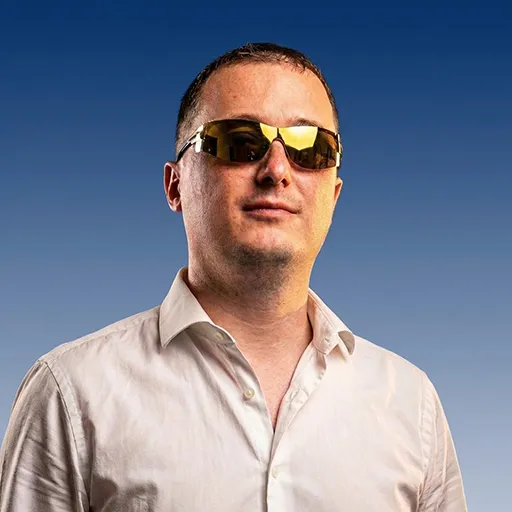
Practice led by Dmytro Nasyrov
Founder and CTO
23+ years in custom software development. Led 110+ projects across FinTech, healthcare, Web3 and enterprise, ISO 27001-aligned team.
| Factor | Cloud-backed IoT | Edge-heavy IoT |
|---|---|---|
| Latency | Seconds to minutes | Milliseconds |
| Offline resilience | Limited without queueing | Strong; device works standalone |
| Cloud cost | Higher; everything travels | Lower; edge filters first |
| Device cost | Lower; thin client | Higher; more compute on device |
| When it fits | Consumer devices, low-latency-tolerant workloads | Industrial, intermittent connectivity, safety-critical |
Pharos Verified Delivery applied to IoT means no device ships without a secure boot path, a signed firmware update mechanism, a provisioning flow, a telemetry pipeline and a decommissioning procedure. Five artefacts, every time.
Pharos Verified Delivery applied to 110+ production applications since 2013
IoT systems usually fail in year 2-3, not at launch. Each engagement below has been running in production for at least one year with measurable uptime.
Client running 1,800 sensor nodes with manual firmware updates, 12% offline rate.
Rebuilt the update pipeline with signed over-the-air delivery and staged rollout. Offline rate dropped to 2.8% within one quarter.
The sensors were fine. The update pipeline was the bottleneck. Firmware updates done well are 60-70% of IoT operational success.
Client using commercial MQTT broker with growing cost as the fleet scaled past 8K nodes.
Migrated to a self-hosted broker cluster with cell partitioning and improved throughput. Operating cost dropped 68% per active node.
Self-hosting only made sense because the operational maturity was there. We would not recommend self-hosting to every client.
Provisioning flow had a 27% drop-off rate during customer onboarding.
Redesigned the provisioning flow with BLE-assisted Wi-Fi handoff and better fallback paths. Drop-off rate dropped to 6%.
Most IoT pain is not in the device. It is in the first 90 seconds of setup in the customer's hand.
Client names anonymized under NDA. Full case studies at /cases/.
We decline roughly 30% of RFPs we receive. Forcing a bad fit costs both sides 3-6 months and damages outcomes. Here is how we think about scope:
For many "IoT" use cases, a customer smartphone app plus an API is simpler, cheaper and more reliable than a connected device. We will say so openly when that is the honest answer.
Pharos IoT portfolio
Observations from 11 IoT engagements 2020-2026 across industrial, smart building, agriculture and connected fleet domains.
65% of fleets we inherited had no firmware rollback pathway. Adding it pre-rollout prevented outages in every case we tracked.
Edge model retraining cadence averaged 11 weeks across computer-vision IoT projects. Teams that automated retraining at under 4 weeks saw 2.4x fewer field escalations.[6]
Time-series storage cost was the #1 budget surprise on 7 of 11 projects. Retention tiering (hot 30d, warm 180d, cold S3 Glacier) cut cost 60-75%.
Security audits found weak device identity (shared secrets, plaintext provisioning) on 9 of 11 fleets. Per-device certificate issuance at manufacturing became a non-negotiable first deliverable.[7]
Industrial IoT outlook 2026-2027 is shaped by four structural shifts that reshape reference architecture choices in every engagement.
Edge-first inference is now the default for factory-floor vision and predictive maintenance workloads because bandwidth and latency budgets collapse when 5000+ devices ship frames to cloud.[3]
Fleet security moved from perimeter firewalls to per-device identity and SBOM enforcement after the 2024-2025 OT breach wave.[8]
Open time-series stacks (TimescaleDB, InfluxDB 3, Prometheus) replaced bespoke Hadoop pipelines for most mid-market deployments.[10]
ISO 27001 plus IEC 62443 dual certification is emerging as the buyer baseline for enterprise IoT vendors rather than a nice-to-have.[7]
Use this 8-point health check to evaluate an IoT engagement at the 90-day mark before you commit to multi-year fleet rollout.
Device onboarding time-to-first-telemetry: under 4 minutes target.
Fleet-wide OTA success rate across last 3 releases: above 98.5%.
Edge-to-cloud p95 ingest latency under production load.
Per-device unit cost (hardware plus connectivity plus cloud) vs. original plan.
Ratio of rolled-back firmware releases: under 3% rolling 90 days.
SBOM coverage, CVE triage SLA, secrets rotation cadence.[9]
Device health, data quality, ML drift on analytics layer.
Data platform query latency for business dashboards: p95 under 2 seconds.
Production post-mortem
The engagement covered 2100 gateways across 38 sites. Original architecture shipped raw 100Hz sensor frames to cloud Kafka. Month 2 bandwidth bill alone exceeded the annual hosting budget. We refactored to edge aggregation (Rust daemon on gateways) emitting 1Hz rollups plus on-demand high-frequency pulls for anomalies.[4] The rule we now enforce at engagement kickoff: if a sensor emits above 5Hz, it never talks directly to cloud.
Cloud spend dropped 81% month over month, end-to-end p95 latency for alerts improved from 14s to 2.6s, and fleet OTA stability recovered because the gateways stopped saturating their uplinks.
Published record
Technical articles, comparison guides and methodology deep-dives we write from our own delivery experience.
Trusted by Coinbase, Consensys, Core Scientific, MicroStrategy, Gate.io and 10+ more Web3 and enterprise platforms
16+ partnersOur 16 technology partners include:
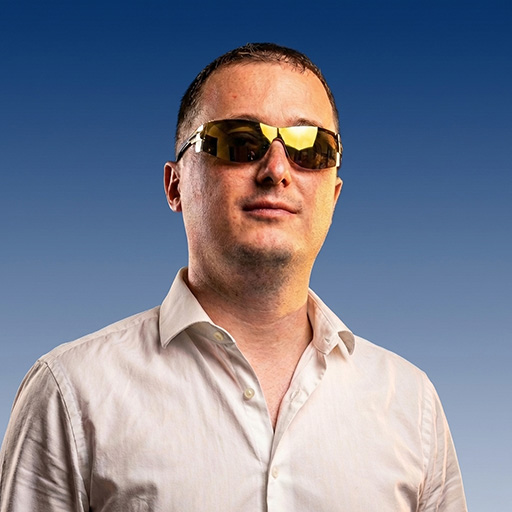
Founder and CTO Pharos Production
I design and build reliable software solutions - from lightweight apps to high-load distributed systems and blockchain platforms.
PhD in Artificial Intelligence, MSc in Computer Science (with honors), MSc in Electronics & Precision Mechanics.
13 years in architecture of great software solutions tailored to customer needs for startups and enterprises
23 years of practical enterprise customized software production experience
Lecturer at the National Kyiv Polytechnic University
Doctor of Philosophy in Artificial Intelligence
Master's degree in Computer Science, completed with excellence
Master's degree in Electronics and precision mechanics engineering
Pharos Production scopes engagements in three tiers, Proof of concept, MVP build and Enterprise platform, with typical budgets from $10,000 to $500,000+ depending on scope and complexity.
Focused validation of your riskiest technical assumption with a working spike and a clear build-or-pivot recommendation.
Production-ready first version with core flows, real backend and the integrations to onboard first paying users.
Full-scale build with architecture, DevOps, QA, security and long-term evolution.
Prices vary based on project scope, complexity, timeline and requirements. Hourly rates range from $50 to $99 depending on role and seniority. Contact us for a personalized estimate.
Need extra hands on your software project? Our developers can jump in at any stage - from architecture to auditing - and integrate seamlessly with your team to fill any technical gaps.
Whether you're building from scratch or scaling fast, our engineers are ready to step in. You stay in control, and we handle the code.
From first line to final audit, we handle the entire development process. We will deliver secure, production-ready software, while you can focus on your business.
Our engineers work with 187+ technologies across blockchain, backend, frontend, mobile and DevOps - chosen for production reliability and performance.
Our engineers work with 187+ technologies across 10 categories: Frameworks, AI, Blockchains, DevOps, Clouds, Databases, Brokers, Tests, Programming, UI/UX.
























































Recognized on Clutch, GoodFirms and The Manifest for software engineering excellence








65+ industry awards
Our company starts and assembles an entire project specialists with the perfect blend of skills and experience to start the work.
We'll design, build and launch your MVP, ensuring it meets the core requirements of your software solution.
We'll create a complete software solution that is custom-made to meet your exact specifications.
Our company will be right there with you, keeping your software solution running smoothly, fixing issues and rolling out updates.
IoT development guide covering architecture patterns, MQTT and communication protocols, AWS/Azure platforms, security best practices and cost planning.

Manufacturing software development in 2026: MES, ERP, IIoT, digital twin and predictive maintenance types, build vs buy, costs and timelines.

Computer vision use cases across manufacturing, healthcare, retail and security in 2026. Real implementation details, cost benchmarks and ROI data for CV deployments.

Practical guide to implementing machine learning for business in 2026. Covers ML use cases across industries, ROI frameworks, implementation steps, cost analysis and common pitfalls with specific numbers and benchmarks.
Type to filter questions and answers. Use Topic to narrow the list.
Showing all 7
No matches
Try a different keyword, change the topic or clear filters
IoT project cost depends on device count, firmware complexity, connectivity protocol and cloud backend scope. A focused pilot connecting a single device class to a dashboard typically starts in the low tens of thousands of dollars, while a multi-region fleet platform with edge processing and analytics runs higher.
Pharos Production scopes a fixed-price discovery first so the firmware, protocol and cloud architecture are costed before a single line of production code is written.
A connected proof of concept usually takes 6 to 10 weeks, covering firmware, a single protocol and a basic cloud dashboard. Production fleet platforms with edge computing, over-the-air updates and analytics typically run 4 to 8 months. Timelines depend on hardware availability, certification needs and whether device firmware is built from scratch or adapted from an existing reference design.
Pharos Production builds on MQTT, CoAP and Bluetooth Low Energy (BLE) for device messaging, plus cellular, LoRaWAN, Wi-Fi and Zigbee depending on range, power and bandwidth. Protocol choice is driven by battery budget, payload size and deployment density. We design the messaging layer for at-least-once delivery, reconnection handling and constrained-device footprints.
We build IoT backends on AWS IoT Core and Azure IoT Hub, with device registries, rules engines, time-series storage and digital twins. These managed services handle device authentication, message routing and scale, while we add custom business logic, dashboards and integrations. We also deploy edge computing with AWS IoT Greengrass or Azure IoT Edge when latency or offline operation matters.
IoT security starts with per-device certificates, mutual TLS and signed over-the-air firmware updates to block tampered code. We encrypt data in transit and at rest, isolate device identities, rotate credentials and monitor fleet telemetry for anomalies.
Our approach aligns with established frameworks so connected medical, industrial and consumer devices meet the security expectations of regulated buyers.
Pharos Production delivers IoT systems for smart manufacturing (predictive maintenance and quality control), healthcare (remote patient monitoring and medical device integration), agriculture (sensor networks and irrigation), logistics and smart buildings. Each vertical drives different protocol, certification and edge-processing choices, so we tailor the architecture to the operating environment rather than reusing a generic template.
Pharos Production owns the full software stack: device firmware, edge logic, cloud backend, APIs and dashboards. We write embedded firmware in C and C++ for microcontrollers and integrate with your chosen hardware or reference boards.
We do not manufacture custom silicon, but we collaborate with your hardware partners on board bring-up, driver integration and the firmware that runs on the final device.
An IoT engagement is not a firmware project or a cloud project. It is a reliability engineering project with embedded, networking, cloud, data and ML subsystems that all need DORA-style delivery metrics, SBOM-level supply-chain controls and a time-series backbone designed for retention not just ingest.[1] Pharos structures IoT delivery around those four axes so the fleet does not become unmaintainable at 10k+ devices.
Book a 30-minute IoT architecture call
Achieve them with minimized risk through our bespoke innovation capabilities
Contact us today to discuss your project. We're ready to review your request promptly and guide you on the best next steps for collaboration
Same dayWe're committed to keeping your information confidential, so we'll sign a Non-Disclosure Agreement
1 dayAfter we chat about your goals and needs, we'll craft a comprehensive proposal detailing the project scope, team, timeline and budget
3-5 daysLet's connect on Google Meet to go through the proposal and confirm all the details together!
1-2 daysAs soon as the contract is signed, our dedicated team will jump into action on your project!
Same dayHeadquarters in Las Vegas, Nevada. Engineering office in Kyiv, Ukraine.
We also work with clients through dedicated local teams in Las Vegas, New York and San Francisco.
Thanks for the request!
We typically reply within 24 hours