














































AR/VR Development Cost in 2026: Types, Platforms and Build Guide
AR/VR development cost in 2026 covering pricing by platform, hardware and complexity, plus the build process and how to reduce cost without adding risk.

Reviewed by Dr. Dmytro Nasyrov, Founder and CTO • Last reviewed August 20, 2026
Pharos Production builds Augmented Reality (AR) and Virtual Reality (VR) applications that create immersive experiences for training, retail, healthcare, real estate and entertainment.
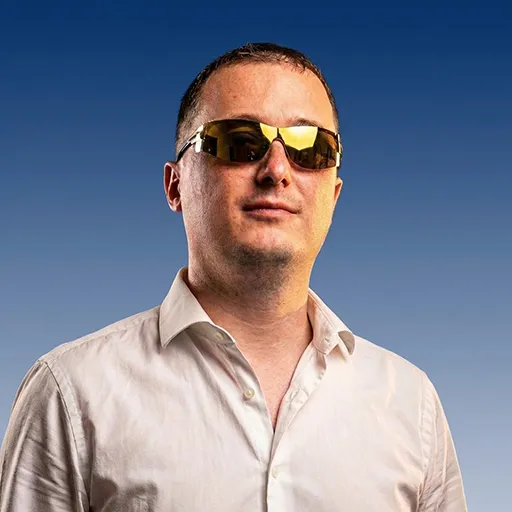
Practice led by Dmytro Nasyrov
Founder and CTO
23+ years in custom software development. Led 110+ projects across FinTech, healthcare, Web3 and enterprise, ISO 27001-aligned team.
Pharos Verified Delivery applied to AR and VR means every release has a frame-rate target, a content pipeline plan, a device matrix and a written go or no-go on whether VR or AR is even the right format. Frame drops break trust faster than anything else in this space.
Pharos Verified Delivery applied to 110+ production applications since 2013
AR and VR projects often die in prototype phase. Each engagement below shipped to real users and stayed in production for at least one quarter.
Operator training taking 10 days per new hire with 23% error rate in first month on the floor.
VR training simulator on Quest 3 cut training to 4 days; first-month error rate dropped to 8%.
The win was repeatable practice without consuming a real machine. We did not try to replace the human trainer. We replaced the most expensive failure mode.
Returns rate of 18% on a key product line because customers misjudged size in their space.
Built a WebXR-based AR visualizer integrated into the existing PDP. Returns rate dropped to 9% within 90 days of launch.
WebXR meant no app install. Friction kills AR adoption. Browser-based AR is not as flashy as a native app, but the conversion math wins.
Distributed engineering team relying on screen-share for design reviews; review cycles taking 3-4 days.
Built a custom VR review tool in Unity for shared 3D inspection. Review cycles dropped to under 1 day.
We measured cycle time, not headset adoption. Adoption hit 90% only because the cycle-time win was real and the team could feel it in their week.
Client names anonymized under NDA. Full case studies at /cases/.
We decline roughly 30% of RFPs we receive. Forcing a bad fit costs both sides 3-6 months and damages outcomes. Here is how we think about scope:
For most product visualization, a 3D web viewer is faster and cheaper than AR. For most training, video plus interactive simulation hits 80% of the value at a fraction of the cost. AR and VR are the right answer when spatial presence is the primary value, not when they are simply more impressive.
Pharos AR/VR portfolio
Observations from 6 AR/VR engagements 2022-2026 across industrial training, field service and product design review.
Thermal throttling on Quest 3 crossed the usability threshold at 34 minutes of continuous high-shader workload. Every build now has a thermals budget test.
Hand-tracking accuracy dropped below usable on 4 of 6 projects in low-light storage areas. Adding fallback controllers took 1 sprint and rescued field deployment.
Content pipeline was the #1 velocity bottleneck. Teams that scripted the artist-to-device loop shipped content 3.1x faster month over month.[11]
MDM integration (ArborXR, ManageXR) became the deal-breaker on 3 of 6 enterprise rollouts. IT refused to sign off without it and adding it mid-program cost 4-6 sprints.[7]
AR/VR enterprise outlook 2026-2027 is defined by the post-hype contraction into narrow high-ROI verticals and the rise of passthrough MR plus WebXR as the default deployment surface.
Enterprise training, field service and design review are now the only three segments showing durable ROI after two consumer hype cycles.[6]
Apple Vision Pro, Quest 3/3S passthrough and Pico 4E shifted the reference platform from tethered VR to standalone MR with hand tracking.
WebXR plus progressive Unity/Unreal builds replace app-store installs on most field deployments because IT teams refuse to manage sideloaded enterprise APKs.[3]
Spatial computing SDKs (RealityKit, ARKit, ARCore Geospatial, Niantic Lightship) are converging on anchors-plus-occlusion as the shared primitive.
Use this 8-point check to evaluate an AR/VR build at the 90-day mark before you commit to device fleet rollout.
Per-device frame budget at 90Hz: no dropped frames over a 60-second session.
Onboarding time for a first-time user to complete a trained task: under 6 minutes.
Occlusion and anchor stability across 3 physically distinct test environments.
Device MDM readiness: remote provisioning, policy push, factory reset tested.[7]
Seated mode, captions, comfort settings, photosensitive flag audit.
Session length, task completion, comfort events logged.
Asset import to QA-approved build in under 3 days.
What happens on tracking loss, low battery, guardian violation.
Production post-mortem
The engagement covered 600 Quest 3 headsets across 14 plants. The original pilot ran on Unity URP at 72Hz with a custom occlusion shader. It felt great in the lab. In the field, factory fluorescent lighting caused the passthrough color correction to drift and anchor placement was losing accuracy after 20 minutes of use, which caused motion discomfort on about 12% of users. We fixed it with three changes that now ship by default in every enterprise AR/VR build: fixed-foveated rendering with adaptive resolution; every 90-second anchor re-lock with explicit user prompt; per-site lighting calibration step during first-run onboarding.[4]
Discomfort reports dropped to 1.8% and training completion rates rose 22%.
Published record
Technical articles, comparison guides and methodology deep-dives we write from our own delivery experience.
Trusted by Coinbase, Consensys, Core Scientific, MicroStrategy, Gate.io and 10+ more Web3 and enterprise platforms
16+ partnersOur 16 technology partners include:
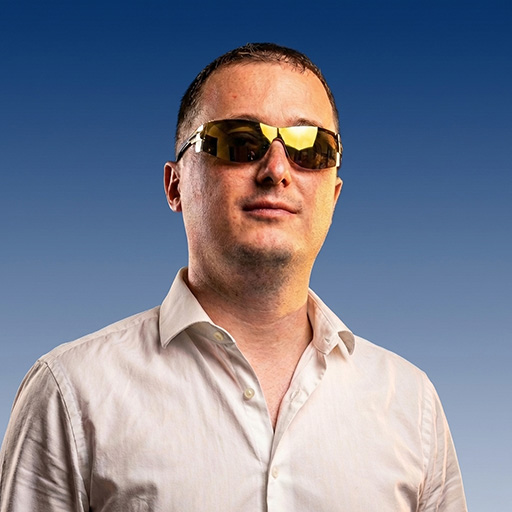
Founder and CTO Pharos Production
I design and build reliable software solutions - from lightweight apps to high-load distributed systems and blockchain platforms.
PhD in Artificial Intelligence, MSc in Computer Science (with honors), MSc in Electronics & Precision Mechanics.
13 years in architecture of great software solutions tailored to customer needs for startups and enterprises
23 years of practical enterprise customized software production experience
Lecturer at the National Kyiv Polytechnic University
Doctor of Philosophy in Artificial Intelligence
Master's degree in Computer Science, completed with excellence
Master's degree in Electronics and precision mechanics engineering
Pharos Production scopes engagements in three tiers, Proof of concept, MVP build and Enterprise platform, with typical budgets from $10,000 to $500,000+ depending on scope and complexity.
Focused validation of your riskiest technical assumption with a working spike, a clean codebase and a clear build-or-pivot recommendation.
Production-ready first version with core user flows, real backend, authentication and the integrations you need to onboard first paying users.
Full-scale build covering architecture, DevOps, QA, security and long-term evolution across teams and regions.
Prices vary based on project scope, complexity, timeline and requirements. Hourly rates range from $50 to $99 depending on role and seniority. Contact us for a personalized estimate.
Need extra hands on your software project? Our developers can jump in at any stage - from architecture to auditing - and integrate seamlessly with your team to fill any technical gaps.
Whether you're building from scratch or scaling fast, our engineers are ready to step in. You stay in control, and we handle the code.
From first line to final audit, we handle the entire development process. We will deliver secure, production-ready software, while you can focus on your business.
Our engineers work with 187+ technologies across blockchain, backend, frontend, mobile and DevOps - chosen for production reliability and performance.
Our engineers work with 187+ technologies across 10 categories: Frameworks, AI, Blockchains, DevOps, Clouds, Databases, Brokers, Tests, Programming, UI/UX.






































































Recognized on Clutch, GoodFirms and The Manifest for software engineering excellence











65+ industry awards
Our company starts and assembles an entire project specialists with the perfect blend of skills and experience to start the work.
We'll design, build and launch your MVP, ensuring it meets the core requirements of your software solution.
We'll create a complete software solution that is custom-made to meet your exact specifications.
Our company will be right there with you, keeping your software solution running smoothly, fixing issues and rolling out updates.
AR/VR development cost in 2026 covering pricing by platform, hardware and complexity, plus the build process and how to reduce cost without adding risk.
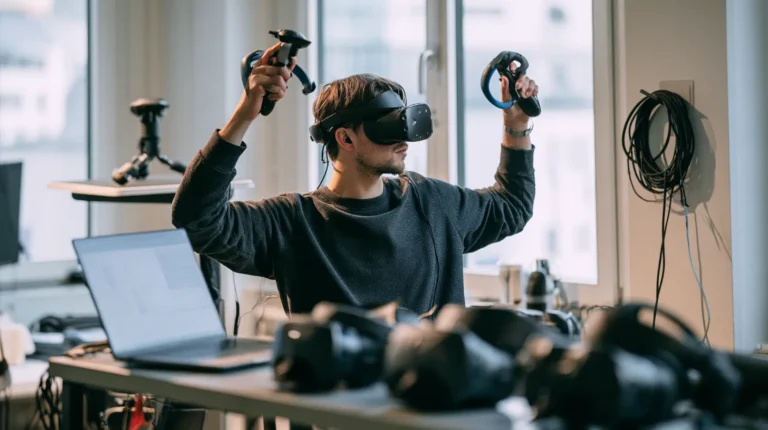
Khronos's own specification defines OpenXR's extension model around one rule: every extension is optional per runtime, so a codebase has to query extensions with xrEnumerateInstanceExtensionProperties, and optional core features such as STAGE with their own enumeration call, before depending on them. This guide works through the decisions that follow from that rule: action-based input bound to interaction profiles instead of raw controller state, reference spaces with no shared origin, engine-level OpenXR coverage that depends on each engine's own gap list and why visionOS is a separate platform with no OpenXR runtime to target, not another runtime to detect.
Type to filter questions and answers. Use Topic to narrow the list.
Showing all 7
No matches
Try a different keyword, change the topic or clear filters
Pharos builds AR experiences using ARKit (iOS), ARCore (Android) and WebXR for browser-based deployment and VR applications targeting Meta Quest 2/3/Pro, Apple Vision Pro, HTC Vive and PC-based headsets. Cross-platform VR projects are built in Unity or Unreal Engine, selected based on rendering fidelity requirements and team toolchain preferences.
Industrial and enterprise training accounts for the largest share of AR/VR investment, replacing physical setups with simulated environments that cut training cost by 40 to 60 percent per cohort. Healthcare uses VR for surgical simulation and patient therapy.
Retail deploys AR for virtual try-on and spatial product visualization. Real estate uses VR walkthroughs to close sales remotely.
A focused AR feature - for example a product visualization layer in an existing iOS app using ARKit - takes 6 to 10 weeks. A standalone VR training application built in Unity with custom environment assets and scoring logic typically takes 16 to 28 weeks. Apple Vision Pro apps using visionOS and RealityKit are a separate build targeting spatial computing paradigms and add 4 to 8 weeks over an equivalent Quest build.
Requirements depend on delivery format. WebXR AR runs on any modern smartphone camera with no app install. ARKit experiences require iOS 14 or later on iPhone 8 or later. Standalone VR on Meta Quest 3 requires no PC or wires. PC VR via SteamVR requires a GPU meeting minimum specs (NVIDIA RTX 2070 or equivalent). Pharos documents device requirements in a hardware compatibility matrix delivered at project close.
Performance optimization for AR/VR targets 72 to 90fps minimum to prevent motion sickness, achieved through LOD (level of detail) mesh management, occlusion culling, texture atlasing, GPU instancing for repeated objects and draw call batching. On mobile AR, Pharos uses ARKit's scene reconstruction and depth API to anchor virtual objects accurately without excessive GPU load.
Yes. WebXR Device API enables AR and VR experiences in Chrome, Edge and Firefox on supported devices with no app download required. Pharos uses Three.js or Babylon.js with the WebXR API for web-based AR, suitable for product configurators, retail try-on and marketing campaigns where install friction must be eliminated.
A VR training application includes 3D environment modeling and texturing, scenario scripting with branching decision logic, avatar and interaction system development, a scoring and progress tracking backend, LMS (learning management system) integration via xAPI/SCORM and a content management interface for subject matter experts to update scenarios without code changes.
AR/VR builds fail in the field for the same reason they succeed in the lab: the demo loop is optimized for 90 seconds of show-and-tell, not for a 25-minute supervised training session on a factory floor or a 2-hour design review. Pharos ships AR/VR with frame budget, thermals, comfort telemetry and MDM integration as first-class deliverables rather than afterthoughts.[1]
Book a 30-minute AR/VR feasibility call
Achieve them with minimized risk through our bespoke innovation capabilities
Contact us today to discuss your project. We're ready to review your request promptly and guide you on the best next steps for collaboration
Same dayWe're committed to keeping your information confidential, so we'll sign a Non-Disclosure Agreement
1 dayAfter we chat about your goals and needs, we'll craft a comprehensive proposal detailing the project scope, team, timeline and budget
3-5 daysLet's connect on Google Meet to go through the proposal and confirm all the details together!
1-2 daysAs soon as the contract is signed, our dedicated team will jump into action on your project!
Same dayHeadquarters in Las Vegas, Nevada. Engineering office in Kyiv, Ukraine.
We also work with clients through dedicated local teams in Las Vegas, New York and San Francisco.
Thanks for the request!
We typically reply within 24 hours