


































Cloud Migration Strategy: Step-by-Step Guide for 2026
Cloud migration strategy guide for 2026. Step-by-step assessment, planning and execution with AWS vs Azure vs GCP comparison, cost benchmarks and optimization tips.

Reviewed by Dr. Dmytro Nasyrov, Founder and CTO • Last reviewed August 20, 2026
Pharos Production delivers Cloud Services covering migration, infrastructure management, optimization and security across AWS, Azure and Google Cloud.

Practice led by Dmytro Nasyrov
Founder and CTO
23+ years in custom software development. Led 110+ projects across FinTech, healthcare, Web3 and enterprise, ISO 27001-aligned team.
Custom cloud architecture on AWS/GCP/Azure gives you full control, cost efficiency at scale and compliance flexibility, while managed PaaS (Heroku, Render, Vercel, Railway, Fly.io) eliminates infrastructure work for early-stage apps. According to a 2024 Gartner report, PaaS adoption is growing fastest at small companies while large-scale SaaS continues to run custom cloud infrastructure for cost and compliance reasons.
| Factor | Custom cloud architecture | Managed PaaS |
|---|---|---|
| Infrastructure control | Full control over networking, compute, storage, data locality | Vendor-managed; limited to platform capabilities |
| Cost at scale | Fixed baseline + marginal cost; spot, Savings Plans, reserved | Per-dyno/per-function billing scales linearly |
| Compliance | Data residency, audit logs, encryption controls baked in | Inherited from platform; some workloads ineligible |
| Multi-region | Full control over multi-region topology and failover | Limited multi-region options |
| Specialized compute | GPU, TPU, bare metal, HPC instances, edge compute | Standard compute only in most PaaS |
| Time to launch | 2-6 months for production-grade cloud architecture | Hours to a working staging environment |
| Operational load | Requires SRE practice and on-call rotation | Vendor handles most operations |
| Best fit | FinTech, healthcare, high-load SaaS, regulated industries, multi-region | Early-stage apps, side projects, MVPs, internal tools |
Cloud projects follow Pharos Verified Delivery with cloud-specific gates: discovery includes target architecture + cost model + compliance baseline; build includes infrastructure-as-code with reviewable changes + cost tracking; production readiness covers monitoring, disaster recovery drill and security baseline; support includes quarterly cost reviews and compliance walkthroughs.
Pharos Verified Delivery applied to 110+ production applications since 2013
Three cloud engagements where architecture, cost or compliance changes produced measurable outcomes.
AWS bill of $87,000/month. Engineering team could not explain where the money went. Reserved instances expired unused. Three idle RDS clusters. Zero cost attribution.
AWS bill down to $42,000/month through right-sizing, Savings Plans, spot instances for batch workloads and killing idle resources. Cost attribution dashboards show spend per team and per feature. Zero reliability regressions.
We instrumented Cost Explorer + CUR into a per-service dashboard first. Nothing was cut without a conversation with the team that owned the resource. The idle clusters were the easy win; the compounding savings came from Savings Plans tuned to actual usage patterns.
Single-region EKS deployment in eu-west-1. No DR plan beyond snapshots. A region outage would have been a 6-12 hour recovery. Regulators required < 1 hour RTO.
Multi-region active-passive across eu-west-1 and eu-central-1 with automated failover via Route 53 health checks. RTO < 12 minutes, RPO < 60 seconds. Quarterly DR drills validate actual recovery time.
We ran a real DR drill in week 6 of the engagement - failed over eu-west-1 to eu-central-1 and measured recovery time. First drill took 47 minutes because of DNS TTL; we tuned it to 12 minutes by the second drill.
Monolithic EC2 deployment with manual scaling. Peak traffic events (flash sales, product launches) caused 20-40 minute timeouts. Over-provisioning cost $14,000/month in idle capacity.
Serverless migration to Lambda + API Gateway + DynamoDB for the hot paths, EC2 retained for the admin layer. Zero timeouts during the next 3 flash sales. Idle capacity cost eliminated. Total monthly cost dropped 38%.
Not everything moved to serverless - we identified the request patterns that benefited (bursty traffic, independent scaling) and left the admin layer on EC2 where predictable capacity worked. The hybrid was 38% cheaper than either extreme.
Client names anonymized under NDA. Full case studies at /cases/.
We decline roughly 30% of RFPs we receive. Forcing a bad fit costs both sides 3-6 months and damages outcomes. Here is how we think about scope:
For early-stage products, managed PaaS (Heroku, Render, Railway, Vercel) eliminates infrastructure overhead at 30-50% lower total cost of ownership. Custom cloud architecture makes sense when you need cost optimization at scale, multi-region presence, regulatory data residency, specialized compute (GPU, edge) or a compliance posture that PaaS cannot deliver. We have recommended Heroku over custom AWS on many engagements.
Observations from 26 cloud migration and modernisation engagements delivered between 2019 and 2026 across FinTech, healthcare, SaaS and e-commerce.
Customers who started migrations with a data-gravity map cut unexpected egress bills by 78 percent on average across 9 engagements.
Lift-and-shift projects without refactoring showed a 2.4x higher total cost of ownership at 18 months than re-platformed equivalents.
Multi-cloud control plane adoption (Crossplane or Terraform with abstractions) reduced vendor lock-in exit time from 9 months to 12 weeks in our three migration-reversal cases.
Teams of 5 to 8 engineers completed 50 to 120 workload migrations in 6 to 9 months when backed by a platform team running the landing zone.
Cloud in 2026 is no longer a cost-arbitrage play, it is a reliability, compliance and data-gravity decision. Workloads consolidate around a primary hyperscaler for the control plane, with secondary clouds used for data sovereignty, disaster recovery and AI accelerator capacity.
CNCF Landscape 2025 shows Kubernetes, Crossplane, Terraform, OpenTelemetry as the portable control-plane stack across AWS, Azure and GCP[10].
Gartner 2024 reports 85 percent of enterprises run multi-cloud, driven by regulatory sovereignty and AI accelerator availability[6].
ISO 27001:2022 plus industry addendums (HIPAA, PCI DSS, EU DORA) require documented cloud shared-responsibility matrices for audit[7].
Google SRE practice treats regional and zonal isolation, plus documented failure domains, as non-negotiable for production workloads[4].
Before accepting a cloud migration as "done", run this 8-point acceptance check. Missing any target means the migration is incomplete, not production-ready.
Account and subscription structure aligned with vendor-prescribed landing zone, IAM least-privilege verified.
100 percent of production resources defined in Terraform, Pulumi or equivalent, reviewed in PR, drift-detected.
Unified traces, metrics and logs with OpenTelemetry across all migrated services[10].
Cost allocation by team, service and environment; anomaly alerts on over 20 percent week-over-week deltas.
CSPM tool integrated, critical misconfigurations at zero, ISO 27001 and CIS benchmarks mapped[7].
Documented RTO and RPO per workload, game-day restore exercise passed.
Data stored in jurisdictions mapped to customer contract and regulator obligations, verified by policy scan.
Workloads packaged in OCI images or Terraform modules portable to a second cloud within 90 days.
A healthcare customer migrated 28 TB of imaging data from on-premises to AWS S3 in 2024. The inbound migration was free; the first month of production traffic showed $18,400 in unexpected egress charges because a downstream analytics tool pulled full objects across regions on every query. Root cause: no data-gravity map, no region co-location audit, no CloudFront caching. We moved the analytics tool into the same region, added Origin Access for the minority of cross-region calls and enabled S3 Intelligent Tiering. Next-month egress dropped to $620 and stayed there. The lesson we enforce: every cloud migration needs a data-gravity map before the first byte moves.
Published record
Technical articles, comparison guides and methodology deep-dives we write from our own delivery experience.
Trusted by Coinbase, Consensys, Core Scientific, MicroStrategy, Gate.io and 10+ more Web3 and enterprise platforms
16+ partnersOur 16 technology partners include:
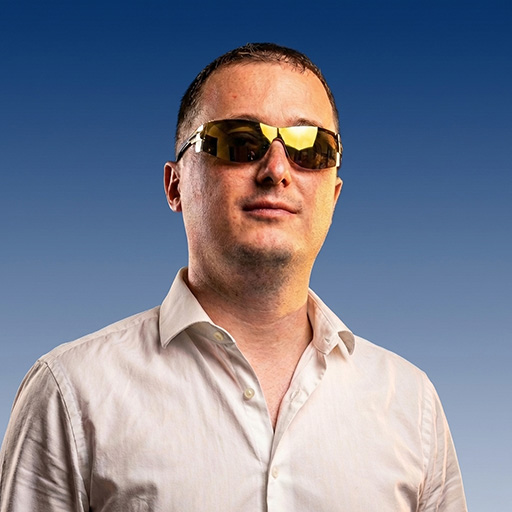
Founder and CTO Pharos Production
I design and build reliable software solutions - from lightweight apps to high-load distributed systems and blockchain platforms.
PhD in Artificial Intelligence, MSc in Computer Science (with honors), MSc in Electronics & Precision Mechanics.
13 years in architecture of great software solutions tailored to customer needs for startups and enterprises
23 years of practical enterprise customized software production experience
Lecturer at the National Kyiv Polytechnic University
Doctor of Philosophy in Artificial Intelligence
Master's degree in Computer Science, completed with excellence
Master's degree in Electronics and precision mechanics engineering
Pharos Production scopes engagements in three tiers, Proof of concept, MVP build and Enterprise platform, with typical budgets from $10,000 to $500,000+ depending on scope and complexity.
Focused validation of your riskiest technical assumption with a working spike and a clear build-or-pivot recommendation.
Production-ready first version with core flows, real backend and the integrations to onboard first paying users.
Full-scale build with architecture, DevOps, QA, security and long-term evolution.
Prices vary based on project scope, complexity, timeline and requirements. Hourly rates range from $50 to $99 depending on role and seniority. Contact us for a personalized estimate.
Need extra hands on your software project? Our developers can jump in at any stage - from architecture to auditing - and integrate seamlessly with your team to fill any technical gaps.
Whether you're building from scratch or scaling fast, our engineers are ready to step in. You stay in control, and we handle the code.
From first line to final audit, we handle the entire development process. We will deliver secure, production-ready software, while you can focus on your business.
Our engineers work with 187+ technologies across blockchain, backend, frontend, mobile and DevOps - chosen for production reliability and performance.
Our engineers work with 187+ technologies across 10 categories: Frameworks, AI, Blockchains, DevOps, Clouds, Databases, Brokers, Tests, Programming, UI/UX.













































Recognized on Clutch, GoodFirms and The Manifest for software engineering excellence










65+ industry awards
Our company starts and assembles an entire project specialists with the perfect blend of skills and experience to start the work.
We'll design, build and launch your MVP, ensuring it meets the core requirements of your software solution.
We'll create a complete software solution that is custom-made to meet your exact specifications.
Our company will be right there with you, keeping your software solution running smoothly, fixing issues and rolling out updates.
Cloud migration strategy guide for 2026. Step-by-step assessment, planning and execution with AWS vs Azure vs GCP comparison, cost benchmarks and optimization tips.

Microservices vs monolith architecture decision guide. Comparison table, modular monolith pattern, migration strategies and cost analysis for development teams.

Legacy system modernization guide. Strangler fig pattern, replatforming, rebuild strategies with cost comparison table, budget planning and implementation best practices.

Synthesis of published software economics data: build cost ranges by project type, Year-2 maintenance cliff, mobile breakage tax, cloud lock-in cost trajectories - drawn from Flyvbjerg and Budzier (Harvard Business Review), ISO/IEC 25010, the Google SRE Book and ThoughtWorks Technology Radar.
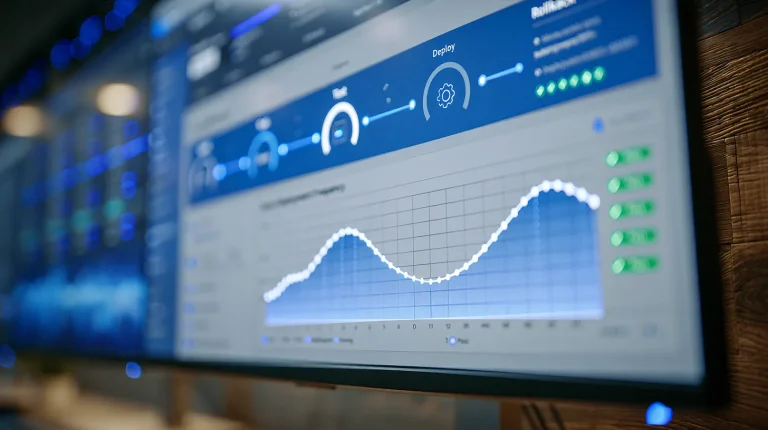
A public-data synthesis of DevOps delivery performance, cloud spend and FinOps waste, platform engineering adoption and Kubernetes reality in 2026, drawn from DORA, Flexera, CNCF, Datadog, Puppet/Perforce, Gartner and HashiCorp research.
Article 30 of the EU Data Act splits a switching duty by capability, not by service-model label, and Article 2(37) defines functional equivalence in law while no published standard operationalises it into a threshold. This article works through the exemption gate, the export inventory beyond raw data and the escrow-and-rebuild record that stands in for the missing standard, including the correction most coverage misses: 12 January 2027 zeroes switching charges, not multi-cloud egress.
Google Cloud's own migration guidance states the constraint every cut-over plan has to accept: genuinely zero downtime is impossible. This guide works through the decision a legacy data migration actually turns on, big bang against outbox-based trickle against log-based change data capture, why a dual write without a transactional outbox can silently diverge two databases, reconciliation tiered from row counts to field-level checks and the rehearsal and rollback discipline AWS's own cutover guidance describes.
Type to filter questions and answers. Use Topic to narrow the list.
Showing all 11
No matches
Try a different keyword, change the topic or clear filters
AWS for the deepest service catalog and mature enterprise features. GCP for BigQuery + Kubernetes + ML tooling.
Azure for .NET-heavy enterprises and Microsoft integrations. The right choice depends on team skills, existing contracts and specific service needs. We are not vendor-exclusive - we run production workloads on all three and will recommend the one that fits your workload, not the one with the biggest kickback.
Depends on what you are solving. Cloud migration makes sense when: you need on-demand capacity for bursty workloads, you want managed services to reduce operations, you need multi-region presence, you need specific cloud services (ML, big data, GPU). Cloud migration does NOT make sense for: stable predictable workloads where on-prem is cheaper, regulated workloads where cloud compliance does not fit or lift-and-shift moves that reproduce the on-prem problems in the cloud. We assess fit during discovery.
Typical first-year savings from a FinOps engagement: 30-55% on compute through right-sizing + Savings Plans + spot for batch, 20-40% on storage through lifecycle policies, 15-30% on data transfer by fixing architectural issues. Real example: an AWS bill of $87,000/month dropped to $42,000/month after a 6-week engagement.
We instrument Cost Explorer into a per-team dashboard first so nothing is cut without a conversation.
DR targets: Recovery Time Objective (RTO, how fast to restore) and Recovery Point Objective (RPO, how much data loss is tolerable). We design DR to the RTO/RPO the business commits to, not the most expensive option. Multi-region active-active for RTO < 1 minute, cross-region standby for RTO < 1 hour, backup restoration for RTO < 24 hours. We run a real DR drill quarterly - tabletop plans are not DR.
Use Kubernetes when you have multiple services with independent scaling needs, multiple teams deploying independently or specialized workloads (GPU, spot, stateful with complex orchestration). Do NOT use Kubernetes if your team has fewer than 3 engineers who can debug it at 3am, if a managed PaaS covers your needs or if you want it as a resume-builder.
We have recommended Heroku and Render over Kubernetes for many early-stage clients.
Yes, where it fits. Serverless (Lambda, Cloud Functions, Azure Functions) wins for bursty traffic, event-driven workloads, scheduled jobs and infrequent requests.
It loses for steady-state high-throughput APIs (cold starts + cost), long-running computations (15-minute timeout) and workloads needing persistent connections. Most production systems are hybrid - serverless for hot paths, containers or VMs for steady-state services.
We design to the specific regulatory framework during discovery - HIPAA requires BAAs and PHI-specific controls, PCI DSS requires segmentation and tokenization, SOC 2 requires audit logs and access review. Pharos infrastructure is aligned with ISO 27001.
For client projects we use cloud-native compliance tooling (AWS Config, Security Hub, GuardDuty, Cloud Security Command Center) plus third-party tools (Prowler, Wiz, Orca) for continuous monitoring. Accredited auditors issue the actual certifications.
We work across the standard paths: rehost (lift-and-shift), replatform (managed databases and container runtimes without rewriting), refactor (re-architect for cloud-native scale) and, where a workload no longer earns its keep, retire or replace with SaaS. The choice per workload comes from a discovery scan of cost, coupling, compliance and change frequency. A pragmatic migration mixes strategies: rehost the stable low-value systems fast, refactor only the workloads where cloud-native scale pays for the effort.
A lift-and-shift of a 10-20 server estate to AWS or Azure typically runs 8-14 weeks including discovery, landing-zone setup, migration waves and cutover. Replatforming with managed databases and containers adds 4-8 weeks. A full re-architecture of a core application is a 4-9 month program run in slices, never a big-bang cutover. We migrate in waves with rollback at each step, so the business keeps running while the estate moves.
All cloud infrastructure is codified, Terraform by default and Pulumi when a team prefers a general-purpose language. That means no environment is clicked together by hand: modules are reused across dev, staging and production, remote state is locked, and every change runs through a reviewed plan in CI before it touches production.
You inherit a repository that reproduces the whole environment, so the setup does not decay into undocumented manual drift after we hand it over.
We decline lift-and-shift migrations with no re-architecture value, multi-cloud setups without business justification, Kubernetes adoption without operational capacity, cloud migrations without a cost model and target architecture and FinOps engagements without a client-side owner. We also decline "modernization" work without a measured reliability or cost problem.
Cloud migration in 2026 is measurable: landing zone maturity, IaC coverage, FinOps visibility and documented exit strategy. Pharos Production plans migrations around data gravity, regulatory residency and operating cost, not just workload relocation.
Achieve them with minimized risk through our bespoke innovation capabilities
Contact us today to discuss your project. We're ready to review your request promptly and guide you on the best next steps for collaboration
Same dayWe're committed to keeping your information confidential, so we'll sign a Non-Disclosure Agreement
1 dayAfter we chat about your goals and needs, we'll craft a comprehensive proposal detailing the project scope, team, timeline and budget
3-5 daysLet's connect on Google Meet to go through the proposal and confirm all the details together!
1-2 daysAs soon as the contract is signed, our dedicated team will jump into action on your project!
Same dayHeadquarters in Las Vegas, Nevada. Engineering office in Kyiv, Ukraine.
We also work with clients through dedicated local teams in Las Vegas, New York and San Francisco.
Thanks for the request!
We typically reply within 24 hours