
Game Development in 2026: Types, Cost and Build Guide
Game development in 2026: mobile, PC, console, multiplayer and Web3 game types, engine choice, build vs buy, costs and timelines by scope.

Gaming software development encompasses the backend systems, infrastructure and services that power multiplayer games, live operations and player engagement.
Practice led by Dmytro Nasyrov
Founder and CTO
23+ years in software development. Led gaming backend projects for studios, publishers and esports platforms, ISO 27001-aligned. Experience with 10M+ concurrent player systems.
Game development in 2026: mobile, PC, console, multiplayer and Web3 game types, engine choice, build vs buy, costs and timelines by scope.

Mobile app development cost in 2026: native vs cross-platform pricing, cost by app complexity, what drives the budget and how to estimate yours.

Payment gateway integration cost in 2026: third-party, orchestration and custom gateway pricing, PCI DSS scope, timelines and how to choose the right path.

AR/VR development cost in 2026 covering pricing by platform, hardware and complexity, plus the build process and how to reduce cost without adding risk.

A requirement-by-requirement reading of the Gambling Commission's Remote gambling and software technical standards as platform behavior: what RTS 1 to 17 ask the software to do, which rows an approved test house certifies and which the licensee tests itself, the ISO/IEC 27001:2022 security requirements and their audit, the GAMSTOP check cadence and how the Malta Gaming Authority's system audit compares.

Khronos's own specification defines OpenXR's extension model around one rule: every extension is optional per runtime, so a codebase has to query extensions with xrEnumerateInstanceExtensionProperties, and optional core features such as STAGE with their own enumeration call, before depending on them. This guide works through the decisions that follow from that rule: action-based input bound to interaction profiles instead of raw controller state, reference spaces with no shared origin, engine-level OpenXR coverage that depends on each engine's own gap list and why visionOS is a separate platform with no OpenXR runtime to target, not another runtime to detect.
Gaming software market in numbersThe global gaming market reached $187 billion in 2024 (Newzoo). The game backend-as-a-service market is projected to grow at 25.3% CAGR through 2030. Mobile gaming represents 49% of global revenue. 78% of top-grossing games use live service models (GaaS). The esports market is expected to reach $5.48 billion by 2029 (Statista).
Pharos Production gaming delivery metricsAverage time to MVP for game backends is 10 weeks. Matchmaking systems handle 500K+ concurrent players with sub-100ms match time. Zero critical downtime incidents during game launches across delivered platforms. The Verified Delivery process uses 2-week sprints with load testing simulating 10x expected player counts at every iteration.
| Factor | Custom (Pharos) | Off-the-shelf (PlayFab, GameSparks, Nakama) |
|---|---|---|
| Matchmaking | Custom algorithms with game-specific skill factors | Generic ELO/Glicko with limited tuning parameters |
| Anti-cheat | Server-authoritative logic with custom detection models | Client-side SDKs with vendor-provided heuristics |
| LiveOps | Custom content pipeline with A/B testing and targeting | Pre-built event templates with limited segmentation |
| Economy system | Custom dual-currency, marketplace, auction mechanics | Standard IAP integration with basic virtual currency |
| Scalability | Cloud-native, auto-scaling for launch day 100x spikes | Platform capacity limits, negotiated scaling plans |
| Data ownership | Full player data in your infrastructure | Vendor-hosted, data portability limitations |
| Cost at scale | Infrastructure cost only, no per-MAU fees | Per-MAU pricing that grows with player base |
Pharos Production recommends custom game backends for studios expecting 100K+ MAU, competitive multiplayer titles needing server-authoritative gameplay or games with complex economy systems that vendor platforms cannot accommodate.
A game studio launching a competitive 5v5 shooter needed a matchmaking backend that could handle 800K concurrent players with sub-100ms match times while maintaining fair skill-based matches across 6 global regions. The core challenge: balancing match quality (skill fairness) against queue time (player experience) at wildly different population densities per region. Our approach: a multi-factor matchmaking system that considers MMR rating, connection quality, party size, behavioral score and recent match history. The algorithm uses an expanding search window that starts tight (within 50 MMR) and widens over 15-second intervals, with hard limits that prevent skill gaps exceeding 300 MMR. Regional routing uses latency probes to assign players to the lowest-latency server cluster, with cross-region matching only when same-region queue times exceed 45 seconds. The server-authoritative backend runs game simulation at 64 ticks per second using an ECS architecture with client-side prediction and server reconciliation to mask network latency. The anti-cheat system combines server-side hit validation, statistical analysis of aim patterns and automated replay flagging. At launch, the system handled 1.2M concurrent connections with zero matchmaking downtime. Explore our open-source libraries on GitHub.
| Metric | Before Pharos | After Pharos |
|---|---|---|
| Matchmaking time | Studio target: under 2 minutes | Average 47 seconds, p95 under 90 seconds |
| Skill fairness | No skill-based matching in prototype | Multi-factor MMR, max 300 MMR gap per match |
| Server capacity | Prototype: 10K concurrent players | Production: 1.2M concurrent, auto-scaling |
| Cheat detection | Client-side only, easily bypassed | Server-authoritative + ML anomaly detection |
| Global latency | Single region, 150ms+ for distant players | 6 regions, sub-50ms p95 for 95% of players |
Metrics from a competitive 5v5 shooter backend. 800K target concurrent players, 1.2M actual at launch. 6 global regions with server-authoritative gameplay at 64 tick rate.
Independent reviews from Clutch, GoodFirms and direct client testimonials - verified feedback on our software projects
Based on 342 verified reviews
Proprietary research based on game backend projects delivered by Pharos Production. Dataset covers multiplayer backends, matchmaking systems and LiveOps platforms. Methodology (Pharos Verified Delivery): aggregated delivery metrics with post-launch monitoring during peak player activity. Full report available on request.
Key technology shifts that impact how Pharos Production architects gaming software development software for clients.
Games-as-a-Service and Live Operations
GaaS models generate 78% of top-grossing game revenue. Continuous content updates, seasonal events and battle passes require sophisticated LiveOps infrastructure. Real-time player segmentation, A/B testing and targeted content delivery are table stakes. Pharos Production builds LiveOps platforms with automated event scheduling and player cohort targeting.
Server-Authoritative Multiplayer
Competitive integrity demands server-authoritative game logic. Client-side authority enables cheating. Modern backends run full game simulations server-side at 60+ ticks per second with client prediction and reconciliation. Pharos Production builds server-authoritative backends using ECS architectures optimized for high-frequency state updates.
AI-Powered Game Systems
AI now drives dynamic difficulty adjustment, NPC behavior, procedural content generation and player churn prediction. 65% of studios plan to integrate AI into game systems by 2027. Pharos Production builds ML-powered game features including adaptive matchmaking and AI-driven content recommendation.
Cross-Platform Multiplayer
Players expect to play together across PC, console and mobile. Cross-platform backends must handle heterogeneous client capabilities, unified friend systems and platform-specific compliance (PSN, Xbox Live, Nintendo). Pharos Production builds cross-platform account systems with unified matchmaking and progression.
Real-Time Analytics and Player Intelligence
Understanding player behavior in real time enables proactive retention interventions. Predictive models identify churn risk 7 days before players leave, enabling targeted re-engagement. Pharos Production builds real-time analytics pipelines processing millions of game events per minute with sub-second dashboard updates.
Anti-Cheat and Trust Systems
Cheating costs the gaming industry $30 billion annually. Modern anti-cheat combines server-authoritative validation, kernel-level client monitoring, statistical anomaly detection and machine learning on player behavior patterns. Pharos Production builds layered anti-cheat systems with replay analysis and automated ban review.
Pharos Production scopes engagements in three tiers, Proof of concept, MVP build and Enterprise platform, with typical budgets from $10,000 to $500,000+ depending on scope and complexity.
Focused validation of your riskiest technical assumption with a working spike and a clear build-or-pivot recommendation.
Production-ready first version with core flows, real backend and the integrations to onboard first paying users.
Full-scale build with architecture, DevOps, QA, security and long-term evolution.
Prices vary based on project scope, complexity, timeline and requirements. Hourly rates range from $50 to $99 depending on role and seniority. Contact us for a personalized estimate.
Need extra hands on your software project? Our developers can jump in at any stage - from architecture to auditing - and integrate seamlessly with your team to fill any technical gaps.
Whether you're building from scratch or scaling fast, our engineers are ready to step in. You stay in control, and we handle the code.
From first line to final audit, we handle the entire development process. We will deliver secure, production-ready software, while you can focus on your business.
| Model | Best for | Team setup | Budget range |
|---|---|---|---|
| Staff Augmentation | Existing teams needing extra engineers at any project stage | 1-2 weeks | From $5,000/month |
| Dedicated Team Popular | Long-term projects requiring full ownership and control | 2-4 weeks | From $15,000/month |
| Project Outsourcing | Full-cycle development from idea to production launch | 1-2 weeks | $10,000-$80,000+ |
Our company starts and assembles an entire project specialists with the perfect blend of skills and experience to start the work.
We'll design, build and launch your MVP, ensuring it meets the core requirements of your software solution.
We'll create a complete software solution that is custom-made to meet your exact specifications.
Our company will be right there with you, keeping your software solution running smoothly, fixing issues and rolling out updates.
Our engineers work with 187+ technologies across blockchain, backend, frontend, mobile and DevOps - chosen for production reliability and performance.
Our engineers work with 187+ technologies across 10 categories: Frameworks, AI, Blockchains, DevOps, Clouds, Databases, Brokers, Tests, Programming, UI/UX.
































































Recognized on Clutch, GoodFirms and The Manifest for software engineering excellence










65+ industry awards
Quick answers to common questions about custom software development, pricing, process and technology.
Type to filter questions and answers. Use Topic to narrow the list.
Showing all 14
No matches
Try a different keyword, change the topic or clear filters
Pharos Production has been in business since 2013, with over 13 years of experience in custom software development. During this time, we have delivered over 110 applications for 200+ clients across 28 industries, including FinTech, healthcare, crypto and e-commerce. We are rated 5/5 on Clutch based on 107 verified reviews (2026).
Pharos Production provides six core service categories: AI Development (LLM applications, AI agents, machine learning and computer vision), Blockchain and Web3 (smart contracts, DeFi, tokenization on Ethereum, Solana, TON and other chains), FinTech Development (payment platforms, digital banking, KYC and AML integration), Software Development (mobile apps, web platforms, database design, UI/UX), Security and QA (code audits, penetration testing, smart contract audits, manual and automated testing) and Consulting (architecture design, MVP validation, startup consulting).
Pharos Production is headquartered in Las Vegas, Nevada, USA (5348 Vegas Dr, Las Vegas, NV 89108), with an engineering office in Kyiv, Ukraine (44-B Eugene Konovalets Str. Suite 201, Kyiv 01133). We work with clients worldwide and provide remote collaboration across all time zones. Visit our contact page for directions and scheduling options.
Pharos Production has a team of 90+ engineers, including software developers, blockchain specialists, QA engineers, DevOps experts, UI/UX designers, project managers and solution architects. Our founder, Dr. Dmytro Nasyrov, holds a PhD in Artificial Intelligence and leads the technical direction of all projects.
We serve a wide range of clients, from startups and product companies to mid-sized enterprises and large institutions. Our clients include crypto exchanges, FinTech providers (like Pleenk), healthcare organizations, sportsbook operators (like Pro Gambling), e-commerce platforms and SaaS companies. Pharos Production has worked with 200+ clients across 28 industries since 2013, adapting engagement models to match each client's stage, whether it is MVP validation for a startup or enterprise-scale development for an established business.
A custom software development company like Pharos Production assigns one dedicated engineering team that owns your product across multiple release cycles, instead of handing it off once a contract ends. Agencies more often rotate staff between clients and optimize for fast delivery over long-term product ownership.
Pharos Production keeps the same team on your codebase through 2-week sprints, so there is no re-onboarding cost each time you request a new feature.
Custom software development costs vary based on project scope and complexity. At Pharos Production, typical project ranges are: MVP development ($10,000-$25,000), suitable for startups validating a product idea; full-fledged production ($25,000-$50,000), for established businesses scaling a proven concept; and full-cycle development ($50,000-$80,000+), for complex enterprise-grade systems. These ranges include architecture design, development, QA testing and deployment. Hourly rates range from $50 to $99 depending on role and seniority. Final pricing depends on technology stack, number of integrations and engagement model (staff augmentation, dedicated team or project outsourcing).
Development timelines depend on scope and complexity. At Pharos Production, a typical MVP takes 2-4 months, a production-ready application takes 4-8 months and a complex enterprise system can take 8-12+ months. We use an agile methodology with 2-week sprints, delivering working increments after each sprint. Every sprint includes a retrospective, progress report and planning session for the next iteration. This approach ensures transparency and allows businesses to launch faster by prioritizing high-impact features first. Get a timeline estimate for your project.
Pharos Production serves 28 industries: FinTech, MiCA Compliance, Banking, Insurance, Crypto, Healthcare, Fitness, E-Commerce, Food & Restaurant, On-Demand, Manufacturing, Automotive, Energy, Oil & Gas, Supply Chain, Construction, Real Estate, Gaming, Streaming, Media, Telecom, Education, Aviation, Travel, Logistics, Marketing, Agriculture and Recommender Systems. Our deepest expertise is in FinTech, blockchain and healthcare, where we have delivered compliance-ready platforms (HIPAA, PCI DSS, GDPR) and high-load systems handling thousands of concurrent users. For the latest industry insights, read our guides on FinTech trends in 2026 and the Web3 technology stack.
Hiring a software development company offers faster time-to-market, lower upfront costs and access to specialized expertise without long-term employment commitments. According to Deloitte's 2024 Global Outsourcing Survey, 57% of companies outsource software development to access skills they cannot hire internally.
| Factor | In-house team | Software development company |
|---|---|---|
| Time to assemble | 3-6 months (recruiting + onboarding) | 1-2 weeks |
| Upfront cost | High (salaries, benefits, equipment) | Lower (project-based pricing) |
| Specialized expertise | Limited to who you can hire locally | Access to 90+ engineers across blockchain, AI, FinTech |
| Scalability | Slow (each new hire takes months) | Fast (scale up or down per sprint) |
| Long-term commitment | Full-time employment contracts | Flexible engagement models |
| Risk | High if key engineers leave | Company ensures continuity and knowledge transfer |
For businesses that need blockchain, AI or high-load architecture expertise, outsourcing to a specialized firm like Pharos Production reduces risk and accelerates delivery.
Pharos Production focuses on mid-to-large custom software projects with budgets starting at $10,000. We do not take on template-based websites, WordPress theme customization or short-term contracts under one month. We also do not provide non-technical staffing (marketing, sales or design-only roles). Our strongest fit is blockchain, FinTech and healthcare projects where security, compliance and high-load architecture are critical. For smaller projects or MVPs under $10,000, we recommend exploring freelance platforms or no-code tools as a more cost-effective starting point.
We use agile with 2-week sprints because it reduces the risk of building features that miss the mark. Each sprint ends with a working demo, a retrospective and a plan for the next iteration.
This means clients see progress every 14 days and can adjust priorities based on real results, not assumptions. We chose this approach after years of experience showing that rigid, fixed-scope contracts lead to scope creep, missed deadlines and products that do not match market needs by launch day.
Custom development is not the right choice in every situation. You should not hire a custom software company if: your problem is fully solved by an existing SaaS product (e.g. Shopify for e-commerce, Salesforce for CRM); your budget is under $10,000 and timeline is under 4 weeks; you need a simple landing page or marketing website (WordPress or Webflow is faster and cheaper); or you are still validating the idea and have not spoken to potential users yet.
In these cases, off-the-shelf tools or no-code platforms offer better ROI. Custom development makes sense when you need unique workflows, regulatory compliance, high-load architecture or competitive differentiation that packaged software cannot provide.
Here are three anonymized examples from our recent delivery history:
FinTech startup - payment platform (MVP)
Scope: mobile app + backend API with bank-grade encryption. Team: 4 engineers, 1 QA. Timeline: 10 weeks. Budget: $38,000. Result: launched on schedule, processed $2M+ in transactions within the first quarter.
Healthcare provider - patient portal (Full product)
Scope: HIPAA-aligned web platform with EHR integration, appointment scheduling and telemedicine. Team: 6 engineers, 1 DevOps, 2 QA. Timeline: 6 months. Budget: $120,000. Result: 15,000+ active patients, zero compliance violations in two annual audits.
Crypto exchange - trading engine (Complex)
Scope: high-load matching engine handling 50,000+ orders per second, multi-chain wallet infrastructure on Ethereum and Solana. Team: 8 engineers, 2 QA, 1 security auditor. Timeline: 11 months. Budget: $340,000. Result: 99.97% uptime, passed three independent security audits.
See more projects: NoMoreBets, Pulse, Sagas, Gambit Stream and Pleenk. For the full portfolio, visit our case studies. Learn more about the technology behind these projects in our guide to stablecoins and crypto infrastructure.
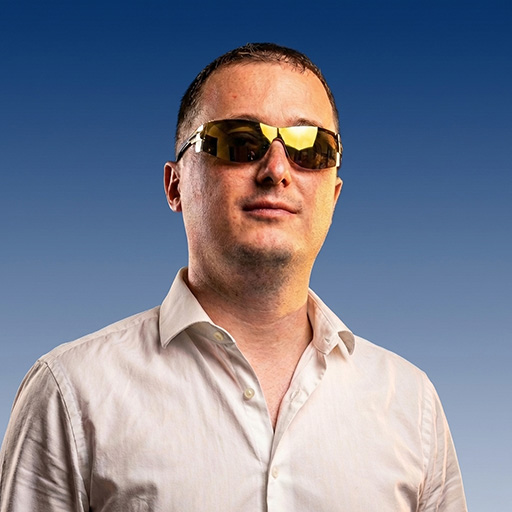
90+ engineers ready to deliver your Gaming Software project on time and within budget
Contact us today to discuss your project. We're ready to review your request promptly and guide you on the best next steps for collaboration
Same dayWe're committed to keeping your information confidential, so we'll sign a Non-Disclosure Agreement
1 dayAfter we chat about your goals and needs, we'll craft a comprehensive proposal detailing the project scope, team, timeline and budget
3-5 daysLet's connect on Google Meet to go through the proposal and confirm all the details together!
1-2 daysAs soon as the contract is signed, our dedicated team will jump into action on your project!
Same dayHeadquarters in Las Vegas, Nevada. Engineering office in Kyiv, Ukraine.
We also work with clients through dedicated local teams in Las Vegas, New York and San Francisco.
Thanks for the request!
We typically reply within 24 hours