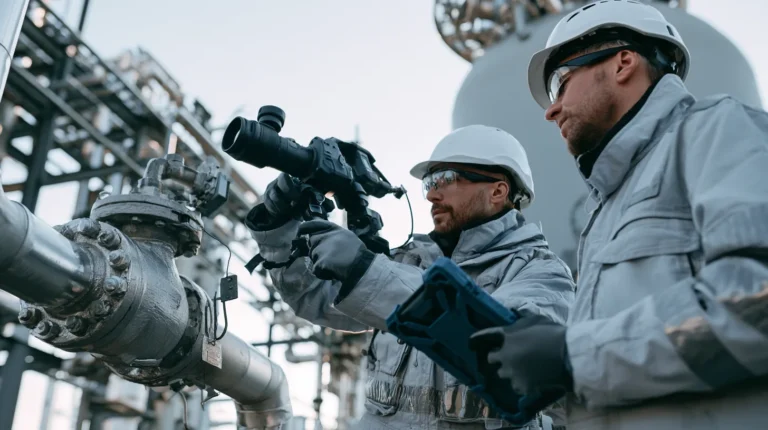
AR/VR Development Cost in 2026: Types, Platforms and Build Guide
AR/VR development cost in 2026 covering pricing by platform, hardware and complexity, plus the build process and how to reduce cost without adding risk.
 Updated
9 min read
433 views
Updated
9 min read
433 views
Key takeaways: AR/VR development cost in 2026 4
What drives the AR/VR budget, how platform and complexity change the number and how to control cost without cutting corners.
- Cost rises from AR to VR to MR Mobile AR is the cheapest entry point since it runs on phones people already own. Headset VR and MR cost more because they add dedicated hardware and spatial tracking.
- Platform sets the starting budget Mobile AR typically runs $20,000-80,000, headset VR $50,000-150,000 or more per scenario and WebXR is the cheapest way to test an idea without an app-store build.
- Complexity tier matters more than the label A proof of concept runs $15,000-40,000, a multi-scene build $40,000-150,000 and a full enterprise program $150,000-500,000 or more a year.
- Prototype on real hardware first Testing comfort and frame rate on the target device before committing to 3D art production is the single biggest way to avoid expensive rework.
AR/VR development cost is one of the hardest numbers to pin down in a project brief. A single-scene mobile filter and a multi-site enterprise training simulator both get called AR/VR and the two can sit hundreds of thousands of dollars apart. What actually moves the number is platform, the hardware behind it, how bespoke the 3D content is and how interactive the experience needs to be. This guide breaks down AR/VR development cost in 2026: the differences between AR, VR and MR, what drives the price and honest ranges by platform and complexity tier. Use it to budget an XR build before you commit to one.
In short: AR/VR development cost in 2026 typically runs from $15,000 - $40,000 for a simple mobile AR feature or a single-scene VR proof of concept to $150,000 - $500,000+ a year for a multi-scenario enterprise VR or MR training program. Mobile AR is the cheapest entry point because it runs on hardware people already own. Headset VR and MR cost more because they need dedicated devices, bespoke 3D content and platform-specific engineering for comfort and tracking. These are industry estimates, not quotes. Your real number depends on platform, hardware, content complexity and how interactive the experience needs to be.
AR vs VR vs MR: cost by type
Before pricing anything, it helps to be clear on what is actually being built. The three terms get used loosely in a lot of pitches and each one carries a different starting cost.
- AR (Augmented Reality). Digital content overlaid on the real world through a phone camera or a see-through headset. The lowest starting cost of the three, largely because it runs on hardware most users already carry, so there is no device budget and distribution rides on app stores everyone already knows.
- VR (Virtual Reality). A fully synthetic environment inside a headset that replaces the real world entirely. Costs more than AR because it needs a dedicated device, real-time 3D environments and careful comfort and locomotion design to avoid motion sickness.
- MR (Mixed Reality). Virtual objects that respond to and interact with the real room, using passthrough headsets or spatial-mapping hardware. Usually the most expensive of the three, since it adds spatial tracking and occlusion on top of everything a VR build already needs.
Cost generally rises from AR to VR to MR, though the label matters less than the scope behind it. A simple AR filter can cost less than a modest VR training module and a stripped-down MR proof of concept can undercut a large multi-scene VR app. Complexity, covered further down, is what really sets the number.
What drives AR/VR development cost in 2026
Once the type is settled, five factors do most of the work of setting the budget.
- Platform. Mobile AR runs on hardware users already own. Headset VR and MR need the team to buy or provision devices, which adds cost before a single line of code ships.
- Hardware and device fleet. An enterprise VR or MR rollout across dozens or hundreds of headsets adds procurement, provisioning and remote device management on top of the software build itself.
- 3D asset complexity. Off-the-shelf or lightly adapted 3D assets are cheap. Bespoke, high-fidelity modeled and rigged content, such as a replica of a piece of factory equipment or a realistic avatar, is usually the single biggest line item in the budget.
- Interactivity depth. A passive 360-degree viewer costs a fraction of an experience built around hand tracking, physics, multi-user presence and voice.
- Platform-specific engineering. Spatial tracking, occlusion, frame budget and comfort tuning to avoid motion sickness all add engineering time that a regular website or mobile app never needs.
None of these factors move the price on their own. They compound, which is why two projects that sound similar on paper can land on AR/VR development cost estimates that are nowhere close.
AR/VR development cost by platform
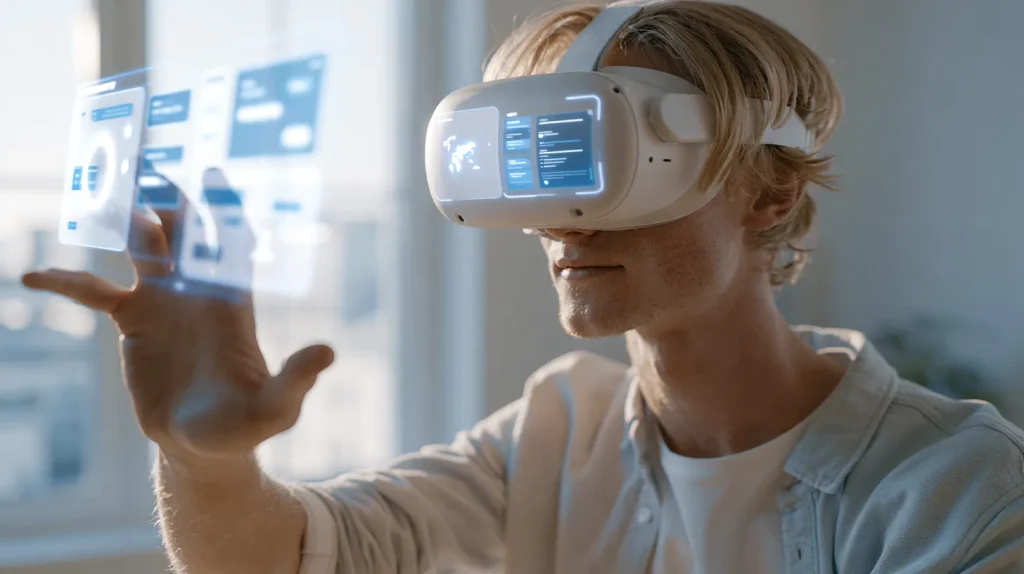
Platform changes both distribution and engineering cost. The table below reflects typical 2026 patterns, not fixed prices.
| Platform | Typical 2026 cost | Best fit |
|---|---|---|
| Mobile AR | $20,000 - $80,000 for a focused MVP (markerless AR, basic 3D overlay or filter), $80,000 - $200,000+ for advanced builds (multi-user AR, persistent SLAM tracking and virtual try-on) | Retail try-on, marketing campaigns, wayfinding and any product that needs to reach the widest possible audience fast |
| Headset VR | $50,000 - $150,000 for a single-scenario app (one training module, one environment), $150,000 - $400,000+ for a multi-scenario enterprise platform | Training, simulation, design review and any use case that benefits from full immersion |
| WebXR | $25,000 - $90,000 for a lightweight browser-based experience or configurator | Product showcases and demos that need to skip app-store install and reach AR-capable phones and VR headsets from one build |
Mobile AR usually builds on the same mobile app development stack and app-store distribution as a regular phone app, which is why it is normally the cheapest AR/VR platform to start with. Headset VR needs a native Unity or Unreal build tuned to specific hardware, plus the headsets themselves for anything beyond a single test device. WebXR trades away some depth of interaction and offline performance for a lighter build and zero app-store friction, which makes it a fast way to test whether an AR/VR idea earns a bigger budget.
AR/VR development cost by complexity tier
Complexity moves the number as much as platform does. Three tiers cover most of what teams actually budget for.
| Complexity tier | Typical 2026 cost |
|---|---|
| Proof of concept | $15,000 - $40,000 for one environment or interaction, using off-the-shelf or lightly customized 3D assets, enough to validate the idea on real hardware |
| Mid-complexity build | $40,000 - $150,000 for several environments or modules, custom 3D assets and real interactivity such as grabbing, assembling or walking through a space, on a single target platform |
| Enterprise program | $150,000 - $500,000+ a year across multiple scenarios or sites, a bespoke content pipeline, multi-user or networked sessions, device-fleet management and ongoing content updates |
A proof of concept rarely needs more than one well-built scene. It exists to prove the interaction is worth the investment, not to cover every use case at once. Mid-complexity builds are where most standalone AR/VR products live, with enough content and interactivity to be genuinely useful without the overhead of a full program. Enterprise AR/VR is closer to a program than a single project, with multiple scenarios, sites and headsets all drawing on the same content pipeline and support budget.
How AR/VR development gets built
Regardless of platform or complexity tier, most AR/VR builds move through the same stages.
- Discovery and validation. Confirm AR, VR or MR is actually the right medium for the problem and choose the target platform before committing to a build.
- Prototype on real hardware. Test the core interaction and comfort on the actual target device early, since an editor preview does not reveal frame-rate or motion-sickness problems.
- 3D asset production. Model, texture, rig and optimize the content for a real-time frame budget, usually the slowest step to scale.
- Core development. Integrate the platform SDK, such as ARKit, ARCore or OpenXR, inside a Unity or Unreal build, then add the interaction and physics logic. Keeping that SDK integration consistent across Meta Quest, Vision Pro and Android XR headsets is its own challenge, covered in our OpenXR cross-platform development guide.
- On-device testing. Check frame rate, thermals, anchor stability and comfort on real hardware, not just in the editor, before anything ships.
- Deployment. Submit to the app stores for mobile AR, enroll headsets in mobile device management for an enterprise rollout or host the build for WebXR.
- Support and content updates. Budget for new scenes, bug fixes and platform updates after launch, since AR/VR SDKs and headset software both move fast.
Skipping the prototype step to save time is one of the most common ways an AR/VR budget grows later, because comfort and performance problems found after the 3D content is built are far more expensive to fix.
How to reduce AR/VR development cost without adding risk
- Prototype on real hardware before committing to art. Comfort and frame-rate problems are cheap to fix in a prototype and expensive to fix once a full library of 3D content is built around them.
- Reuse off-the-shelf 3D assets where the look does not need to be bespoke. Reserve custom modeling budget for the handful of assets users actually touch, not everything in the scene.
- Start with the platform your users already hold. Mobile AR reaches the widest audience without a hardware budget line. Add a headset build later if the use case earns it.
- Build the content pipeline once. A scripted artist-to-device workflow is what keeps a multi-scenario program affordable release after release, instead of hand-exporting every asset one at a time.
- Plan for device management from day one. Retrofitting mobile device management onto a multi-headset rollout after the pilot is one of the most common causes of AR/VR budget overrun.
None of this means building a smaller experience. It means spending the AR/VR budget on the platform, content and interactions users actually need, instead of on rework caused by decisions made too late.
How Pharos Production delivers AR/VR development
We build mobile AR, headset VR and WebXR experiences, from an early prototype on real hardware through 3D content production, SDK integration and on-device tuning for frame rate, comfort and anchor stability. If you are scoping an AR/VR build and need a realistic platform choice and budget, our AR/VR development team can size the platform, complexity and cost with you, alongside a custom software development team when the AR/VR experience is one part of a larger product.
Sources: 2026 cost ranges synthesized from published AR/VR and XR development pricing guides (MobiDev, ScienceSoft, Program-Ace, Belitsoft) and public XR project rate-card benchmarks. Figures are 2026 industry ranges, not quotes. Your cost depends on platform, hardware, content complexity and interactivity.
FAQ
Quick answers to common questions about custom software development, pricing, process and technology.
Type to filter questions and answers. Use Topic to narrow the list.
Showing all 5
No matches
Try a different keyword, change the topic or clear filters
-
How much does AR/VR development cost in 2026?
AR/VR development in 2026 typically ranges from $15,000-40,000 for a simple mobile AR feature or single-scene VR proof of concept to $150,000-500,000 or more a year for a multi-scenario enterprise VR or MR training program. Mobile AR is the cheapest entry point because it runs on hardware people already own.
Headset VR and MR cost more because they need dedicated devices, 3D content and platform-specific engineering. These are industry planning ranges, not quotes.
-
How does the difference between AR, VR and MR affect the cost?
AR overlays digital content on the real world through a phone or a see-through headset. VR replaces the visual field entirely inside a headset.
MR blends the two, letting virtual objects respond to the real room. Cost generally rises from AR to VR to MR because each step adds hardware, spatial tracking and content complexity, though a simple experience in any of the three can cost less than a complex one in another.
-
Is mobile AR cheaper to build than a VR headset app?
Usually, yes. Mobile AR reaches users through phones they already carry, so there is no device budget and app-store distribution is familiar.
A focused mobile AR MVP often runs $20,000-80,000. A comparable headset VR app usually costs more, $50,000-150,000 for a single scenario, because it needs a native Unity or Unreal build tuned to specific hardware plus, for an enterprise rollout, the headsets themselves.
-
How much does an enterprise VR training program cost?
A multi-scenario enterprise VR or MR training program typically runs $150,000-500,000 or more a year, covering several training modules or sites, a custom 3D content pipeline, device-fleet management and ongoing content updates. Programs that start with one well-scoped scenario and expand once it proves out tend to spend this budget more efficiently than ones that try to build every scenario at once.
-
How can I reduce AR/VR development cost without cutting corners?
Prototype the core interaction on real target hardware before committing budget to 3D art, since comfort and frame-rate problems are far cheaper to fix early. Reuse off-the-shelf 3D assets wherever the experience does not depend on a bespoke look, start with the platform your users already hold and plan for device management from day one on any multi-headset rollout instead of retrofitting it after a pilot.

I work with startup founders who need a dedicated software development team but don’t want to gamble on hiring, random outsourcing, or opaque delivery.
Most founders face the same problem sooner or later.
Early technical and team decisions lock the product into tech debt, slow delivery, missed milestones and constant re-hiring. By the time this becomes visible, fixing it is already expensive.As a CTO and software architect, I help founders design, build and run dedicated development teams that work as a true extension of the startup. Not as a black-box vendor.
My focus is on complex products where mistakes are costly:
- Web3 and blockchain platforms
- FinTech and regulated products
- High-load startup systems
- MVP → scale transitions
We don’t do body-shopping.
We don’t sell generic outsourcing.Instead, we help founders:
- build the right team structure from day one
- keep technical ownership and transparency
- scale delivery without losing control
- avoid vendor lock-in and hidden risks
Teams are aligned with the product roadmap, business goals and long-term architecture. Not just short-term velocity.