










Skip to content

Last reviewed August 15, 2026

OpenAI API Integration Services

Pharos Production delivers expert OpenAI API integration for enterprises building intelligent products. Our team works with GPT-4, GPT-4o, o3, Assistants API, function calling, embeddings and fine-tuning to build production-grade AI systems with proper guardrails and cost controls. We help companies move beyond prototypes to robust, scalable OpenAI deployments. This includes prompt engineering, token optimization, structured output parsing, content moderation layers, fallback strategies and usage monitoring. Whether you need a customer-facing chatbot, internal knowledge assistant, document processing pipeline or AI-powered workflow automation, we architect solutions that balance capability with cost. Pharos Production brings deep experience in enterprise AI deployment - rate limiting, PII filtering, audit logging, SOC 2 compliance and multi-region failover. We build the infrastructure around OpenAI APIs that turns experimental AI into reliable business tools.

  • 20+ OpenAI integrations
  • 12+ AI engineers
  • 8+ models in production

Your business results matter

Achieve them with minimized risk through our bespoke innovation capabilities

Your contact details
Please enter your name
Please enter a valid email address
Please enter your message
* required

We typically reply within 4 hours

  • 25+ AI projects delivered
  • 90+ engineers
  • 107 Clutch reviews

Enterprise-grade AI with responsible governance, data privacy and production-ready deployment

Key facts: Pharos Production integrates OpenAI APIs (GPT-4o, o1, Whisper, DALL-E, Embeddings) into production applications since 2023. 20+ OpenAI-powered systems deployed across customer support, document processing and content generation. Last reviewed: . Editorial policy.

What is OpenAI API integration?

OpenAI API integration is the process of embedding GPT-4, GPT-4o, o3, Assistants API, embeddings, function calling, vision and fine-tuning capabilities into enterprise applications. OpenAI powers intelligent chatbots, document analysis, code generation, content creation, semantic search and autonomous agents. Integration includes prompt engineering, structured output parsing, token optimization, streaming, content moderation, fallback strategies and usage monitoring. The Assistants API enables stateful multi-turn conversations with file retrieval, code interpreter and function calling in a managed runtime.

What we build with OpenAI API Integration

Customer support chatbots

GPT-4o powered support agents with RAG retrieval, function calling for order lookups and ticket creation, escalation to humans and multi-language support.

Document analysis and extraction

Automated contract review, invoice processing, compliance checking and structured data extraction from PDFs, images and scanned documents using GPT-4 Vision.

Code generation and review

AI-assisted development tools - code generation, refactoring suggestions, PR review automation, documentation generation and test case creation.

Content generation pipelines

Automated SEO content, product descriptions, email copy and marketing materials with brand voice fine-tuning, fact-checking and human approval workflows.

Semantic search and embeddings

text-embedding-3 powered search across knowledge bases, product catalogs and internal documentation with hybrid retrieval and reranking.

Workflow automation agents

Assistants API agents that manage CRM updates, schedule meetings, process expense reports and orchestrate multi-step business workflows via function calling.

OpenAI vs Anthropic vs open-source LLMs

Factor OpenAI Anthropic / Open-source
Model range GPT-4o, o3, o4-mini, GPT-4 Vision, DALL-E, Whisper Anthropic: Claude 3.5/4. Open-source: Llama, Mistral
Reasoning o3 for complex reasoning, math, code Anthropic: extended thinking. Open-source: limited
Multimodal Vision, audio (Whisper), image gen (DALL-E) Anthropic: vision only. Open-source: varies
Function calling Native JSON mode, parallel tool calls Anthropic: tool use. Open-source: limited
Fine-tuning GPT-4o fine-tuning with custom datasets Anthropic: none. Open-source: full control (LoRA)
Enterprise Azure OpenAI, SOC 2, data privacy API Anthropic: AWS Bedrock. Open-source: self-hosted
Pricing Pay-per-token, batch API for 50% discount Anthropic: similar. Open-source: infra cost only

Pharos Production recommends OpenAI for projects needing the broadest model range, multimodal capabilities and fine-tuning. Anthropic Claude excels in safety-critical and long-context tasks. Open-source models suit data-sensitive workloads requiring full control.

Limitations: OpenAI APIs have rate limits that require queuing and retry logic for high-throughput applications. Token costs scale linearly with usage - batch processing and caching strategies are essential. Fine-tuning requires high-quality training data (minimum 50-100 examples). Latency for o3 reasoning models can reach 30-60 seconds per request. Data sent to OpenAI APIs is processed externally - for regulated industries, consider Azure OpenAI with private endpoints.

OpenAI API Integration development cost range
OpenAI integration starts from $15,000-$35,000 for chatbot or content generation features. RAG systems with Embeddings and vector search cost $40,000-$110,000. Enterprise multi-agent platforms range from $150,000-$280,000. Ongoing API costs: $500-$5,000/month depending on volume.

OpenAI Integration Benchmark 2026

Proprietary research based on 20+ OpenAI integration projects delivered by Pharos Production. Dataset covers chatbots, document processing, RAG systems and AI agents. Methodology (Pharos Verified Delivery): aggregated delivery metrics with token usage analytics and response quality benchmarks. Full report available on request.

8 weeks Average time to MVP for OpenAI-powered applications
< 1.5s Average GPT-4o response time with streaming
40-60% Cost reduction with prompt optimization and caching
$35K-$210K+ Project cost range depending on scope
92%+ Average answer accuracy in RAG deployments
20+ OpenAI integration projects delivered

Pharos Production - Get your OpenAI integration estimate in 48h. Share your AI requirements - chatbot, document processing, code assistant or workflow automation - and our team will deliver an architecture plan with cost projections. Get a project estimate.

Limitations and considerations
  • OpenAI API pricing scales unpredictably with usage - a GPT-4o application processing 10,000 requests per day can cost $3,000-$8,000 monthly in API fees alone, and cost spikes from prompt injection or retry loops can blow budgets overnight.
  • OpenAI enforces strict rate limits (TPM and RPM) that throttle production applications during peak traffic - hitting rate limits returns 429 errors that degrade user experience, and higher tier limits require spending commitments.
  • Model deprecation cycles force mandatory migrations every 12-18 months - OpenAI retires older model versions with 6 months notice, requiring prompt re-tuning, regression testing and output validation against the replacement model.
  • All data passes through OpenAI servers with no self-hosting option - enterprises in regulated industries (healthcare, finance, government) face compliance risks, and OpenAI data processing terms may conflict with GDPR, HIPAA or internal data governance policies.
Key takeaways
  • OpenAI GPT-4o processes text, images and audio in a single API call, enabling multimodal enterprise applications.
  • Function calling and JSON mode enable reliable structured output for integration with business systems and databases.
  • The Assistants API provides managed state, file retrieval and code execution - reducing custom infrastructure by 60-70%.
  • Pharos Production has delivered 20+ OpenAI-powered projects including chatbots, document processing and AI agents.
  • An OpenAI integration MVP starts from $35,000-$70,000 and takes 6-10 weeks depending on RAG complexity and integrations.

Reviews

Independent reviews from Clutch, GoodFirms and direct client testimonials - verified feedback on our software projects

Based on 342 verified reviews

5 out of 5 stars
Software Development

Delivered reliable frontend solutions with strong performance and timely execution.

Robin Kim
5 out of 5 stars
Web3 & Blockchain

Delivered tailored blockchain solution for manufacturing traceability.

Mohumahad ali Freidy
5 out of 5 stars
Web3 & Blockchain

Built DAO governance system with transparent voting and treasury tracking.

Harish Boddu
5 out of 5 stars
Web3 & Blockchain

Delivered blockchain-based content protection system with seamless performance.

Claire Quirk
5 out of 5 stars
Web3 & Blockchain

Built blockchain-based payment MVP with high transaction throughput and EV charging integration.

John Henry Harris
5 out of 5 stars
Software Development

Built Android app with QR-based payments and strong execution speed.

Eden E.
5 out of 5 stars
Software Development

Delivered platform with strong UI/UX and effective project management using agile tools.

Jim Vagin
5 out of 5 stars
Web3 & Blockchain

Conducted penetration testing and implemented wallet security improvements.

Graham R.
5 out of 5 stars
Web3 & Blockchain

Strong technical expertise with measurable growth results and effective communication.

Anonymous
Skip glossary

Key OpenAI API terms 7

Chat Completions
The primary OpenAI API endpoint that accepts a list of role-tagged messages and returns a model-generated reply, supporting streaming, temperature control and tool use.
Function calling
An OpenAI API feature where the model returns a structured JSON invocation of a developer-defined function rather than prose, enabling reliable integration with external systems.
Embeddings
Numerical vector representations of text produced by OpenAI embedding models that encode semantic meaning, enabling similarity search, clustering and retrieval-augmented generation.
Fine-tuning
A process of further training a base OpenAI model on custom labeled examples to steer its style, tone or task behavior without modifying the full model weights.
Structured outputs
An OpenAI API mode that forces model responses to conform to a JSON Schema, guaranteeing parseable output for downstream code without manual extraction logic.
Assistants API
A stateful OpenAI API layer that manages conversation threads, file attachments and tool execution on behalf of the caller, simplifying multi-turn agent application development.
Tokens
The basic units OpenAI models use to process text - roughly four characters each in English - that determine both input context length limits and per-request billing costs.

Frequently asked questions

Last updated:

  • Copy link Copies a direct link to this answer to your clipboard.

    We use prompt compression, semantic caching (Redis + embeddings), batch API for non-real-time workloads (50% cost savings), model routing (GPT-4o-mini for simple tasks, GPT-4o for complex ones) and token budget monitoring with alerts.

  • Copy link Copies a direct link to this answer to your clipboard.

    Yes with proper architecture. We use Azure OpenAI for data residency requirements, implement PII filtering before API calls, add audit logging for compliance and configure data retention policies.

    OpenAI API data is not used for training by default.

  • Copy link Copies a direct link to this answer to your clipboard.

    Yes. We fine-tune GPT-4o with your domain data to improve accuracy, reduce prompt length and lower per-request costs. Fine-tuning works best with 100+ high-quality examples and measurable evaluation criteria.

  • Copy link Copies a direct link to this answer to your clipboard.

    We implement exponential backoff, request queuing with priority lanes, token bucket rate limiting, fallback to secondary models (Claude, open-source) and usage dashboards with budget alerts.

  • Copy link Copies a direct link to this answer to your clipboard.

    Chatbot MVPs start from $35,000-$70,000. Document processing systems range from $55,000 to $140,000.

    Enterprise AI platforms with multi-agent orchestration cost $150,000 to $280,000+.

Choose your project scope

Pharos Production scopes engagements in three tiers, Proof of concept, MVP build and Enterprise platform, with typical budgets from $10,000 to $500,000+ depending on scope and complexity.

PoC

Proof of concept

Focused validation of your riskiest technical assumption with a working spike and a clear build-or-pivot recommendation.

Timeline
3-6 weeks
Team
1-2 engineers + architect
Best for
validating a risky technical bet before funding a full build
$10,000 - $30,000
Enterprise

Enterprise platform

Full-scale build with architecture, DevOps, QA, security and long-term evolution.

Timeline
6-12+ months
Team
6-12 engineers across teams
Best for
multi-team platforms with security, compliance and long-term evolution
$150,000 - $500,000+

Prices vary based on project scope, complexity, timeline and requirements. Hourly rates range from $50 to $99 depending on role and seniority. Contact us for a personalized estimate.

An approach to the development cycle

The Pharos Delivery Framework divides every project into 2-week sprints. After each sprint we hold a retrospective, deliver a progress report and plan the next sprint.
  1. Team Assembly

    Our company starts and assembles an entire project specialists with the perfect blend of skills and experience to start the work.

  2. MVP

    We'll design, build and launch your MVP, ensuring it meets the core requirements of your software solution.

  3. Production

    We'll create a complete software solution that is custom-made to meet your exact specifications.

  4. Ongoing

    Continuous Support

    Our company will be right there with you, keeping your software solution running smoothly, fixing issues and rolling out updates.

Trusted & Recognized

Partnerships and awards

Recognized on Clutch, GoodFirms and The Manifest for software engineering excellence

  • Partner1
  • Partner2
  • Partner3
  • Partner4
  • Partner5
  • Clutch Global Leader, Spring 2025
  • Clutch Top Blockchain Company, Ukraine 2025
  • Clutch Top Web3 Development, Ukraine 2025
  • Clutch Top Smart Contract Development, Ukraine 2025
  • GoodFirms Review Award 2025
  • The Manifest Top Blockchain Company, Ukraine 2024

65+ industry awards

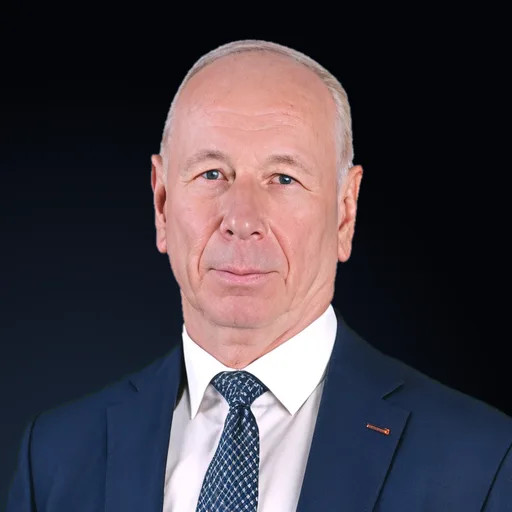
Victor Sineglazov - independent AI scientific advisor

Technically reviewed by Victor Sineglazov, D.Sc.

Independent AI Scientific Advisor

Professor, Artificial Intelligence Department, Igor Sikorsky Kyiv Polytechnic Institute. Head of the Aviation Computer-Integrated Complexes Department, Kyiv Aviation Institute.

Reviewed for technical accuracy on August 15, 2026. Not an endorsement of any commercial claim on this page.

OpenAI API integration insights

Two translucent pillars with contrasting gradient tints on a white plinth connected by a balanced scale, comparing OpenAI and Anthropic for enterprise AI.

OpenAI vs Anthropic Enterprise AI: 2026 Comparison

Quick Comparison: OpenAI vs Anthropic Factor OpenAI (GPT-4o) Anthropic (Claude 3.5/4) Best for General tasks, image understanding Coding, analysis, long documents Context window 128K tokens 200K tokens Pricing (input) $2.50/1M tokens $3.00/1M tokens Pricing (output) $10.00/1M tokens $15.00/1M tokens Enterprise features Azure OpenAI, fine-tuning, assistants AWS Bedrock, prompt caching Prompt caching Automatic (50% off) Manual […]


Floating translucent documents in a grid with one sliding toward a glowing query node on a blue light beam, illustrating RAG retrieval.

RAG vs Fine-Tuning: When to Use Each for AI Projects

Quick Comparison: RAG vs Fine-Tuning Factor RAG Fine-Tuning Best for Dynamic knowledge bases, 10K+ documents Narrow domain tasks, consistent behavior Update speed Instant (add/remove docs) Requires retraining (hours to days) Upfront cost $5K-$20K (vector DB + pipeline) $500-$5,000 per training run Per-query cost Higher (retrieval + inference) Lower (single model call) Accuracy Broad coverage, may […]

Minimalist sculptor hands refining a translucent LLM sphere on a workbench with geometric chisels, representing LLM fine-tuning.

LLM Fine-Tuning Guide: LoRA, RLHF and DPO Explained

Fine-tuning large language models transforms general-purpose AI into domain-expert systems that understand your industry terminology, follow your output format requirements and achieve accuracy levels that prompting alone cannot reach. This guide covers the three dominant fine-tuning techniques in 2026 - LoRA, RLHF and DPO - with practical guidance on when to use each, how to […]

Two developers scoping a build against a handwritten enumerated list on paper with the keyboard pushed aside, the planning stage of Model Context Protocol server development

MCP Server Development

A spec-current guide to MCP server development after the 2026-07-28 revision, covering the stateless protocol change, the modern-vs-legacy split, server primitives, transports, authorization and the named security failure modes, plus what a server actually costs to build and maintain.

Dmytro Nasyrov, Founder and CTO at Pharos Production
Dmytro Nasyrov Founder & CTO Let's work together!

Build with OpenAI API Integration

90+ engineers ready to deliver your OpenAI API Integration project on time and within budget

Your contact details
Please enter your name
Please enter a valid email address
Please enter your message
* required

We typically reply within 4 hours

What happens next?

  1. Contact us

    Contact us today to discuss your project. We're ready to review your request promptly and guide you on the best next steps for collaboration

    Same day
  2. NDA

    We're committed to keeping your information confidential, so we'll sign a Non-Disclosure Agreement

    1 day
  3. Plan the Goals

    After we chat about your goals and needs, we'll craft a comprehensive proposal detailing the project scope, team, timeline and budget

    3-5 days
  4. Finalize the Details

    Let's connect on Google Meet to go through the proposal and confirm all the details together!

    1-2 days
  5. Sign the Contract

    As soon as the contract is signed, our dedicated team will jump into action on your project!

    Same day

Our offices

Headquarters in Las Vegas, Nevada. Engineering office in Kyiv, Ukraine.

We also work with clients through dedicated local teams in Las Vegas, New York and San Francisco.

Las Vegas, United States

Headquarters PT
5348 Vegas Dr, Las Vegas, NV 89108, United States

Kyiv, Ukraine

Engineering office EET (UTC+2)
44-B Eugene Konovalets Str. Suite 201, Kyiv 01133, Ukraine