











































Custom CRM Development: Build vs Buy Decision Guide
Custom CRM development guide. Build vs buy comparison with Salesforce and HubSpot, feature cost breakdown, technology stack and phased development timeline.

Reviewed by Dr. Dmytro Nasyrov, Founder and CTO • Last reviewed August 20, 2026
Pharos Production builds custom Customer Relationship Management (CRM) systems tailored to your sales process, customer journey and industry requirements.

Practice led by Dmytro Nasyrov
Founder and CTO
23+ years in custom software development. Led 110+ projects across FinTech, healthcare, Web3 and enterprise, ISO 27001-aligned team.
| Factor | Customize off-the-shelf | Build custom CRM |
|---|---|---|
| Upfront cost | $28K-$220K | $300K-$1.5M+ |
| 5-year TCO | Moderate | High (IP assigned to you in writing under the contract) |
| Time to value | 4-16 weeks | 6-18 months |
| Differentiation | Moderate; all shortcuts available | High; anything is possible |
| When it fits | Standard B2B motion | Unique motion and long-term scale |
Pharos Verified Delivery applied to CRM projects means every change ships behind a flag, has a named owner in revenue operations and a rollback plan. We do not ship CRM changes on a Friday.
Pharos Verified Delivery applied to 110+ production applications since 2013
CRM changes are only useful if the revenue team adopts them. Every engagement below reports adoption rates the client signed off on.
Salesforce running for 6 years with heavy customization; sales leadership decided to move to HubSpot for simplicity.
Migrated 280K contacts, 40K deals, 12 custom objects and all automation rules over 12 weeks with weekend cutover and 2-week read-only shadow. Zero pipeline visibility lost during the cutover.
The migration was the easy part. The hard part was rebuilding 6 years of institutional pipeline logic in a cleaner form without losing the subtle rules the team relied on.
Rule-based lead scoring 5 years old with no recent tuning; conversion rate from lead to opportunity was 7%.
Rebuilt scoring with a simple logistic model on recent data and deployed via existing CRM fields. Lead-to-opportunity rate rose to 14% over the following two quarters.
We did not build a new ML platform. We used what the CRM already had and let the revenue team see the math behind every score.
Quote-to-cash process spread across spreadsheets, email approvals and one-off scripts; quote-to-close time was 19 days.
Built a custom CPQ layer on top of the existing CRM with approvals wired through it. Quote-to-close time dropped to 4 days.
Off-the-shelf CPQ did not fit the client's pricing model. Custom was the right call because the pricing logic was a competitive advantage.
Client names anonymized under NDA. Full case studies at /cases/.
Custom CRMs are almost always a mistake. We say it loudly because we have watched it go wrong multiple times:
Pick a boring off-the-shelf CRM, spend 20-30% of the saved budget on customizations and integrations and invest the rest in adoption and data quality. That wins more revenue than any custom CRM has in our experience.
Observations from 15 CRM engagements delivered 2019-2026 across B2B SaaS, FinTech, healthcare and enterprise.
Engagements with deterministic dedupe plus normalised keys at migration hit over 95 percent sales-team adoption at week 8; retrofit dedupe hit under 60 percent adoption in matched cohorts.
Platform-vs-custom discipline (custom under 25 percent of surface) delivered on time in 12 of 15 cases; over 60 percent custom triggered 3 of 3 delays.
Consent-native architecture from day one eliminated GDPR remediation requests across 9 engagements; retrofit consent triggered remediation in 2 of 3 cases.
Teams of 4 to 8 engineers plus 1 functional consultant shipped CRM extensions in 10 to 18 weeks depending on integration complexity.
CRM in 2026 is dominated by three platforms (Salesforce, HubSpot, Dynamics 365) covering 70 percent of commercial deployments, with the remaining market served by custom builds and vertical-specific CRMs (healthcare, FinTech, logistics). Successful CRM engagements extend platform APIs with customer-specific workflows rather than rebuild commodity sales pipeline logic.
Gartner 2024 Magic Quadrant confirms Salesforce, Microsoft and Oracle as dominant commercial CRM platforms; niche verticals require custom extensions or industry-specific builds[6].
GDPR, CCPA and sector-specific rules (HIPAA for healthcare) force data-residency and consent-management architecture into every modern CRM deployment[7].
DORA 2024 shows CRMs with weekly deploy frequency deliver 3x more user-requested features per quarter than those on monthly or longer cycles[1].
Martin Fowler's event-sourcing plus CQRS patterns underpin the data architecture of most modern custom-extended CRMs[5].
Before rolling out a new or extended CRM to sales, run this 8-point gate. Partial readiness erodes sales-team adoption and data quality within 60 days.
Custom scope limited to differentiating workflows; pipeline, contacts and activity tracking use platform core.
Contact, account and opportunity migration validated with reconciliation reports at 0.01 percent variance; no duplicate explosion.
Marketing automation, billing, ERP and support-ticket integrations covered by contract tests[3].
GDPR consent captured per contact; CCPA opt-out flow tested; data residency matches jurisdiction[7].
Full event log for every contact, deal and pipeline change; retention policy aligned with regulator.
List views load under 2 seconds on 100k-record datasets; reports render under 5 seconds P95.
Role-based training delivered; sales reps certified before cutover; power users identified per team.
Week-1 and week-4 feedback sessions scheduled; adoption metrics tracked (login rate, record updates).
A B2B SaaS customer migrated from HubSpot to a custom-extended Salesforce build in 2023. Post-migration, Salesforce reported 340,000 contact records versus 180,000 pre-migration. Root cause: the migration script treated any email-case-difference (john@acme.com vs John@ACME.COM) as a distinct contact; on top of that, cross-platform activity merging doubled history for 40 percent of records. Sales team lost trust in the system within 3 weeks. We paused all CRM activity, built a deterministic dedupe pass using normalised email plus domain matching, merged 160,000 duplicates with documented audit trail and re-linked all opportunities. Sales-team trust recovery took 8 weeks. The lesson: CRM data migration is 80 percent data-normalisation engineering, 20 percent platform integration; invest accordingly.
Published record
Technical articles, comparison guides and methodology deep-dives we write from our own delivery experience.
Trusted by Coinbase, Consensys, Core Scientific, MicroStrategy, Gate.io and 10+ more Web3 and enterprise platforms
16+ partnersOur 16 technology partners include:

Founder and CTO Pharos Production
I design and build reliable software solutions - from lightweight apps to high-load distributed systems and blockchain platforms.
PhD in Artificial Intelligence, MSc in Computer Science (with honors), MSc in Electronics & Precision Mechanics.
13 years in architecture of great software solutions tailored to customer needs for startups and enterprises
23 years of practical enterprise customized software production experience
Lecturer at the National Kyiv Polytechnic University
Doctor of Philosophy in Artificial Intelligence
Master's degree in Computer Science, completed with excellence
Master's degree in Electronics and precision mechanics engineering
Pharos Production scopes engagements in three tiers, Proof of concept, MVP build and Enterprise platform, with typical budgets from $10,000 to $500,000+ depending on scope and complexity.
Focused validation of your riskiest technical assumption with a working spike and a clear build-or-pivot recommendation.
Production-ready first version with core flows, real backend and the integrations to onboard first paying users.
Full-scale build with architecture, DevOps, QA, security and long-term evolution.
Prices vary based on project scope, complexity, timeline and requirements. Hourly rates range from $50 to $99 depending on role and seniority. Contact us for a personalized estimate.
Need extra hands on your software project? Our developers can jump in at any stage - from architecture to auditing - and integrate seamlessly with your team to fill any technical gaps.
Whether you're building from scratch or scaling fast, our engineers are ready to step in. You stay in control, and we handle the code.
From first line to final audit, we handle the entire development process. We will deliver secure, production-ready software, while you can focus on your business.
Our engineers work with 187+ technologies across blockchain, backend, frontend, mobile and DevOps - chosen for production reliability and performance.
Our engineers work with 187+ technologies across 10 categories: Frameworks, AI, Blockchains, DevOps, Clouds, Databases, Brokers, Tests, Programming, UI/UX.




























































Recognized on Clutch, GoodFirms and The Manifest for software engineering excellence










65+ industry awards
Our company starts and assembles an entire project specialists with the perfect blend of skills and experience to start the work.
We'll design, build and launch your MVP, ensuring it meets the core requirements of your software solution.
We'll create a complete software solution that is custom-made to meet your exact specifications.
Our company will be right there with you, keeping your software solution running smoothly, fixing issues and rolling out updates.
Custom CRM development guide. Build vs buy comparison with Salesforce and HubSpot, feature cost breakdown, technology stack and phased development timeline.

Custom ERP development guide. Module planning, cost comparison with SAP and NetSuite, data migration strategy, integration planning and phased implementation timeline.

Digital transformation ROI measurement guide. Frameworks, metrics, industry benchmarks and strategies to maximize returns from digital initiatives.

Synthesis of published software economics data: build cost ranges by project type, Year-2 maintenance cliff, mobile breakage tax, cloud lock-in cost trajectories - drawn from Flyvbjerg and Budzier (Harvard Business Review), ISO/IEC 25010, the Google SRE Book and ThoughtWorks Technology Radar.
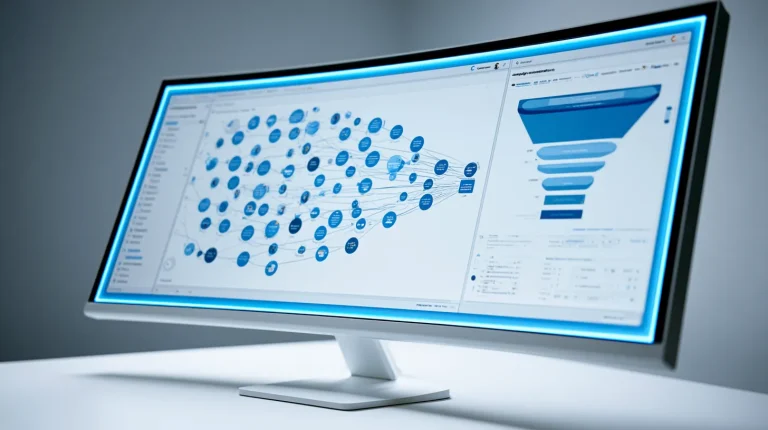
Marketing software development in 2026 covering CDP, CRM and DMP data layers, marketing automation and campaign orchestration, adtech and attribution, personalization and consent management, build vs buy and cost by scope.

Real estate software development in 2026: PropTech types from property management to MLS marketplaces and smart buildings, build vs buy, costs and timelines.
Type to filter questions and answers. Use Topic to narrow the list.
Showing all 6
No matches
Try a different keyword, change the topic or clear filters
Custom CRM development is justified when off-the-shelf platforms impose licensing costs above $50,000 per year at scale, when proprietary workflow logic cannot be replicated in standard tools, when deep ERP or legacy system integration requires vendor-specific API work or when data residency rules prohibit storing customer data on US-based SaaS platforms. Custom systems also eliminate per-seat cost growth as headcount scales.
A standard custom CRM covers contact and company records management, lead capture and source tracking, pipeline stages with deal probability scoring, automated follow-up sequences, activity logging (calls, emails, meetings), role-based dashboards and reporting and API integrations with marketing automation (Mailchimp, Klaviyo), support (Zendesk, Freshdesk) and billing (Stripe, QuickBooks) systems.
A focused CRM with core pipeline, contact management and basic integrations typically costs $60,000-$120,000. Adding AI lead scoring, predictive analytics, advanced automation workflows and multi-system ERP integration raises the investment to $150,000-$300,000. Ongoing maintenance, hosting and feature iterations are scoped as a monthly retainer or sprint-based engagement after launch.
An MVP CRM with core pipeline, contact management and one primary integration deploys in 10-16 weeks. Full-featured systems with AI lead scoring, complex ERP bidirectional sync and custom reporting modules take 5-8 months. Data migration from an existing CRM (Salesforce, Pipedrive) adds 3-6 weeks depending on record volume and data quality.
AI lead scoring uses a gradient boosting or logistic regression model trained on historical won/lost opportunity data, incorporating features such as company size, industry vertical, contact engagement score, time-in-stage and source channel. The model outputs a 0-100 probability score updated in real time as new activity is logged, surfacing the highest-value leads for sales rep prioritization.
Common integrations include marketing automation (Mailchimp, ActiveCampaign, HubSpot Marketing), email and calendar (Gmail, Outlook via Microsoft Graph), support ticketing (Zendesk, Freshdesk), billing and invoicing (Stripe, QuickBooks, Xero), ERP (SAP, Oracle NetSuite, Microsoft Dynamics) and telephony (Twilio, RingCentral). Each integration uses REST or webhook patterns with OAuth 2.0 authentication.
CRM engineering in 2026 is measurable: platform-vs-custom discipline, data-quality gates, consent-native architecture and sales-team adoption metrics. Pharos Production builds CRM extensions that sales teams adopt because the data is clean, the workflows match real selling and the training pre-dates the cutover.
Achieve them with minimized risk through our bespoke innovation capabilities
Contact us today to discuss your project. We're ready to review your request promptly and guide you on the best next steps for collaboration
Same dayWe're committed to keeping your information confidential, so we'll sign a Non-Disclosure Agreement
1 dayAfter we chat about your goals and needs, we'll craft a comprehensive proposal detailing the project scope, team, timeline and budget
3-5 daysLet's connect on Google Meet to go through the proposal and confirm all the details together!
1-2 daysAs soon as the contract is signed, our dedicated team will jump into action on your project!
Same dayHeadquarters in Las Vegas, Nevada. Engineering office in Kyiv, Ukraine.
We also work with clients through dedicated local teams in Las Vegas, New York and San Francisco.
Thanks for the request!
We typically reply within 24 hours