
Agriculture Software Development in 2026: AgriTech Types, Cost and Build Guide
Agriculture software development in 2026: farm management, precision ag, IoT, drone imagery and livestock types, build vs buy, costs and timelines.

AgTech (agricultural technology) software development is the process of building digital platforms that help farms and agribusinesses optimize production, reduce waste and make data-driven decisions.
Pharos Production is an agriculture software development company that builds farm management systems, precision agriculture platforms, IoT sensor networks and smart farming solutions for farms, agribusinesses, cooperatives and AgTech startups. The global agritech market reached $22.5 billion in 2024 and is projected to exceed $41 billion by 2030 (MarketsandMarkets), with FAO estimating that global food production must increase 60% by 2050 to feed 9.7 billion people. Founded in 2013 with 90+ engineers and 110+ apps delivered, Pharos Production combines IoT, AI and satellite data expertise to help agricultural businesses increase yields, reduce costs and optimize resources. Every project follows our Verified Delivery process - field testing, data validation and performance monitoring at each sprint before production deployment.

Practice led by Dmytro Nasyrov
Founder and CTO
23+ years in software development. Led IoT and data-intensive platforms for agricultural businesses, ISO 27001-aligned.
Agriculture software development in 2026: farm management, precision ag, IoT, drone imagery and livestock types, build vs buy, costs and timelines.

IoT development guide covering architecture patterns, MQTT and communication protocols, AWS/Azure platforms, security best practices and cost planning.

Computer vision use cases across manufacturing, healthcare, retail and security in 2026. Real implementation details, cost benchmarks and ROI data for CV deployments.
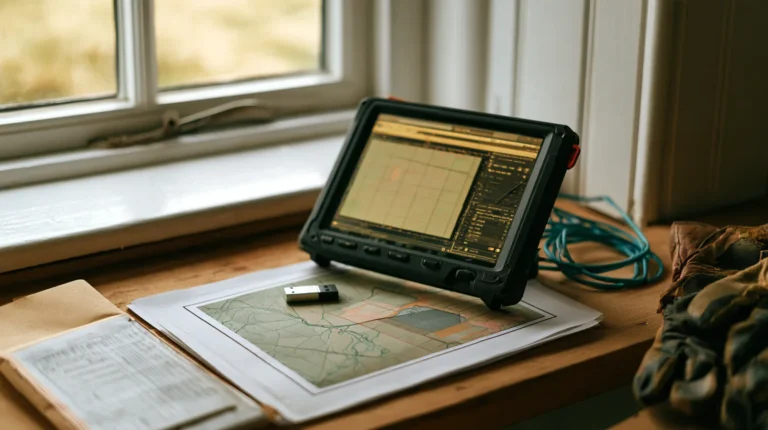
The two halves of an ISOXML integration that no standard hands you: the mapping between a task data set and a platform's own model, and the validation that stops a bad export before it reaches a cab. Around them, the two transfer directions, where Part 10 and Part 11 sit, the dictionary lookup behind every logged value, what a task controller functionality actually warrants and the import failures the AEF names.
Pharos Production applies its full-cycle software development expertise to deliver tailored solutions for agriculture businesses.
A Farm Management Information System (FMIS) centralizes crop planning, field records, equipment tracking, workforce scheduling and financial reporting in a single platform. We build FMIS with offline-first architecture because farms often lack reliable internet - data syncs automatically when connectivity returns. Pharos Production delivers FMIS platforms with cross-platform mobile apps for field workers and scalable back-end infrastructure for enterprise-scale operations.
Precision agriculture uses IoT sensors, GPS mapping and variable-rate technology to optimize inputs (water, fertilizer, pesticides) at the sub-field level. According to McKinsey, precision farming can increase crop yields by 15-20% while reducing input costs by 10-25%. Pharos Production builds precision ag platforms with real-time sensor data pipelines, GIS-based field mapping and AI-powered variable-rate application controllers.
Smart irrigation systems use soil moisture sensors, weather forecasts and evapotranspiration models to automate watering schedules. We use predictive models rather than fixed schedules because agriculture accounts for 70% of global freshwater use (World Bank) - even a 20% reduction in water waste has massive environmental and cost impact. Pharos Production integrates IoT valve controllers with cloud-based analytics for real-time irrigation optimization.
Satellite and drone imagery combined with computer vision detects crop health issues (nutrient deficiency, pest damage, disease) weeks before they are visible to the human eye. Pharos Production builds crop monitoring platforms with NDVI analysis, multispectral imaging pipelines and AI-powered anomaly detection. Our systems process imagery from Copernicus/Sentinel-2 satellites and commercial drone payloads.
IoT-enabled livestock monitoring tracks animal health, location, feeding patterns and breeding cycles in real time. Pharos Production builds livestock platforms with wearable sensor integration (ear tags, collars, bolus sensors), automated health alerts and herd analytics dashboards accessible on iOS and Android devices. Our systems help farms reduce veterinary costs and improve animal welfare through early disease detection.
Farm-to-fork traceability platforms track produce from harvest through processing, transportation and retail. Pharos Production builds agri-logistics systems with QR/barcode tracking, temperature monitoring for cold chains and blockchain-based provenance records for organic and fair-trade certification verification. Our platforms integrate with e-commerce marketplaces for direct-to-consumer sales.
Farm accounting software tracks costs per field, crop and season - enabling data-driven decisions about which crops to plant, when to sell and where to invest. Pharos Production builds farm financial platforms with modern front-end dashboards, automated expense categorization and integration with government subsidy reporting systems.
Agriculture marketplace platforms connect farmers directly with buyers, eliminating intermediaries and improving price transparency. Pharos Production builds ag-commerce platforms with real-time bidding, quality grading systems, logistics coordination and mobile apps for field-level listing and selling.
Climate and weather platforms aggregate data from meteorological services, on-farm sensors and satellite imagery to provide hyperlocal forecasts and risk scores. Pharos Production builds risk assessment systems that predict drought, frost and pest outbreaks using ML models trained on historical weather and crop data. Our DevOps infrastructure ensures 99.9% uptime for mission-critical weather alerting.
Carbon footprint tracking and sustainability reporting tools help farms meet ESG requirements and access carbon credit markets. With agriculture responsible for 10-12% of global greenhouse gas emissions (IPCC), regulatory pressure and consumer demand for sustainable produce are accelerating. Pharos Production builds sustainability platforms with automated emissions calculation, regenerative practice scoring and compliance reporting for EU and USDA organic standards.
| Solution | Key capabilities |
|---|---|
| Farm Management Information Systems (FMIS) | Farm Operations Planning & Task Management Module Crop & Field Activity Tracking Dashboard Farm Resource Allocation & Asset Management System +4 |
| Precision Agriculture & IoT Sensor Platforms | Soil Moisture & Nutrient Sensor Integration System Satellite & Drone Imaging Analytics Platform Variable Rate Irrigation & Fertilization Engine +4 |
| Smart Irrigation & Water Management Systems | Automated Irrigation Scheduling Engine Soil Hydration Mapping & Moisture Analytics Dashboard Water Pump & Valve Remote Control System +4 |
| Crop Monitoring & Satellite Imaging Solutions | Remote Crop Health Analysis Platform Disease & Pest Detection Imaging Model Vegetation Index (NDVI) Monitoring Dashboard +4 |
| Livestock Monitoring & Health Tracking Systems | Wearable Livestock Health Sensor Platform Real-Time Animal Movement & Activity Tracker Herd Reproductive Cycle Management System +4 |
| Supply Chain & Agri-Logistics Management Platforms | Farm-to-Market Traceability & Batch Tracking System Agricultural Inventory & Warehouse Management Tool Cold Chain Monitoring & Temperature Compliance Platform +4 |
| Farm Financial Planning & Accounting Software | Farm Profitability & Cost Analysis Engine Cash Flow Forecasting & Budget Planning Module Expense Categorization & Automated Bookkeeping Tool +4 |
| Agriculture Marketplace & E-Commerce Platforms | Online Farm Product Marketplace Web App Direct Farmer-to-Buyer Transaction Engine Dynamic Pricing & Demand Forecasting Module +4 |
| Climate, Weather & Risk Assessment Platforms | Hyperlocal Weather Forecasting Engine Drought & Flood Risk Simulation Tool Frost Warning & Temperature Alert System +4 |
| Sustainable Farming & Carbon Footprint Tracking Tools | Soil Health Monitoring & Regeneration Metrics Carbon Emissions & Sequestration Tracking Engine Regenerative Agriculture Practices Recommendation Tool +4 |
AgTech market in numbersThe global agritech market reached $22.5 billion in 2024 and is projected to exceed $41 billion by 2030 (MarketsandMarkets). Precision agriculture accounts for 40% of the AgTech market. IoT sensor deployments in agriculture grew 25% YoY in 2025.
Pharos AgTech delivery metricsAverage AgTech MVP delivery: 10 weeks. IoT sensor integration: 1-2 weeks per protocol. 4+ AgTech projects delivered with satellite imagery and predictive analytics.
| Factor | Custom AgTech Platform | Off-the-Shelf (John Deere Ops, Trimble) |
|---|---|---|
| IoT integration | Any sensor, any protocol, any vendor without restrictions | Vendor-locked sensors and proprietary data formats |
| Data ownership | Your farm data stays on your servers, full export control | Vendor cloud, limited data portability |
| AI/ML models | Custom models trained on your soil, climate and crop data | Generic models, limited regional adaptation |
| Supply chain | End-to-end traceability from field to consumer | Farm-level only, separate supply chain tools needed |
| Scalability | Architecture designed for your acreage and sensor density | Pricing tiers limit sensor count and data volume |
| Offline capability | Works in areas with limited connectivity via edge computing | Requires internet for most operations |
Custom AgTech development is recommended for operations with 1000+ acres, multi-crop diversity or proprietary growing methodologies that off-the-shelf tools cannot model.
IoT Sensor Networks
Machine learning models analyze satellite imagery, sensor data and historical yields to predict crop performance, detect diseases and optimize input application rates.
Drone Imaging and Remote Sensing
Standardized IoT protocols (MQTT, CoAP, LoRaWAN) and edge gateways connect field sensors to cloud platforms for real-time agricultural data collection and processing.
AI Crop Yield Prediction Models
Computer vision and deep learning models process Copernicus/Sentinel-2 satellite imagery and commercial drone payloads for NDVI analysis, yield prediction and damage assessment.
GPS-Guided Precision Machinery
AWS IoT Core, Google Cloud IoT and Azure IoT Hub provide managed services for connecting, monitoring and managing millions of agricultural sensors and edge devices at scale.
Farm Management Software Platforms
Soil moisture probes, weather stations, GPS receivers, spectral cameras and water flow meters generate the field-level data that drives precision agriculture decision-making. Integration with John Deere and other equipment APIs enables automated variable-rate application.
Agricultural Robotics and Automation
PostgreSQL with PostGIS extension, TimescaleDB for sensor time-series and InfluxDB handle the spatial and temporal data demands of agricultural analytics platforms.
Climate and Weather Analytics Engines
Distributed ledgers and smart contracts enable verifiable farm-to-fork traceability, organic certification tracking and carbon credit tokenization for agricultural supply chains.
Supply Chain Traceability Systems
TensorFlow, PyTorch and scikit-learn power crop disease detection, yield prediction, pest identification and variable-rate application optimization models trained on agricultural datasets.
When a large agricultural cooperative needed a field management app for 200+ farms across regions with unreliable 3G coverage, the core challenge was data consistency across offline devices. Our solution: a CRDT-based (Conflict-free Replicated Data Type) sync engine that allows field workers to record observations, soil samples and equipment readings without internet. Each device maintains a local database that automatically merges with the cloud when connectivity returns - without data loss or conflicts. We implemented background sync with delta compression to minimize bandwidth usage on metered connections. The sensor integration layer supports MQTT and LoRaWAN protocols, aggregating data from soil moisture probes, weather stations and GPS-equipped machinery into a unified dashboard. The platform processes 50K+ daily sensor readings across 200+ farms with 99.9% data integrity. Explore our open-source libraries on GitHub.
| Metric | Before Pharos | After Pharos |
|---|---|---|
| Farm coverage | Manual records, single farm | 200+ farms on unified platform |
| Offline capability | No app without internet | CRDT offline-first sync, works on 3G/edge |
| Sensor data processing | Manual readings, spreadsheets | 50K+ daily automated sensor readings |
| Data integrity | Frequent sync conflicts and data loss | 99.9% integrity with CRDT merge |
| Bandwidth usage | Full data uploads on each sync | Delta compression, 80% bandwidth reduction |
| Equipment protocols | Single vendor sensors only | MQTT + LoRaWAN + GPS, multi-vendor support |
Metrics from a cooperative farm management project (200+ farms). Sensor data integrity measured over 12-month production period.
Independent reviews from Clutch, GoodFirms and direct client testimonials - verified feedback on our software projects
Based on 342 verified reviews

Pharos Production helped us modernize our patient-facing applications while ensuring full compliance with healthcare security and privacy requirements. The new platform increased patient portal adoption from 22% to 68% within six months of launch. The project was delivered on schedule and significantly improved both clinician efficiency and patient engagement.
Proprietary research report based on analysis of agriculture software projects delivered by Pharos Production. Dataset covers farm management platforms, IoT sensor networks, precision agriculture tools and supply chain systems. Methodology: aggregated delivery metrics with 6-18 months post-deployment field monitoring per project. Each platform undergoes 8-12 field validation cycles with real sensor hardware and agricultural data before production release. Data integrity validated through automated consistency checks on CRDT-synced offline datasets. Uptime measured via continuous synthetic monitoring across cloud infrastructure. Full report with detailed methodology and per-project breakdowns available on request.
Select your project type, sensor complexity and data scope to get a ballpark cost and timeline.
Pharos Production scopes engagements in three tiers, Proof of concept, MVP build and Enterprise platform, with typical budgets from $10,000 to $500,000+ depending on scope and complexity.
Focused validation of your riskiest technical assumption with a working spike and a clear build-or-pivot recommendation.
Production-ready first version with core flows, real backend and the integrations to onboard first paying users.
Full-scale build with architecture, DevOps, QA, security and long-term evolution.
Prices vary based on project scope, complexity, timeline and requirements. Hourly rates range from $50 to $99 depending on role and seniority. Contact us for a personalized estimate.
Need extra hands on your software project? Our developers can jump in at any stage - from architecture to auditing - and integrate seamlessly with your team to fill any technical gaps.
Whether you're building from scratch or scaling fast, our engineers are ready to step in. You stay in control, and we handle the code.
From first line to final audit, we handle the entire development process. We will deliver secure, production-ready software, while you can focus on your business.
| Model | Best for | Team setup | Budget range |
|---|---|---|---|
| Staff Augmentation | Existing teams needing extra engineers at any project stage | 1-2 weeks | From $5,000/month |
| Dedicated Team Popular | Long-term projects requiring full ownership and control | 2-4 weeks | From $15,000/month |
| Project Outsourcing | Full-cycle development from idea to production launch | 1-2 weeks | $10,000-$80,000+ |
Our company starts and assembles an entire project specialists with the perfect blend of skills and experience to start the work.
We'll design, build and launch your MVP, ensuring it meets the core requirements of your software solution.
We'll create a complete software solution that is custom-made to meet your exact specifications.
Our company will be right there with you, keeping your software solution running smoothly, fixing issues and rolling out updates.
Our engineers work with 187+ technologies across blockchain, backend, frontend, mobile and DevOps - chosen for production reliability and performance.
Our engineers work with 187+ technologies across 10 categories: Frameworks, AI, Blockchains, DevOps, Clouds, Databases, Brokers, Tests, Programming, UI/UX.











































Recognized on Clutch, GoodFirms and The Manifest for software engineering excellence









65+ industry awards
Answers to common questions about agriculture software development and precision farming platforms.
Type to filter questions and answers. Use Topic to narrow the list.
Showing all 15
No matches
Try a different keyword, change the topic or clear filters
Yes. Pharos Production builds real-time crop monitoring platforms with IoT soil sensors, weather stations and satellite imagery integration. Our systems process data from scalable back-end pipelines and display field-level analytics on modern front-end dashboards and mobile apps for field workers.
Yes. Pharos Production integrates drones, IoT sensors (soil moisture, temperature, humidity, GPS), weather stations and satellite feeds into unified agricultural management platforms. Our DevOps team handles the data pipeline infrastructure - from edge devices through cloud processing to real-time dashboards. See also our blockchain solutions for supply chain traceability.
Pharos Production builds custom farm management dashboards with field mapping, crop planning, equipment tracking, labor management and yield analytics for large agricultural operations and cooperatives.
AgTech project costs depend on complexity, sensor integration scope and data pipeline requirements. A basic farm management app MVP may start from $30,000-$60,000, while a full precision agriculture platform with IoT, drone imagery and AI analytics can range from $120,000 to $300,000+. Our team of 90+ engineers delivers estimates calibrated to real project data from 110+ delivered applications across all industries we serve. Request a free estimate.
A farm monitoring MVP typically takes 3-5 months. A full precision agriculture platform with IoT integration and analytics may require 6-10 months. Pharos Production uses agile development with 2-week sprints.
Yes. Pharos Production builds software for greenhouse and indoor farming operations including climate control automation, lighting optimization, nutrient delivery scheduling and crop cycle management. Our vertical farming platforms integrate with environmental sensors and actuators via API-first back-end architecture. For greenhouse operations that sell produce through digital channels, see our marketplace solutions above.
If you manage a single farm under 500 hectares, existing platforms like John Deere Operations Center or Climate FieldView will serve you well. Custom AgTech makes sense when you need proprietary yield prediction models, multi-farm portfolio management or IoT sensor networks with custom data pipelines that commercial tools cannot support.
Agricultural software operates in environments with seasonal cycles, variable weather and diverse equipment - iterative validation is essential. We use 2-week sprints because sensor integrations and data pipelines must be field-tested with real agricultural data, not just simulated.
Across our AgTech projects, each platform goes through 8-12 field validation cycles before production release, with an average of 2 sensor calibration issues caught per cycle that would have caused incorrect data in production.
Evaluate five factors: (1) AgTech domain expertise - the team should understand crop cycles, sensor protocols (MQTT, LoRaWAN) and agricultural data standards, not just general IoT, (2) experience with offline-first and field-ready applications that work without reliable internet, (3) published case studies with farms or agribusinesses showing measurable outcomes (yield increase, cost reduction), (4) independent reviews on Clutch and GoodFirms and (5) a development methodology that includes field testing with real agricultural data at every sprint. Pharos Production scores 5/5 on Clutch with 104 verified reviews.
Off-the-shelf tools (Trimble, Climate FieldView, Agrivi) offer standardized features but cannot adapt to unique farm workflows, proprietary equipment or regional crop varieties. Custom AgTech software integrates with your existing sensors, machinery and ERP systems via APIs tailored to your operation. Development takes 3-8 months for MVP but provides full data ownership, unlimited customization and no per-user licensing fees. Pharos Production builds custom AgTech platforms with scalable back-end architecture that grows with your operation.
Yes. We recommend a PoC for projects involving novel sensor integrations, untested ML models for crop prediction or complex drone data pipelines. A typical AgTech PoC takes 4-8 weeks, includes working sensor-to-dashboard data flow, basic analytics and a field validation plan. PoC cost ranges from $15,000-$30,000. Start with an MVP to validate your concept before full-scale development. Request a PoC estimate.
Every AgTech project includes post-launch support as part of our Verified Delivery process. Our standard SLA covers 99.9% uptime for cloud infrastructure, 24-hour response time for critical issues and ongoing sensor calibration support. Agricultural platforms have seasonal peaks (planting, harvest) requiring elastic scaling - our DevOps team manages infrastructure scaling and monitoring year-round.
AI in agriculture delivers measurable ROI across three areas: (1) yield prediction - ML models trained on soil, weather and satellite data predict harvest volumes with 85-90% accuracy, enabling better logistics and pricing decisions, (2) disease detection - computer vision identifies crop diseases from drone/satellite imagery, per a review of remote sensing methods (Remote Sensing, 2023), often weeks before visual symptoms appear and (3) input optimization - variable-rate application controllers reduce fertilizer and pesticide use by 10-25% while maintaining yields. Pharos Production integrates these AI capabilities into custom platforms. See also our FinTech solutions for agricultural finance and insurance.
Yes. AI agents in agriculture go beyond dashboards - they autonomously analyze sensor data, satellite imagery and weather forecasts to generate field-level recommendations for planting, irrigation and pest management.
Pharos Production builds precision farming recommendation agents, pest and disease detection agents using multi-agent systems (one agent analyzes imagery, another applies agronomic knowledge, a third recommends treatment), autonomous irrigation agents and supply chain optimization agents that reduce post-harvest losses. Our agents integrate with existing IoT sensors and farm management platforms.
Yes. The agricultural robotics market is projected to reach $56 billion by 2030 at 26% CAGR (MarketsandMarkets). Pharos Production builds agricultural robotics software including ROS2-based autonomous navigation with RTK GPS (centimeter-level accuracy), computer vision for crop/weed detection (YOLO models), fleet and drone swarm management platforms with real-time task dispatch and integration with John Deere Operations Center API. We cover autonomous tractors, weeding robots, harvesting robots, drone swarms and livestock robotics. The robot fleet management platform market is projected to reach $11 billion by 2033.

90+ engineers ready to deliver your Agriculture project on time and within budget
Contact us today to discuss your project. We're ready to review your request promptly and guide you on the best next steps for collaboration
Same dayWe're committed to keeping your information confidential, so we'll sign a Non-Disclosure Agreement
1 dayAfter we chat about your goals and needs, we'll craft a comprehensive proposal detailing the project scope, team, timeline and budget
3-5 daysLet's connect on Google Meet to go through the proposal and confirm all the details together!
1-2 daysAs soon as the contract is signed, our dedicated team will jump into action on your project!
Same dayHeadquarters in Las Vegas, Nevada. Engineering office in Kyiv, Ukraine.
We also work with clients through dedicated local teams in Las Vegas, New York and San Francisco.
Thanks for the request!
We typically reply within 24 hours