
Computer Vision Use Cases 2026: Applications Across Industries
Computer vision use cases across manufacturing, healthcare, retail and security in 2026. Real implementation details, cost benchmarks and ROI data for CV deployments.
 Updated
5 min read
364 views
Updated
5 min read
364 views
Technically reviewed by Victor Sineglazov, D.Sc.

Key takeaways 5
- $19.2B market growing 19.6% annually The global computer vision market hit $19.2B in 2025 and is projected to grow at 19.6% CAGR through 2030.
- Manufacturing inspection cuts defects 90% CV inspection systems achieve 99.2-99.8% accuracy and reduce defect escape rates by 90% with setups from $15,000.
- Over 500 FDA-cleared medical CV devices Healthcare AI includes 500+ FDA-cleared devices with diagnostic accuracy matching specialists for specific conditions.
- Retail analytics improve conversion 10-20% Anonymous customer behavior heatmaps help retailers optimize store layouts and product placement for higher sales.
- Lighting investment prevents most CV failures Inconsistent lighting is the top cause of CV system failures - budget $5,000-$20,000 for controlled lighting setups.
Introduction
Computer vision is transforming how businesses operate across manufacturing, healthcare, retail and security - and the technology is more accessible than ever. According to Grand View Research, the global computer vision market reached $19.2 billion in 2025 and is projected to grow at 19.6% CAGR through 2030. This guide covers the most impactful computer vision use cases across industries in 2026 with real implementation details, cost benchmarks and ROI data.
Manufacturing Quality Control
Computer vision has become the standard for automated quality inspection in manufacturing, replacing manual inspection processes that are inconsistent and expensive.
Visual Defect Detection
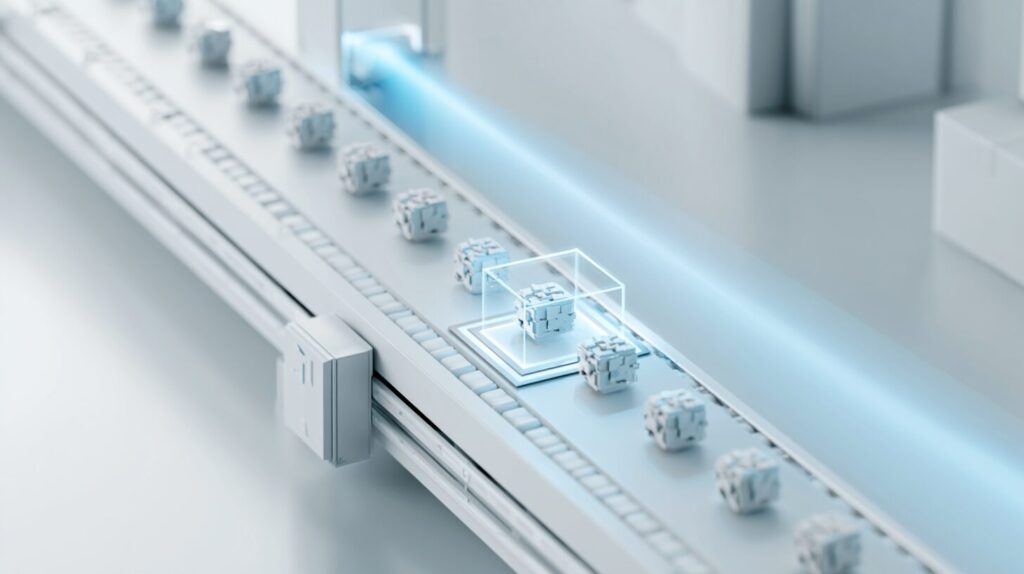
Modern CV systems inspect products at speeds of 100-500 units per minute with accuracy rates of 99.2-99.8%, compared to 85-95% for human inspectors. These systems detect surface scratches, dents, color variations, dimensional deviations and assembly errors in real-time. According to Cognex, manufacturers deploying CV-based inspection reduce defect escape rates by 90% and cut inspection costs by 50-70%.
Predictive Quality
Advanced implementations analyze visual data from production lines to predict quality issues before they occur. By monitoring tool wear, material flow patterns and environmental conditions, these systems alert operators to adjust parameters proactively. BMW reports a 30% reduction in quality-related production stops since implementing predictive visual quality systems.
Implementation Cost
A basic single-camera inspection station costs $15,000-$50,000 including hardware, software and integration. Multi-camera systems covering a full production line run $100,000-$500,000. Cloud-based CV platforms from providers like Landing AI have reduced entry costs to $5,000-$15,000 for simple use cases.
Healthcare Medical Imaging
Medical imaging AI is one of the most mature and impactful applications of computer vision, with over 500 FDA-cleared AI medical devices as of 2025 according to the FDA database.
Diagnostic Imaging
CV algorithms analyze X-rays, CT scans, MRIs and pathology slides to detect abnormalities with performance matching or exceeding specialists in specific conditions. Chest X-ray AI achieves 94-97% sensitivity for pneumonia detection. Mammography AI reduces false negatives by 9.4% according to a 2024 Lancet study. Retinal imaging AI screens for diabetic retinopathy with 96% accuracy, enabling screening at primary care clinics without ophthalmologists.
Surgical Assistance
Real-time computer vision guides surgical procedures by overlaying anatomical structures, tracking instruments and providing navigation. According to Intuitive Surgical, CV-assisted robotic surgery reduces complication rates by 20-30% for complex procedures.
Regulatory Considerations
Healthcare CV systems must comply with FDA 510(k) or De Novo clearance in the US, CE marking in the EU and equivalent certifications in other markets. The regulatory pathway typically adds 12-24 months and $200,000-$1,000,000 to development costs. HIPAA compliance for patient data handling is non-negotiable.
Retail and Customer Analytics
Retail computer vision goes far beyond loss prevention, now powering customer experience optimization, inventory management and store operations.
Customer Behavior Analysis
Heatmap systems track customer movement patterns through stores, identifying high-traffic zones, dwell times and conversion paths. According to RetailNext, retailers using CV-based analytics improve conversion rates by 10-20% through optimized store layouts and product placement. These systems process data anonymously without storing facial data, addressing privacy concerns.
Automated Checkout
CV-powered checkout systems like Amazon Just Walk Out technology identify products as customers pick them up, eliminating checkout lines. Standard implementations cost $100,000-$300,000 per store but reduce staffing costs by 30-40% and increase throughput by 50%.
Inventory Management
Shelf scanning robots and fixed cameras monitor inventory levels in real-time, detecting out-of-stock items, misplaced products and planogram compliance. Walmart reports a 30% reduction in out-of-stock incidents after deploying CV-based inventory monitoring according to their 2025 investor presentation.

Security and Surveillance
Modern security CV goes well beyond basic motion detection, offering intelligent analysis that reduces false alarms and improves response times.
Intelligent Video Analytics
AI-powered surveillance systems detect specific behaviors including perimeter intrusion, loitering, abandoned objects, crowd formation and aggressive actions. According to Axis Communications, intelligent analytics reduce false alarm rates by 95% compared to traditional motion detection, cutting monitoring costs by 60%.
Access Control
Facial recognition and body detection systems provide contactless access control with accuracy rates above 99.5% in controlled environments. Multi-factor systems combining face recognition with badge or PIN verification meet the highest security standards for critical infrastructure.
Safety Monitoring
Industrial safety CV monitors PPE compliance (hard hats, safety vests, goggles), restricted zone access and hazardous situations in real-time. Construction companies report 40-60% reductions in safety incidents after deploying these systems according to the National Safety Council.
Implementation Considerations
Successful computer vision deployment requires careful attention to several critical factors that determine project success or failure.
Data collection and annotation. CV models require thousands of labeled images for training. Budget $10,000-$50,000 for initial dataset creation depending on complexity. Consider using synthetic data generation to supplement real images - it can reduce data collection costs by 50-80%.
Edge vs cloud deployment. Real-time applications (quality inspection, safety monitoring) typically require edge deployment with inference times under 100ms. Analytics and non-time-critical applications can use cloud processing. Edge hardware costs $2,000-$10,000 per node while cloud inference costs $0.01-$0.10 per image.
Lighting and environment. The number one cause of CV system failures in production is inconsistent lighting. Invest in controlled lighting setups for inspection applications. Budget $5,000-$20,000 for proper lighting engineering.
Key Takeaways
- $19.2B market growing 19.6% annually. Computer vision is mainstream technology with proven ROI across manufacturing, healthcare, retail and security according to Grand View Research.
- Manufacturing ROI is immediate. CV inspection systems reduce defect escape rates by 90% and cut inspection costs by 50-70% with basic setups starting at $15,000.
- Healthcare AI is FDA-validated. Over 500 FDA-cleared CV medical devices exist with diagnostic accuracy matching specialists for specific conditions.
- Retail analytics boost conversion 10-20%. Anonymous customer behavior analysis drives store optimization without privacy concerns.
- Lighting is the hidden cost. Invest $5,000-$20,000 in controlled lighting to prevent the number one cause of production CV failures.
FAQ
Common questions about implementing computer vision solutions across industries.
Type to filter questions and answers. Use Topic to narrow the list.
Showing all 5
No matches
Try a different keyword, change the topic or clear filters
-
Basic single-camera inspection systems cost $15,000-$50,000. Multi-camera production line systems run $100,000-$500,000. Cloud-based CV platforms start at $5,000-$15,000 for simple use cases.
-
Most CV models require 1,000-10,000 labeled images for reliable results. Synthetic data generation can supplement real images and reduce collection costs by 50-80%. Transfer learning enables good results with fewer examples.
-
Real-time applications like quality inspection and safety monitoring need edge deployment with sub-100ms inference. Analytics and batch processing can use cloud at $0.01-$0.10 per image. Edge hardware costs $2,000-$10,000 per node.
-
Modern CV systems achieve 99.2-99.8% accuracy for manufacturing inspection, 94-97% sensitivity for medical imaging diagnostics and 99.5%+ for facial recognition in controlled environments.
Computer vision glossary 5
- Computer Vision (CV)
- A field of AI that enables machines to interpret and analyze visual data from images or video in real time.
- Edge Deployment
- Running AI inference on local hardware near the data source, enabling response times under 100ms for time-critical tasks.
- PPE Compliance Monitoring
- Automated CV detection of personal protective equipment such as hard hats, safety vests and goggles in industrial environments.
- Planogram Compliance
- Automated verification that retail shelf product placement matches the prescribed layout plan using camera-based scanning.
- FDA 510(k) Clearance
- A US regulatory pathway for medical devices that demonstrates substantial equivalence to a legally marketed predicate device.

I work with startup founders who need a dedicated software development team but don’t want to gamble on hiring, random outsourcing, or opaque delivery.
Most founders face the same problem sooner or later.
Early technical and team decisions lock the product into tech debt, slow delivery, missed milestones and constant re-hiring. By the time this becomes visible, fixing it is already expensive.As a CTO and software architect, I help founders design, build and run dedicated development teams that work as a true extension of the startup. Not as a black-box vendor.
My focus is on complex products where mistakes are costly:
- Web3 and blockchain platforms
- FinTech and regulated products
- High-load startup systems
- MVP → scale transitions
We don’t do body-shopping.
We don’t sell generic outsourcing.Instead, we help founders:
- build the right team structure from day one
- keep technical ownership and transparency
- scale delivery without losing control
- avoid vendor lock-in and hidden risks
Teams are aligned with the product roadmap, business goals and long-term architecture. Not just short-term velocity.