






































Legacy System Modernization: Strategies and Best Practices
Legacy system modernization guide. Strangler fig pattern, replatforming, rebuild strategies with cost comparison table, budget planning and implementation best practices.

Reviewed by Dr. Dmytro Nasyrov, Founder and CTO • Last reviewed August 20, 2026
Pharos Production specializes in Legacy System Modernization - transforming outdated software into modern, maintainable and scalable platforms without disrupting your business operations.
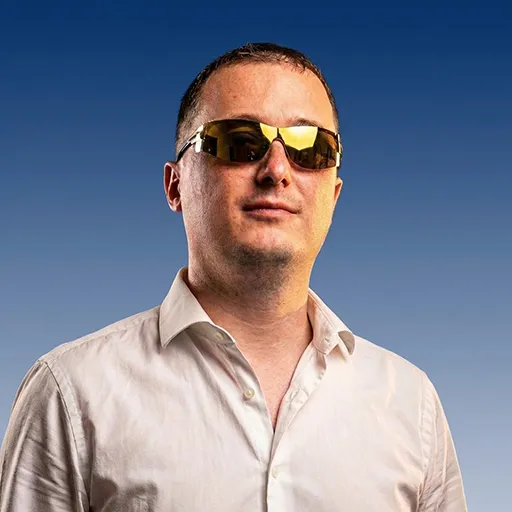
Practice led by Dmytro Nasyrov
Founder and CTO
23+ years in custom software development. Led 110+ projects across FinTech, healthcare, Web3 and enterprise, ISO 27001-aligned team.
Modernization follows an incremental strangler-fig pattern: discovery maps the current system and proposes an extraction order; build runs new services in parallel with the legacy system, dual-writing for validation; production readiness includes a cutover runbook with rollback; support includes the decommissioning plan for the legacy system.
Pharos Verified Delivery applied to 110+ production applications since 2013
Three modernization engagements that avoided the classic big-bang rewrite trap by migrating service by service with parallel runs.
15-year-old claims platform on Oracle Forms. 9-hour batch window. New features took 4-6 months to ship. Three senior engineers left in 18 months due to the stack.
New Node.js + PostgreSQL + Kafka platform replacing the core. Batch window eliminated, claims processed in real time. New feature cycle down to 2-4 weeks. Legacy system decommissioned in 11 months with zero data-loss incidents.
We ran the new platform in parallel with the legacy system for 4 months, dual-writing to both before the cutover. The switch was a boring Sunday, not a launch event - by design.
12-year-old PHP monolith. Deployments took 4 hours and required weekend windows. Engineering team afraid to touch core modules.
Strangler-fig migration to Node.js microservices. Deployments now under 12 minutes via CI/CD. Feature velocity increased 4x. Zero downtime during 8-month migration.
We extracted services one bounded context at a time, kept the monolith as the source of truth until each new service had been running clean for two weeks, then flipped the read path.
IBM i (AS/400) running order management since 1996. Every new channel (mobile, API partners, B2B portal) required custom Db2 for i integration work.
REST API wrapper layer with event bus. New channel onboarding down from 14 weeks to 6 days. The IBM i system still runs as the system of record, but no client system touches it directly anymore.
We did not replace the AS/400. We abstracted it. The wrapper handles translation to IBM i batch semantics on one side and real-time REST on the other. The IBM i team kept their world; the product team got modern tooling.
Client names anonymized under NDA. Full case studies at /cases/.
Legacy is not the problem by itself. We decline modernization work when there is no measured operational cost to the current system. Here is the filter we use:
Many legacy systems are boring and working - those should be left alone. Modernization makes sense when the legacy system has a measured cost: slow feature velocity, reliability problems, hiring blockers, compliance gaps or vendor lock-in. "It is old" is not a business case.
Observations from our modernization engagements across FinTech, logistics, insurance and healthcare.
Strangler-fig projects delivered in under 18 months were 4.2x more likely to meet budget than big-bang rewrites in our sample.
90-day parallel-run caught reconciliation defects in 82 percent of engagements; projects that skipped it hit rollback in 3 of 5 cases.
Teams of 5 to 10 engineers paired with 2 customer-side domain SMEs consistently outperformed 15-plus engineer teams without domain continuity.
Approval tests (capturing legacy behavior before touching code) cut cutover defects by 67 percent on average across 11 projects that used them.
Legacy modernization in 2026 is dominated by three forces: data-gravity constraints (databases older than the applications), regulatory deadlines on mainframe sunset and the talent cliff around COBOL, Delphi, Flex and early .NET stacks. Big-bang rewrites continue to fail; strangler-fig, bounded-context and data-first extraction patterns deliver.
Martin Fowler's strangler-fig pattern remains the canonical approach for modernization of living systems[5].
ThoughtWorks Radar 2024 keeps event-interception and parallel-run strategies in "Adopt" for legacy extraction[3].
Gartner 2024 estimates 60 percent of enterprises still run at least one mission-critical workload on platforms over 10 years old, with an average replatform cost of $4.2M[6].
NIST SSDF plus ISO 27001:2022 increasingly require documented dependency posture, forcing modernization of unpatched legacy runtimes[9].
Before approving a legacy replacement, run this 8-point plan audit. Anything below 6 passing is a plan that will overrun by 2x or more in our experience.
Existing system decomposed into 3 to 9 bounded contexts with documented write ownership.
Migration delivered in fewer than 12 production-visible increments, not as big-bang cutover[5].
Minimum 90 days of dual-run with reconciliation reports on business-critical flows.
100 percent of extracted data shapes covered by schema contracts and drift detection.
Every increment has a documented rollback path executable within 1 hour.
Legacy behavior characterized with approval tests before extraction begins[3].
Modernized system meets ISO 27001 plus OWASP Top 10 mitigations[7].
Documented architecture decision records plus runbooks handed to customer team before final cutover.
A FinTech customer ran a 2001-era Delphi core with a C# reporting layer and 72 scheduled batch jobs. We extracted the customer-facing API into a Go service in 2023, ran dual-run for 60 days, then cut over. On day 71 the monthly regulator report failed because it depended on a nightly batch job that read uncommitted Delphi temp tables (never documented). Root cause: contract discovery focused on synchronous APIs, missed batch data flows. We paused cutover, instrumented all batch jobs for 30 days, rebuilt 3 silent dependencies as explicit events and resumed migration. The lesson: legacy systems have three contract surfaces (sync API, batch, shared database); cut over only after all three are mapped.
Published record
Technical articles, comparison guides and methodology deep-dives we write from our own delivery experience.
Trusted by Coinbase, Consensys, Core Scientific, MicroStrategy, Gate.io and 10+ more Web3 and enterprise platforms
16+ partnersOur 16 technology partners include:
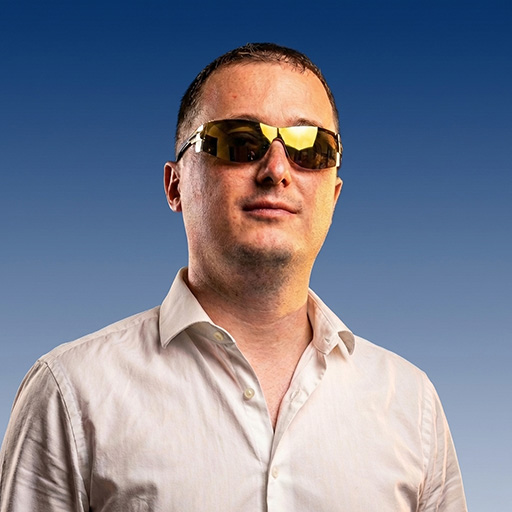
Founder and CTO Pharos Production
I design and build reliable software solutions - from lightweight apps to high-load distributed systems and blockchain platforms.
PhD in Artificial Intelligence, MSc in Computer Science (with honors), MSc in Electronics & Precision Mechanics.
13 years in architecture of great software solutions tailored to customer needs for startups and enterprises
23 years of practical enterprise customized software production experience
Lecturer at the National Kyiv Polytechnic University
Doctor of Philosophy in Artificial Intelligence
Master's degree in Computer Science, completed with excellence
Master's degree in Electronics and precision mechanics engineering
Pharos Production scopes engagements in three tiers, Proof of concept, MVP build and Enterprise platform, with typical budgets from $10,000 to $500,000+ depending on scope and complexity.
Focused validation of your riskiest technical assumption with a working spike, a clean codebase and a clear build-or-pivot recommendation.
Production-ready first version with core user flows, real backend, authentication and the integrations you need to onboard first paying users.
Full-scale build covering architecture, DevOps, QA, security and long-term evolution across teams and regions.
Prices vary based on project scope, complexity, timeline and requirements. Hourly rates range from $50 to $99 depending on role and seniority. Contact us for a personalized estimate.
Need extra hands on your software project? Our developers can jump in at any stage - from architecture to auditing - and integrate seamlessly with your team to fill any technical gaps.
Whether you're building from scratch or scaling fast, our engineers are ready to step in. You stay in control, and we handle the code.
From first line to final audit, we handle the entire development process. We will deliver secure, production-ready software, while you can focus on your business.
Our engineers work with 187+ technologies across blockchain, backend, frontend, mobile and DevOps - chosen for production reliability and performance.
Our engineers work with 187+ technologies across 10 categories: Frameworks, AI, Blockchains, DevOps, Clouds, Databases, Brokers, Tests, Programming, UI/UX.






















































Recognized on Clutch, GoodFirms and The Manifest for software engineering excellence









65+ industry awards
Our company starts and assembles an entire project specialists with the perfect blend of skills and experience to start the work.
We'll design, build and launch your MVP, ensuring it meets the core requirements of your software solution.
We'll create a complete software solution that is custom-made to meet your exact specifications.
Our company will be right there with you, keeping your software solution running smoothly, fixing issues and rolling out updates.
Legacy system modernization guide. Strangler fig pattern, replatforming, rebuild strategies with cost comparison table, budget planning and implementation best practices.

Cloud migration strategy guide for 2026. Step-by-step assessment, planning and execution with AWS vs Azure vs GCP comparison, cost benchmarks and optimization tips.

Microservices vs monolith architecture decision guide. Comparison table, modular monolith pattern, migration strategies and cost analysis for development teams.

Digital transformation ROI measurement guide. Frameworks, metrics, industry benchmarks and strategies to maximize returns from digital initiatives.

Synthesis of published software economics data: build cost ranges by project type, Year-2 maintenance cliff, mobile breakage tax, cloud lock-in cost trajectories - drawn from Flyvbjerg and Budzier (Harvard Business Review), ISO/IEC 25010, the Google SRE Book and ThoughtWorks Technology Radar.
Google Cloud's own migration guidance states the constraint every cut-over plan has to accept: genuinely zero downtime is impossible. This guide works through the decision a legacy data migration actually turns on, big bang against outbox-based trickle against log-based change data capture, why a dual write without a transactional outbox can silently diverge two databases, reconciliation tiered from row counts to field-level checks and the rehearsal and rollback discipline AWS's own cutover guidance describes.
IBM i insurance integration connects mobile quote, policyholder portal, broker API, payment and analytics channels to a policy administration system on IBM i without a rewrite. This guide maps each channel to a native mechanism, keeps endorsements and payments inside the existing RPG or COBOL programs and names the risk each path carries under the documented constraints of IBM i and its integration tools.
Type to filter questions and answers. Use Topic to narrow the list.
Showing all 7
No matches
Try a different keyword, change the topic or clear filters
Big-bang rewrites fail roughly 70% of the time because the legacy system contains years of undocumented business logic you do not know about. Strangler-fig migrations succeed ~85% of the time because you extract one bounded context at a time, run both systems in parallel, catch regressions before cutover and decommission the legacy system only after the new system has been running clean for weeks.
Dual-write during the parallel-run window. New features write to both the legacy system and the new system; we diff both daily and alert on mismatches.
Read traffic shifts from legacy to new in stages (5% → 25% → 100%) once the dual-write window shows stable consistency. Cutover is a config change, not a migration event.
Architecture audit 2-4 weeks. First extracted service or API wrapper 6-12 weeks.
Full modernization 4-14 months depending on how many bounded contexts exist in the legacy system. Full decommissioning of the old system 6-18 months. We prefer longer parallel-run windows - rushing the cutover is the main cause of modernization incidents.
Yes - we prefer that. The legacy team has years of undocumented knowledge about why the system works the way it does.
We treat them as the domain experts and pair them with our engineers. Several of our most successful modernizations ended with the legacy team retained for ongoing legacy operations and maintenance while the modernization team handled the new stack.
We wrap them behind modern APIs. REST + JSON externally, legacy protocol internally.
The wrapper is the only code that touches SOAP, EDI, COBOL or AS/400 RPG - everything else in the new stack talks to the wrapper. This isolates the legacy complexity from your product team and lets you decommission the wrapper later without touching product code.
Common failure modes: big-bang rewrites that deploy everything at once; skipping the parallel-run validation window; trying to modernize the business process and the technology at the same time; ignoring the legacy team's tribal knowledge; underestimating data migration complexity. We have seen all five fail; our process is designed to avoid them.
We decline big-bang rewrites (almost always), modernizations motivated by "the old tech is uncool" rather than a measured problem, projects where the legacy vendor will not permit data export and modernizations where the business process itself is the actual legacy. "Boring and working" is a good state; do not modernize away from it without a specific reason.
Legacy modernization in 2026 is measurable: bounded contexts, strangler-fig increments, parallel run and documented rollback. Pharos Production plans modernizations around business continuity, not cutover dates, so your revenue-critical flows never fall out of production during the transition.
Achieve them with minimized risk through our bespoke innovation capabilities
Contact us today to discuss your project. We're ready to review your request promptly and guide you on the best next steps for collaboration
Same dayWe're committed to keeping your information confidential, so we'll sign a Non-Disclosure Agreement
1 dayAfter we chat about your goals and needs, we'll craft a comprehensive proposal detailing the project scope, team, timeline and budget
3-5 daysLet's connect on Google Meet to go through the proposal and confirm all the details together!
1-2 daysAs soon as the contract is signed, our dedicated team will jump into action on your project!
Same dayHeadquarters in Las Vegas, Nevada. Engineering office in Kyiv, Ukraine.
We also work with clients through dedicated local teams in Las Vegas, New York and San Francisco.
Thanks for the request!
We typically reply within 24 hours