PoC vs MVP vs Prototype
PoC vs MVP vs prototype explained as three different questions rather than three sizes of the same build, with real cost ranges and a decision framework for which to build first.
 Updated
8 min read
364 views
Updated
8 min read
364 views

Key takeaways: PoC vs MVP vs prototype 4
Which question each artifact actually answers, what it costs and how to pick the right one before you spend against the wrong one.
- Three questions, not three sizes A PoC tests technical feasibility, a prototype tests UX and demand, and an MVP tests real usage and payment. Picking the wrong one wastes budget answering a question you did not need answered.
- A PoC or prototype is 5-15% of MVP cost, not a cheaper MVP Market ranges run PoC $2,000-$25,000, prototype $3,000-$20,000 and MVP $10,000-$150,000+, and the smaller two are scoped narrower on purpose, not discounted versions of the same product.
- The right artifact depends on which risk is still open Build a PoC for an unproven technical risk, a prototype for an unproven UX or demand question, and go straight to an MVP once the goal is real users and first revenue.
- The most expensive mistake is skipping the question Founders who fund a full MVP without de-risking a scary technical assumption first, or who commission a prototype when the real question was "will they pay", end up rebuilding from scratch.
Founders scoping their first build often ask for "a cheap MVP first" when what they actually need is a proof of concept, or ask a designer for "a prototype" when what they need is a real backend. The three terms answer three different questions, and picking the wrong one wastes the exact budget a first-time founder can least afford to waste. A proof of concept (PoC) answers "can this be built, does the risky technical part actually work." A prototype answers "will users want this and can they use it," usually as a clickable mock with no real backend behind it. An MVP answers "will people use it and pay for it," which is why it needs a working product behind the screens the other two do not.
In short: a PoC tests technical feasibility and typically costs $2,000-$25,000 (agencies commonly quote $5,000-$15,000); a prototype tests UX and demand as a clickable mock with typically no real backend, running $3,000-$20,000 (commonly $5,000-$15,000); an MVP tests real usage and payment with a production-ready core, running $10,000 up to $150,000 or more depending on complexity. At Pharos, our own ladder runs PoC $10,000-$30,000 and MVP $50,000-$150,000. A PoC or prototype is usually 5-15% of the eventual MVP cost, not a cheaper MVP.
The core distinction: three questions, not three sizes
The most common founder mistake is treating a PoC, a prototype and an MVP as small, medium and large versions of the same thing. They are not. Each one exists to answer a single question, and the scope, the deliverable and the price all follow from which question is being asked.
- A PoC answers a technical question. Can this actually be built, does the risky algorithm work, does the integration hold up, does the performance target hold at scale. Nothing about users or the market is being tested.
- A prototype answers a UX question. Will users understand this, can they navigate it, does the flow make sense. It is usually a clickable mock, often built in Figma, with no real data or backend behind the screens.
- An MVP answers a market question. Will real people use this repeatedly, and will they pay for it. That question needs a working core flow, real accounts and a backend that actually does the job, which is why it costs more and takes longer than the other two.
Once the question is clear, the right artifact usually picks itself. The confusion, and the wasted budget, comes almost entirely from skipping this step and jumping straight to "what should we build" before anyone has asked "what are we actually trying to find out."
PoC vs prototype vs MVP at a glance
The table below lines up all three against the same six dimensions, so the difference is a scope decision you can check rather than a term you have to take on faith.
| Proof of concept (PoC) | Prototype | MVP | |
|---|---|---|---|
| Question answered | Can this be built | Will users understand and use it | Will people use it and pay |
| Scope | One risky technical assumption | Core user flows, click-through only | 3-5 features that make the product usable end to end |
| Deliverable | A working technical demo, often internal only | A clickable mock, often in Figma | A real product real users can sign up for |
| Code | Throwaway, not meant to survive | Not production-grade, no real backend | Production-ready base, meant to be built on |
| Typical duration | 1-4 weeks | 1-4 weeks, usually 2-3 | 4-8 weeks simple, 8-14 standard, 12-24+ complex |
| Typical team | Around 1.5-2 people | A designer and a product person | 3-4 people across dev, design and QA |
Duration and team size track scope directly. A PoC needs just enough engineering time to answer one technical question, a prototype needs mostly design time and almost no backend work, and an MVP needs a full small team because it is carrying real product weight, not a single test.
The "throwaway" label in that table is literal, not a caveat. A PoC is disposable code built to prove one assumption, not a foundation, so founders should not expect the MVP to be built on top of it. Budgeting a PoC as though it counts toward the MVP is a common and expensive misconception, since the PoC buys a decision, not a head start on the build.
What each one actually costs
Market pricing follows the same logic as the table above: you are paying for the scope of the question, not a discount on the final product.
| Artifact | Typical market range | What it buys |
|---|---|---|
| Proof of concept | $2,000 - $25,000 (agencies typically $5,000-$15,000) | A working answer to one technical risk, not a product |
| Prototype | $3,000 - $20,000 (typically $5,000-$15,000) | A clickable, testable flow with no real backend |
| MVP | $10,000 - $150,000+ depending on complexity | A real product a paying customer can actually use |
The ratio matters more than any single number in that table. A PoC or a prototype is normally 5-15% of what the eventual MVP will cost, because it is deliberately answering a narrower question with a fraction of the scope. Founders who budget a PoC as "step one of the MVP price" are usually comparing the wrong two numbers.
Which one should you build first
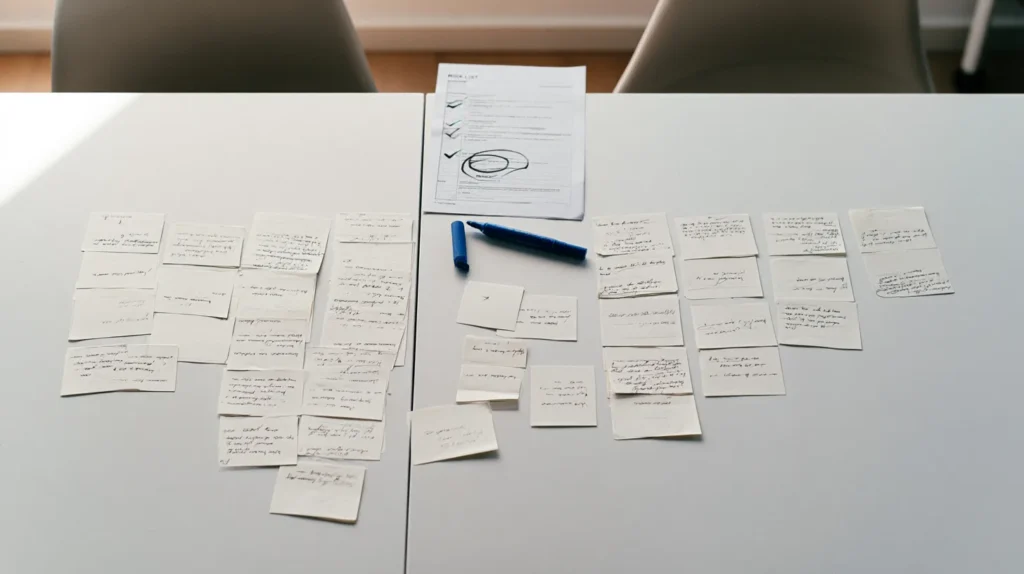
The decision is not about budget size, it is about which question is still unanswered.
- Build a PoC first when the risk is technical. A novel algorithm, a hard third-party integration, a performance target nobody has hit at your expected scale. Prove the risky part works before spending MVP-level money on the rest of the product.
- Build a prototype first when the tech is well understood but the UX or the demand is not. If the backend and integrations are routine and the open question is whether users will get the flow, or whether the idea resonates at all, a clickable mock answers that faster and cheaper than any working code would.
- Go straight to an MVP when you need real users and first revenue. If the technical path and the UX are both reasonably clear and what is left to test is whether people will actually pay, the PoC and prototype stages add time without answering the question that matters.
When both an open technical risk and an unproven UX or demand question exist at the same time, run the PoC first to kill the technical risk, then follow with a prototype or MVP for the market question, or run the two in parallel if budget allows. Move to a full production build only after the MVP has proven viability with real users and real payment. Skipping that proof and scaling a PoC or a prototype straight into production is a separate, more expensive mistake than picking the wrong artifact in the first place.
The mistake founders make most often
The two failure modes sit on opposite sides of the same confusion. Some founders pay for a full MVP when a $10,000 PoC would have de-risked the one scary technical assumption first, and end up funding a production-grade backend around a feature that turns out not to work at all. Others commission a throwaway prototype when the real open question was always "will they pay," burn the design budget on a beautiful clickable mock, and then have to fund the actual product from scratch because the mock never touched the market question in the first place. Both mistakes cost more than the PoC or prototype that would have caught them early.
How Pharos scopes a PoC
We start every early-stage engagement by naming the open question, not the deliverable. When the risk is technical, we scope a proof of concept against our own ladder, $10,000-$30,000, sized to answer that one risky assumption and nothing more. Once the technical path is proven, or was never in doubt, we move into MVP scoping in the $50,000-$150,000 band, the same three-to-five-feature approach we cover in full in our full MVP development cost guide. Whether that MVP is priced fixed-price or time and materials is its own decision, covered separately, but it only becomes the right question to ask once you know a PoC or a prototype was not the answer instead. If you are trying to work out which of the three your first build actually needs, our software development team can help you name the question before you spend against the wrong artifact.
Sources: 2026 cost ranges synthesized from published PoC, prototype and MVP pricing guides (Clutch, GoodFirms, industry rate-card benchmarks) and our own service pricing. Market figures are industry ranges, not quotes; PoC and MVP figures for Pharos are our own pricing. Your real cost depends on scope, team composition, tech stack and region.
FAQ
Quick answers to common questions about custom software development, pricing, process and technology.
Type to filter questions and answers. Use Topic to narrow the list.
Showing all 5
No matches
Try a different keyword, change the topic or clear filters
-
What is the difference between a PoC and an MVP?
A proof of concept tests whether something can be built at all, technically, and skips production polish, real user accounts and often a real backend, which is why it typically costs $2,000-$25,000. An MVP proves whether real people will use the product and pay for it, so it needs a working core flow, real accounts and a production-ready base, which is why it costs more and takes longer.
-
Is a prototype the same as an MVP?
No. A prototype is usually a clickable mock, often built in Figma, with no real backend behind it, and it exists to test whether users understand and can navigate the product. An MVP is a real, working product with a production-ready base that real users can sign up for and use, which is a materially bigger build.
-
How much does a proof of concept cost?
Market rates for a PoC typically run $2,000-$25,000, with most agencies quoting $5,000-$15,000 for a focused technical demo. At Pharos our own PoC pricing runs $10,000-$30,000, scoped to answer one specific technical risk rather than build a product.
-
Do I need a PoC before an MVP?
Only if there is a real unproven technical risk, a novel algorithm, a hard integration or a performance target nobody has hit at your expected scale. If the technical path is already well understood and the open question is UX or market demand, a prototype or a straight-to-MVP approach usually serves better than an extra PoC step.
-
How long does a PoC take?
Most proof-of-concept builds take 1-4 weeks with a small team of around 1.5-2 people, since the scope is deliberately narrow to one risky technical assumption. That is roughly the same timeframe as a prototype, but the deliverable and the team composition are different because the question being answered is different.

I work with startup founders who need a dedicated software development team but don’t want to gamble on hiring, random outsourcing, or opaque delivery.
Most founders face the same problem sooner or later.
Early technical and team decisions lock the product into tech debt, slow delivery, missed milestones and constant re-hiring. By the time this becomes visible, fixing it is already expensive.As a CTO and software architect, I help founders design, build and run dedicated development teams that work as a true extension of the startup. Not as a black-box vendor.
My focus is on complex products where mistakes are costly:
- Web3 and blockchain platforms
- FinTech and regulated products
- High-load startup systems
- MVP → scale transitions
We don’t do body-shopping.
We don’t sell generic outsourcing.Instead, we help founders:
- build the right team structure from day one
- keep technical ownership and transparency
- scale delivery without losing control
- avoid vendor lock-in and hidden risks
Teams are aligned with the product roadmap, business goals and long-term architecture. Not just short-term velocity.