
ART vs EMT: How MiCA Classifies Crypto-Assets and the Software Each Needs
ART vs EMT under MiCA explained: asset-referenced tokens, e-money tokens and other crypto-assets, their obligations, supervision and the software token issuers need to build.

Expert insights from Pharos Production on software engineering, FinTech and emerging technologies
Pharos Production's engineering team publishes technical guides and business analysis on FinTech, blockchain, Web3 and full-stack development. With 90+ engineers, 110+ apps delivered since 2013 and a 5/5 Clutch rating (2026), our senior developers and architects from Las Vegas and Kyiv offices share production-tested approaches and real project experience.
Technical deep-dives written by our senior engineers. Covers Web3 architecture, smart contract development, blockchain infrastructure, API design patterns and DevOps practices. Each article includes production-tested code examples and architecture decisions from real Pharos Production projects.
Market analysis and strategic perspectives for CTOs, product owners and startup founders. Covers FinTech market trends, regulatory landscape changes, technology adoption patterns and ROI frameworks for custom software investments. Data-backed analysis with industry benchmarks and forecasts.
Early-stage research on AI/ML integration, decentralized identity, zero-knowledge proofs, cross-chain interoperability and next-generation cloud architectures. Written by engineers actively building with these technologies across our 110+ delivered applications.
Criteria-based evaluation frameworks for founders choosing a development partner. Each guide covers what to look for, red flags to avoid and how Pharos meets the criteria.
ART vs EMT under MiCA explained: asset-referenced tokens, e-money tokens and other crypto-assets, their obligations, supervision and the software token issuers need to build.

Quick Comparison: Custom AI vs Off-the-Shelf Factor Custom AI Off-the-Shelf Platforms Time to deploy 3-6 months 1-4 weeks Upfront cost $50K-$500K+ $500-$5,000/month TCO (3 years) Lower at scale Higher at scale Differentiation Full competitive moat Same tools as competitors Data ownership 100% yours Vendor-controlled Customization Unlimited Limited to vendor features Maintenance Your team or vendor […]

Quick Comparison: RAG vs Fine-Tuning Factor RAG Fine-Tuning Best for Dynamic knowledge bases, 10K+ documents Narrow domain tasks, consistent behavior Update speed Instant (add/remove docs) Requires retraining (hours to days) Upfront cost $5K-$20K (vector DB + pipeline) $500-$5,000 per training run Per-query cost Higher (retrieval + inference) Lower (single model call) Accuracy Broad coverage, may […]

Software development cost guide for 2026. Cost ranges by project type, hourly rates by region, budget breakdown by phase and practical cost reduction strategies.

Computer vision use cases across manufacturing, healthcare, retail and security in 2026. Real implementation details, cost benchmarks and ROI data for CV deployments.

AI agent development costs range from $10,000 for a simple chatbot to $300,000+ for enterprise multi-agent systems. The final cost depends on agent complexity, number of integrations, model selection, security requirements and deployment infrastructure. Based on 110+ projects delivered since 2013, Pharos Production provides transparent cost estimates within 48 hours of receiving requirements. This guide […]

Synthesis of public benchmark data on production LLM costs, eval harness patterns, RAG vs fine-tuning economics, drift retraining cadence and pre-production eval gates - drawn from NIST AI RMF, Stanford AI Index, OWASP LLM Top 10 and named industry cohort.

RPA vs AI automation comparison for 2026. Decision framework with cost analysis, comparison table, hybrid approach and real-world use cases for each technology.
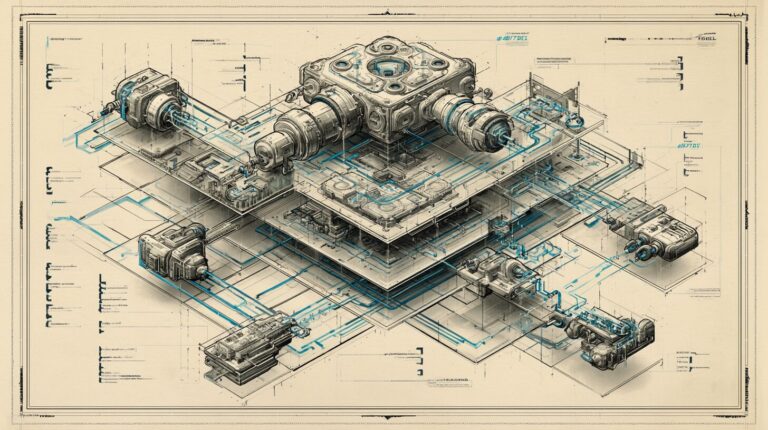
AI agent architecture patterns are reusable design blueprints for building autonomous AI systems that reason, plan and execute tasks. Just as software engineering has MVC and microservices patterns, AI agent development has established patterns that solve common challenges: how agents decide what to do next, how they access tools, how they maintain memory and how […]

How long does blockchain development take? Blockchain development timelines range from 2 weeks for simple token contracts to 12+ months for complex multi-chain ecosystems. The timeline depends on smart contract complexity, security requirements, number of chain integrations and regulatory compliance needs. Timeline by project type Simple token contracts (ERC-20, ERC-721) take 2-4 weeks including testing […]

Original research based on 25+ Pharos Production AI projects delivered 2023-2026. Cost breakdowns by complexity tier, hidden costs analysis, team composition, ROI timelines and regional variation. Key finding: median AI MVP cost is $42,000 but hidden costs add 28-42% to first-year totals.

AI governance is no longer optional. The EU AI Act enforcement began in 2025, with full compliance requirements taking effect across 2026. Organizations deploying AI systems in production face mandatory risk assessments, bias testing, transparency requirements and incident reporting obligations. This guide provides a practical framework for building responsible AI systems that meet regulatory requirements […]

The AI agent framework landscape in 2026 has matured significantly from the early days of LangChain-or-nothing decisions. Today, developers choose from at least six production-viable frameworks, each with distinct strengths and tradeoffs. The right framework choice saves months of development time and prevents costly rewrites. The wrong choice locks you into patterns that fight your […]

Quick Comparison: OpenAI vs Anthropic Factor OpenAI (GPT-4o) Anthropic (Claude 3.5/4) Best for General tasks, image understanding Coding, analysis, long documents Context window 128K tokens 200K tokens Pricing (input) $2.50/1M tokens $3.00/1M tokens Pricing (output) $10.00/1M tokens $15.00/1M tokens Enterprise features Azure OpenAI, fine-tuning, assistants AWS Bedrock, prompt caching Prompt caching Automatic (50% off) Manual […]

Synthesis of public application security data: pen-test cost ranges, critical bug density, common vulnerability classes 2024-2026, threat-modeling cost, IR MTTR - drawn from NIST CSF, MITRE ATT&CK, OWASP ASVS, Verizon DBIR and named industry cohort.

Synthesis of published software economics data: build cost ranges by project type, Year-2 maintenance cliff, mobile breakage tax, cloud lock-in cost trajectories - drawn from Flyvbjerg and Budzier (Harvard Business Review), ISO/IEC 25010, the Google SRE Book and ThoughtWorks Technology Radar.

Quick Comparison: LangChain vs CrewAI vs AutoGen Factor LangChain/LangGraph CrewAI AutoGen Best for Production systems, complex state Role-based teams, rapid prototyping Code generation, research tasks Learning curve Steep (large API surface) Moderate (role-based abstraction) Moderate (conversation patterns) Production readiness High (LangSmith observability) Medium (growing ecosystem) Low (research-oriented) Multi-agent LangGraph for orchestration Built-in role assignment Conversation-based […]

What compliance certifications does a FinTech product need? The required certifications depend on your product type, target market and data handling practices. At minimum, most FinTech products need SOC 2 Type II for data security, PCI DSS if handling payment card data and GDPR compliance for EU users. PCI DSS compliance checklist PCI DSS applies […]

Fine-tuning large language models transforms general-purpose AI into domain-expert systems that understand your industry terminology, follow your output format requirements and achieve accuracy levels that prompting alone cannot reach. This guide covers the three dominant fine-tuning techniques in 2026 - LoRA, RLHF and DPO - with practical guidance on when to use each, how to […]

Complete guide to building enterprise AI copilots. Covers architecture, RAG implementation, guardrails, deployment patterns and cost planning with specific benchmarks.

Original research on smart contract audit cost trends, bug density per 1k LOC, common vulnerability classes 2024-2026 and what audit quality actually means - drawn from 30+ Pharos engagements and tier-1 industry data.

Synthesis of public tech-DD data: M&A engagement cost ranges, architecture red-flag patterns, buy-vs-build decision outcomes, vendor RFP scoring effectiveness - drawn from ISO/IEC 25010, IEEE 29148, TOGAF, McKinsey, Gartner and named industry cohort.

Custom ERP development guide. Module planning, cost comparison with SAP and NetSuite, data migration strategy, integration planning and phased implementation timeline.

Synthesis of public regulatory cost data: SOC 2 Type 1/Type 2 ranges, PCI DSS L1 assessments, multi-state MTL aggregate spend, AML/KYC tooling pricing and FFIEC examination readiness - drawn from PCI Council, AICPA, FFIEC, FATF and named industry cohort.

Digital transformation ROI measurement guide. Frameworks, metrics, industry benchmarks and strategies to maximize returns from digital initiatives.

Legacy system modernization guide. Strangler fig pattern, replatforming, rebuild strategies with cost comparison table, budget planning and implementation best practices.

IoT development guide covering architecture patterns, MQTT and communication protocols, AWS/Azure platforms, security best practices and cost planning.

Cybersecurity guide for startups and SMBs in 2026. Top 10 security measures, compliance basics (SOC 2, GDPR, HIPAA), budget guide and cost-effective tools.

How much does AI development cost in 2026? AI development costs range from $10,000 for simple chatbots to $500,000+ for enterprise multi-agent systems. The final cost depends on four factors: model complexity, data preparation needs, integration scope and ongoing inference costs. AI development cost by project type Simple AI features like FAQ chatbots and basic […]

Multi-agent systems represent a fundamental shift in how enterprises build AI. Instead of relying on a single monolithic model to handle every task, multi-agent architectures deploy specialized AI agents that collaborate, delegate and coordinate to solve complex business problems. This guide covers the architecture patterns, frameworks, coordination strategies and production deployment lessons that engineering teams […]

Complete SaaS development cost breakdown for 2026. MVP to enterprise tier pricing, hidden costs, cost reduction strategies and monthly operational expenses.

AI automation in 2026 has moved far beyond chatbots and simple workflow triggers. Enterprises are deploying autonomous AI agents that plan, reason and execute multi-step business processes with minimal human oversight. This article covers the most consequential AI automation trends shaping enterprise operations - from agentic process automation and AI-native software development to autonomous supply […]

Practical guide to implementing machine learning for business in 2026. Covers ML use cases across industries, ROI frameworks, implementation steps, cost analysis and common pitfalls with specific numbers and benchmarks.

AI in healthcare guide for 2026. Diagnostic AI, clinical applications, HIPAA compliance, FDA regulatory pathways and implementation roadmap with cost benchmarks.

Enterprise AI adoption in 2026 is at a tipping point. 78% of enterprises report using AI in at least one business function, but only 22% have successfully scaled AI beyond pilot projects, according to the McKinsey Global AI Survey (2024). The gap between experimentation and production deployment is where most AI initiatives fail - not […]

AI in FinTech applications for 2026. Fraud detection, credit scoring, robo-advisors and compliance automation with implementation costs and regulatory guidance.

Quick Comparison: Build vs Buy Factor Build Custom Buy/Platform Time to first version 8-16 weeks 1-2 weeks Annual cost (enterprise) $100K-$300K dev + $20K infra $50K-$200K licensing Flexibility Full control Vendor roadmap Integration depth Custom APIs, deep system access Pre-built connectors IP ownership Assigned to you in writing under the contract Vendor owns core logic […]

Microservices vs monolith architecture decision guide. Comparison table, modular monolith pattern, migration strategies and cost analysis for development teams.

Staff augmentation vs outsourcing comparison. Decision framework, cost analysis, hybrid model and selection criteria for choosing the right engagement model.

Enterprise NLP applications guide covering contract analysis, sentiment analysis, chatbots and document processing. Implementation strategies, cost benchmarks and ROI data for 2026.

Flutter vs React Native comparison for 2026. Performance benchmarks, developer experience, ecosystem maturity, cost analysis and decision framework for mobile development.

Cloud migration strategy guide for 2026. Step-by-step assessment, planning and execution with AWS vs Azure vs GCP comparison, cost benchmarks and optimization tips.

Custom CRM development guide. Build vs buy comparison with Salesforce and HubSpot, feature cost breakdown, technology stack and phased development timeline.

How to choose a software development company in 2026. Evaluation criteria, red flags, engagement models and step-by-step selection process with practical checklist.

FinTech trends 2026 are moving from hype to production as blockchain payments, tokenized assets and smart contract automation reshape real-world finance. This guide from Dmytro Nasyrov, CTO at Pharos Production, explains how stablecoins, real-time settlement and embedded compliance improve UX, risk controls and reporting across banking and payments platforms. Learn where AI and data pipelines create measurable gains in cost, speed and governance and what to build next.
This guide breaks down the Web3 development stack in 2026 and explains how modern teams choose blockchain tools that hold up in production. You will learn how wallets, smart contracts, nodes, indexing, storage and observability fit together and what tradeoffs developers should consider for security, performance and cost. Use it as a practical reference for planning architecture and shipping reliable Web3 applications.

Stablecoins are cryptocurrencies whose rate is stabilized by being tied to the value of tangible assets. The most famous example is the USDT token, worth $1. These tokens are convenient for mutual settlements since the value of other cryptocurrencies changes unpredictably over time. In addition to dollars, such tokens can be backed by precious metals, oil or other cryptocurrencies. Sometimes, they are not supported by anything, but the increase and decrease of the money supply in circulation is controlled by intelligent contract algorithms, which ensures their relatively stable rate.
Inside the blog
Every article on this blog comes from production experience - not theory. Our engineers write about problems they solved on real projects across FinTech, healthcare, Web3 and enterprise platforms. You get architecture decisions, code patterns and integration strategies tested under actual business constraints.
All content is reviewed by CTO Dmytro Nasyrov before publication. We prioritize depth over frequency: each piece covers a specific technical challenge with enough context for you to apply the solution in your own stack. Whether you are evaluating a technology or debugging an architecture, these articles save you research time.
Common questions about the Pharos Production engineering blog.
Type to filter questions and answers. Use Topic to narrow the list.
Showing all 4
No matches
Try a different keyword, change the topic or clear filters
The Pharos Production engineering blog covers FinTech trends, Web3 and blockchain development, custom software architecture and emerging technology insights. Articles are written by our team of 90+ engineers from Las Vegas and Kyiv offices with hands-on production experience.
All articles are written by senior engineers and architects at Pharos Production and reviewed by CTO Dmytro Nasyrov. The team brings 13+ years of production experience across 28+ industries including FinTech, healthcare and Web3.
Pharos Production publishes new articles regularly based on industry developments, project learnings and technology releases. Each article goes through technical review and fact-checking before publication.
Subscribe or check back for the latest insights on software development.
Yes. All articles on the Pharos Production blog are freely accessible and may be cited with attribution. For deeper technical consultation or custom research on a topic covered in our articles, contact our engineering team directly.

Achieve them with minimized risk through our bespoke innovation capabilities
Contact us today to discuss your project. We're ready to review your request promptly and guide you on the best next steps for collaboration
Same dayWe're committed to keeping your information confidential, so we'll sign a Non-Disclosure Agreement
1 dayAfter we chat about your goals and needs, we'll craft a comprehensive proposal detailing the project scope, team, timeline and budget
3-5 daysLet's connect on Google Meet to go through the proposal and confirm all the details together!
1-2 daysAs soon as the contract is signed, our dedicated team will jump into action on your project!
Same dayThanks for the request!
We typically reply within 24 hours