NLP for Enterprise: Natural Language Processing Applications
Enterprise NLP applications guide covering contract analysis, sentiment analysis, chatbots and document processing. Implementation strategies, cost benchmarks and ROI data for 2026.
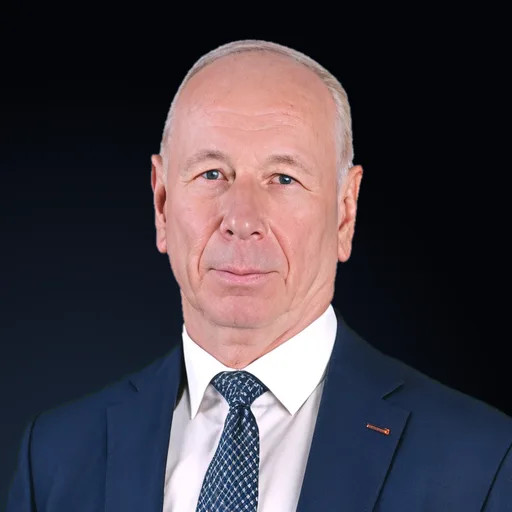
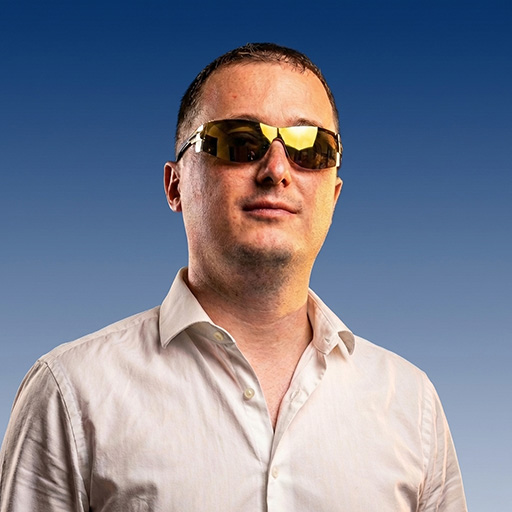
Reviewed by Dr. Dmytro Nasyrov, Founder and CTO
Pharos Production delivers custom Natural Language Processing (NLP) development services that help machines understand, generate and act on human language.
Aligned with these frameworks. Audit reports and certifications available on request.
Reviewed by Dmytro Nasyrov
Founder and CTO
23+ years in custom software development. Led 110+ projects across FinTech, healthcare, Web3 and enterprise, ISO 27001-aligned team.
Classical NLP (fine-tuned transformers, gradient boosting, rules) wins on narrow tasks with enough labeled data, low latency requirements and cost-sensitive workloads. LLM-based approaches (prompt engineering, RAG, few-shot) win on fuzzy reasoning, zero-shot tasks and complex instruction following. Most production NLP systems combine both: classical models for hot paths, LLMs for edge cases.
| Factor | Classical NLP | LLM-based approach |
|---|---|---|
| Input type | Structured text, narrow domain, classification or extraction | Unstructured conversation, fuzzy reasoning, instruction following |
| Training data | Requires thousands to tens of thousands of labeled examples | Works with zero-shot or few-shot examples |
| Latency | Sub-50ms typical; suitable for real-time | 0.5-5 seconds typical; not for sub-second requirements |
| Cost per request | Near-zero marginal cost once trained | $0.001-$0.05 per call; adds up at scale |
| Determinism | Deterministic (same input → same output) | Non-deterministic unless temperature=0 |
| Accuracy ceiling | Very high on narrow tasks with enough training data | Very high on fuzzy tasks with good prompting |
| Development time | 6-12 weeks for a production MVP | 2-6 weeks for an LLM-based MVP |
| Best fit | Document extraction, search relevance, compliance, content moderation at scale | Complex Q&A, conversation, content generation, instruction following |
NLP projects follow Pharos Verified Delivery with NLP-specific gates: discovery defines task, labeling strategy and eval metric; build evaluates multiple approaches (classical, fine-tuned transformer, LLM-based) against a held-out test set; production readiness covers serving infrastructure, monitoring, drift detection and retraining cadence; support includes monthly eval refresh and production metric reviews.
Pharos Verified Delivery applied to 110+ production applications since 2013
Three NLP engagements where the hybrid classical + LLM approach moved the accuracy needle.
Claims processors manually extracted 40+ fields from scanned documents. 22 minutes per claim. 8% data entry error rate from fatigue.
Hybrid pipeline: OCR (AWS Textract) + layout-aware transformer (LayoutLMv3) for field extraction + rules for validation. 99.2% extraction accuracy after human review layer. Processing time under 35 seconds per claim.
The key was combining layout-aware NLP with deterministic validation rules. Pure OCR was 78% accurate; adding the LayoutLMv3 model on top reached 94%; adding business rule validation (dates must be valid, amounts must sum) reached 99.2%.
Keyword-only search using Elasticsearch defaults. Search abandonment rate 38%. Zero-result searches on 12% of queries despite relevant products existing.
Hybrid BM25 + dense retrieval with a fine-tuned BGE embedding model + Cohere reranker. Search abandonment dropped to 14%. Zero-result rate down to 2.8%. Click-through rate on search results up 46%.
We did not replace Elasticsearch - we added a second retrieval layer. BM25 handles exact matches; dense retrieval catches semantic matches the keyword layer missed. The reranker combines the two and orders results. Both layers run in parallel so total latency stayed under 120ms.
Compliance team manually reviewed outbound communications for regulatory violations. 4 full-time analysts. 8% of messages reviewed; the rest went unmonitored due to volume.
NLP pipeline flagging high-risk messages with explainable rules + classifier. 100% of messages scanned, 92% reduction in reviewer workload, 3x more actual violations caught.
Rules + classifier is the right combination for compliance. Rules handle the deterministic cases (sanctions names, MNPI keywords, specific phrase patterns); the classifier catches novel phrasings rules miss. Every flagged message has both a rule trace and a classifier confidence score for human review.
Client names anonymized under NDA. Full case studies at /cases/.
We decline roughly 30% of RFPs we receive. Forcing a bad fit costs both sides 3-6 months and damages outcomes. Here is how we think about scope:
NLP shines on fuzzy text tasks with unstructured inputs. For high-volume exact-match search, Elasticsearch or Typesense dominates on latency and relevance. For structured classification with enough training data, traditional ML (gradient boosting) outperforms deep NLP at 10x lower cost. For simple intent routing, rules cover 80% of cases. We start every NLP engagement by asking "could this be a search index, a classifier or a rules engine?"
Pharos NLP portfolio
Ranges we consistently see across 20+ NLP engagements.
82-94% F1 on classification, extraction and similar tasks after 4-10 weeks of iteration; below 78% triggers architecture review.
Top-3 language parity within 5 F1 points of English on multilingual pipelines; languages with under 1M training examples drop 8-15 points typically.
6-14 weeks for production NLP system including data pipeline, training and monitoring scaffolding[5].
$1.5k-$12k per month for classical NLP on mid-volume workloads; $3k-$35k for LLM-backed pipelines depending on token volume[7].
Quarterly retraining on stable domains; monthly or triggered retraining on fast-moving domains (support, moderation).
Three shifts are reshaping production NLP system delivery.
Classification, extraction and sentiment tasks move to LLM-based pipelines where per-query cost is acceptable. Classical NLP retains edge on real-time, high-volume or on-device scenarios[1].
Large multilingual models deliver production-quality output on 40+ languages. Teams building English-first pipelines rebuild for multilingual by default[2].
Buyers require published eval scores on domain-specific NLP benchmarks before contract signing[6].
Every NLP system we ship runs against the same four-dimension readiness evaluation before handover.
Production post-mortem
A customer feedback classification pipeline deployed in March 2025 upgraded its tokenizer version during a routine library update. The new tokenizer handled emoji and Unicode variant selectors differently, shifting output token IDs for ~6% of inputs. Downstream rule-based post-processing silently returned incorrect categories for that subset before a week of mis-routed tickets surfaced the issue.

Tokenizer version now pinned and asserted at both train and serve. Tokenization-parity check added to integration tests. Unicode edge case coverage expanded in NLP pipeline test suites.
Published record
Technical articles, comparison guides and methodology deep-dives we write from our own delivery experience.
Trusted by Coinbase, Consensys, Core Scientific, MicroStrategy, Gate.io and 10+ more Web3 and enterprise platforms
16+ partnersOur 16 technology partners include:
Founder and CTO Pharos Production
I design and build reliable software solutions - from lightweight apps to high-load distributed systems and blockchain platforms.
PhD in Artificial Intelligence, MSc in Computer Science (with honors), MSc in Electronics & Precision Mechanics.
13 years in architecture of great software solutions tailored to customer needs for startups and enterprises
23 years of practical enterprise customized software production experience
Lecturer at the National Kyiv Polytechnic University
Doctor of Philosophy in Artificial Intelligence
Master's degree in Computer Science, completed with excellence
Master's degree in Electronics and precision mechanics engineering

Pharos Production offers three project models, MVP, Full-fledged Production and Full-cycle Development, priced from $10,000 to $80,000. An MVP prototype takes about 3 months.
Feasibility study, prototype on your data and integration roadmap in four to eight weeks.
Full model development, API layer, cloud deployment and MLOps with monitoring.
Multi-model architecture, custom data infrastructure, compliance and hybrid or on-prem delivery.
Prices vary based on project scope, complexity, timeline and requirements. Hourly rates range from $35 to $75 depending on role and seniority. Contact us for a personalized estimate.

Need extra hands on your software project? Our developers can jump in at any stage - from architecture to auditing - and integrate seamlessly with your team to fill any technical gaps.

Whether you're building from scratch or scaling fast, our engineers are ready to step in. You stay in control, and we handle the code.
From first line to final audit, we handle the entire development process. We will deliver secure, production-ready software, while you can focus on your business.
Our engineers work with 45+ ai technologies - chosen for production reliability and performance.
Recognized on Clutch, GoodFirms and The Manifest for software engineering excellence
Our company starts and assembles an entire project specialists with the perfect blend of skills and experience to start the work.
We'll design, build and launch your MVP, ensuring it meets the core requirements of your software solution.
We'll create a complete software solution that is custom-made to meet your exact specifications.
Our company will be right there with you, keeping your software solution running smoothly, fixing issues and rolling out updates.
Enterprise NLP applications guide covering contract analysis, sentiment analysis, chatbots and document processing. Implementation strategies, cost benchmarks and ROI data for 2026.
Fine-tuning large language models transforms general-purpose AI into domain-expert systems that understand your industry terminology, follow your output format requirements and achieve accuracy levels that prompting alone cannot reach. This guide covers the three dominant fine-tuning techniques in 2026 - LoRA, RLHF and DPO - with practical guidance on when to use each, how to […]
Practical guide to implementing machine learning for business in 2026. Covers ML use cases across industries, ROI frameworks, implementation steps, cost analysis and common pitfalls with specific numbers and benchmarks.
Type to filter questions and answers. Use Topic to narrow the list.
Showing all 8
No matches
Try a different keyword, change the topic or clear filters
Use classical NLP when you have thousands of labeled examples, need sub-50ms latency, need determinism or your workload scale makes per-call LLM pricing dominate. Use LLMs for fuzzy reasoning, zero-shot tasks, conversation and complex instruction following.
Most production systems combine both. Pharos default: classical models for hot paths and structured extraction, LLMs for edge cases and natural-language interfaces.
Fine-tuning a pre-trained transformer (BERT, RoBERTa) typically needs 1,000-10,000 labeled examples per class for production accuracy. Training from scratch needs 100,000+. Active learning reduces labeling cost by selecting the most informative examples to label next. For new domains, we often bootstrap with LLM-generated labels (weak supervision) then fine-tune on the corrected subset.
Pre-trained multilingual models (mBERT, XLM-RoBERTa, LaBSE, Cohere multilingual embeddings) cover 100+ languages out of the box. For specialized domains in non-English, we fine-tune on domain-specific data.
For languages with limited training data, we use translation to English, process with English models, then translate back - the accuracy tradeoff is usually small and the engineering cost is much lower.
Yes. Pipeline: OCR (AWS Textract, Google Document AI, Tesseract) + layout-aware transformer (LayoutLMv3) for fields + business rule validation + human review queue for low-confidence.
We have shipped invoice extraction, insurance claims, legal document review, financial statements and medical records (with HIPAA compliance). Typical accuracy 95-99% after the validation layer.
Hybrid BM25 + dense retrieval. BM25 (via Elasticsearch or OpenSearch) handles exact matches; dense retrieval (via sentence-transformers or Cohere embeddings) catches semantic matches.
A reranker (Cohere, Voyage, BGE reranker) combines both and orders results. Latency stays under 120ms if the two retrieval layers run in parallel.
NLP MVP $30,000-$80,000: 2-3 weeks discovery + eval set creation, 4-6 weeks build, 2-3 weeks production serving. Production NLP with MLOps: $80,000-$250,000+.
Labeling budget separate, typically $3,000-$30,000 depending on volume and complexity. Ongoing retainer from $5,000/month for monthly eval refresh and drift monitoring.
Instrument input distributions (text length, vocabulary, topic mix) and prediction distributions on every inference. Compare week-over-week to baseline and alert when KL divergence exceeds threshold.
For supervised models where ground truth is delayed, track accuracy on the lag. Automated retraining on a monthly schedule; more frequent for fast-moving domains like social or news content.
We decline search use cases where Elasticsearch dominates, structured classification where traditional ML wins, projects without a labeled eval set, real-time systems with sub-50ms latency budgets on long text and "NLP for the sake of NLP" projects without a measurable business metric. "Let us add NLP to it" is not a use case.
NLP rewards teams that treat tokenization, multilingual coverage and evaluation rigor as first-class concerns[10]. LLM vs classical selection, multilingual-by-default architecture and published eval evidence are the three areas that separate NLP systems that scale from pipelines that silently drift.
Book a 30-minute NLP readiness call
Achieve them with minimized risk through our bespoke innovation capabilities
Contact us today to discuss your project. We're ready to review your request promptly and guide you on the best next steps for collaboration
Same dayWe're committed to keeping your information confidential, so we'll sign a Non-Disclosure Agreement
1 dayAfter we chat about your goals and needs, we'll craft a comprehensive proposal detailing the project scope, team, timeline and budget
3-5 daysLet's connect on Google Meet to go through the proposal and confirm all the details together!
1-2 daysAs soon as the contract is signed, our dedicated team will jump into action on your project!
Same dayHeadquarters in Las Vegas, Nevada. Engineering office in Kyiv, Ukraine.
We also work with clients through dedicated local teams in Las Vegas, New York and San Francisco.
Thanks for the request!
We typically reply within 4 hours