
Founder & engineering leadership
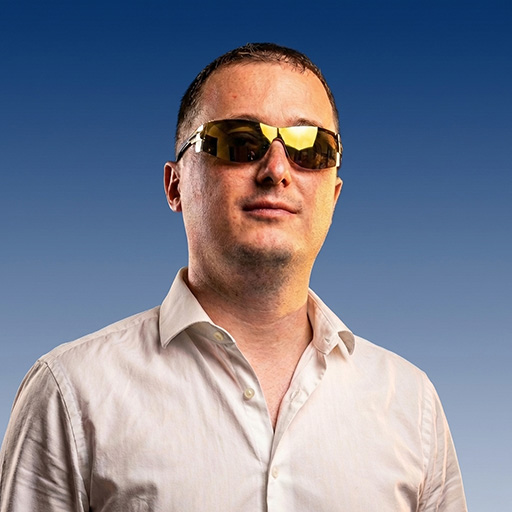
Dmytro Nasyrov
Founder and CTO Pharos Production
Founder of Pharos Production, PhD in Artificial Intelligence and lecturer at Igor Sikorsky Kyiv Polytechnic Institute.
About
Dmytro Nasyrov is the founder and CTO of Pharos Production, a software development and AI engineering company since 2013. With 23 years of engineering experience and a PhD in Artificial Intelligence, he leads engineering culture at Pharos and lectures at Igor Sikorsky Kyiv Polytechnic Institute.
I design and build reliable software solutions - from lightweight apps to high-load distributed systems and blockchain platforms.
PhD in Artificial Intelligence, MSc in Computer Science (with honors), MSc in Electronics & Precision Mechanics.
Education and credentials
- PhD in Artificial Intelligence
- Lecturer, Igor Sikorsky Kyiv Polytechnic Institute
- Alumnus, Igor Sikorsky Kyiv Polytechnic Institute
Areas of expertise
- Artificial Intelligence - LLM integration, RAG, agents, ML platforms
- Blockchain protocols - DeFi, NFT, smart contracts, dApps
- FinTech platforms - payments, compliance, RegTech
- Custom software development - web, mobile, enterprise
- DevOps and cloud architecture
- Engineering leadership - strategy, technical due diligence
Career timeline
-
Founder and CTO, Pharos Production
Software development and AI engineering. 90+ engineers, 110+ apps for 200+ clients across 28 industries. Aligned with ISO 27001, SOC 2, HIPAA, PCI DSS and GDPR frameworks.
-
Lecturer, Igor Sikorsky Kyiv Polytechnic Institute
Teaching engineering at Ukraine's leading technical university.
Ideas from practice
Articles by Dmytro Nasyrov
IBM i Insurance Integration
IBM i insurance integration connects mobile quote, policyholder portal, broker API, payment and analytics channels to a policy administration system on IBM i without a rewrite. This guide maps each channel to a native mechanism, keeps endorsements and payments inside the existing RPG or COBOL programs and names the risk each path carries under the documented constraints of IBM i and its integration tools.
LDAR Software
LDAR software for an EU oil or gas operator is the system of record behind the leak detection and repair program that Regulation (EU) 2024/1787 requires. This guide sets out the component, survey, leak, repair, delay and flare records the Regulation implies, the 5-day and 30-day repair clocks and how versioned rule tables absorb implementing acts still to come.
How to Choose a Smart Contract Development Company: A Buyer's Checklist
Evaluate a smart contract provider through delivery evidence, actual project contribution and operational authority. Use the filled escrow RFP to align proposals before comparing their prices.

Aircraft Maintenance Records
EASA sets no single retention period for aircraft maintenance records. This guide maps each record class under Part-M, Part-145 and Part-CAMO to its rule, its holder and its clock, then turns the rules into build requirements for a records system: append-only corrections, CRS records bound to an identifiable signatory, per-record retention and exports that carry every clock through a change of operator or CAMO.
OBD-II Data Access
A vendor-neutral engineering comparison of the four ways a fleet or app platform gets vehicle data: dongle PIDs under SAE J1979, J1979-2 OBDonUDS vehicles, OEM connected-car APIs and raw CAN logging with DBC decoding, with a criteria matrix for choosing between them, the backend ingestion shape and data-quality traps of each, dongle security controls and the EU Data Act rule on who may ask for vehicle data.

Driver Location Tracking
A driver location tracking system carries a phone's location fix to two readers, the rider's map and the dispatch index. This guide follows the fix through background limits on Android and iOS, sampling by driver state, the transport and reconnect model, capacity sizing, an H3 cell index, map matching and nearest-driver lookup, and closes with what the EU Platform Work Directive means for collection and human review.
Last updated: