
Founder & engineering leadership
Dmytro Nasyrov
Founder and CTO Pharos Production
Founder of Pharos Production, PhD in Artificial Intelligence and lecturer at Igor Sikorsky Kyiv Polytechnic Institute.
About
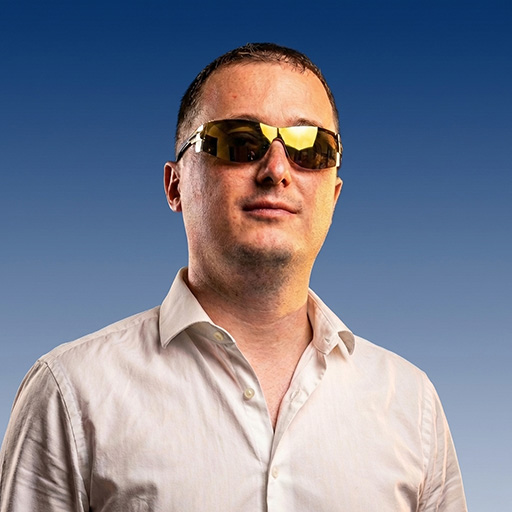
Dmytro Nasyrov is the founder and CTO of Pharos Production, a software development and AI engineering company since 2013. With 23 years of engineering experience and a PhD in Artificial Intelligence, he leads engineering culture at Pharos and lectures at Igor Sikorsky Kyiv Polytechnic Institute.
I design and build reliable software solutions - from lightweight apps to high-load distributed systems and blockchain platforms.
PhD in Artificial Intelligence, MSc in Computer Science (with honors), MSc in Electronics & Precision Mechanics.
Education and credentials
- PhD in Artificial Intelligence
- Lecturer, Igor Sikorsky Kyiv Polytechnic Institute
- Alumnus, Igor Sikorsky Kyiv Polytechnic Institute
Areas of expertise
- Artificial Intelligence - LLM integration, RAG, agents, ML platforms
- Blockchain protocols - DeFi, NFT, smart contracts, dApps
- FinTech platforms - payments, compliance, RegTech
- Custom software development - web, mobile, enterprise
- DevOps and cloud architecture
- Engineering leadership - strategy, technical due diligence
Career timeline
-
Founder and CTO, Pharos Production
Software development and AI engineering. 90+ engineers, 110+ apps for 200+ clients across 28 industries. Aligned with ISO 27001, SOC 2, HIPAA, PCI DSS and GDPR frameworks.
-
Lecturer, Igor Sikorsky Kyiv Polytechnic Institute
Teaching engineering at Ukraine's leading technical university.
Ideas from practice
Articles by Dmytro Nasyrov

Pipeline Leak Detection Software
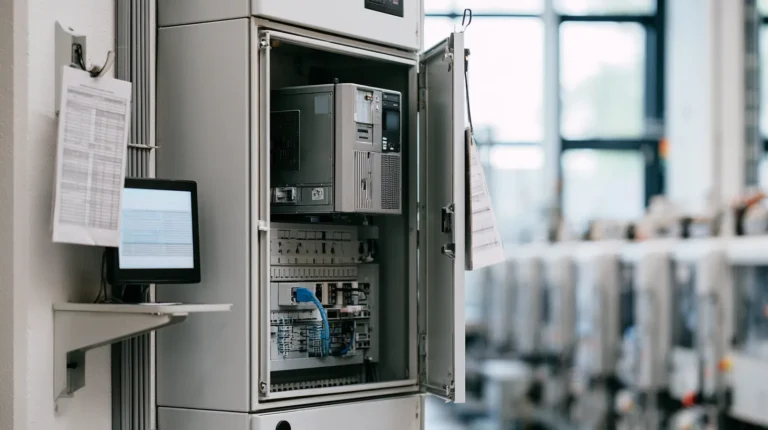
Computational pipeline monitoring read as a software specification: the definition 49 CFR 195.2 gives it, the design rule at 195.134 and the operating rule at 195.444 that bind an operator to API RP 1130, the seven method families of section 4.1.2 with the data each one demands in engineering practice, plus the sensitivity against false alarms trade that no numerical performance standard in the regulation settles for you.
OPC UA Integration
The four decisions that decide whether an OPC UA integration holds: a published companion specification or a custom nodeset; a decoder that reads structures instead of storing opaque bytes; subscriptions and queues sized against a server that revises what you ask for; certificates and roles that are administered rather than coded. Around them the northbound leg, the historian mapping and the gateway question.

CAMARA Network API Integration
CAMARA Location Verification answers TRUE, FALSE or PARTIAL rather than a plain boolean, and a SIM Swap null can mean the operator would not disclose a date rather than no swap occurred. This guide works through the four CAMARA network APIs a product team actually integrates, the identity and consent layer behind all of them and the error model that treats its own published codes as incomplete by design.

OpenADR Integration
The two parts of an OpenADR integration that sit outside the certified VTN to VEN interface: how each OpenADR 3 event interval becomes an OCPP 2.0.1 SetChargingProfile, with a capacity ceiling and a per-transaction schedule stacked on one station, and what the platform does when the VTN stops answering. Around them, the VTN and VEN roles, registration and OAuth, reporting, 2.0b coexistence and certification as a process.

CBAM Annual Declaration
In a CBAM annual declaration the certificate count is the embedded emissions after the carbon-price reduction and the free-allocation adjustment, and every other element of the filing is stated here as a data model with its article, its data source and its validation check.

UKGC Technical Standards
A requirement-by-requirement reading of the Gambling Commission's Remote gambling and software technical standards as platform behavior: what RTS 1 to 17 ask the software to do, which rows an approved test house certifies and which the licensee tests itself, the ISO/IEC 27001:2022 security requirements and their audit, the GAMSTOP check cadence and how the Malta Gaming Authority's system audit compares.
Last updated: