
Founder & engineering leadership
Dmytro Nasyrov
Founder and CTO Pharos Production
Founder of Pharos Production, PhD in Artificial Intelligence and lecturer at Igor Sikorsky Kyiv Polytechnic Institute.

About
Dmytro Nasyrov is the founder and CTO of Pharos Production, a software development and AI engineering company since 2013. With 23 years of engineering experience and a PhD in Artificial Intelligence, he leads engineering culture at Pharos and lectures at Igor Sikorsky Kyiv Polytechnic Institute.
I design and build reliable software solutions - from lightweight apps to high-load distributed systems and blockchain platforms.
PhD in Artificial Intelligence, MSc in Computer Science (with honors), MSc in Electronics & Precision Mechanics.
Education and credentials
- PhD in Artificial Intelligence
- Lecturer, Igor Sikorsky Kyiv Polytechnic Institute
- Alumnus, Igor Sikorsky Kyiv Polytechnic Institute
Areas of expertise
- Artificial Intelligence - LLM integration, RAG, agents, ML platforms
- Blockchain protocols - DeFi, NFT, smart contracts, dApps
- FinTech platforms - payments, compliance, RegTech
- Custom software development - web, mobile, enterprise
- DevOps and cloud architecture
- Engineering leadership - strategy, technical due diligence
Career timeline
-
Founder and CTO, Pharos Production
Software development and AI engineering. 90+ engineers, 110+ apps for 200+ clients across 28 industries. Aligned with ISO 27001, SOC 2, HIPAA, PCI DSS and GDPR frameworks.
-
Lecturer, Igor Sikorsky Kyiv Polytechnic Institute
Teaching engineering at Ukraine's leading technical university.
Ideas from practice
Articles by Dmytro Nasyrov
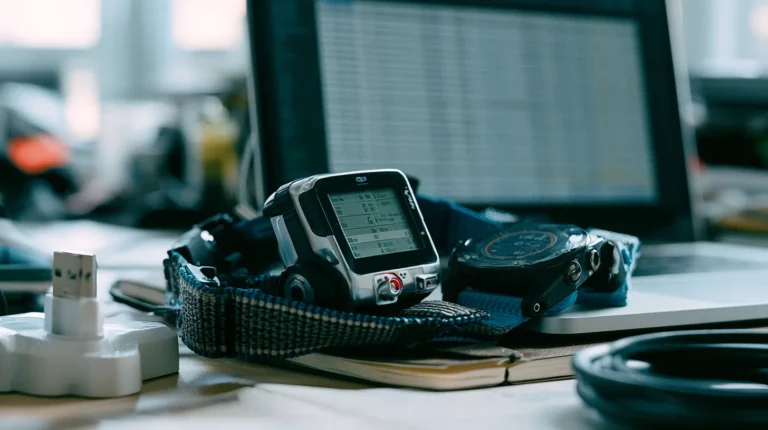
FIT File Ingestion
What a fitness platform has to build to accept device uploads and hand them back: a decoder that reads definition messages before data, a timestamp path that knows the FIT epoch from a relative value, an integrity check the specification owner makes the case for skipping on activity files, an identity key that survives a re-upload and an export path that is honest about what TCX and GPX drop.

eSIM Provisioning Integration
What an MVNO or a connectivity platform has to build to move a profile from an SM-DP+ into a subscriber's eUICC: the consumer architecture and the components that own each step, an activation code whose positional fields fail quietly, two client paths that decompose that code differently and the authorization each platform demands before your app may download anything. With the failure we expect named at every step.

IFC Data Integration
An IFC file can validate against the schema and still disagree with the last one about which storey a wall belongs to. This guide works through the decisions a construction platform makes when it ingests IFC: which encoding to accept, what identity is keyed on, how the spatial tree is discovered, where properties and quantities really live, how uploads are validated and how models are placed against each other.
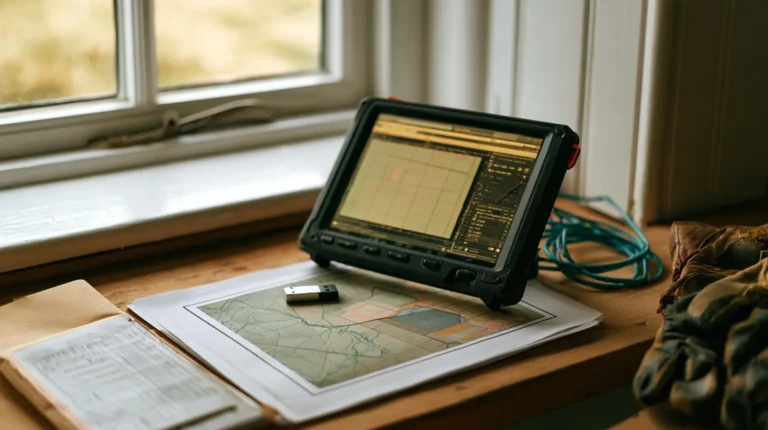
ISOXML Integration
The two halves of an ISOXML integration that no standard hands you: the mapping between a task data set and a platform's own model, and the validation that stops a bad export before it reaches a cab. Around them, the two transfer directions, where Part 10 and Part 11 sit, the dictionary lookup behind every logged value, what a task controller functionality actually warrants and the import failures the AEF names.

LTI Advantage Integration
The platform half of an LTI Advantage integration, which the tool-side tutorials never cover: the identifiers a learning platform mints, the login it issues, the token it signs, the key set it publishes and the gradebook and roster endpoints it exposes. With the service table, the migration claim that keeps existing records attached and why the Complete certification level is required for platforms.

Crew Rostering Software
What a crew rostering engine has to compute under EASA Subpart FTL: the acclimatization state it derives before any table can be read, the maximum flight duty period looked up in reference time, the cumulative duty limits held as rolling windows beside a calendar-year flight time total and standby, reserve and rest on their own counters. Around them, the duties and rest data model, recomputation on disruption and the audit trail every verdict needs.
Last updated: