
Founder & engineering leadership
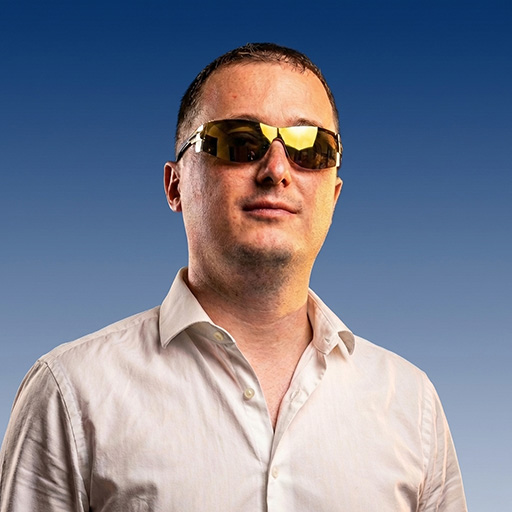
Dmytro Nasyrov
Founder and CTO Pharos Production
Founder of Pharos Production, PhD in Artificial Intelligence and lecturer at Igor Sikorsky Kyiv Polytechnic Institute.
About
Dmytro Nasyrov is the founder and CTO of Pharos Production, a software development and AI engineering company since 2013. With 23 years of engineering experience and a PhD in Artificial Intelligence, he leads engineering culture at Pharos and lectures at Igor Sikorsky Kyiv Polytechnic Institute.
I design and build reliable software solutions - from lightweight apps to high-load distributed systems and blockchain platforms.
PhD in Artificial Intelligence, MSc in Computer Science (with honors), MSc in Electronics & Precision Mechanics.
Education and credentials
- PhD in Artificial Intelligence
- Lecturer, Igor Sikorsky Kyiv Polytechnic Institute
- Alumnus, Igor Sikorsky Kyiv Polytechnic Institute
Areas of expertise
- Artificial Intelligence - LLM integration, RAG, agents, ML platforms
- Blockchain protocols - DeFi, NFT, smart contracts, dApps
- FinTech platforms - payments, compliance, RegTech
- Custom software development - web, mobile, enterprise
- DevOps and cloud architecture
- Engineering leadership - strategy, technical due diligence
Career timeline
-
Founder and CTO, Pharos Production
Software development and AI engineering. 90+ engineers, 110+ apps for 200+ clients across 28 industries. Aligned with ISO 27001, SOC 2, HIPAA, PCI DSS and GDPR frameworks.
-
Lecturer, Igor Sikorsky Kyiv Polytechnic Institute
Teaching engineering at Ukraine's leading technical university.
Ideas from practice
Articles by Dmytro Nasyrov

State of AI Development Costs 2026: Pharos Production Research Report
Original research based on 25+ Pharos Production AI projects delivered 2023-2026. Cost breakdowns by complexity tier, hidden costs analysis, team composition, ROI timelines and regional variation. Key finding: median AI MVP cost is $42,000 but hidden costs add 28-42% to first-year totals.

AI Governance Framework: Building Responsible AI Systems
AI governance is no longer optional. The EU AI Act enforcement began in 2025, with full compliance requirements taking effect across 2026. Organizations deploying AI systems in production face mandatory risk assessments, bias testing, transparency requirements and incident reporting obligations. This guide provides a practical framework for building responsible AI systems that meet regulatory requirements […]

AI Agent Frameworks Comparison 2026: Complete Guide
The AI agent framework landscape in 2026 has matured significantly from the early days of LangChain-or-nothing decisions. Today, developers choose from at least six production-viable frameworks, each with distinct strengths and tradeoffs. The right framework choice saves months of development time and prevents costly rewrites. The wrong choice locks you into patterns that fight your […]

OpenAI vs Anthropic Enterprise AI: 2026 Comparison
Quick Comparison: OpenAI vs Anthropic Factor OpenAI (GPT-4o) Anthropic (Claude 3.5/4) Best for General tasks, image understanding Coding, analysis, long documents Context window 128K tokens 200K tokens Pricing (input) $2.50/1M tokens $3.00/1M tokens Pricing (output) $10.00/1M tokens $15.00/1M tokens Enterprise features Azure OpenAI, fine-tuning, assistants AWS Bedrock, prompt caching Prompt caching Automatic (50% off) Manual […]

State of AppSec 2026: What Industry Data Tells Us About Critical Findings, Pen-Test Cost and IR Readiness
Synthesis of public application security data: pen-test cost ranges, critical bug density, common vulnerability classes 2024-2026, threat-modeling cost, IR MTTR - drawn from NIST CSF, MITRE ATT&CK, OWASP ASVS, Verizon DBIR and named industry cohort.

State of Custom Software TCO 2026: What Industry Data Tells Us About Build Cost, Maintenance and Scaling Cliffs
Synthesis of published software economics data: build cost ranges by project type, Year-2 maintenance cliff, mobile breakage tax, cloud lock-in cost trajectories - drawn from Flyvbjerg and Budzier (Harvard Business Review), ISO/IEC 25010, the Google SRE Book and ThoughtWorks Technology Radar.
Last updated: