Separate Report Dates From Answer Dates
Reader reports gained their own event timeline and query, separating submission from internal updates while keeping reviewer notes outside the public shape
Reviewed by Dmytro Nasyrov on October 22, 2026.
A report about an answer can be submitted long after the answer was written. Our earlier reader view reconstructed report information from conversation history, which made the answer's timestamp an unreliable substitute for the report's own timeline.
Name the event each date records
We introduced a reader-facing report query and kept submission, decision and ordinary record updates separate. Moving a report into review or editing an internal note could update the record without resolving it. An updated timestamp therefore could not stand in for a decision timestamp.
| Field | Event meaning |
|---|---|
| Answer timestamp | The original answer event |
| submittedAt | The reader submitted the report |
| decidedAt | A decision was recorded |
| updatedAt | Some report field changed |
Reopening or resubmitting cleared the decision date under the agreed lifecycle. Otherwise a report could appear newly open while retaining a date that looked like its current resolution. This was a semantic consistency problem across state and time, not a date-formatting problem.
Read the report directly
The frontend forwarded the report query instead of loading whole conversation history to reconstruct the collection. In the All feed, report entries were ordered by submission time. The Flagged view retained the Reported label and added the relevant resolved or declined event when available. One event model now supported both surfaces. A reader did not have to infer whether a date referred to the original answer, their own report or an internal administrative update.
The public shape excluded internal review details
For readers, the type contained statuses and dates without the reviewer's name or internal note. That boundary was established in the data shape, rather than relying on the UI to hide fields it did not need. The query returned at most the newest 200 reports.
There was no pagination or completeness guarantee beyond that cap. Deleting the target answer or conversation also removed its reports under the existing policy, so this view was not an independent audit archive.
A synthetic timeline exposed the wrong substitution
The saved report fixture gives the answer a timestamp of 10:00, submission a timestamp of 12:00 and the decision a timestamp of 15:00 on October 7. Its row adapter emits the latter two events separately. These are fixture values, not measured service turnaround. Their separation makes the defect observable: using the answer time would make the reader's report appear two hours older than the submitted event.
Changing the report state in that fixture leaves the surrounding answer unchanged. NEW and IN_REVIEW produce no decision. RESOLVED produces a resolved event; DISMISSED produces a declined event. The adapter also rejects inconsistent combinations instead of rendering a plausible-looking date:
// Reduced from the report-row regression assertions:
reportRow({ ...REPORT, status: 'IN_REVIEW', decidedAt: decision })
  .decided // null, even with a supplied date
reportRow({ ...REPORT, status: 'RESOLVED', decidedAt: null })
  .decided // null, even with a terminal status
A terminal status without a timestamp does not justify inventing one from updatedAt. Conversely, an open status with an old decision timestamp should not display that old resolution as the current report's outcome. The UI can refuse the misleading combination while the service lifecycle clears or corrects the underlying field.
The date label had to accept relative days
Across supported locales, the catalog regression checked the report labels and removed the old answered-on key from Flagged. A second test kept German, Spanish and French labels free of a preposition before the date substitution. The date formatter could return a relative day, so a phrase built for a calendar date alone could become ungrammatical when Today appeared. Correctly selecting submittedAt would still leave an awkward or misleading label if the surrounding words named the answer or assumed a different date format. The tests paired the field meaning with its displayed vocabulary rather than treating localization as an unrelated final polish step.
Check the timeline through a real transition
The implementation record reports filing, resolving and dismissing a report against the local development cluster, then inspecting dates in the reader's Flagged view. Automated suites covered the query and presentation changes. These are historical integration checks, not a measurement of review turnaround.
Submission used a non-null date-time field in the merged schema; the earlier design example had used a string. The merged contract should govern any future typed example. Repeating the earlier snippet would preserve the design history while giving readers the wrong implementation.
FAQ
Quick answers to common questions about custom software development, pricing, process and technology.
Type to filter questions and answers. Use Topic to narrow the list.
Showing all 14
No matches
Try a different keyword, change the topic or clear filters
-
How long have you been in business?
Pharos Production has been in business since 2013, with over 13 years of experience in custom software development. During this time, we have delivered over 110 applications for 200+ clients across 28 industries, including FinTech, healthcare, crypto and e-commerce. We are rated 5/5 on Clutch based on 107 verified reviews (2026).
-
What services do you provide?
Pharos Production provides six core service categories: AI Development (LLM applications, AI agents, machine learning and computer vision), Blockchain and Web3 (smart contracts, DeFi, tokenization on Ethereum, Solana, TON and other chains), FinTech Development (payment platforms, digital banking, KYC and AML integration), Software Development (mobile apps, web platforms, database design, UI/UX), Security and QA (code audits, penetration testing, smart contract audits, manual and automated testing) and Consulting (architecture design, MVP validation, startup consulting).
-
Where is Pharos Production located?
Pharos Production is headquartered in Las Vegas, Nevada, USA (5348 Vegas Dr, Las Vegas, NV 89108), with an engineering office in Kyiv, Ukraine (44-B Eugene Konovalets Str. Suite 201, Kyiv 01133). We work with clients worldwide and provide remote collaboration across all time zones. Visit our contact page for directions and scheduling options.
-
How big is your team?
Pharos Production has a team of 90+ engineers, including software developers, blockchain specialists, QA engineers, DevOps experts, UI/UX designers, project managers and solution architects. Our founder, Dr. Dmytro Nasyrov, holds a PhD in Artificial Intelligence and leads the technical direction of all projects.
-
What types of customers do you serve?
We serve a wide range of clients, from startups and product companies to mid-sized enterprises and large institutions. Our clients include crypto exchanges, FinTech providers (like Pleenk), healthcare organizations, sportsbook operators (like Pro Gambling), e-commerce platforms and SaaS companies. Pharos Production has worked with 200+ clients across 28 industries since 2013, adapting engagement models to match each client's stage, whether it is MVP validation for a startup or enterprise-scale development for an established business.
-
How is a custom software development company different from an agency?
A custom software development company like Pharos Production assigns one dedicated engineering team that owns your product across multiple release cycles, instead of handing it off once a contract ends. Agencies more often rotate staff between clients and optimize for fast delivery over long-term product ownership.
Pharos Production keeps the same team on your codebase through 2-week sprints, so there is no re-onboarding cost each time you request a new feature.
-
How much does custom software development cost?
Custom software development costs vary based on project scope and complexity. At Pharos Production, typical project ranges are: MVP development ($10,000-$25,000), suitable for startups validating a product idea; full-fledged production ($25,000-$50,000), for established businesses scaling a proven concept; and full-cycle development ($50,000-$80,000+), for complex enterprise-grade systems. These ranges include architecture design, development, QA testing and deployment. Hourly rates range from $50 to $99 depending on role and seniority. Final pricing depends on technology stack, number of integrations and engagement model (staff augmentation, dedicated team or project outsourcing).
-
How long does it take to develop a custom software application?
Development timelines depend on scope and complexity. At Pharos Production, a typical MVP takes 2-4 months, a production-ready application takes 4-8 months and a complex enterprise system can take 8-12+ months. We use an agile methodology with 2-week sprints, delivering working increments after each sprint. Every sprint includes a retrospective, progress report and planning session for the next iteration. This approach ensures transparency and allows businesses to launch faster by prioritizing high-impact features first. Get a timeline estimate for your project.
-
What industries does Pharos Production serve?
Pharos Production serves 28 industries: FinTech, MiCA Compliance, Banking, Insurance, Crypto, Healthcare, Fitness, E-Commerce, Food & Restaurant, On-Demand, Manufacturing, Automotive, Energy, Oil & Gas, Supply Chain, Construction, Real Estate, Gaming, Streaming, Media, Telecom, Education, Aviation, Travel, Logistics, Marketing, Agriculture and Recommender Systems. Our deepest expertise is in FinTech, blockchain and healthcare, where we have delivered compliance-ready platforms (HIPAA, PCI DSS, GDPR) and high-load systems handling thousands of concurrent users. For the latest industry insights, read our guides on FinTech trends in 2026 and the Web3 technology stack.
-
Why hire a software development company instead of building in-house?
Hiring a software development company offers faster time-to-market, lower upfront costs and access to specialized expertise without long-term employment commitments. According to Deloitte's 2024 Global Outsourcing Survey, 57% of companies outsource software development to access skills they cannot hire internally.
Factor In-house team Software development company Time to assemble 3-6 months (recruiting + onboarding) 1-2 weeks Upfront cost High (salaries, benefits, equipment) Lower (project-based pricing) Specialized expertise Limited to who you can hire locally Access to 90+ engineers across blockchain, AI, FinTech Scalability Slow (each new hire takes months) Fast (scale up or down per sprint) Long-term commitment Full-time employment contracts Flexible engagement models Risk High if key engineers leave Company ensures continuity and knowledge transfer For businesses that need blockchain, AI or high-load architecture expertise, outsourcing to a specialized firm like Pharos Production reduces risk and accelerates delivery.
-
What projects does Pharos Production not take on?
Pharos Production focuses on mid-to-large custom software projects with budgets starting at $10,000. We do not take on template-based websites, WordPress theme customization or short-term contracts under one month. We also do not provide non-technical staffing (marketing, sales or design-only roles). Our strongest fit is blockchain, FinTech and healthcare projects where security, compliance and high-load architecture are critical. For smaller projects or MVPs under $10,000, we recommend exploring freelance platforms or no-code tools as a more cost-effective starting point.
-
Why does Pharos Production use agile methodology?
We use agile with 2-week sprints because it reduces the risk of building features that miss the mark. Each sprint ends with a working demo, a retrospective and a plan for the next iteration.
This means clients see progress every 14 days and can adjust priorities based on real results, not assumptions. We chose this approach after years of experience showing that rigid, fixed-scope contracts lead to scope creep, missed deadlines and products that do not match market needs by launch day.
-
When should you NOT hire a custom software development company?
Custom development is not the right choice in every situation. You should not hire a custom software company if: your problem is fully solved by an existing SaaS product (e.g. Shopify for e-commerce, Salesforce for CRM); your budget is under $10,000 and timeline is under 4 weeks; you need a simple landing page or marketing website (WordPress or Webflow is faster and cheaper); or you are still validating the idea and have not spoken to potential users yet.
In these cases, off-the-shelf tools or no-code platforms offer better ROI. Custom development makes sense when you need unique workflows, regulatory compliance, high-load architecture or competitive differentiation that packaged software cannot provide.
-
What kind of projects has Pharos Production delivered?
Here are three anonymized examples from our recent delivery history:
FinTech startup - payment platform (MVP)
Scope: mobile app + backend API with bank-grade encryption. Team: 4 engineers, 1 QA. Timeline: 10 weeks. Budget: $38,000. Result: launched on schedule, processed $2M+ in transactions within the first quarter.Healthcare provider - patient portal (Full product)
Scope: HIPAA-aligned web platform with EHR integration, appointment scheduling and telemedicine. Team: 6 engineers, 1 DevOps, 2 QA. Timeline: 6 months. Budget: $120,000. Result: 15,000+ active patients, zero compliance violations in two annual audits.Crypto exchange - trading engine (Complex)
Scope: high-load matching engine handling 50,000+ orders per second, multi-chain wallet infrastructure on Ethereum and Solana. Team: 8 engineers, 2 QA, 1 security auditor. Timeline: 11 months. Budget: $340,000. Result: 99.97% uptime, passed three independent security audits.See more projects: NoMoreBets, Pulse, Sagas, Gambit Stream and Pleenk. For the full portfolio, visit our case studies. Learn more about the technology behind these projects in our guide to stablecoins and crypto infrastructure.
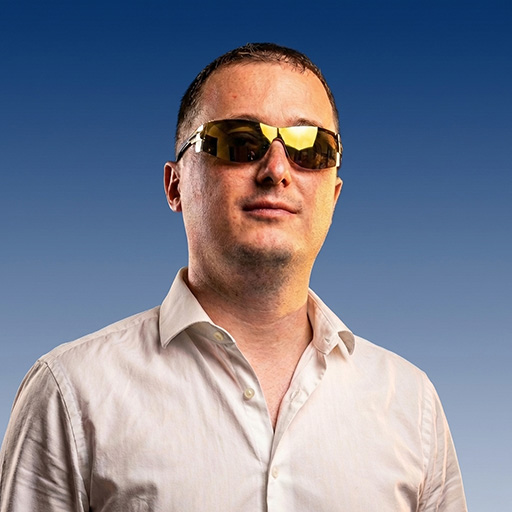
Stas Rysin is the Lead Frontend Developer at Pharos Production. His work covers the design system, reader interfaces and administration workflows of a professional learning platform for aesthetic medicine.