
Founder & engineering leadership
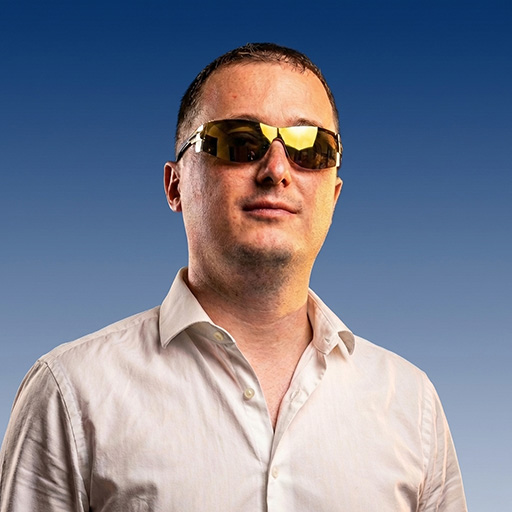
Dmytro Nasyrov
Founder and CTO Pharos Production
Founder of Pharos Production, PhD in Artificial Intelligence and lecturer at Igor Sikorsky Kyiv Polytechnic Institute.
About
Dmytro Nasyrov is the founder and CTO of Pharos Production, a software development and AI engineering company since 2013. With 23 years of engineering experience and a PhD in Artificial Intelligence, he leads engineering culture at Pharos and lectures at Igor Sikorsky Kyiv Polytechnic Institute.
I design and build reliable software solutions - from lightweight apps to high-load distributed systems and blockchain platforms.
PhD in Artificial Intelligence, MSc in Computer Science (with honors), MSc in Electronics & Precision Mechanics.
Education and credentials
- PhD in Artificial Intelligence
- Lecturer, Igor Sikorsky Kyiv Polytechnic Institute
- Alumnus, Igor Sikorsky Kyiv Polytechnic Institute
Areas of expertise
- Artificial Intelligence - LLM integration, RAG, agents, ML platforms
- Blockchain protocols - DeFi, NFT, smart contracts, dApps
- FinTech platforms - payments, compliance, RegTech
- Custom software development - web, mobile, enterprise
- DevOps and cloud architecture
- Engineering leadership - strategy, technical due diligence
Career timeline
-
Founder and CTO, Pharos Production
Software development and AI engineering. 90+ engineers, 110+ apps for 200+ clients across 28 industries. Aligned with ISO 27001, SOC 2, HIPAA, PCI DSS and GDPR frameworks.
-
Lecturer, Igor Sikorsky Kyiv Polytechnic Institute
Teaching engineering at Ukraine's leading technical university.
Ideas from practice
Articles by Dmytro Nasyrov

CRA Severe Incident Classification
The Cyber Resilience Act never defines severe as a standalone term. The threshold sits in Article 14(5), narrowing the general incident definition to sensitive or important data or functions, or to malicious code, while Article 3(42) sets a separate evidentiary bar for actively exploited that a high severity score alone does not meet.

GPAI Model Obligations
What a general-purpose AI model provider owes regulators under Annex XI versus downstream integrators under Annex XII, where the open-source carve-out stops and why GPAI penalties sit in Article 101, not Article 99.

Verification of Payee Implementation
Verification of Payee is two jobs in one build, and the scheme treats them very differently. The requesting side is a specified round trip with a five second envelope and a discard rule. The responding side is a specified message shape wrapped around a decision the scheme declines to make, in a guidance document that says it is not part of the Rulebook and that the responder is free to ignore. This walks the message lifecycle position by position, states each one twice and closes each one on the contract both sides owe.

RWA Compliance Controls: Mapping Regulations to Smart Contracts
RWA compliance controls mapped duty by duty to the specific smart-contract mechanism that enforces it, from ONCHAINID identity registries and jurisdiction gates to Rule 144 lockups, investor caps, sanctions screening and forced transfer, plus the MiFID II vs MiCA boundary that decides which EU rulebook applies.

AI Act High Risk Classification
How to classify an AI system as high-risk under Article 6 and Annex III of the EU AI Act after the Digital Omnibus, with the new 1a to 1c carve-outs, a decision tree and worked examples.

LLM Observability Cost
A real LLM observability cost model built from verified vendor pricing retrieved 2026-08-08, showing why Langfuse, LangSmith, Braintrust and Arize cannot be compared on list price alone and how the OpenTelemetry GenAI conventions' Development status quietly breaks naive cost attribution.
Last updated: