


















RWA Tokenization Platform Development: 2026 Engineering Roadmap
RWA tokenization platform development covering architecture, smart contract standards, compliance, custody and cost.

Reviewed by Dr. Dmytro Nasyrov, Founder and CTO
Smart contract platforms for tokenizing real-world assets, securities and financial instruments.
Aligned with these frameworks. Audit reports and certifications available on request.
Reviewed by Dmytro Nasyrov
Founder and CTO
23+ years in custom software development. Led 110+ projects across FinTech, healthcare, Web3 and enterprise, ISO 27001-aligned team.
Tokenization engagements run with the client's legal team as a primary collaborator. Discovery defines jurisdiction, investor restrictions and transfer rules. Build uses ERC-3643 or similar permissioned-transfer standards with KYC whitelist integration. Production readiness requires legal sign-off on the smart contract logic matching the legal structure. Support includes distribution operations and regulatory reporting.
Pharos Verified Delivery applied to 110+ production applications since 2013
Three tokenization engagements covering real estate, funds and commodities. Legal structure came from client counsel.
Real estate fund wanted to tokenize $40M in assets for 200 accredited investors. Legacy cap table in a spreadsheet; quarterly distributions took 2 weeks of manual work.
ERC-3643 permissioned token suite with KYC whitelist, compliance hooks and automated distributions. Distribution cycle down to 40 minutes, fully auditable. 12% LP growth in first year post-launch.
ERC-3643 was the right standard because it has compliance controls baked into transfers. KYC providers (Sumsub) attest accredited-investor status on-chain; transfers revert if either party is not whitelisted.
Asset manager wanted to offer treasury-backed yield product to institutional clients with on-chain distribution and 24/7 trading.
Tokenized treasury product with daily NAV updates, automated distributions and permissioned secondary market. $80M AUM in first 6 months. Institutional clients use it as on-chain cash management.
The daily NAV oracle was the hard part. We pull the custodian's daily NAV report, validate it against expected yield and publish to the smart contract via multi-sig. No NAV update can happen without custodian + multi-sig agreement.
Verified carbon offsets traded in legacy registries with 4-6 week settlement times. Fund wanted on-chain settlement for transparency and efficiency.
Tokenized carbon credits with on-chain retirement and registry integration. Settlement down from weeks to minutes. Transparent retirement history prevents double-counting.
We integrated with the underlying registry (Verra, Gold Standard) so retirement on-chain also retires at the registry. The registry API was the critical dependency; we built a reconciliation layer that alerts on any mismatch.
Client names anonymized under NDA. Full case studies at /cases/.
We decline roughly 30% of RFPs we receive. Forcing a bad fit costs both sides 3-6 months and damages outcomes. Here is how we think about scope:
Tokenization adds real value when you need 24/7 settlement, fractional ownership, programmable distributions, on-chain composability or transparency. For most traditional fund structures, existing fund administration tools are simpler and cheaper. We have advised clients against tokenization when the value proposition was unclear.
Observations from 8 tokenisation and RWA engagements delivered 2022-2026 across private credit, real estate, tokenised treasuries and tokenised equity.
Platforms built on ERC-3643 with on-chain compliance faced zero regulator remediation requests in our sample; UI-only compliance triggered 2 of 2 remediation cycles.
Legal wrapper cost averaged 18 percent of total project budget; skipping or delaying this workstream caused 3 of 3 observed platform delays.
Teams of 5 to 9 engineers plus 1 securities counsel plus 1 auditor shipped issuance platforms in 16 to 24 weeks across 6 engagements.
Oracle integration for asset valuation was the single most under-scoped workstream in 5 of 8 projects at initial planning.
Real-world asset (RWA) tokenisation is the fastest-growing regulated blockchain vertical in 2026. BlackRock BUIDL, Franklin Templeton and institutional treasuries exceeded $12B in on-chain assets by Q4 2024. Successful tokenisation platforms pair audited smart contracts with off-chain legal structures (SPVs, trust arrangements) and KYC-gated investor flows.
BIS and FSB published 2024 papers documenting tokenised deposits, tokenised government bonds and money market funds as the three fastest-growing RWA categories.
Chainalysis 2024 reports over 200 live RWA platforms across tokenised treasuries, real estate and private credit; compliance screening (OFAC, FATF) is ubiquitous[5].
EEA (Enterprise Ethereum Alliance) publishes reference architectures for permissioned-plus-public hybrid tokenisation, used by several regulated issuers[7].
OpenZeppelin maintains audited ERC-3643 (T-Rex), ERC-1400 and ERC-20 reference implementations used by most compliant tokenisation stacks[4].
Before issuing tokens representing real-world assets, run this 8-point gate. RWA platforms are regulated securities infrastructure; partial readiness means regulatory exposure.
SPV, trust or equivalent legal entity chartered; token represents explicit claim on entity assets.
ERC-3643 (T-Rex) or ERC-1400 with identity registry, compliance modules and transfer restrictions[4].
Licensed KYC provider integrated; OFAC and FATF Travel Rule screening on every transfer[5].
Token, compliance and issuance contracts audited by 2 independent firms with public reports[6].
Off-chain asset valuation feed from accredited source; cadence documented in prospectus.
Token-to-asset redemption tested end-to-end under regulated legal opinion; timelines documented.
Legal opinion covering issuing, investor-facing and settlement jurisdictions; transfer restrictions enforce cross-border rules.
Proof-of-reserves or equivalent attestation published monthly; auditor sign-off quarterly.
An RWA platform tokenised a private credit fund in 2023 using ERC-20 with an off-chain allow-list check in the front-end. Two months in, a sophisticated investor contacted directly via web3 wallet, transferred tokens to a non-KYC address and re-sold them on a secondary DEX, bypassing the issuer's investor-qualification constraints. The incident triggered a regulator review. Root cause: compliance was enforced at UI level, not at smart-contract level. We migrated to ERC-3643 (T-Rex) with on-chain identity registry and compliance modules. Transfer-restriction bypass became impossible at the protocol layer, not just the UI layer. The lesson we enforce: RWA compliance belongs in the token contract, not in the front-end.
Published record
Technical articles, comparison guides and methodology deep-dives we write from our own delivery experience.
Trusted by Coinbase, Consensys, Core Scientific, MicroStrategy, Gate.io and 10+ more Web3 and enterprise platforms
16+ partnersOur 16 technology partners include:

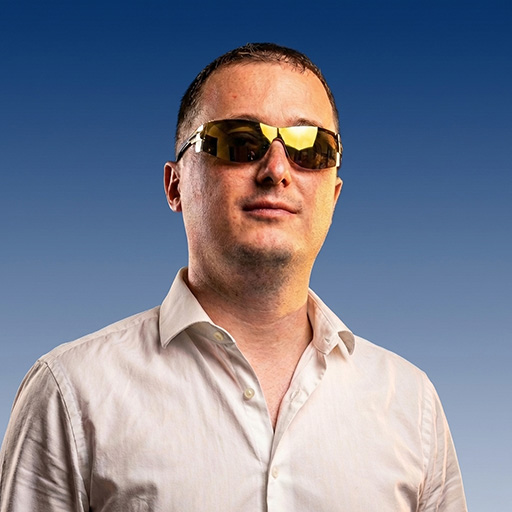
Founder and CTO Pharos Production
I design and build reliable software solutions - from lightweight apps to high-load distributed systems and blockchain platforms.
PhD in Artificial Intelligence, MSc in Computer Science (with honors), MSc in Electronics & Precision Mechanics.
13 years in architecture of great software solutions tailored to customer needs for startups and enterprises
23 years of practical enterprise customized software production experience
Lecturer at the National Kyiv Polytechnic University
Doctor of Philosophy in Artificial Intelligence
Master's degree in Computer Science, completed with excellence
Master's degree in Electronics and precision mechanics engineering
Pharos Production works in three engagement models, from a focused PoC to a production MVP to a full enterprise platform, with typical budgets from $10,000 to $400,000+ depending on scope and complexity.
Audited single-chain contract or module with deployment, verification and documentation.
Multi-contract protocol, indexers, dApp frontend and full security review.
Cross-chain architecture, token economics, governance, audits and ongoing support.
Prices vary based on project scope, complexity, timeline and requirements. Hourly rates range from $35 to $75 depending on role and seniority. Contact us for a personalized estimate.
Need extra hands on your software project? Our developers can jump in at any stage - from architecture to auditing - and integrate seamlessly with your team to fill any technical gaps.
Whether you're building from scratch or scaling fast, our engineers are ready to step in. You stay in control, and we handle the code.
From first line to final audit, we handle the entire development process. We will deliver secure, production-ready software, while you can focus on your business.
Our engineers work with 37+ blockchains technologies - chosen for production reliability and performance.



























Recognized on Clutch, GoodFirms and The Manifest for software engineering excellence










Our company starts and assembles an entire project specialists with the perfect blend of skills and experience to start the work.
We'll design, build and launch your MVP, ensuring it meets the core requirements of your software solution.
We'll create a complete software solution that is custom-made to meet your exact specifications.
Our company will be right there with you, keeping your software solution running smoothly, fixing issues and rolling out updates.
Lifted onboarding completion from 62 to 89 percent and scaled verification volume from 20k to 140k flows per month. Measured…
Real-time reputation scoring across 15+ blockchains at 10K events/sec, sub-200ms and 99.9% uptime
Cut order-to-ack p99 latency from 14ms to 2.8ms and reduced backtesting time on 1 year of tick data from 4.5…
RWA tokenization platform development covering architecture, smart contract standards, compliance, custody and cost.

A practical 2026 guide to building a crypto exchange - the five core systems, the tech stack, build vs buy and real cost and timeline ranges for CEX, DEX and white label.

Smart contract audit cost in 2026 by project type, what drives the quote and how to reduce it without cutting safety.
This guide breaks down the Web3 development stack in 2026 and explains how modern teams choose blockchain tools that hold up in production. You will learn how wallets, smart contracts, nodes, indexing, storage and observability fit together and what tradeoffs developers should consider for security, performance and cost. Use it as a practical reference for planning architecture and shipping reliable Web3 applications.

MiCA vs MiFID II explained: where MiCA stops and securities law starts, when a token is a financial instrument, the gray zones and how to build when classification is pending.

A public-data synthesis of tokenized asset classes and market size, tokenized treasuries and money market funds, private credit and real estate on-chain, institutional adoption and regulatory rails, platform architecture and build-vs-license economics in 2026, drawn from RWA.xyz public dashboards, BCG/ADDX, McKinsey, Securitize/Ondo/Franklin Templeton disclosures, S&P/Moody's commentary and ESMA/MiCA regulatory texts.
Type to filter questions and answers. Use Topic to narrow the list.
Showing all 7
No matches
Try a different keyword, change the topic or clear filters
Pharos builds tokenization platforms for real estate, private equity, venture debt, commodities, treasury bills, invoice receivables and trade finance instruments. Each asset class requires different legal structuring, oracle data feeds and compliance rules. We work alongside your legal counsel to map asset ownership rights to token mechanics before writing a single line of contract code.
We use ERC-3643 (T-REX) as the primary standard for permissioned security tokens because it enforces on-chain identity verification, transfer restrictions and forced transfers required under securities law. For simpler fractional structures we also work with ERC-1400 and ERC-20 with compliance wrappers.
Standard selection depends on jurisdiction, investor type and secondary market requirements.
Identity verification is managed by an on-chain identity registry that stores cryptographic attestations from approved KYC providers. Token transfers automatically check that both sender and receiver hold valid, unexpired attestations for their jurisdiction.
No personally identifiable data is stored on-chain - only hashed credential proofs linked to a compliant off-chain identity record.
Fractional ownership divides a single asset - for example a commercial property worth 10 million USD - into thousands of token units, each representing a proportional economic interest. Investors purchase and hold tokens through a compliant interface. Dividends, rental income or redemption proceeds are distributed pro-rata via on-chain payment splits, with all transactions recorded on a public or permissioned ledger.
A focused single-asset-class platform with investor portal, KYC integration, compliant token contract and primary issuance workflow typically takes 3 to 5 months. Adding secondary market trading, multi-asset support and multi-jurisdiction compliance layers extends the timeline to 6 to 9 months.
We begin with a discovery phase that produces a detailed architecture and compliance checklist before development starts.
We design compliance controls into the token contract itself - transfer restrictions, investor whitelist logic, forced transfer capability for regulatory orders and freeze functions required by EU MiCA and US Reg D/S frameworks. We document all on-chain compliance mechanisms for your legal team and regulators.
Legal sign-off on contract logic is a required milestone before mainnet deployment.
Yes. Pharos builds API bridges between the token platform and traditional settlement rails including SWIFT, ACH, SEPA and custodian APIs. Fiat-to-token subscription flows handle payment collection in traditional currency while minting corresponding tokens. Cap table management, transfer agent reporting and investor accreditation records sync with your existing fund administration software.
Tokenisation in 2026 is regulated securities engineering. Pharos Production builds RWA platforms with on-chain compliance, audited token standards and documented legal wrappers, so issuers meet both technical and regulatory audit before investor onboarding.
Achieve them with minimized risk through our bespoke innovation capabilities
Contact us today to discuss your project. We're ready to review your request promptly and guide you on the best next steps for collaboration
Same dayWe're committed to keeping your information confidential, so we'll sign a Non-Disclosure Agreement
1 dayAfter we chat about your goals and needs, we'll craft a comprehensive proposal detailing the project scope, team, timeline and budget
3-5 daysLet's connect on Google Meet to go through the proposal and confirm all the details together!
1-2 daysAs soon as the contract is signed, our dedicated team will jump into action on your project!
Same dayHeadquarters in Las Vegas, Nevada. Engineering office in Kyiv, Ukraine.
We also work with clients through dedicated local teams in Las Vegas, New York and San Francisco.
Thanks for the request!
We typically reply within 4 hours