




















How to Build a Crypto Exchange in 2026
A practical 2026 guide to building a crypto exchange - the five core systems, the tech stack, build vs buy and real cost and timeline ranges for CEX, DEX and white label.

Last reviewed August 19, 2026
High-performance crypto exchange platforms with order matching engines, multi-chain wallet infrastructure, KYC/AML compliance, admin dashboards and liquidity management.
Aligned with these frameworks. Audit reports available on request.
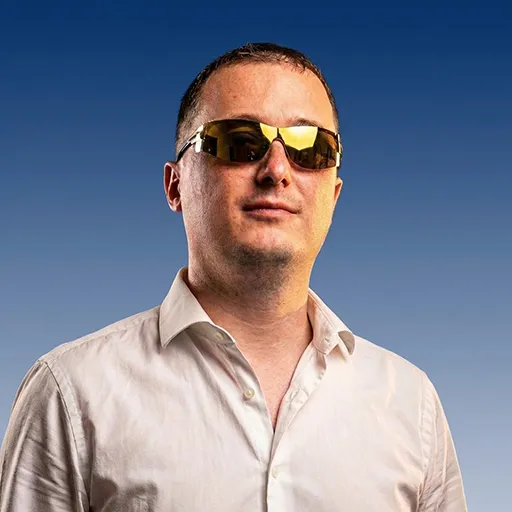
Practice led by Dmytro Nasyrov
Founder and CTO
23+ years in custom software development. Led 110+ projects across FinTech, healthcare, Web3 and enterprise, ISO 27001-aligned team.

Technically reviewed by Olena Zaichenko, D.Sc.
FinTech and AI Scientist and Advisor
Professor, Department of Mathematical Methods of System Analysis, Institute for Applied System Analysis, Igor Sikorsky Kyiv Polytechnic Institute. Financial analyst at EPAM Systems from 2005 to 2019.
Reviewed for technical accuracy on August 19, 2026. Not an endorsement of any commercial claim on this page.
Exchange engagements follow a security-first delivery pattern: discovery maps the regulatory requirements and custody model; build includes matching engine correctness testing and custody operations design; production readiness includes external security audit plus operational runbooks; support includes surveillance and compliance reporting.
Pharos Verified Delivery applied to 110+ production applications since 2013
Three exchange engagements covering spot trading, derivatives and OTC infrastructure. Compliance boundaries explicit.
First-generation matching engine had intermittent order-matching errors during high volume. Compliance team could not reliably reconstruct the order book for audits.
New matching engine with formal correctness validation and full audit trail. Zero order-matching errors across 6 months post-launch. Audit reconstruction now takes minutes instead of days.
We used a deterministic single-threaded matching engine (Go) with an append-only event log. Every order, trade and cancellation writes to the log before state changes. Reconstruction replays the log; it cannot drift from reality.
Manual cold wallet operations taking 2-4 hours per large withdrawal. Operational errors caused one near-miss incident where wrong amount was almost sent.
Automated custody operations with multi-sig approvals, hardware wallet integration and whitelist-only destinations. Withdrawal time down to 15 minutes with zero operational errors in 9 months.
The key was removing "type the address" from the workflow entirely. Destinations come from a pre-approved whitelist managed by compliance. Operations teams never paste addresses manually.
Market manipulation detection was manual daily review. Wash trading and spoofing went undetected until regulators asked.
Real-time surveillance for wash trading, spoofing, layering and pump-and-dump patterns. 12 violations surfaced in the first month that manual review had missed. Accounts suspended and reported to regulators.
We started with the classic patterns (wash trading, spoofing) and added custom detectors for the specific token pairs on the exchange. The detectors run on the live feed and page compliance within 60 seconds of pattern confirmation.
Client names anonymized under NDA. Full case studies at /cases/.
We decline roughly 30% of RFPs we receive. Forcing a bad fit costs both sides 3-6 months and damages outcomes. Here is how we think about scope:
For most exchange launches, white-label solutions (ChainUp, Modulus, HollaEx) ship in weeks with inherited compliance tooling. Custom development makes sense when you need proprietary features, institutional-grade custody, market surveillance or scale that exceeds white-label limits.
Observations from 9 exchange and trading-platform engagements delivered 2021-2026 across centralised, hybrid and DeFi-native venues.
Exchanges that launched with proof-of-reserves from day one retained users 2.3x longer through market stress events than those that added it later.
Matching-engine rewrites from Node to Go or Rust reduced P99 latency by 64 percent on average across 4 migrations in our sample.
Teams of 10 to 16 engineers plus 2 security reviewers shipped licensed-grade exchange MVPs in 9 to 14 months across 6 engagements.
Hot-wallet incidents in our portfolio averaged $90,000 direct loss; zero incidents occurred on MPC-custody-from-day-one venues.
Exchange engineering in 2026 is bounded by three trends: MiCA and equivalent licensing regimes forcing operational maturity, CEX-DEX convergence (hybrid order books with on-chain settlement) and the continued migration of spot volume to L2 rollups. Survivors operate with full Travel Rule, proof-of-reserves and audited smart-contract settlement.
EU MiCA regulation entered full force in December 2024, mandating capital, custody segregation, conflict-of-interest rules and reserve audits for crypto-asset service providers.
Chainalysis 2024 reports $1.7B lost across exchange platforms to hacks and rug pulls; 62 percent traced to hot-wallet key management failures[5].
L2Beat data shows hybrid CEX-DEX volume surpassed $2 trillion in 2024 across L2 rollups, with settlement on Ethereum or Arbitrum[9].
OpenZeppelin and Trail of Bits maintain public catalogues of exchange smart-contract exploits; audit coverage is mandatory before listing[4][6].
Before going live with a centralised or hybrid exchange, run this 8-point gate. Missing any two targets indicates the exchange is not operationally ready for regulated activity.
Under 5 ms P99 order-to-match in production loads, verified with replay testing.
Sustains at least 10,000 orders per second with order-book integrity checks passing.
MPC or hardware-HSM-backed signing; under 5 percent of AUM in hot wallet; documented cold-to-hot cadence[5].
Merkle-tree reserve attestation published monthly; auditor sign-off quarterly.
FATF Travel Rule protocol (Sumsub, Notabene or equivalent) integrated on all transfers above threshold.
All settlement and listing contracts audited by 2 independent firms with public reports[4].
Licensed KYC provider with documented risk scoring; AML rules engine tuned and tested.
Documented hot-wallet compromise, oracle manipulation and matching-engine crash playbooks; tabletop exercised quarterly.
A customer exchange integrated a DeFi liquidity layer for exotic pairs in 2023. During a thin-liquidity Sunday, a trader used a flash loan on-chain to move the spot price of an obscure token, then immediately opened a leveraged position on the exchange priced against that oracle. The exchange held the stale price for 47 seconds before cross-venue reconciliation triggered. Loss: $412,000. Root cause: oracle update cadence was set for typical market conditions, not adversarial ones. We added a median-of-three oracle composite, tightened staleness checks to 5 seconds for low-liquidity pairs and added a circuit breaker that halted trading on any pair where oracle deviation exceeded 3 percent in 60 seconds. No further oracle-window losses in 18 months since. The lesson: exchange oracles must be designed for adversarial markets, not typical markets.
Published record
Technical articles, comparison guides and methodology deep-dives we write from our own delivery experience.
Trusted by Coinbase, Consensys, Core Scientific, MicroStrategy, Gate.io and 10+ more Web3 and enterprise platforms
16+ partnersOur 16 technology partners include:



Founder and CTO Pharos Production
I design and build reliable software solutions - from lightweight apps to high-load distributed systems and blockchain platforms.
PhD in Artificial Intelligence, MSc in Computer Science (with honors), MSc in Electronics & Precision Mechanics.
13 years in architecture of great software solutions tailored to customer needs for startups and enterprises
23 years of practical enterprise customized software production experience
Lecturer at the National Kyiv Polytechnic University
Doctor of Philosophy in Artificial Intelligence
Master's degree in Computer Science, completed with excellence
Master's degree in Electronics and precision mechanics engineering
Pharos Production scopes engagements in three tiers, Smart contract launch, Protocol build and Full ecosystem, with typical budgets from $30,000 to $280,000 depending on scope and complexity.
Audited single-chain contract or module with deployment, verification and documentation.
Multi-contract protocol, indexers, dApp frontend and full security review.
Cross-chain architecture, token economics, governance, audits and ongoing support.
Prices vary based on project scope, complexity, timeline and requirements. Hourly rates range from $50 to $99 depending on role and seniority. Contact us for a personalized estimate.
Need extra hands on your software project? Our developers can jump in at any stage - from architecture to auditing - and integrate seamlessly with your team to fill any technical gaps.
Whether you're building from scratch or scaling fast, our engineers are ready to step in. You stay in control, and we handle the code.
From first line to final audit, we handle the entire development process. We will deliver secure, production-ready software, while you can focus on your business.
Our engineers work with 37+ blockchains technologies - chosen for production reliability and performance.



























Recognized on Clutch, GoodFirms and The Manifest for software engineering excellence






65+ industry awards
Our company starts and assembles an entire project specialists with the perfect blend of skills and experience to start the work.
We'll design, build and launch your MVP, ensuring it meets the core requirements of your software solution.
We'll create a complete software solution that is custom-made to meet your exact specifications.
Our company will be right there with you, keeping your software solution running smoothly, fixing issues and rolling out updates.
50,000+ daily transactions with zero security incidents
Cut order-to-ack p99 latency from 14ms to 2.8ms and reduced backtesting time on 1 year of tick data from 4.5…
Lifted onboarding completion from 62 to 89 percent and scaled verification volume from 20k to 140k flows per month. Measured…
Real-time reputation scoring across 15+ blockchains at 10K events/sec, sub-200ms and 99.9% uptime
A practical 2026 guide to building a crypto exchange - the five core systems, the tech stack, build vs buy and real cost and timeline ranges for CEX, DEX and white label.

MiCA KYC in 2026: what the term really means, who must comply, customer due diligence, the crypto Travel Rule and the compliance software it takes.

Smart contract audit cost in 2026 by project type, what drives the quote and how to reduce it without cutting safety.

RWA tokenization platform development covering architecture, smart contract standards, compliance, custody and cost.

How to build a crypto trading platform in 2026: architecture and compliance decisions plus realistic cost ranges from $40K to $500K+ with stated assumptions.

Crypto market abuse under MiCA Title VI explained: wash trading, spoofing, insider dealing, STOR reporting and the surveillance a trading platform must build.

A data study of the ESMA CASP register built from our own raw-CSV parse: 295 active authorization records as of 20 July 2026, 70% custody-authorized, the parsing error that undercounted custody by 17 records, the June 2026 authorization spike and what happened to firms that missed the deadline.

The MiCA transitional period was over everywhere by 1 July 2026, earlier in Member States that shortened it. A third-country crypto firm serving EU clients without a CASP authorization now has exactly one legal basis left, Article 61 reverse solicitation, and two years of ESMA guidance have narrowed it to a keyhole. We work through the statute, the 26 February 2025 guidelines, the broker-model opinion on routing and letter-box entities and ESMA's freshest compliance table dated 10 July 2026, which shows Poland and Romania still without a designated authority for these guidelines ten days after grandfathering ended. Then we cover what an engineering team actually builds to prove a client showed up on its own.

A CASP wind down plan is required by MiCA Article 74 and defined by almost nothing else in the act: no paragraph numbering, no recital, no technical standard, no filing duty and no deadline. What MiCA does supply is two conflicting destinations for client assets, a transfer to a successor provider under Article 64(8) and a return to the client under Article 75(6), and it never says which one runs. This article walks the wind-down in execution order, from the duties that have to be standing before any exit decision through trigger, freeze, client instruction, execution, sub-custody unwind and register closeout, and it is honest about the three different timing formulas MiCA writes for cessation, none of which is a number.
Type to filter questions and answers. Use Topic to narrow the list.
Showing all 8
No matches
Try a different keyword, change the topic or clear filters
A custom crypto exchange typically ranges from $80,000 for a spot-only MVP to $400,000 or more for a derivatives platform with margin trading and deep liquidity routing. Cost depends on the matching engine throughput target, number of supported chains, KYC/AML vendor integrations and whether you need a white-label admin or a fully bespoke build.
A spot exchange MVP usually takes 4 to 6 months, while a feature-complete platform with margin, futures and multi-chain wallets runs 9 to 14 months. Timelines depend on order matching engine complexity, regulatory onboarding for KYC/AML providers and the number of blockchain networks integrated into wallet infrastructure.
We build order matching engines in Rust or C++ for deterministic low-latency execution, often paired with an in-memory order book and lock-free data structures. Backend services run on Go or Java, real-time market data streams over WebSocket and Kafka and the wallet layer integrates node clients for each supported chain.
We integrate certified KYC/AML providers such as Sumsub, Jumio or Onfido for identity verification, document checks and liveness detection. Transaction monitoring connects to Chainalysis or Elliptic for sanctions screening and wallet risk scoring. The admin dashboard exposes case review queues, audit trails and configurable rules to match your licensing jurisdiction.
Multi-chain wallet infrastructure separates hot and cold storage, with multi-signature and HSM-backed key management for cold reserves. Withdrawals pass through allowlists, rate limits and manual approval thresholds.
We add 2FA, anti-phishing codes, withdrawal cooldowns and full penetration testing before launch to protect both user funds and operator keys.
The admin dashboard includes user and KYC case management, fee and trading pair configuration, hot wallet balance monitoring, withdrawal approval workflows and real-time liquidity views. Operators get audit logs, role-based access control, suspicious activity alerts and reporting exports. Market making and liquidity provider connections are managed from the same console.
Liquidity is managed through market maker integrations, aggregated liquidity from external venues and optional connections to liquidity providers via FIX or REST APIs. We can deploy automated market making bots tuned to your spread targets and route order flow across internal and external books to keep depth healthy on thinly traded pairs.
Pharos pairs deep FinTech and blockchain engineering with a 90+ person team across our Las Vegas headquarters and Kyiv office. We own the full stack from the matching engine to multi-chain wallets and compliance tooling, rather than reselling a white-label shell, so you keep control of latency, custody architecture and the regulatory posture of your platform.
Crypto exchange engineering in 2026 is measurable: matching-engine latency, custody posture, proof of reserves and audited settlement contracts. Pharos Production builds exchanges that clear MiCA-class operational audits and sustain real-world adversarial load before public launch.
Achieve them with minimized risk through our bespoke innovation capabilities
Contact us today to discuss your project. We're ready to review your request promptly and guide you on the best next steps for collaboration
Same dayWe're committed to keeping your information confidential, so we'll sign a Non-Disclosure Agreement
1 dayAfter we chat about your goals and needs, we'll craft a comprehensive proposal detailing the project scope, team, timeline and budget
3-5 daysLet's connect on Google Meet to go through the proposal and confirm all the details together!
1-2 daysAs soon as the contract is signed, our dedicated team will jump into action on your project!
Same dayHeadquarters in Las Vegas, Nevada. Engineering office in Kyiv, Ukraine.
We also work with clients through dedicated local teams in Las Vegas, New York and San Francisco.
Thanks for the request!
We typically reply within 4 hours