

































Mobile App Development Cost in 2026: Pricing by Complexity and Platform
Mobile app development cost in 2026: native vs cross-platform pricing, cost by app complexity, what drives the budget and how to estimate yours.

Reviewed by Dr. Dmytro Nasyrov, Founder and CTO • Last reviewed August 20, 2026
Pharos Production provides White Label Software Development services that let agencies, consultancies and SaaS companies deliver custom software under their own brand.
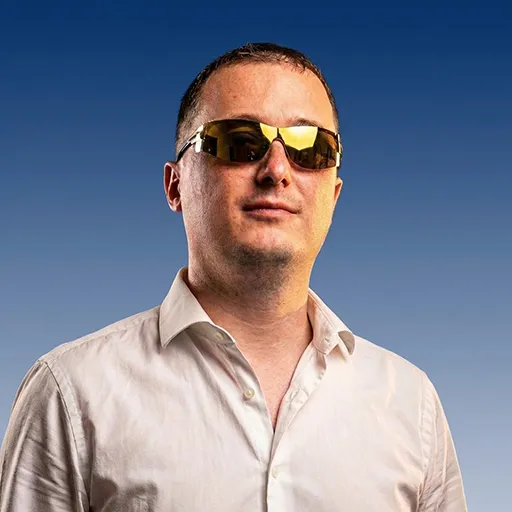
Practice led by Dmytro Nasyrov
Founder and CTO
23+ years in custom software development. Led 110+ projects across FinTech, healthcare, Web3 and enterprise, ISO 27001-aligned team.
Three engagement models for the same kind of agency partnership. The right choice depends on whether the agency wants the Pharos team visible to the end client.
| Factor | White-label | Co-branded delivery |
|---|---|---|
| Visibility | Pharos invisible | Pharos named on the deal |
| NDA scope | Strict; no case studies | Standard NDA; case studies allowed |
| Pricing | From $7,500/engineer/month | From $9,500/engineer/month |
| Best fit | Agency capacity buyout | Specialized partnership with shared brand |
| Communication | Routes through agency | Direct or routed (your choice) |
Pharos Verified Delivery applied to white-label means everything passes through the agency: branding, communication, status updates, demos and final delivery. The Pharos team operates as a silent extension of the agency, never as a parallel vendor.
Pharos Verified Delivery applied to 110+ production applications since 2013
White-label engagements only work when the agency partner can resell with confidence. Each engagement below ran for at least 12 months with active resale.
Agency winning 6-figure projects but losing them to capacity constraints; 4-month lead time on net-new work.
Stood up a 6-engineer white-label team running under the agency brand. Lead time dropped to 3 weeks; agency revenue up 38% in 2 quarters.
The agency interviewed every engineer. The end clients never knew Pharos existed. That is the entire point of white-label and we treat it seriously.
Agency selling marketing tech but unable to deliver custom data engineering for enterprise clients.
Pharos delivered data engineering work under the agency brand on 5 enterprise engagements. Win rate on enterprise tier rose from 22% to 51%.
White-label gave the agency a capability they could sell without hiring. We made sure the work was indistinguishable from in-house.
Agency inherited a half-built project from a previous vendor with 14 weeks of debt and a frustrated client.
Quietly shipped the rescue under the agency brand within 9 weeks; client was never told the team had changed. Project delivered without losing the relationship.
White-label rescue work is high-trust. We do not get a logo, we do not get a case study, but the agency keeps the client and that is the deal.
Client names anonymized under NDA. Full case studies at /cases/.
White-label only works when the agency wants a silent partner. When the agency wants visibility or co-marketing, the engagement model is different and we will say so.
When the agency wants to bring Pharos into the open, a co-branded delivery engagement is cleaner. When the agency wants integration, a staff-augmentation model with named engineers is the right shape. White-label is the silent option, and we treat it as such.
Pharos white-label portfolio
Observations from 8 white-label engagements 2020-2026 across FinTech, healthcare SaaS, HR tech and B2B enterprise portfolios.
6 of 8 platforms we inherited had single-schema multi-tenancy. Migration to schema-per-tenant or RLS took 4-10 weeks and prevented at least 2 documented leak incidents per platform.[8]
Averaged 11 days on inherited systems. Self-serve pipelines compressed it to 4 hours median.
Per-brand compliance scoping was the #1 sales blocker on 5 of 8 platforms. Documenting which frameworks apply per tenant unblocked 3 enterprise deals in quarter two.[7]
Observability per tenant was missing on 7 of 8 platforms. Resellers who got per-brand dashboards renewed at 1.9x the rate of those who did not.
White-label software outlook 2026-2027 is shaped by the shift from cosmetic rebrand wrappers toward true multi-tenant platforms with per-brand compliance posture and tenant-scoped observability.
Data, runtime and billing layer isolation replaced shared-instance white-labels after the 2023-2024 cross-tenant breach wave exposed shortcut architectures.[8]
Each reseller gets its own SOC 2 or ISO 27001 scope if needed; this became a contract gate for enterprise resellers.[7]
Logo, color, typography and email template pipelines compressed brand-onboarding time from weeks to hours.[3]
Per-brand dashboards, SLOs and incident reports replaced blended platform metrics because resellers demand visibility into their customers.[4]
Evaluate a white-label platform at the 90-day mark using this 8-point check before you onboard resellers past the pilot tier.
Separate schemas or databases, keys, storage and egress per brand.
Logos, colors, typography and email templates applied end-to-end within 2 hours of new tenant creation.
Dashboards visible to the reseller without leaking cross-tenant data.[4]
Which SOC 2, ISO 27001 or regional frameworks apply, documented per tenant.
Per-tenant usage and invoice trails accurate to the cent.
Which party owns L1 and L2 tickets per brand, with runbook.
Rolling vs. scheduled per tenant, with rollback pathway.
Reseller can export their tenant data in a documented format.
Production post-mortem
Seven resellers, 31 brands, 280k end-users. The original platform shared a single database with tenant_id discriminators on every query. Month 6 a schema migration introduced a query that forgot the tenant_id predicate and leaked 14 minutes of cross-tenant data before our canary caught it. We refactored over 8 weeks to schema-per-tenant with strict ORM-enforced scoping, added row-level-security as defense in depth and moved per-brand secrets to separate KMS keys.[8]
We also shipped per-tenant canary tests that simulate a cross-tenant query and alert if it returns a row. The rule every white-label now ships with: if tenant isolation is not encoded at multiple layers (schema, RLS, secrets, networking), it is not isolated.
Published record
Technical articles, comparison guides and methodology deep-dives we write from our own delivery experience.
Trusted by Coinbase, Consensys, Core Scientific, MicroStrategy, Gate.io and 10+ more Web3 and enterprise platforms
16+ partnersOur 16 technology partners include:
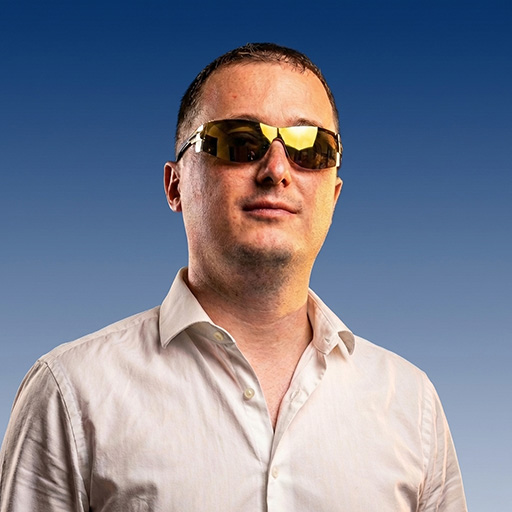
Founder and CTO Pharos Production
I design and build reliable software solutions - from lightweight apps to high-load distributed systems and blockchain platforms.
PhD in Artificial Intelligence, MSc in Computer Science (with honors), MSc in Electronics & Precision Mechanics.
13 years in architecture of great software solutions tailored to customer needs for startups and enterprises
23 years of practical enterprise customized software production experience
Lecturer at the National Kyiv Polytechnic University
Doctor of Philosophy in Artificial Intelligence
Master's degree in Computer Science, completed with excellence
Master's degree in Electronics and precision mechanics engineering
Pharos Production scopes engagements in three tiers, Proof of concept, MVP build and Enterprise platform, with typical budgets from $10,000 to $500,000+ depending on scope and complexity.
Focused validation of your riskiest technical assumption with a working spike, a clean codebase and a clear build-or-pivot recommendation.
Production-ready first version with core user flows, real backend, authentication and the integrations you need to onboard first paying users.
Full-scale build covering architecture, DevOps, QA, security and long-term evolution across teams and regions.
Prices vary based on project scope, complexity, timeline and requirements. Hourly rates range from $50 to $99 depending on role and seniority. Contact us for a personalized estimate.
Need extra hands on your software project? Our developers can jump in at any stage - from architecture to auditing - and integrate seamlessly with your team to fill any technical gaps.
Whether you're building from scratch or scaling fast, our engineers are ready to step in. You stay in control, and we handle the code.
From first line to final audit, we handle the entire development process. We will deliver secure, production-ready software, while you can focus on your business.
Our engineers work with 187+ technologies across blockchain, backend, frontend, mobile and DevOps - chosen for production reliability and performance.
Our engineers work with 187+ technologies across 10 categories: Frameworks, AI, Blockchains, DevOps, Clouds, Databases, Brokers, Tests, Programming, UI/UX.












































Recognized on Clutch, GoodFirms and The Manifest for software engineering excellence










65+ industry awards
Our company starts and assembles an entire project specialists with the perfect blend of skills and experience to start the work.
We'll design, build and launch your MVP, ensuring it meets the core requirements of your software solution.
We'll create a complete software solution that is custom-made to meet your exact specifications.
Our company will be right there with you, keeping your software solution running smoothly, fixing issues and rolling out updates.
Mobile app development cost in 2026: native vs cross-platform pricing, cost by app complexity, what drives the budget and how to estimate yours.

Complete SaaS development cost breakdown for 2026. MVP to enterprise tier pricing, hidden costs, cost reduction strategies and monthly operational expenses.

Quick Comparison: Custom AI vs Off-the-Shelf Factor Custom AI Off-the-Shelf Platforms Time to deploy 3-6 months 1-4 weeks Upfront cost $50K-$500K+ $500-$5,000/month TCO (3 years) Lower at scale Higher at scale Differentiation Full competitive moat Same tools as competitors Data ownership 100% yours Vendor-controlled Customization Unlimited Limited to vendor features Maintenance Your team or vendor […]
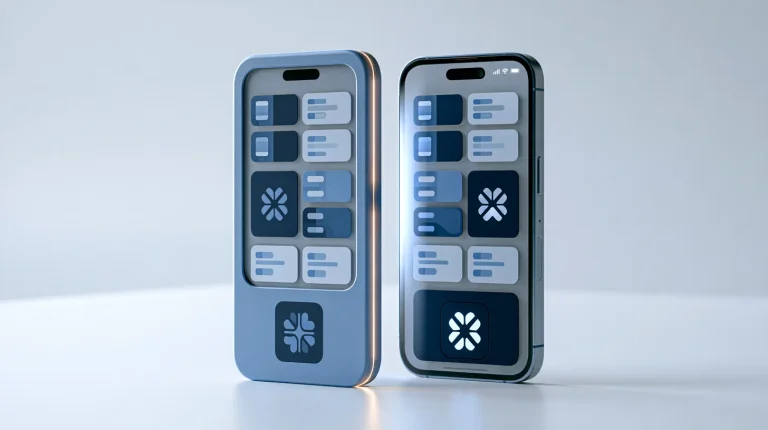
White label software development in 2026: agency resell, SaaS rebrand and custom-build models, white label vs custom vs off-the-shelf, IP and NDA terms, what gets white-labeled and cost by model.
Type to filter questions and answers. Use Topic to narrow the list.
Showing all 7
No matches
Try a different keyword, change the topic or clear filters
White label development means Pharos engineers build a fully functional product that you brand, sell and support as your own - with no Pharos attribution anywhere in the product. We deliver web platforms, mobile apps, AI-powered tools, SaaS dashboards, FinTech products and cloud infrastructure under your brand identity, following your design system and using your PM tools throughout.
We operate under a signed NDA before any work begins, which covers code authorship, team composition and the existence of the engagement itself. Communications run through your team's tools: Slack, Jira, GitHub or whichever system you use. Engineers are introduced using your preferred designation. Final deliverables carry no Pharos branding in code comments, package names or documentation.
Agencies that have won a project outside their technical capacity, software resellers building a product line and startups that want to maintain a small headcount while delivering enterprise-grade software are the primary users. FinTech companies building regulated products under tight timelines also use white label to access Pharos's compliance-aware development experience quickly.
Cost depends on product complexity, team size and timeline. A white label mobile app with backend API and admin dashboard typically runs 60,000 to 150,000 USD. A full SaaS platform with multi-tenant architecture, billing integration and AI features ranges from 150,000 to 400,000 USD. We provide a fixed-scope estimate after a discovery session so budget is defined before development begins.
Yes. Your project manager retains full task and priority control.
Pharos engineers join your Jira, Linear, Trello or Notion workspace on day one and follow your sprint cadence. We do not impose a parallel project structure. Status updates, sprint reviews and escalations happen inside your existing workflow so your client-facing team has full visibility without exposing the development partner.
Full IP ownership transfers to you on delivery. The engagement agreement assigns all code, designs, data models and documentation to your company in writing.
Under Ukrainian law, work by employees vests in the employer by law and passes to you through the contract, while work by individual contractors needs an explicit written assignment, which Pharos obtains. Pharos retains no rights or licenses. You can sell, license, modify or open-source the product without restriction and without informing Pharos.
Yes. Post-launch maintenance is available as a monthly retainer covering bug fixes, dependency updates, security patches and minor feature additions.
Maintenance teams are staffed from the same engineers who built the product wherever possible to minimize knowledge-transfer overhead. Retainer scope and SLA response times are defined in a separate maintenance agreement signed at project completion.
White-label software is not a theming problem, it is a multi-tenant platform problem with per-brand compliance, observability and data-isolation requirements that most teams underestimate until the first cross-tenant incident. Pharos ships white-label platforms with tenant isolation encoded at schema, RLS, secrets and networking layers, per-brand compliance scopes and tenant-scoped observability wired in at week one.[1]
Book a 30-minute white-label architecture call
Achieve them with minimized risk through our bespoke innovation capabilities
Contact us today to discuss your project. We're ready to review your request promptly and guide you on the best next steps for collaboration
Same dayWe're committed to keeping your information confidential, so we'll sign a Non-Disclosure Agreement
1 dayAfter we chat about your goals and needs, we'll craft a comprehensive proposal detailing the project scope, team, timeline and budget
3-5 daysLet's connect on Google Meet to go through the proposal and confirm all the details together!
1-2 daysAs soon as the contract is signed, our dedicated team will jump into action on your project!
Same dayHeadquarters in Las Vegas, Nevada. Engineering office in Kyiv, Ukraine.
We also work with clients through dedicated local teams in Las Vegas, New York and San Francisco.
Thanks for the request!
We typically reply within 24 hours