






































Digital Transformation ROI: How to Measure and Maximize Returns
Digital transformation ROI measurement guide. Frameworks, metrics, industry benchmarks and strategies to maximize returns from digital initiatives.

Reviewed by Dr. Dmytro Nasyrov, Founder and CTO • Last reviewed August 20, 2026
Pharos Production delivers Digital Transformation services that modernize your technology stack, automate manual processes and create new digital revenue streams.

Practice led by Dmytro Nasyrov
Founder and CTO
23+ years in custom software development. Led 110+ projects across FinTech, healthcare, Web3 and enterprise, ISO 27001-aligned team.
Transformation programs follow a multi-phase approach: assessment and target operating model (4-8 weeks), pilot program on one business unit or workflow (3-6 months), rollout and change management (6-18 months) and steady-state support. Pharos provides the engineering and architecture; client leadership owns change management with our advisory support.
Pharos Verified Delivery applied to 110+ production applications since 2013
Three multi-year transformation engagements with the specific calls that distinguished them from PowerPoint exercises.
Claims, underwriting and policy administration ran on separate green-screen systems. Customer service had 5 different tools open. Average policy change took 3-5 days.
Unified customer portal + integrated back office. Policy changes now processed in under 2 hours. Customer service team consolidated to one tool. NPS up from 32 to 67.
The engineering was the easy part - unified portal, API integration layer, ops dashboard. The hard part was retraining 180 claims processors and changing their incentive structure from "tickets handled" to "customer issues resolved." That took 14 months and 3 ugly meetings.
23 factory sites each running their own ERP and MES. Monthly reporting took 3 weeks of manual data consolidation. Production decisions were made on 3-week-old data.
Real-time data platform ingesting from all 23 sites. Daily reporting available by 9am. Production decisions based on yesterday's data, not last month's. 8% efficiency gain across all sites measured independently.
We built the data platform before touching the sites. The sites migrated one by one over 18 months, each with a 6-week onboarding. Site managers co-owned the rollout schedule - we worked around harvest seasons, union negotiations and tool calibration windows.
Citizen benefits applications required paper forms, in-person visits and 6-8 week processing times. Staff burnout high; citizen satisfaction low.
Digital-first benefits application with eligibility screening, document upload and status tracking. Processing time down to 6-9 days, in-person visits down 73%, citizen satisfaction up 31 points.
Government transformation looks different. We spent the first 6 weeks just mapping the 4 federal compliance frameworks the system had to satisfy, then designed the UX around those constraints. Starting from the compliance side and working toward UX is counterintuitive but it avoids rework.
Client names anonymized under NDA. Full case studies at /cases/.
Transformation programs fail ~70% of the time. Most of those failures are avoidable if you decline the wrong engagements up front.
Big transformation programs fail disproportionately. Smaller focused engineering engagements succeed disproportionately. When in doubt, we recommend starting with one measurable problem (reduce claim cycle time; eliminate quarterly data consolidation; launch customer self-service) and solving it well before committing to a multi-year program.
Observations from 18 transformation programs delivered 2019-2026 across FinTech, banking, insurance and enterprise SaaS.
Programs with an empowered executive sponsor hit planned outcomes in 83 percent of cases; programs without one hit 22 percent.
DORA metrics improved measurably in 14 of 18 programs within 9 months when platform investment preceded product team enablement.
Product operating model adoption correlated with 2.6x faster time-to-market on new customer features in our sample.
Teams of 3 to 5 platform engineers sustained 30 to 80 product developers at elite DORA metrics when paired with clear golden paths.
Digital transformation in 2026 is measured less in technology adoption and more in organisational capability: trunk-based development, product operating model, platform thinking and data-informed decisions. The divide between "digital native" performance and laggard incumbents is widening, and the cost of catching up accelerates every year.
DORA 2024 shows elite digital performers deliver 4x more value than low performers on the same budget[1].
Accelerate (Forsgren, Humble, Kim) documents the 24 capabilities that separate elite from low performers, applied across 2,000+ organisations[11].
Gartner 2024 finds 70 percent of digital transformation programs miss targets; most failures trace to operating-model change, not technology selection[6].
ThoughtWorks Radar 2024 elevates product operating models, team topologies and internal developer platforms as foundational for transformation success[3].
Before approving a multi-quarter transformation budget, run this 8-point readiness audit. Anything below 6 passing indicates the plan is a technology shopping list, not a transformation.
Deployment frequency, lead time, MTTR and change failure rate measured on current state[1].
Empowered cross-functional teams with clear mission, KPIs and autonomy on stack choices.
Internal developer platform roadmap with named product owner and golden-path services.
Persistent product funding, not project-based gating; budgets align to value streams[11].
Governed analytics layer with documented data products and SLAs per consumer.
ISO 27001 plus NIST SSDF mapped across current and target state[7].
Named executive sponsor, change champions per team and documented OKRs cascaded.
Business outcomes (time-to-market, customer NPS, unit economics) tracked monthly.
A banking customer launched an internal developer platform in 2023. After 14 months the platform team had 9 engineers and 11 product teams were still deploying through the legacy Jenkins. Root cause: the platform was built as infrastructure, not as a product. No user research, no golden paths for the top 3 service types, no SLA commitments. We paused feature work for 8 weeks, ran discovery with the 11 target teams, shipped 3 opinionated golden paths (Node API, Java Spring, React front-end) with documented SLAs. Within 6 months, 9 of 11 teams migrated voluntarily. Platform DORA metrics pulled the rest of the bank from "Low" to "High" in 4 quarters. The lesson: platforms need customers and roadmaps, not just Kubernetes clusters.
Published record
Technical articles, comparison guides and methodology deep-dives we write from our own delivery experience.
Trusted by Coinbase, Consensys, Core Scientific, MicroStrategy, Gate.io and 10+ more Web3 and enterprise platforms
16+ partnersOur 16 technology partners include:
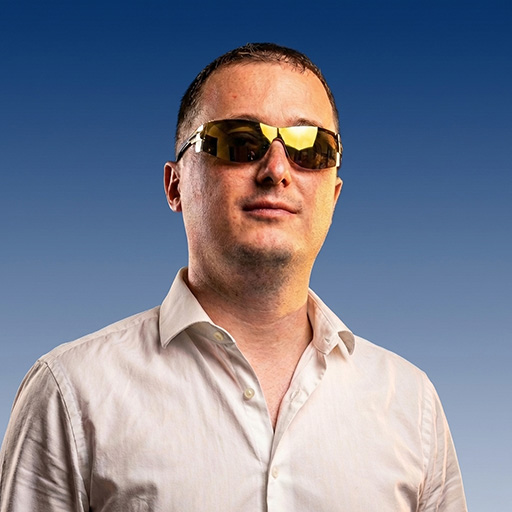
Founder and CTO Pharos Production
I design and build reliable software solutions - from lightweight apps to high-load distributed systems and blockchain platforms.
PhD in Artificial Intelligence, MSc in Computer Science (with honors), MSc in Electronics & Precision Mechanics.
13 years in architecture of great software solutions tailored to customer needs for startups and enterprises
23 years of practical enterprise customized software production experience
Lecturer at the National Kyiv Polytechnic University
Doctor of Philosophy in Artificial Intelligence
Master's degree in Computer Science, completed with excellence
Master's degree in Electronics and precision mechanics engineering
Pharos Production scopes engagements in three tiers, Focused module launch, Core platform build and Enterprise rollout, with typical budgets from $55,000 to $500,000+ depending on scope and complexity.
Single high-value module integrated into existing systems with a measurable business outcome.
Multi-department platform with integrations, role-based access and training for internal teams.
Multi-location, multi-team rollout with migration, governance, security and long-term evolution.
Prices vary based on project scope, complexity, timeline and requirements. Hourly rates range from $50 to $99 depending on role and seniority. Contact us for a personalized estimate.
Need extra hands on your software project? Our developers can jump in at any stage - from architecture to auditing - and integrate seamlessly with your team to fill any technical gaps.
Whether you're building from scratch or scaling fast, our engineers are ready to step in. You stay in control, and we handle the code.
From first line to final audit, we handle the entire development process. We will deliver secure, production-ready software, while you can focus on your business.
Our engineers work with 187+ technologies across blockchain, backend, frontend, mobile and DevOps - chosen for production reliability and performance.
Our engineers work with 187+ technologies across 10 categories: Frameworks, AI, Blockchains, DevOps, Clouds, Databases, Brokers, Tests, Programming, UI/UX.




















































Recognized on Clutch, GoodFirms and The Manifest for software engineering excellence










65+ industry awards
Our company starts and assembles an entire project specialists with the perfect blend of skills and experience to start the work.
We'll design, build and launch your MVP, ensuring it meets the core requirements of your software solution.
We'll create a complete software solution that is custom-made to meet your exact specifications.
Our company will be right there with you, keeping your software solution running smoothly, fixing issues and rolling out updates.
Digital transformation ROI measurement guide. Frameworks, metrics, industry benchmarks and strategies to maximize returns from digital initiatives.

Legacy system modernization guide. Strangler fig pattern, replatforming, rebuild strategies with cost comparison table, budget planning and implementation best practices.

Cloud migration strategy guide for 2026. Step-by-step assessment, planning and execution with AWS vs Azure vs GCP comparison, cost benchmarks and optimization tips.

Synthesis of published software economics data: build cost ranges by project type, Year-2 maintenance cliff, mobile breakage tax, cloud lock-in cost trajectories - drawn from Flyvbjerg and Budzier (Harvard Business Review), ISO/IEC 25010, the Google SRE Book and ThoughtWorks Technology Radar.
Type to filter questions and answers. Use Topic to narrow the list.
Showing all 6
No matches
Try a different keyword, change the topic or clear filters
McKinsey research consistently shows ~70% failure rate on digital transformation. The top two failure modes are lack of executive sponsorship (the program stalls when leadership priorities shift) and insufficient change management (the new system ships but staff work around it). Pharos refuses transformation engagements without explicit executive sponsorship and without change management in scope.
We advise on change management; we do not own it. Change management has to come from client leadership because it requires authority we do not have - hiring, firing, incentive structure, reporting lines.
We partner with client HR and leadership teams, and we sometimes bring in specialist change management consultants for specific program phases, but we never accept a transformation engagement where change management is "someone else's problem."
Assessment + target operating model: $30,000-$100,000. Pilot program: $150,000-$500,000.
Full rollout: $500,000-$2,000,000+ over 12-36 months depending on scale, geography and integration complexity. Long steady-state engagements run on monthly retainers. We prefer smaller, focused engagements when they can solve the actual problem.
Phase 1: Assessment and target operating model (4-8 weeks). Phase 2: Pilot program on one business unit or one workflow (3-6 months) with measurable outcomes.
Phase 3: Rollout across the organization (6-18 months). Phase 4: Steady state support. Each phase has go/no-go criteria - we are willing to walk away at phase boundaries if results are not on track.
Then you do not need a transformation program, you need software engineering. We will tell you that directly during scoping.
Transformation framing is appropriate when the change spans people, process and technology together; when the scope is just "better software," a focused engineering engagement delivers better results at lower risk.
We decline when there is no executive sponsorship, when success criteria cannot be expressed in measurable business terms, when the framing is "digital transformation" for what is actually a software rebuild, when change management is not in scope and when the transformation is driven by consultants rather than business need. Transformation engagements without these foundations are the ones that become 70% failure-rate case studies.
Digital transformation in 2026 is capability-change, not technology-change. Pharos Production delivers transformations anchored on DORA metrics, product operating models and internal developer platforms, so your organisation keeps moving faster after the engagement ends.
Achieve them with minimized risk through our bespoke innovation capabilities
Contact us today to discuss your project. We're ready to review your request promptly and guide you on the best next steps for collaboration
Same dayWe're committed to keeping your information confidential, so we'll sign a Non-Disclosure Agreement
1 dayAfter we chat about your goals and needs, we'll craft a comprehensive proposal detailing the project scope, team, timeline and budget
3-5 daysLet's connect on Google Meet to go through the proposal and confirm all the details together!
1-2 daysAs soon as the contract is signed, our dedicated team will jump into action on your project!
Same dayHeadquarters in Las Vegas, Nevada. Engineering office in Kyiv, Ukraine.
We also work with clients through dedicated local teams in Las Vegas, New York and San Francisco.
Thanks for the request!
We typically reply within 24 hours