Securing AI Agents in Production: A Six-Layer Defense Architecture
Securing AI agents in production with a six-layer defense architecture, grounded in the March 2026 LiteLLM supply-chain attack and Gartner incident forecasts.
 Updated
6 min read
247 views
Updated
6 min read
247 views
Technically reviewed by Victor Sineglazov, D.Sc.

Key takeaways: securing AI agents in production 4
Why single guardrails fail, what the six defense layers are and how the March 2026 LiteLLM attack shows the architecture at work.
- A real incident, not a hypothetical The March 24 2026 LiteLLM supply-chain attack backdoored a package with roughly 95 million monthly downloads, quarantined within about three hours.
- Six layers, six failure modes contained Identity, input, tools, memory, supply chain and monitoring, each layer assumes the one above it will eventually fail.
- Attacks traverse layers in chains Design reviews should trace an entry layer through to the layer that should contain the damage.
- A minimum viable version is buildable in weeks The first-production-agent checklist covers the majority of OWASP Agentic Top 10 risk classes at once.
An AI agent in production is a privileged, autonomous process with credentials, network access and the ability to act. Securing it with a system prompt that says "be safe" is the 2026 equivalent of securing a web app with a hidden admin URL. Real agent security is layered: every layer assumes the one above it will eventually fail.
The urgency is not theoretical. Gartner forecast on April 9 2026 that by 2028, 25% of enterprise GenAI applications will experience five or more minor security incidents per year, up from 9% in 2025, and that by 2029, 15% will suffer at least one major incident annually, up from 3%, growth driven largely by MCP-style tool integrations (source: Gartner, Apr 9 2026). And in March 2026 the ecosystem got a concrete demonstration of how fast an agent stack can be poisoned.
In short: production AI agents need defense in depth, not a single guardrail. This article describes a six-layer architecture (identity, input, tools, memory, supply chain and monitoring) and grounds it in the March 24 2026 LiteLLM supply-chain attack, where backdoored versions of a package with roughly 95 million monthly downloads reached PyPI and were quarantined within hours (source: blog.pypi.org incident report, Apr 2 2026). Gartner projects that by 2028 a quarter of enterprise GenAI applications will suffer at least five minor security incidents per year (source: Gartner, Apr 9 2026).
Case study: the LiteLLM supply-chain attack, March 2026
LiteLLM is a proxy layer that thousands of agent deployments use to route model calls. In March 2026 it became the delivery vehicle for one of the most consequential AI supply-chain attacks to date. The timeline below is assembled from the Cycode analysis and the PyPI incident report of April 2 2026.
Incident timeline
- Late February 2026. The campaign begins with GitHub Actions attacks against security tooling itself, including Aqua Trivy and the Checkmarx kics-github-action (source: cycode.com).
- March 19-23 2026. The actor known as "TeamPCP" harvests PyPI publishing tokens through the compromised Trivy scanner.
- March 24 2026, 10:39. Backdoored litellm v1.82.7 is published to PyPI using the stolen tokens.
- March 24 2026, 10:52. A second backdoored release, v1.82.8, follows thirteen minutes later.
- March 24 2026, 13:38. PyPI quarantines the malicious releases, roughly three hours after the first upload (source: blog.pypi.org, Apr 2 2026).
What the payload did
The payload ran in three stages: harvest credentials from the host, move laterally through Kubernetes and install a persistent systemd backdoor disguised as a "System Telemetry Service" beaconing to a command-and-control endpoint at models.litellm.cloud (source: cycode.com). With roughly 95 million monthly downloads and v1.82.6 as the last clean release, any pipeline that auto-updated during the three-hour window pulled a backdoor straight into its agent infrastructure.
Two lessons stand out. First, the attackers compromised security scanners to reach their real target, so "we run a scanner" is not a defense by itself. Second, three hours from publication to quarantine is fast incident response, and it was still long enough to matter. Your architecture has to absorb a poisoned dependency, not just hope to avoid one.
The six-layer defense architecture
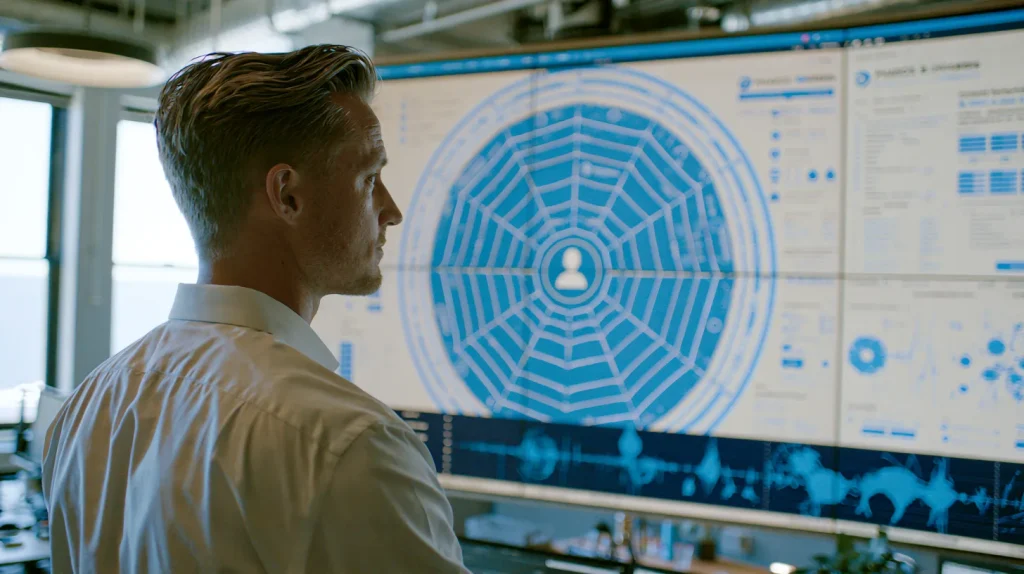
Here is the layered model we implement for production agent deployments. Each layer has a distinct job and a distinct failure mode it contains.
Identity and input: who acts and what reaches the agent
- Layer 1 - Identity and access. Every agent gets its own identity: dedicated service accounts, short-lived credentials and narrowly scoped permissions per tool and per environment. No shared API keys, no long-lived tokens in environment variables. If an agent is compromised, this layer defines the blast radius.
- Layer 2 - Input and instruction security. Everything the agent reads, user messages, retrieved documents, web pages, emails, other agents' output, is untrusted data. Enforce a hard separation between instructions and content, filter inbound context for injection patterns and require explicit confirmation when input attempts to change the agent's goal.
Execution and memory: what the agent can do and remember
- Layer 3 - Tool and execution sandboxing. Tools are allowlisted with typed, validated parameters. Destructive operations sit behind approval gates. Any generated code executes in isolated, egress-restricted containers with no path back to production credentials. The agent proposes; the sandbox disposes.
- Layer 4 - Memory and context integrity. Long-term memory is a database an attacker will try to write to. Validate entries before persisting, tag them with provenance, expire them on a schedule and audit what the agent has memorized. Poisoned memory turns one successful injection into a permanent implant.
Supply chain and oversight: what enters the system and who watches it
- Layer 5 - Supply chain controls. Pin dependency versions and delay auto-upgrades behind a soak period, the LiteLLM window shows why hour-zero adoption of new releases is a risk, not a virtue. Maintain a bill of materials for models, packages and MCP servers, verify artifact signatures where available and vet every third-party connector before it touches production.
- Layer 6 - Monitoring, limits and human oversight. Log every tool call and model decision to immutable storage, alert on anomalous action patterns, cap spend and action rates per agent and keep a kill switch that operates at the infrastructure level. Humans review high-impact actions before they execute, not after.
How the layers interact
The layers are ordered by proximity to the agent's identity, but attacks traverse them in chains. The LiteLLM attack entered at Layer 5, harvested credentials that Layer 1 should have scoped and persisted in ways Layer 6 should have detected. A prompt-injection attack enters at Layer 2, attempts actions that Layer 3 should sandbox and tries to persist through Layer 4. Design reviews should trace these chains explicitly: pick an entry layer, assume it fails and verify the next layer contains the damage.
Deployment checklist for the first production agent
For teams shipping their first agent, the minimum viable version of the six layers looks like this:
- Dedicated service identity with scoped, short-lived credentials (Layer 1)
- Prompt/content separation and injection filtering on all retrieved context (Layer 2)
- Tool allowlist with approval gates on anything destructive or financial (Layer 3)
- Memory writes validated and auditable, with retention limits (Layer 4)
- Pinned dependencies, a 48-72 hour soak delay on upgrades and an AI bill of materials (Layer 5)
- Immutable action logs, rate and spend caps and an out-of-band kill switch (Layer 6)
This is buildable in weeks, not quarters, and it addresses the majority of the OWASP Agentic Top 10 risk classes at once. Tying the pipeline itself to CI/CD, the kind of setup a DevOps team builds, is what keeps these controls enforced on every release rather than only at launch.
How Pharos Production helps secure production agents
Agent security in 2026 is an architecture problem. Single guardrails fail quietly; layered defenses fail loudly and locally. The LiteLLM incident showed that even well-run ecosystems ship poisoned artifacts for a few hours, and Gartner's numbers say incident frequency is heading up, not down. Teams that build the six layers now will treat those events as contained noise rather than breaches. If you are putting AI agents into production and want this architecture designed, implemented or audited against your current stack, our security engineers can help, the same team behind our write-up on cybersecurity for startups. Start with our cybersecurity services.
Sources: Gartner forecast, Apr 9 2026. LiteLLM supply-chain attack timeline assembled from Cycode analysis (cycode.com) and the PyPI incident report, Apr 2 2026 (blog.pypi.org). Figures and dates are as published by the cited sources at the time of writing.
FAQ
Quick answers to common questions about custom software development, pricing, process and technology.
Type to filter questions and answers. Use Topic to narrow the list.
Showing all 3
No matches
Try a different keyword, change the topic or clear filters
-
The six-layer defense architecture is a defense-in-depth model for production agent deployments with six independent control layers: identity and access, input and instruction security, tool and execution sandboxing, memory and context integrity, supply chain controls and monitoring with human oversight. Each layer assumes the previous one can fail and is designed to contain the resulting damage.
-
An actor called "TeamPCP" used PyPI tokens stolen through a compromised Trivy scanner to publish backdoored litellm versions 1.82.7 and 1.82.8 on March 24 2026. The payload harvested credentials, moved laterally through Kubernetes and installed a systemd backdoor disguised as a telemetry service.
PyPI quarantined the releases about three hours after publication (source: blog.pypi.org incident report, Apr 2 2026). The last clean release was 1.82.6.
-
Gartner projected on April 9 2026 that by 2028, 25% of enterprise GenAI applications will experience five or more minor security incidents per year, up from 9% in 2025, and that by 2029, 15% will experience at least one major incident annually, up from 3%. The growth is attributed largely to expanding tool and MCP integrations.

I work with startup founders who need a dedicated software development team but don’t want to gamble on hiring, random outsourcing, or opaque delivery.
Most founders face the same problem sooner or later.
Early technical and team decisions lock the product into tech debt, slow delivery, missed milestones and constant re-hiring. By the time this becomes visible, fixing it is already expensive.As a CTO and software architect, I help founders design, build and run dedicated development teams that work as a true extension of the startup. Not as a black-box vendor.
My focus is on complex products where mistakes are costly:
- Web3 and blockchain platforms
- FinTech and regulated products
- High-load startup systems
- MVP → scale transitions
We don’t do body-shopping.
We don’t sell generic outsourcing.Instead, we help founders:
- build the right team structure from day one
- keep technical ownership and transparency
- scale delivery without losing control
- avoid vendor lock-in and hidden risks
Teams are aligned with the product roadmap, business goals and long-term architecture. Not just short-term velocity.