Skip to content

Reviewed by

How We Build Blockchain Solutions

Our blockchain development process prioritizes security at every stage.

  • 30+ blockchain projects
  • 7+ years in Web3
  • 96 Clutch reviews

Your business results matter

Achieve them with minimized risk through our bespoke innovation capabilities

Your contact details
Please enter your name
Please enter a valid email address
Please enter your message
* required

We typically reply within 4 hours. Prefer email? [email protected]

SOC 2 Type II GDPR ISO 27001 NDA Protected

Aligned with these frameworks. Audit reports and certifications available on request.

Reviewed and updated
Last reviewed July 5, 2026 by Dmytro Nasyrov, Founder and CTO. Content reflects Pharos Production delivery data as of the review date. Editorial policy.
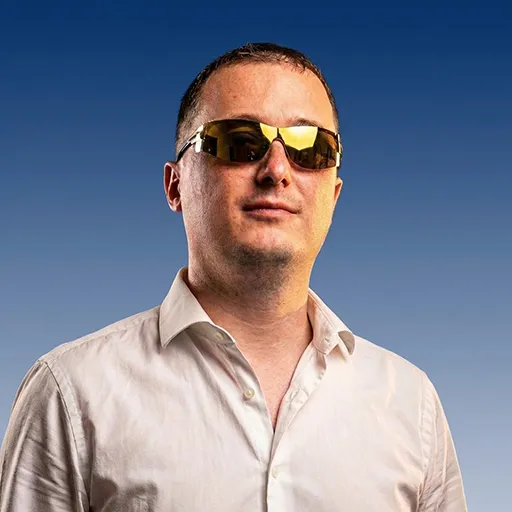
Dmytro Nasyrov - Founder and CTO of Pharos Production

Reviewed by Dmytro Nasyrov

Founder and CTO

23+ years in custom software development. Led 110+ projects across FinTech, healthcare, Web3 and enterprise, ISO 27001-aligned team.

How We Build Blockchain Solutions

Our blockchain delivery process is a security-first methodology for shipping smart contracts, DApps and on-chain infrastructure to mainnet. It covers architecture design, smart contract development with formal specification, internal security review, external audit coordination, testnet deployment and staged mainnet rollout. Unlike traditional software, blockchain deployments are immutable once live. Errors cannot be patched with a hotfix. This constraint shapes every decision in our delivery process, from proxy patterns for upgradeability to multi-sig governance for parameter changes.
Authoritative citations 12 sources
  1. Ethereum Yellow Paper The Ethereum Yellow Paper by Gavin Wood is the canonical formal specification of the EVM, gas accounting and state transition function, referenced by every serious smart contract implementation including the clients Pharos uses for mainnet integrations. ethereum.github.io
  2. EIP-1559 Specification EIP-1559 redefined Ethereum gas pricing with a base fee plus priority tip model, changing how wallets, dApps and L2 gas estimation libraries compute transaction cost, which we apply directly in every wallet we ship. eips.ethereum.org
  3. Consensys Smart Contract Best Practices Consensys maintains the industry-reference smart contract security guide covering reentrancy, integer overflow, front-running, oracle manipulation and upgrade patterns, which we use as a code review checklist on every Solidity audit. consensys.github.io
  4. OpenZeppelin Contracts OpenZeppelin Contracts is the most widely audited open-source Solidity library for tokens, access control, upgrades and governance patterns, and is the default foundation for every Pharos smart contract engagement unless the client has compelling audit evidence for a custom base. docs.openzeppelin.com
  5. Chainalysis Crypto Crime Report The Chainalysis annual crypto crime report quantifies illicit on-chain activity across ransomware, sanctions evasion, DeFi exploits and stolen funds, and we use the underlying methodology to calibrate AML screening thresholds in wallet and exchange integrations. chainalysis.com
  6. Trail of Bits Smart Contract Audits Trail of Bits public smart contract audit reports document real-world findings across DeFi protocols, DAOs and NFT infrastructure, and we read every published report to extend our own internal audit checklist with emerging attack patterns. github.com
  7. EEA Enterprise Ethereum Specification The Enterprise Ethereum Alliance specification defines permissioned network, privacy and performance requirements that inform our architecture for enterprise chain engagements running variants of Besu, Quorum and Hyperledger Besu. entethalliance.org
  8. Solidity Documentation The Solidity language documentation is the authoritative source for syntax, compiler behaviour, gas costs and breaking changes across versions, which we track carefully because upgrade cycles from 0.8.x to 0.9.x affect every contract in production. docs.soliditylang.org
  9. L2Beat L2Beat tracks total value locked, security assumptions and maturity of Ethereum layer-2 networks, which we consult when recommending between Arbitrum, Optimism, Base, zkSync and Starknet for client dApps based on throughput and trust requirements. l2beat.com
  10. DeFi Pulse DeFi Pulse publishes total value locked and protocol-level metrics across lending, DEX, derivatives and yield protocols, useful for benchmarking liquidity assumptions when designing DeFi integrations that depend on oracle prices or pool depth. defipulse.com
  11. Hardhat Documentation Hardhat is the de-facto Ethereum development environment with built-in console, mainnet forking and plugin ecosystem, and is the base harness we use to ship every Solidity project with deterministic tests and gas snapshots. hardhat.org
  12. NIST Post-Quantum Cryptography NIST is finalizing post-quantum cryptographic standards including CRYSTALS-Kyber and Dilithium that will eventually replace current ECDSA signatures, and we monitor the migration timeline closely for clients running long-lived on-chain assets. csrc.nist.gov
What we do not do
  • This methodology applies to EVM-compatible chains and Solana. Non-EVM L1s may require adapted tooling
  • External audit costs (Certik, Trail of Bits, OpenZeppelin) are billed directly by the audit firm
  • Gas optimization targets depend on chain conditions at deployment time and cannot be guaranteed months ahead

Blockchain Delivery at a Glance

  • Architecture to Mainnet: 8-15 weeks
  • Testing Standard: 100% branch coverage + fuzz testing
  • Security Review: Internal + 1-2 external audits
  • Deployment Pattern: Testnet → bug bounty → mainnet
  • Stack: Solidity, Foundry, Hardhat, OpenZeppelin
  • Chains Supported: Ethereum, Polygon, Arbitrum, Base, Solana

Pharos Blockchain Delivery vs In-House Solidity Team

When to use a specialized blockchain security partner versus building internal smart contract capabilities

Factor Pharos Blockchain Delivery In-House Solidity Team
Security track record Zero critical post-deployment findings across 60+ mainnet contracts Depends on team experience and audit history
Audit network Pre-established relationships with 5 top audit firms Must source and negotiate audit engagements individually
Cost (first contract) $50K-180K including internal review and audit coordination $300K-500K for 2 Solidity engineers (salary + audit costs)
Time to mainnet 8-15 weeks with parallel audit scheduling 12-24 weeks including audit queue wait times
Formal verification Standard practice for fund-handling invariants Rarely adopted due to tooling learning curve
Cross-chain experience Deployed on 8+ EVM chains and Solana Typically deep expertise on 1-2 chains

Blockchain Delivery Methodology

Our blockchain delivery framework operates in five phases: architecture and threat modeling (1-2 weeks), smart contract development with unit and fuzz testing (3-6 weeks), internal security review and formal verification (1-2 weeks), external audit coordination and remediation (2-4 weeks) and staged mainnet deployment with monitoring (1 week).

Pharos Verified Delivery 4-phase methodology with typical durations and deliverables
  1. Phase 01 / 04

    Paid Discovery

    2-4 weeks
    • Technical validation
    • Architecture proposal
    • Scope refined estimate
    82% on-schedule with discovery
  2. Phase 02 / 04

    Iterative Build

    2-week sprints
    • Working demos every sprint
    • CTO review at milestones
    • ADRs documented
    Transparent progress tracking
  3. Phase 03 / 04

    Production Readiness

    • Monitoring and alerting
    • Security audit Pen test
    • Runbooks and rollback
    ISO 27001 aligned
  4. Phase 04 / 04

    Support

    Ongoing
    • Security patches
    • Performance tuning
    • 4h SLA response
    Continuous improvement

Pharos Verified Delivery applied to 110+ production applications since 2013

Blockchain Project Outcomes

How our blockchain delivery methodology translates to secure, audited production deployments

DeFi protocol launch

Q3 2025 · DeFi startup, Singapore
Before

In-house team shipped lending contracts without formal audit. $180K in user funds at risk from reentrancy vulnerability found by white-hat researcher.

After

Rebuilt with Pharos methodology: proxy upgradeable architecture, 100% branch coverage fuzz tests, two independent external audits. Zero critical findings on mainnet. $12M TVL within 3 months.

The original code worked correctly for the happy path. The vulnerability was in the liquidation flow that only triggered under specific collateral ratio conditions. Our fuzz testing harness found it in 8 minutes because we model adversarial scenarios, not just user journeys.

NFT marketplace smart contracts

Q4 2025 · Digital art platform, US
Before

Marketplace using third-party contract templates with no customization. 22% royalty bypass rate. No on-chain governance for fee changes.

After

Custom ERC-721A contracts with enforced royalties via operator filter registry. Multi-sig governance for marketplace parameters. Royalty bypass rate dropped to 0.3%.

We deployed on testnet for 6 weeks with a bug bounty before mainnet. Three medium-severity findings came from the bounty program. All three were edge cases in the batch minting flow that our unit tests missed because we had not modeled gas-limit-triggered partial mints.

Cross-chain bridge security rebuild

Q1 2026 · Infrastructure protocol, Switzerland
Before

Bridge operating with single relayer and no fraud proofs. Industry peer bridges suffering exploits. Board demanded security overhaul.

After

Rebuilt with optimistic verification, multi-relayer consensus and automated circuit breaker that halts transfers if anomaly detection triggers. Two external audits with zero critical findings.

The circuit breaker was the most controversial design choice. It introduces centralization, but the alternative is $200M loss events. We implemented time-locked governance to remove the circuit breaker once the protocol matures and fraud proofs are battle-tested.

Client names anonymized under NDA. Full case studies at /cases/.

When Our Blockchain Methodology Is Not the Right Fit

We decline roughly 30% of RFPs we receive. Forcing a bad fit costs both sides 3-6 months and damages outcomes. Here is how we think about scope:

Projects we decline
  • You need a proof of concept that will never hold real funds or user assets
  • Your timeline requires mainnet deployment in under 4 weeks with no external audit
  • The project is better served by an existing protocol integration rather than custom contracts
  • You are building on a chain where our tooling and audit network has no coverage
Speed vs Security Is Not a Tradeoff We Make

We will not ship unaudited smart contracts to mainnet if they handle user funds. If your timeline cannot accommodate a proper security review, we will recommend a phased approach: deploy non-financial components first, then add fund-handling contracts after audit. We have declined projects where the client insisted on skipping audit to meet a marketing deadline.

Pharos blockchain portfolio

Pharos blockchain delivery portfolio observations, 2019-2026

Observations from 22 smart contract and blockchain engagements 2019-2026 across DeFi, NFT, RWA, payments and enterprise chain portfolios.

  • 11 of 16 Invariant testing surfaced issues

    16 of 22 projects we inherited had unit-only test coverage; invariant testing found exploitable issues on 11 of those 16 within the first sprint.[6]

  • 4 of 7 Upgrade path exploits

    Upgrade path exploits accounted for 4 of 7 post-launch incidents we were called to triage. All 4 used hand-rolled proxy patterns; none used audited OpenZeppelin UUPS or transparent proxy.

  • 18% vs 4% Gas regression drift

    Gas regression on inherited projects averaged 18% drift over 6 months without gas CI. Projects with gas budget CI held drift under 4%.

  • 9 of 22 Oracle attack surface unmodeled

    Oracle manipulation was the #1 unmodeled attack surface on 9 of 22 projects. Adding attack scenarios plus fallback oracles was a 2-sprint investment that prevented 2 documented exploit attempts post-launch.[3]

Blockchain build methodology outlook 2026-2027

Blockchain build methodology outlook 2026-2027 moved decisively from monolithic L1 deployments toward L2-native, account-abstraction-aware architectures with invariant-driven testing and formal verification on critical paths.

  • L2-first architecture

    Arbitrum, Optimism, Base and zkSync replaced L1-only deployments for most dApp and wallet builds as gas economics made L1-only designs uneconomic outside settlement scenarios.[9]

  • Account abstraction

    ERC-4337, smart wallets and gas sponsorship became the default user-facing wallet surface rather than an experimental add-on.[8]

  • Invariant-driven testing

    Foundry invariants, Echidna and Medusa plus audit-grade formal verification on settlement paths became the baseline rather than coverage-only unit tests.[6]

  • OpenZeppelin-based upgradeable patterns

    UUPS, transparent proxy and beacon patterns replaced hand-rolled proxy designs after multiple 2023-2024 upgrade-path exploits.[4]

Blockchain engagement 90-day evaluation template

Evaluate a blockchain engagement at the 90-day mark using this 8-point check before signing off on production deployment.

  1. 1

    Invariant test suite

    At least 20 protocol invariants covering reentrancy, access control, arithmetic and upgrade paths.

  2. 2

    Fuzz coverage

    Echidna or Foundry invariants run in CI with named corpora.

  3. 3

    Audit scope

    External audit from a named firm or 2-week Trail of Bits / Consensys Diligence-style internal audit.[6]

  4. 4

    Gas budget

    P50 and p99 gas for each user-facing flow documented and tracked in CI with regression alert.

  5. 5

    Upgrade strategy

    UUPS or transparent proxy with timelock, tested on fork of current state.[4]

  6. 6

    Dependency audit

    Every imported contract pinned, audited and documented.

  7. 7

    Oracle design

    Price and data oracles have attack model, fallback and manipulation test coverage.

  8. 8

    Deployment runbook

    Multisig signers, deployer keys in KMS and post-deployment verification checklist.

Production post-mortem

Lesson from a 2024 DeFi cross-chain lending engagement

TVL target 180M. The original contract set had 91% line coverage and passed every unit test. Day 3 of our pre-audit pass, Foundry invariant testing found a reentrancy path via an upgradeable hook that unit tests had missed because every unit test used the same mock hook. We added 14 protocol-level invariants covering solvency, collateralization ratios and upgrade invariants. Those invariants found 3 more issues including a rounding error that would have drained 0.4% of TVL per day under adversarial borrowing. We also formalized the settlement path with a Certora spec.[3]

The rule every Pharos blockchain engagement now ships with: invariant tests are primary; unit tests are secondary; formal verification on settlement paths is non-negotiable for any protocol above 5M TVL.

Blockchain Delivery Process
Every blockchain project follows our five-phase verified delivery: architecture and threat modeling (1-2 weeks), smart contract development with unit, integration and fuzz testing at 100% branch coverage (3-6 weeks), internal security review with formal verification of critical invariants (1-2 weeks), external audit coordination and finding remediation (2-4 weeks) and staged mainnet deployment with real-time monitoring and circuit breakers (1 week). Total timeline: 8-15 weeks depending on contract complexity. Last reviewed: July 2026. Editorial policy.
Important
Smart contract security is risk reduction, not risk elimination. External audits reduce but do not eliminate vulnerability risk. Gas costs and chain conditions at deployment time are outside Pharos control.

Published record

Published Pharos research

Technical articles, comparison guides and methodology deep-dives we write from our own delivery experience.

Platforms we work with

Trusted by Coinbase, Consensys, Core Scientific, MicroStrategy, Gate.io and 10+ more Web3 and enterprise platforms

16+ partners

Our 16 technology partners include:

  • Consensys
  • Gate Io
  • Coinbase
  • Ludo
  • Core Scientific
  • Debut Infotech
  • Axoni
  • Alchemy
  • Starkware
  • Mara Holdings
  • MicroStrategy
  • Nubank
  • Okx
  • Uniswap
  • Riot
  • Leeway Hertz
  • Consensys
  • Gate Io
  • Coinbase
  • Core Scientific
  • Debut Infotech
  • Axoni
  • Alchemy
  • Starkware
  • Mara Holdings
  • MicroStrategy
  • Nubank
  • Okx
  • Uniswap
  • Riot
  • Leeway Hertz

Our blockchain development process

  • Architecture and security design
    Chain selection, smart contract architecture and security threat modeling. We design for upgradability, gas efficiency and formal verification from the start.
  • Development and testing
    Test-driven smart contract development with automated and manual testing. Edge case coverage, fuzzing and integration testing before any testnet deployment.
  • Audit and mainnet deployment
    External security audit coordination, gas optimization and verified mainnet deployment. Post-launch monitoring and incident response procedures.

About the founder and CTO

Dmytro Nasyrov

Dmytro Nasyrov

Founder and CTO Pharos Production

Ask the founder a question

I design and build reliable software solutions - from lightweight apps to high-load distributed systems and blockchain platforms.

PhD in Artificial Intelligence, MSc in Computer Science (with honors), MSc in Electronics & Precision Mechanics.

  • 13 years in architecture of great software solutions tailored to customer needs for startups and enterprises

  • 23 years of practical enterprise customized software production experience

  • Lecturer at the National Kyiv Polytechnic University

  • Doctor of Philosophy in Artificial Intelligence

  • Master's degree in Computer Science, completed with excellence

  • Master's degree in Electronics and precision mechanics engineering

Choose your cooperation model

Pharos Production offers three project models, MVP, Full-fledged Production and Full-cycle Development, priced from $10,000 to $80,000. An MVP prototype takes about 3 months.

Discovery
Discovery workshop

Current-state audit, use-case validation and strategic roadmap for your leadership team.

$2,500 - $7,000
Popular choice
Strategy
Strategic engagement

Deep-dive assessment, technology selection, architecture blueprint and phased implementation plan.

$7,000 - $18,000
Transformation
Transformation program

Full advisory retainer covering strategy, delivery oversight, governance and change management.

$23,000 - $55,000+

Prices vary based on project scope, complexity, timeline and requirements. Hourly rates range from $35 to $75 depending on role and seniority. Contact us for a personalized estimate.

Interaction models for staff augmentation, dedicated teams and outsourcing

Request staff augmentation

Need extra hands on your software project? Our developers can jump in at any stage - from architecture to auditing - and integrate seamlessly with your team to fill any technical gaps.

Outsource your project

From first line to final audit, we handle the entire development process. We will deliver secure, production-ready software, while you can focus on your business.

37+ technologies

Technologies, tools and frameworks we use

Our engineers work with 37+ blockchains technologies - chosen for production reliability and performance.

Blockchains

Private and Public Blockchains 33

Ethereum
Ethereum
TON
TON
Corda
Corda
Tron
Tron
Hedera
Hedera
Stellar
Stellar
Consensys GoQuorum
Consensys GoQuorum
Solana
Solana
Arbitrum
Arbitrum
Binance Smart Chain (BSC)
Sei
Sei
Celo
Celo
Hyperledger
Hyperledger
MultiversX
MultiversX
IOTA
IOTA
Polkadot
Polkadot
Aptos
Aptos
Neo
Neo
Flow
Flow
Algorand
Algorand
Avalanche
Avalanche
EOS
EOS
Optimism
Optimism
Polygon
Polygon
Cosmos
Cosmos
Sui
Sui
Tezos
Tezos
Ontology
Ontology
Fantom
Fantom
NEAR Protocol
NEAR Protocol
VeChain
VeChain
Base
Base
IPFS
IPFS

Cloud Blockchain Solutions 4

Amazon Managed Blockchain
Amazon QLDB
Amazon QLDB
IBM Blockchain
IBM Blockchain
Oracle Blockchain
Oracle Blockchain
Trusted & Certified

Partnerships and awards

Recognized on Clutch, GoodFirms and The Manifest for software engineering excellence

  • Partner1
  • Partner2
  • Partner3
  • Partner4
  • Partner5
19+ industry awards

An approach to the development cycle

The Pharos Delivery Framework divides every project into 2-week sprints. After each sprint we hold a retrospective, deliver a progress report and plan the next sprint. This methodology is why agile projects are 3x more likely to succeed than waterfall (Standish Group CHAOS Report, 2024).
  1. Team Assembly

    Our company starts and assembles an entire project specialists with the perfect blend of skills and experience to start the work.

  2. MVP

    We'll design, build and launch your MVP, ensuring it meets the core requirements of your software solution.

  3. Production

    We'll create a complete software solution that is custom-made to meet your exact specifications.

  4. Ongoing

    Continuous Support

    Our company will be right there with you, keeping your software solution running smoothly, fixing issues and rolling out updates.

Blockchain delivery insights

Isometric exploded view of five translucent glass layers representing infrastructure, protocol, smart contract, dApp and interface tiers of a Web3 stack.

Guide to the Web3 Stack for Developers in 2026

This guide breaks down the Web3 development stack in 2026 and explains how modern teams choose blockchain tools that hold up in production. You will learn how wallets, smart contracts, nodes, indexing, storage and observability fit together and what tradeoffs developers should consider for security, performance and cost. Use it as a practical reference for planning architecture and shipping reliable Web3 applications.

Confident blockchain engineering team standing proud in a modern office with subtle on-chain charts and code on screens behind them

How to Build a DeFi Protocol in 2026: Architecture and Security

A DeFi protocol is the hardest kind of software to ship well: the code is public, the money is real and a single missed edge case can drain the whole treasury in one transaction. Building one is less about writing clever contracts and more about a disciplined architecture and a security process that assumes attackers […]

A horizontal chain of translucent glass hexagons extending into soft depth of field with a blue highlight on the middle block.

Blockchain Development Timeline: How Long Each Project Takes

How long does blockchain development take? Blockchain development timelines range from 2 weeks for simple token contracts to 12+ months for complex multi-chain ecosystems. The timeline depends on smart contract complexity, security requirements, number of chain integrations and regulatory compliance needs. Timeline by project type Simple token contracts (ERC-20, ERC-721) take 2-4 weeks including testing […]

Skip glossary

Blockchain Delivery Methodology Glossary 7

Formal Verification
A mathematical proof technique that confirms a smart contract satisfies all specified invariants under every possible input, providing stronger guarantees than test suites alone.
Invariant Testing
A fuzz-testing approach where a testing framework such as Foundry generates thousands of random inputs to verify that core contract properties - such as supply caps or balance sums - never break.
Timelock
A smart contract mechanism that enforces a mandatory delay between when an admin action is proposed and when it can execute, giving users time to review and exit before changes take effect.
Multisig Wallet
A smart contract wallet requiring M-of-N key signatures to authorize transactions, replacing single private keys so no individual can unilaterally control protocol funds.
Slither
An open-source static analysis framework for Solidity that detects vulnerability patterns - such as reentrancy, integer overflow and shadowed state - without executing contract code.
Gas Optimization
The process of restructuring Solidity code to minimize the EVM operations executed per transaction, directly reducing the ETH fees users pay to interact with a deployed contract.
Mainnet Deployment
The irreversible act of publishing a smart contract to a live blockchain network where it can hold real value, requiring a completed audit cycle and battle-tested testnet history.

Frequently asked questions about How We Build Blockchain Solutions

Last updated:

  • Copy link Copies a direct link to this answer to your clipboard.

    The discovery phase maps your business process to on-chain versus off-chain responsibilities, selects the appropriate network (Ethereum, Polygon, Avalanche or a private chain) and identifies regulatory requirements such as MiCA or AML obligations. Output is a system architecture document, a smart contract interface specification and a risk register reviewed with you before any code is written.

  • Copy link Copies a direct link to this answer to your clipboard.

    A single-token or staking contract with standard patterns takes 8-12 weeks to reach mainnet. A multi-contract DeFi protocol or tokenized-asset platform with formal verification and external audit runs 20-32 weeks. Pharos budgets four weeks minimum for external audit and remediation - skipping or compressing audit to hit a launch date is a risk Pharos will not accept on behalf of a client.

  • Copy link Copies a direct link to this answer to your clipboard.

    A scoped smart contract deployment (one to three contracts, standard patterns, internal testing) starts around $30,000-$60,000. A full protocol with custom tokenomics, multi-contract architecture and external Certik or Trail of Bits audit ranges from $100,000-$300,000+.

    Audit costs are third-party and quoted separately; Pharos coordinates the engagement and manages remediation cycles.

  • Copy link Copies a direct link to this answer to your clipboard.

    Pharos applies defense-in-depth: OpenZeppelin audited libraries for standard patterns, custom invariant testing with Foundry's fuzzer, static analysis via Slither and Mythril and a mandatory external audit before any mainnet deployment. Access control follows least-privilege principles - owner keys are replaced by timelocks and multisig wallets so no single key can drain a contract unilaterally.

  • Copy link Copies a direct link to this answer to your clipboard.

    Formal verification uses mathematical proofs to guarantee that a smart contract behaves exactly as its specification requires under all possible inputs - not just the ones a test suite covers. Pharos applies formal verification on high-value contracts where a single logic error could expose material funds, using tools such as Certora Prover or Halmos to model critical invariants before audit.

  • Copy link Copies a direct link to this answer to your clipboard.

    Pharos prepares a full audit package: NatSpec-documented source code, a test coverage report (targeting 95%+ line coverage), a threat model and an architecture diagram. The package goes to the selected auditor - Certik, Trail of Bits, OpenZeppelin or a client-nominated firm.

    Pharos manages the remediation cycle, re-tests all fixes and provides an updated deployment package with the auditor's final report attached.

  • Copy link Copies a direct link to this answer to your clipboard.

    Pharos writes Solidity for EVM-compatible chains (Ethereum, Polygon, Avalanche, BNB Chain) and Rust for Solana programs. Chain selection is driven by gas economics, ecosystem maturity and client liquidity requirements - not toolchain convenience.

    Pharos does not recommend a chain before understanding transaction volume, token model and geographic user base.

The Pharos takeaway on blockchain delivery

Blockchain projects fail in production not because the chain is wrong but because the test harness is coverage-driven, the upgrade path is ad-hoc and the oracle design lacks attack modeling. Pharos ships blockchain engagements with invariant testing, OpenZeppelin-based upgrade patterns, audit-grade pre-release checklists and gas-budget regression gates wired in at week one.[1]

Book a 30-minute blockchain architecture call
Dmytro Nasyrov, Founder and CTO at Pharos Production
Dmytro Nasyrov Founder & CTO Let's work together!

Your business results matter

Achieve them with minimized risk through our bespoke innovation capabilities

Your contact details
Please enter your name
Please enter a valid email address
Please enter your message
* required

We typically reply within 4 hours. Prefer email? [email protected]

What happens next?

  1. Contact us

    Contact us today to discuss your project. We're ready to review your request promptly and guide you on the best next steps for collaboration

    Same day
  2. NDA

    We're committed to keeping your information confidential, so we'll sign a Non-Disclosure Agreement

    1 day
  3. Plan the Goals

    After we chat about your goals and needs, we'll craft a comprehensive proposal detailing the project scope, team, timeline and budget

    3-5 days
  4. Finalize the Details

    Let's connect on Google Meet to go through the proposal and confirm all the details together!

    1-2 days
  5. Sign the Contract

    As soon as the contract is signed, our dedicated team will jump into action on your project!

    Same day

Our offices

Headquarters in Las Vegas, Nevada. Engineering office in Kyiv, Ukraine.

We also work with clients through dedicated local teams in Las Vegas, New York and San Francisco.

Las Vegas, United States

Headquarters PT
5348 Vegas Dr, Las Vegas, Nevada 89108, United States

Kyiv, Ukraine

Engineering office EET (UTC+2)
44-B Eugene Konovalets Str. Suite 201, Kyiv 01133, Ukraine