Energy Software Development in 2026: Types, Cost and Build Guide
Energy software development in 2026: smart grid, energy management, trading and field-service types, build vs buy, costs and timelines by scope.
 Updated
8 min read
317 views
Updated
8 min read
317 views
Technically reviewed by Victor Sineglazov, D.Sc.
Key takeaways: energy software development in 2026 5
The main system types, build vs buy and the real cost ranges by scope.
- Name the system first EMS, smart grid, ETRM, field service or generation monitoring - each is a different build.
- OT and security are the cost Connecting SCADA and meters, and meeting NERC CIP, are the biggest and most underestimated drivers.
- Cost by scope $80K-$200K a module, $200K-$700K a platform, $700K-$3M and up a grid-scale build.
- Build, buy or hybrid Off-the-shelf starts fast; custom wins when your assets, grid or trading model is the advantage.
- AI and IoT pay off Forecasting, grid optimization and predictive maintenance are where energy and downtime savings are.
"Energy software" runs from a single monitoring dashboard to a grid-scale platform that balances supply, demand and trading in real time, so the cost and the build swing widely with what you are actually making. The job is to name the system you need - an energy management system, smart-grid software, a trading platform, a field-service tool - then decide whether to buy, customize or build it. This guide explains energy software development in 2026: the main types, build versus buy, what drives the cost and the honest ranges, before you scope a project with an energy software development partner.
In short: energy software spans energy management systems (EMS), smart grid and metering, energy trading and risk management (ETRM), asset and field-service management, and renewables monitoring. A single custom module or MVP costs roughly $80,000 to $200,000 over 4 to 7 months. A mid-size platform - an EMS or smart-grid module with SCADA, IoT and ERP integration - runs $200,000 to $700,000 over 8 to 16 months. An enterprise grid platform with DERMS and AI forecasting reaches $700,000 to $3M and up over 14 to 30 months. Off-the-shelf suites from SAP, AVEVA or GE start fast but bend your operation to theirs; custom wins when your assets, grid or trading model is the differentiator. Connecting operational technology and meeting grid-security rules like NERC CIP make energy builds costlier than typical business software.
What energy software is, and its main types
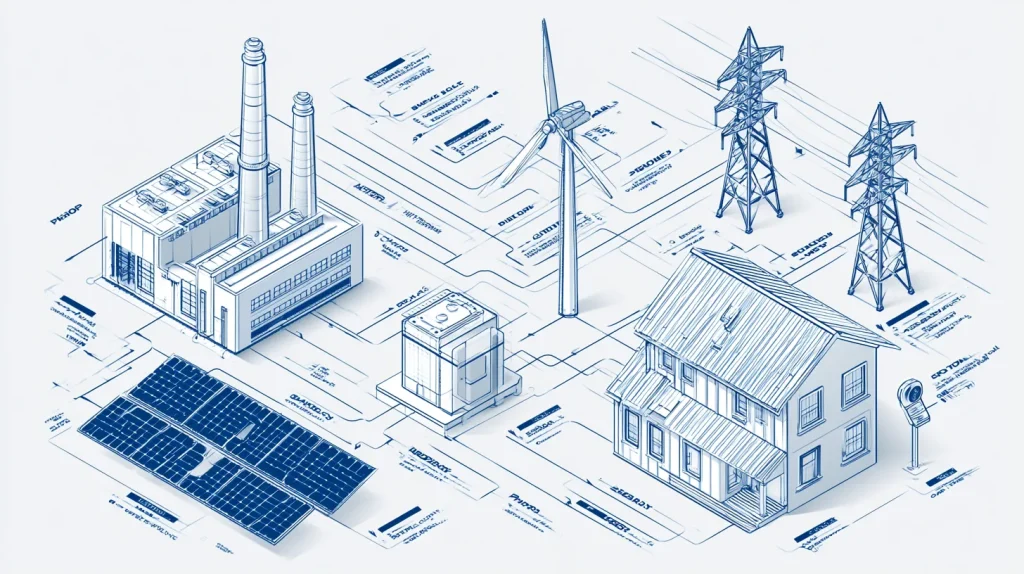
Energy software plans, runs, monitors and trades the generation, distribution and use of power. It is not one product but a family of systems, and most projects are one or two of them rather than all at once. The main types are energy management systems (monitoring and optimizing consumption), smart grid and metering (running the distribution network and meters), energy trading and risk management (buying and selling power and hedging), asset and field-service management (maintaining physical equipment in the field), and generation and renewables monitoring (running plants, solar, wind and storage). Naming which of these you need is the single most important scoping decision, because each is a different build with different operational-technology integration.
The core systems explained
EMS (energy management system): monitors and optimizes energy use across buildings, industrial sites or a portfolio - metering, analytics, alerts and controls that cut consumption and cost.
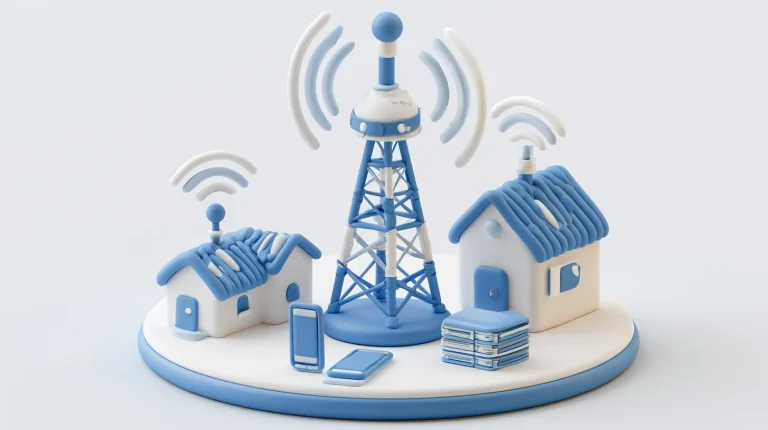
Smart grid and metering: runs the distribution network and advanced metering (AMI), with SCADA for control and DERMS to balance distributed resources like rooftop solar, batteries and EVs.
ETRM (energy trading and risk management): manages buying, selling, scheduling and hedging of power and fuel, with position, risk and settlement - the trading backbone for utilities and energy firms.
Asset and field-service management: tracks physical assets and schedules the crews that maintain them in the field, with work orders, inspections and mobile access for technicians.
Generation and renewables monitoring: real-time monitoring and control for power plants, solar and wind farms and storage, feeding performance, output and predictive-maintenance data.
Build, buy or customize
The first cost decision is build versus buy. Off-the-shelf suites - SAP for the back office, AVEVA and OSIsoft PI for operations, GE and Siemens for grid - cover standard processes and start fast, but you pay heavy license fees and you bend your operation to fit the software, and customizing a big suite to a non-standard grid or asset model can cost as much as a custom build. Custom software is the right call when your assets, grid topology or trading model is a competitive advantage, when you need OT and market integrations the suites do not support, or when per-asset or per-meter pricing stops making sense at scale. Many operators run a hybrid: an off-the-shelf historian or ERP core with custom apps - a monitoring portal, an optimization engine, a field app - built around it. The custom layer is usually where the differentiation and the savings sit.
What drives energy software cost
Within any type, the same factors move the number. Scope - one dashboard versus a grid-scale platform. OT integration - connecting SCADA, meters, plant controls and legacy equipment with mixed protocols is the biggest and most underestimated driver. Real-time and scale - grid and trading systems need low-latency, high-reliability architecture handling huge data volumes. Security and compliance - grid-security standards like NERC CIP and critical-infrastructure rules add mandatory, audited work. Field and hardware - meters, sensors, edge devices and mobile field tools add device and connectivity work. And AI - demand forecasting, grid optimization and predictive maintenance add model, data and evaluation work on top of the application.
Energy software cost and timeline in 2026
Ranges track scope and operational-technology integration depth more than anything else.
Single module / MVP: $80,000 to $200,000, 4 to 7 months. One focused system - a monitoring dashboard, an energy management app or a field-service tool - with core metering and ERP integration.
Mid-size platform: $200,000 to $700,000, 8 to 16 months. A full EMS, smart-grid or trading module with SCADA, IoT and ERP integration, analytics, dashboards and reporting.
Enterprise platform: $700,000 to $3M and up, 14 to 30 months. Grid-scale with DERMS, AI forecasting and optimization, full OT security and compliance, and multi-site rollout.
On top of build cost, budget 15 to 20 percent of it per year for maintenance, plus edge and cloud infrastructure that scales with meters and data volume, and new integrations as equipment and markets change. For a wider view of lifetime cost, see our custom software TCO report.
Integrations that matter
Energy software lives or dies on its integrations, because it has to reach the grid, the meters, the market and the back office. The usual set is SCADA and plant controls on the operational side, smart meters and IoT sensors for consumption and condition data, the ERP and asset systems for work and finance, energy market and trading APIs for prices and settlement, GIS for network and asset mapping, and weather data for forecasting. The operational-technology side is the hard part - protocols are mixed, equipment is long-lived, and grid reliability and security cannot be risked - which is why OT integration and security are the largest share of most energy budgets. Pipeline operators carry one more layer on top of that SCADA integration: continuous leak detection, the method families and what the rule asks of the software, which our pipeline leak detection software guide walks through. Similar OT challenges show up in our guide to manufacturing software development.
AI and IoT in energy in 2026
The clearest returns in modern energy come from AI and IoT. Demand and generation forecasting balances supply and reduces waste; grid optimization and DERMS coordinate distributed solar, batteries and EVs in real time; predictive maintenance fixes turbines and transformers before they fail; and anomaly detection spots faults and losses early. The dispatch signal that tells those distributed resources when to shed or shift load usually travels over OpenADR, the open demand-response standard utilities use to reach buildings, EV chargers and batteries, and our OpenADR integration guide covers wiring it into a DERMS or an EMS. IoT - smart meters, sensors and edge devices - feeds the real-time data those models need. These add cost, but they are where the measurable savings in energy, downtime and grid stability are, which is why they increasingly anchor enterprise builds. We cover the economics in our guides to machine learning for business and IoT development.
Common mistakes
The expensive errors repeat. Underestimating OT integration - mixed SCADA protocols and legacy equipment - and watching the timeline slip. Treating grid-security and NERC CIP compliance as a late add-on when they must shape the architecture from sprint one. Buying a heavyweight suite and customizing it so far it costs more than a custom build would have. Treating real-time grid and trading data as a simple feed when reliability and latency are everything. And building for one site or one market when multi-site, multi-market growth is on the roadmap, then re-architecting under load.
How to decide
Start by naming the system you actually need - an EMS, smart-grid software, an ETRM platform, a field-service tool or a generation monitor - because that, plus your OT integration and security depth, sets the band more than anything else. If a standard process will do, an off-the-shelf core gets you moving fast; if your assets, grid or trading model is the advantage, build the custom layer that makes it one. Most operators land on a hybrid and invest the custom budget where the differentiation is. If you are scoping an energy build, our energy software development team can map the type, OT and market integrations, security, cost and timeline with you, across power, renewables and oil and gas.
FAQ
Quick answers to common questions about custom software development, pricing, process and technology.
Type to filter questions and answers. Use Topic to narrow the list.
Showing all 8
No matches
Try a different keyword, change the topic or clear filters
-
How much does energy software development cost?
A single custom module or MVP - a monitoring dashboard, an energy management app or a field-service tool - costs roughly $80,000 to $200,000 over 4 to 7 months. A mid-size EMS, smart-grid or trading module with SCADA, IoT and ERP integration runs $200,000 to $700,000 over 8 to 16 months. An enterprise grid platform with DERMS, AI forecasting and full OT security reaches $700,000 to $3M and up over 14 to 30 months.
-
Should you build custom energy software or buy off-the-shelf?
Buy off-the-shelf (SAP for back office, AVEVA or OSIsoft PI for operations, GE or Siemens for grid) when your processes are standard and speed matters - you start fast but pay heavy license fees and bend your operation to the software. Build custom when your assets, grid topology or trading model is the advantage, or the suites cannot support your OT and market integrations.
Many operators run a hybrid: an off-the-shelf historian or ERP core with custom apps around it.
-
What is an EMS and smart grid software?
An EMS (energy management system) monitors and optimizes energy use - metering, analytics and controls that cut consumption and cost. Smart grid software runs the distribution network and smart meters, with SCADA for control and DERMS to balance distributed solar, batteries and EVs. The EMS is about using energy efficiently; smart grid software is about delivering and balancing it reliably.
-
How long does it take to build energy software?
A single module or MVP ships in 4 to 7 months, a mid-size EMS or smart-grid module in 8 to 16 months and an enterprise grid platform in 14 to 30 months or more. Operational-technology integration - connecting SCADA, meters and legacy equipment - and grid-security compliance usually set the schedule more than the core application.
-
What integrations does energy software need?
The usual set is SCADA and plant controls on the operational side, smart meters and IoT sensors for consumption and condition data, the ERP and asset systems for work and finance, energy market and trading APIs for prices and settlement, GIS for network mapping and weather data for forecasting. The OT side is the hard part - mixed protocols, long-lived equipment and grid reliability that cannot be risked - and it is the largest share of most budgets.
-
How is AI used in energy software in 2026?
The clearest uses are demand and generation forecasting (balancing supply and reducing waste), grid optimization and DERMS (coordinating distributed solar, batteries and EVs in real time), predictive maintenance (fixing turbines and transformers before they fail) and anomaly detection (spotting faults and losses early). IoT smart meters and sensors feed the data. AI is where the measurable savings in energy, downtime and stability are.
-
What are DERMS and demand response?
DERMS (distributed energy resource management) coordinates distributed resources - rooftop solar, batteries, EV chargers - so the grid stays balanced as generation moves to the edge. Demand response shifts or reduces electricity use at peak times in response to grid signals or price. Both are software-coordinated across meters, devices and resources, and central to the modern, decentralized grid.
-
What security and compliance does energy software need?
Energy is critical infrastructure, so grid-facing software must meet standards like NERC CIP in North America and equivalent critical-infrastructure rules elsewhere, plus strong OT and IT security. These are mandatory and audited, and they shape architecture from the start - retrofitting them later is far more expensive. Budget for security and compliance up front, plus the ongoing audits that come with them.
Energy software glossary 8
- EMS (energy management system)
- Software that monitors and optimizes energy use across buildings, sites or a portfolio - metering, analytics, alerts and controls that cut consumption and cost.
- SCADA
- Supervisory Control and Data Acquisition - the systems that monitor and control physical grid and plant equipment in real time. A key, and demanding, integration point for energy software.
- AMI (advanced metering infrastructure)
- Smart meters and the network that collects their data two-way, enabling real-time consumption, remote reads, dynamic pricing and demand response.
- DERMS (distributed energy resource management)
- Software that coordinates distributed resources - rooftop solar, batteries, EV chargers - so the grid stays balanced as generation moves to the edge.
- ETRM (energy trading and risk management)
- The platform that manages buying, selling, scheduling and hedging of power and fuel, with position, risk and settlement. The trading backbone for utilities and energy firms.
- EAM (enterprise asset management)
- Software that tracks physical assets and schedules the crews and work orders that maintain them, often with mobile field access for technicians.
- Demand response
- Shifting or reducing electricity use at peak times in response to grid signals or price, coordinated by software across meters, devices and distributed resources.
- NERC CIP
- North American Electric Reliability Corporation Critical Infrastructure Protection - mandatory grid cybersecurity standards. With other critical-infrastructure rules, they make security first-class work in energy software.

I work with startup founders who need a dedicated software development team but don’t want to gamble on hiring, random outsourcing, or opaque delivery.
Most founders face the same problem sooner or later.
Early technical and team decisions lock the product into tech debt, slow delivery, missed milestones and constant re-hiring. By the time this becomes visible, fixing it is already expensive.As a CTO and software architect, I help founders design, build and run dedicated development teams that work as a true extension of the startup. Not as a black-box vendor.
My focus is on complex products where mistakes are costly:
- Web3 and blockchain platforms
- FinTech and regulated products
- High-load startup systems
- MVP → scale transitions
We don’t do body-shopping.
We don’t sell generic outsourcing.Instead, we help founders:
- build the right team structure from day one
- keep technical ownership and transparency
- scale delivery without losing control
- avoid vendor lock-in and hidden risks
Teams are aligned with the product roadmap, business goals and long-term architecture. Not just short-term velocity.