
Energy Software Development in 2026: Types, Cost and Build Guide
Energy software development in 2026: smart grid, energy management, trading and field-service types, build vs buy, costs and timelines by scope.

Oil and gas software development is the process of building digital systems for exploration, production, transportation and refining of petroleum resources.
Aligned with these frameworks. Audit reports and certifications available on request.
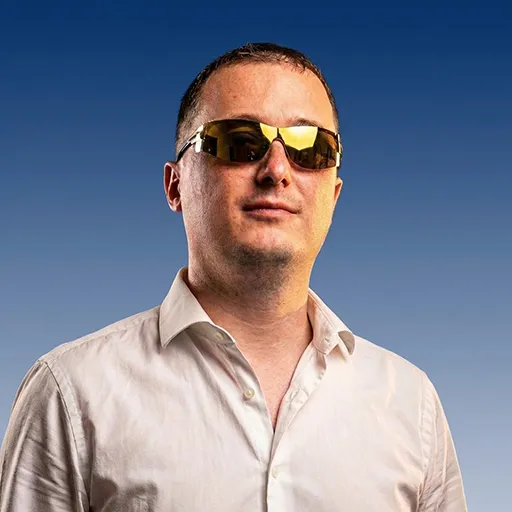
Reviewed by Dmytro Nasyrov
Founder and CTO
23+ years in software development. Led oil and gas platform projects for upstream, midstream and downstream operators, ISO 27001-aligned. IEC 62443 industrial cybersecurity expertise.
Energy software development in 2026: smart grid, energy management, trading and field-service types, build vs buy, costs and timelines by scope.

IoT development guide covering architecture patterns, MQTT and communication protocols, AWS/Azure platforms, security best practices and cost planning.

Manufacturing software development in 2026: MES, ERP, IIoT, digital twin and predictive maintenance types, build vs buy, costs and timelines.
Oil and gas software market in numbersThe global oilfield services digital market is projected to reach $40.8 billion by 2030 at 6.8% CAGR (Grand View Research). The pipeline monitoring market will exceed $8.2 billion by 2030 (MarketsandMarkets). 68% of oil and gas companies plan to increase digital spending through 2028 (Deloitte). Predictive maintenance in O&G is expected to save $1.6 billion annually by 2027.
Pharos Production oil and gas delivery metricsAverage time to MVP for oil and gas platforms is 14 weeks. SCADA integration layers handle 200,000+ tag reads per second with sub-100ms latency. Zero HSE compliance gaps across delivered platforms. The Verified Delivery process uses 2-week sprints with SCADA simulation testing and IEC 62443 security validation at every iteration.
| Factor | Custom (Pharos) | Off-the-shelf (OSIsoft/AVEVA, Halliburton, Schlumberger) |
|---|---|---|
| SCADA integration | Custom adapters for any RTU, PLC and historian system | Pre-built connectors for supported SCADA vendors only |
| Pipeline monitoring | Custom leak detection with ML on your pipeline data | Standard threshold-based alarming |
| Drilling optimization | Custom real-time models for your formation and equipment | Generic drilling advisory with limited customization |
| HSE compliance | Custom workflows mapped to your regulatory requirements | Standard HSE templates for common regulations |
| Production analytics | ML models trained on your well and reservoir data | Canned reports with standard decline curves |
| Remote operations | Custom mobile-first apps for field crews in low connectivity | Desktop-focused with basic mobile access |
| Cost model | One-time development + hosting | Per-well or per-site licensing, annual maintenance 20%+ |
Pharos Production recommends custom oil and gas software for operators managing 500+ wells, midstream companies needing custom pipeline analytics or organizations with unique HSE requirements that vendor templates cannot accommodate.
A midstream operator needed a unified monitoring platform for 3,000 miles of natural gas pipelines across 4 states, replacing a patchwork of legacy SCADA displays and paper-based inspection workflows. The core challenge: integrating 15,000 SCADA tags from 8 different RTU vendors into a real-time monitoring dashboard with ML-powered leak detection that works across variable terrain and operating conditions. Our approach: an OPC UA aggregation layer that normalizes data from all RTU vendors into a canonical pipeline data model. Sensor data streams through Apache Kafka at 200,000+ tag reads per second into a time-series database (TimescaleDB) for analytics. The leak detection engine uses a combination of negative pressure wave analysis and ML anomaly detection on flow, pressure and temperature patterns. The ML model was trained on 3 years of operational data plus 200 simulated leak scenarios, achieving 97% detection rate with a false alarm rate under 2 per month per 100-mile segment. Field crews use a mobile app with offline capability that replaces paper-based pipeline inspection checklists, syncing inspection data via satellite when in remote areas. HSE incident reporting and tracking is integrated end-to-end. The platform reduced leak response time from 4 hours to 18 minutes and decreased HSE compliance documentation effort by 60%. Explore our open-source libraries on GitHub.
| Metric | Before Pharos | After Pharos |
|---|---|---|
| Monitoring | Patchwork legacy SCADA displays | Unified real-time dashboard, 15,000 SCADA tags |
| Leak detection | Manual patrol and threshold alarms | ML-powered detection, 97% accuracy, < 2 false alarms/month/100mi |
| Leak response time | 4 hours average | 18 minutes with automated alerting and crew dispatch |
| Field inspections | Paper-based checklists | Mobile app with offline sync and GPS-tagged records |
| HSE compliance | Manual documentation, audit gaps | 60% reduction in documentation effort, full audit trail |
Metrics from a pipeline monitoring platform for 3,000 miles of midstream infrastructure across 4 states. 15,000 SCADA tags, 8 RTU vendors.
Proprietary research based on oil and gas platform projects delivered by Pharos Production. Dataset covers production monitoring, pipeline management and drilling optimization systems. Methodology (Pharos Verified Delivery): aggregated delivery metrics with 6-18 months post-deployment monitoring per project. Full report available on request.
Key technology shifts that impact how Pharos Production architects oil and gas software development software for clients.
Digital Oilfield and Remote Operations
Remote operations centers (ROC) enable a single team to monitor and control wells across thousands of square miles. AI-powered anomaly detection identifies issues hours before field operators could. 68% of O&G companies are increasing digital oilfield investment. Pharos Production builds ROC platforms with real-time SCADA integration and AI alerting.
AI-Powered Predictive Maintenance
ML models analyzing vibration, temperature, pressure and flow data predict equipment failures 2-4 weeks before they occur. Predictive maintenance reduces unplanned downtime by 30-40% in upstream operations. Pharos Production builds equipment-specific failure prediction models trained on customer operational data.
Pipeline Digital Twins
Digital twins model pipeline networks in real time, simulating flow dynamics, corrosion progression and leak scenarios. Operators test maintenance plans and operational changes virtually before execution. Pharos Production builds pipeline digital twins with real-time sensor data fusion and physics-based corrosion models.
Emissions Monitoring and ESG Compliance
Methane leak detection using satellite data, drone surveys and IoT sensors is becoming mandatory. EPA Quad O regulations and EU methane regulation require continuous monitoring. Pharos Production builds emissions tracking platforms with LDAR (Leak Detection and Repair) workflow integration.
Drilling Automation and Optimization
Real-time drilling optimization uses downhole sensor data (MWD/LWD) to adjust parameters and avoid hazards. AI advisory systems recommend weight-on-bit, RPM and flow rate adjustments. Pharos Production builds drilling optimization dashboards that process WITS data in real time with ML recommendations.
Cloud Migration for Industrial Systems
Oil and gas companies are migrating from on-premise historians (PI, Wonderware) to cloud-based data platforms. Hybrid architectures keep real-time control on-premise while analytics run in the cloud. Pharos Production builds hybrid cloud architectures with SCADA-to-cloud data bridges that maintain IEC 62443 compliance.
Pharos Production works in three engagement models, from a focused PoC to a production MVP to a full enterprise platform, with typical budgets from $10,000 to $400,000+ depending on scope and complexity.
Focused validation of your riskiest technical assumption with a working spike and a clear build-or-pivot recommendation.
Production-ready first version with core flows, real backend and the integrations to onboard first paying users.
Full-scale build with architecture, DevOps, QA, security and long-term evolution.
Prices vary based on project scope, complexity, timeline and requirements. Hourly rates range from $35 to $75 depending on role and seniority. Contact us for a personalized estimate.
Need extra hands on your software project? Our developers can jump in at any stage - from architecture to auditing - and integrate seamlessly with your team to fill any technical gaps.
Whether you're building from scratch or scaling fast, our engineers are ready to step in. You stay in control, and we handle the code.
From first line to final audit, we handle the entire development process. We will deliver secure, production-ready software, while you can focus on your business.
| Model | Best for | Team setup | Budget range |
|---|---|---|---|
| Staff Augmentation | Existing teams needing extra engineers at any project stage | 1-2 weeks | From $5,000/month |
| Dedicated Team Popular | Long-term projects requiring full ownership and control | 2-4 weeks | From $15,000/month |
| Project Outsourcing | Full-cycle development from idea to production launch | 1-2 weeks | $10,000-$80,000+ |
Our company starts and assembles an entire project specialists with the perfect blend of skills and experience to start the work.
We'll design, build and launch your MVP, ensuring it meets the core requirements of your software solution.
We'll create a complete software solution that is custom-made to meet your exact specifications.
Our company will be right there with you, keeping your software solution running smoothly, fixing issues and rolling out updates.
Our engineers work with 187+ technologies across blockchain, backend, frontend, mobile and DevOps - chosen for production reliability and performance.
Our engineers work with 187+ technologies across 10 categories: Frameworks, AI, Blockchains, DevOps, Clouds, Databases, Brokers, Tests, Programming, UI/UX.













































Recognized on Clutch, GoodFirms and The Manifest for software engineering excellence










Quick answers to common questions about custom software development, pricing, process and technology.
Type to filter questions and answers. Use Topic to narrow the list.
Showing all 14
No matches
Try a different keyword, change the topic or clear filters
Pharos Production has been in business since 2013, with over 13 years of experience in custom software development. During this time, we have delivered over 110 applications for 200+ clients across 28 industries, including FinTech, healthcare, crypto and e-commerce. We are rated 5/5 on Clutch based on 101 verified reviews (2026).
Pharos Production provides six core service categories: Software Development (mobile apps, web platforms, database design, UI/UX), Blockchain Development (smart contracts, DeFi, tokenization on Ethereum, Solana, TON and other chains), Software Security (code audits, penetration testing, smart contract audits), Software Consulting (architecture design, MVP validation, startup consulting) and Software Testing and QA (manual, automation, performance and regression testing).
Pharos Production is headquartered in Las Vegas, Nevada, USA (5348 Vegas Dr, Las Vegas, NV 89108), with an engineering office in Kyiv, Ukraine (44-B Eugene Konovalets Str. Suite 201, Kyiv 01133). We work with clients worldwide and provide remote collaboration across all time zones. Visit our contact page for directions and scheduling options.
Pharos Production has a team of 90+ engineers, including software developers, blockchain specialists, QA engineers, DevOps experts, UI/UX designers, project managers and solution architects. Our founder, Dr. Dmytro Nasyrov, holds a PhD in Artificial Intelligence and leads the technical direction of all projects.
We serve a wide range of clients, from startups and product companies to mid-sized enterprises and large institutions. Our clients include crypto exchanges, FinTech providers (like Pleenk), healthcare organizations, sportsbook operators (like Pro Gambling), e-commerce platforms and SaaS companies. Pharos Production has worked with 200+ clients across 28 industries since 2013, adapting engagement models to match each client's stage, whether it is MVP validation for a startup or enterprise-scale development for an established business.
A custom software development company like Pharos Production assigns one dedicated engineering team that owns your product across multiple release cycles, instead of handing it off once a contract ends. Agencies more often rotate staff between clients and optimize for fast delivery over long-term product ownership.
Pharos Production keeps the same team on your codebase through 2-week sprints, so there is no re-onboarding cost each time you request a new feature.
Custom software development costs vary based on project scope and complexity. At Pharos Production, typical project ranges are: MVP development ($10,000-$25,000), suitable for startups validating a product idea; full-fledged production ($25,000-$50,000), for established businesses scaling a proven concept; and full-cycle development ($50,000-$80,000+), for complex enterprise-grade systems. These ranges include architecture design, development, QA testing and deployment. Hourly rates range from $35 to $75 depending on role and seniority. Final pricing depends on technology stack, number of integrations and engagement model (staff augmentation, dedicated team or project outsourcing).
Development timelines depend on scope and complexity. At Pharos Production, a typical MVP takes 2-4 months, a production-ready application takes 4-8 months and a complex enterprise system can take 8-12+ months. We use an agile methodology with 2-week sprints, delivering working increments after each sprint. Every sprint includes a retrospective, progress report and planning session for the next iteration. This approach ensures transparency and allows businesses to launch faster by prioritizing high-impact features first. Get a timeline estimate for your project.
Pharos Production serves 28 industries: Crypto, Web3 and Blockchain, Sports and Sportsbooks, Casino and Gambling, FinTech, Healthcare, E-Commerce, Insurance, Energy and Utilities, Education, Telecom, Media and Entertainment, Logistics and Transportation, Marketing, Banking, Construction and Real Estate, Agriculture, Travel, Fitness, Food & Restaurant, On-Demand, Manufacturing, Automotive, Oil & Gas, Supply Chain, Gaming, Streaming and Aviation. Our deepest expertise is in FinTech, blockchain and healthcare, where we have delivered compliance-ready platforms (HIPAA, PCI DSS, GDPR) and high-load systems handling thousands of concurrent users. For the latest industry insights, read our guides on FinTech trends in 2026 and the Web3 technology stack.
Hiring a software development company offers faster time-to-market, lower upfront costs and access to specialized expertise without long-term employment commitments. According to Deloitte's 2024 Global Outsourcing Survey, 57% of companies outsource software development to access skills they cannot hire internally.
| Factor | In-house team | Software development company |
|---|---|---|
| Time to assemble | 3-6 months (recruiting + onboarding) | 1-2 weeks |
| Upfront cost | High (salaries, benefits, equipment) | Lower (project-based pricing) |
| Specialized expertise | Limited to who you can hire locally | Access to 90+ engineers across blockchain, AI, FinTech |
| Scalability | Slow (each new hire takes months) | Fast (scale up or down per sprint) |
| Long-term commitment | Full-time employment contracts | Flexible engagement models |
| Risk | High if key engineers leave | Company ensures continuity and knowledge transfer |
For businesses that need blockchain, AI or high-load architecture expertise, outsourcing to a specialized firm like Pharos Production reduces risk and accelerates delivery.
Pharos Production focuses on mid-to-large custom software projects with budgets starting at $10,000. We do not take on template-based websites, WordPress theme customization or short-term contracts under one month. We also do not provide non-technical staffing (marketing, sales or design-only roles). Our strongest fit is blockchain, FinTech and healthcare projects where security, compliance and high-load architecture are critical. For smaller projects or MVPs under $10,000, we recommend exploring freelance platforms or no-code tools as a more cost-effective starting point.
We use agile with 2-week sprints because it reduces the risk of building features that miss the mark. Each sprint ends with a working demo, a retrospective and a plan for the next iteration.
This means clients see progress every 14 days and can adjust priorities based on real results, not assumptions. According to the Standish Group CHAOS Report (2024), agile projects are 3x more likely to succeed than waterfall projects. We chose this approach after years of experience showing that rigid, fixed-scope contracts lead to scope creep, missed deadlines and products that do not match market needs by launch day.
Custom development is not the right choice in every situation. You should not hire a custom software company if: your problem is fully solved by an existing SaaS product (e.g. Shopify for e-commerce, Salesforce for CRM); your budget is under $10,000 and timeline is under 4 weeks; you need a simple landing page or marketing website (WordPress or Webflow is faster and cheaper); or you are still validating the idea and have not spoken to potential users yet.
In these cases, off-the-shelf tools or no-code platforms offer better ROI. Custom development makes sense when you need unique workflows, regulatory compliance, high-load architecture or competitive differentiation that packaged software cannot provide.
Here are three anonymized examples from our recent delivery history:
FinTech startup - payment platform (MVP)
Scope: mobile app + backend API with bank-grade encryption. Team: 4 engineers, 1 QA. Timeline: 10 weeks. Budget: $38,000. Result: launched on schedule, processed $2M+ in transactions within the first quarter.
Healthcare provider - patient portal (Full product)
Scope: HIPAA-aligned web platform with EHR integration, appointment scheduling and telemedicine. Team: 6 engineers, 1 DevOps, 2 QA. Timeline: 6 months. Budget: $120,000. Result: 15,000+ active patients, zero compliance violations in two annual audits.
Crypto exchange - trading engine (Complex)
Scope: high-load matching engine handling 50,000+ orders per second, multi-chain wallet infrastructure on Ethereum and Solana. Team: 8 engineers, 2 QA, 1 security auditor. Timeline: 11 months. Budget: $340,000. Result: 99.97% uptime, passed three independent security audits.
See more projects: NoMoreBets, Pulse, Sagas, Gambit Stream and Pleenk. For the full portfolio, visit our case studies. Learn more about the technology behind these projects in our guide to stablecoins and crypto infrastructure.
90+ engineers ready to deliver your Oil and Gas Software project on time and within budget
Contact us today to discuss your project. We're ready to review your request promptly and guide you on the best next steps for collaboration
Same dayWe're committed to keeping your information confidential, so we'll sign a Non-Disclosure Agreement
1 dayAfter we chat about your goals and needs, we'll craft a comprehensive proposal detailing the project scope, team, timeline and budget
3-5 daysLet's connect on Google Meet to go through the proposal and confirm all the details together!
1-2 daysAs soon as the contract is signed, our dedicated team will jump into action on your project!
Same dayHeadquarters in Las Vegas, Nevada. Engineering office in Kyiv, Ukraine.
We also work with clients through dedicated local teams in Las Vegas, New York and San Francisco.
Thanks for the request!
We typically reply within 4 hours