Entertainment Software Development in 2026: Types, Cost and Build Guide
Entertainment software development in 2026: ticketing, fan engagement, content and rights management and interactive types, build vs buy, costs and timelines by scope.
 Updated
8 min read
308 views
Updated
8 min read
308 views
Key takeaways: entertainment software development in 2026 5
The main system types, build vs buy and the real cost ranges by scope.
- Name the type first Ticketing, fan engagement, rights and royalties or an interactive experience - each is a different build and budget.
- Rights complexity drives cost Multi-territory licensing and royalty reconciliation are the modeling work that moves the budget most.
- Cost by scope $50K-$140K a module, $140K-$420K a platform, $420K-$1.8M and up an enterprise suite.
- Design for the on-sale spike Ticketing and second-screen features must survive the same traffic spike as the live moment itself.
- AI targets rights and personalization Recommendation, dynamic pricing and AI-assisted royalty reconciliation are the clearest 2026 returns.
Entertainment software development runs from a single event-ticketing widget to a full fan and rights platform for a media or entertainment business - ticketing, fan engagement, content management, rights and royalties and the interactive experiences layered around an event or release - so the cost and the build swing widely with what you are actually making. The job is to name the system you need - a ticketing platform, a fan engagement app, a rights and royalties system, an interactive or second-screen experience - then decide whether to buy, customize or build it. This guide explains entertainment software development in 2026: the main types, build versus buy, what drives the cost and the honest ranges, before you scope a project with an entertainment technology partner.
In short: entertainment software spans media and content platforms, ticketing and event software, fan engagement and loyalty apps, content management with rights and royalties tracking and interactive entertainment beyond gaming such as live trivia, watch parties and second-screen companion experiences. A single custom module or MVP - a ticketing widget, a fan app or a lightweight rights tracker - costs roughly $50,000 to $140,000 over 3 to 6 months. A mid-size platform - ticketing plus fan engagement, a content hub and core integrations - runs $140,000 to $420,000 over 6 to 11 months. An enterprise suite spanning multi-venue ticketing, a rights and royalty engine, DRM and personalization at scale reaches $420,000 to $1.8M and up over 12 to 22 months. Off-the-shelf ticketing and CMS platforms start fast but charge per ticket or per seat and limit how much of the fan relationship and data you actually own. Custom wins when your event footprint, your fan experience or your rights complexity make the platform fees and constraints hurt. Video streaming delivery is its own specialist track, covered separately. This guide focuses on the ticketing, engagement, rights and interactive layers around it.
What entertainment software is, and its main types
Entertainment software ties together the audience, the content and the business side of a media or entertainment company, and it is not one product but a family of systems. Most projects are one or two of them rather than all at once. The main types are media and content platforms (organizing and distributing shows, articles, music or video), ticketing and event software (selling and managing access to a show, game or venue), fan engagement and loyalty apps (keeping an audience coming back with points, offers and community), content management with rights and royalties tracking (who owns what, who gets paid and where it can legally run) and interactive entertainment beyond gaming - live trivia, watch parties, polls, fan-generated content and other formats that turn a passive audience into an active one. Second-screen experiences, a companion app or web view synced to a live event or broadcast, often sit across several of these types at once. Naming which of these you need is the single most important scoping decision, because a ticketing widget and a full rights and royalty platform are different worlds of cost.
The core systems explained
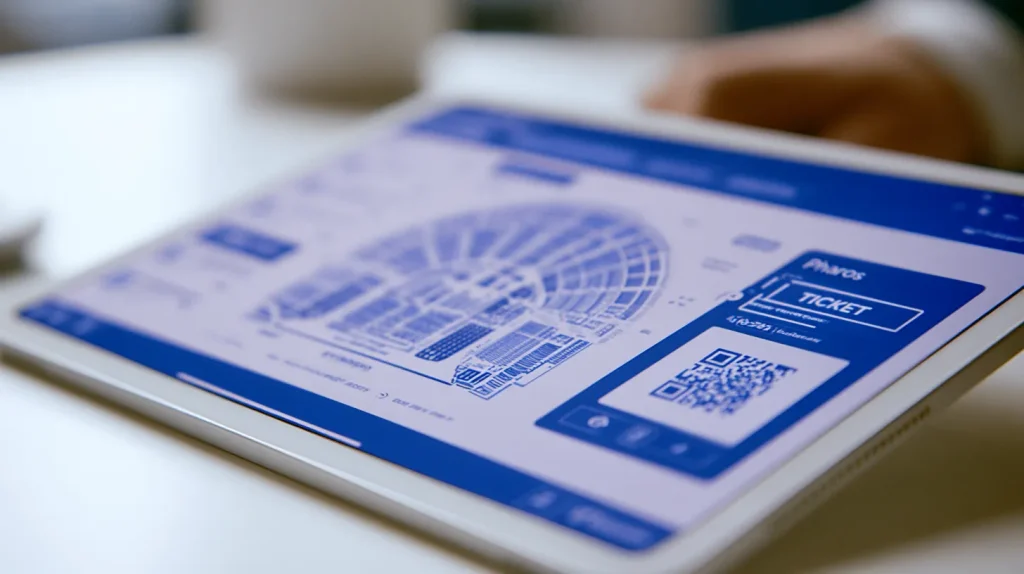
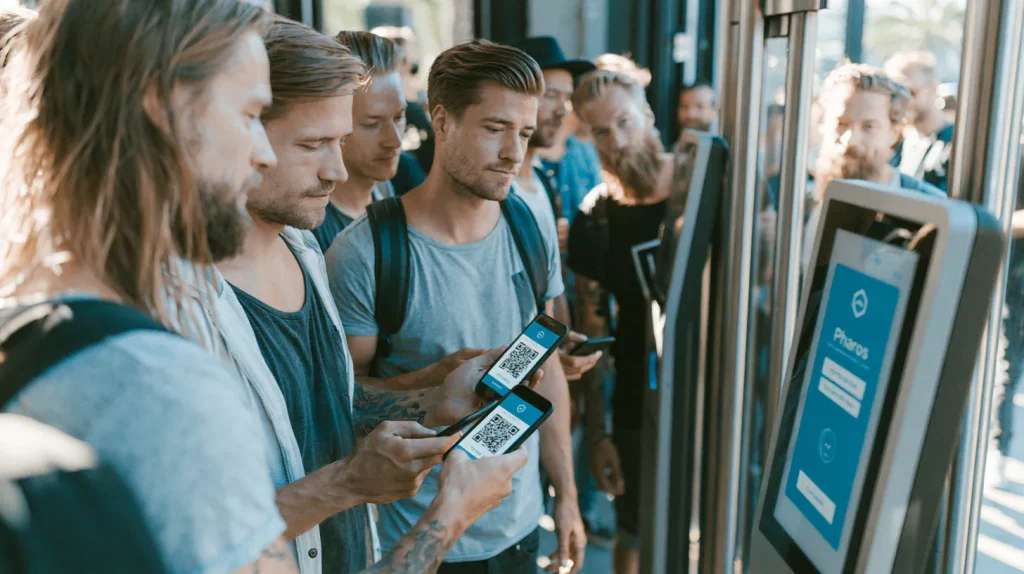
Ticketing and event software: seat maps, pricing tiers, checkout, access control and box-office reporting for a venue, tour or festival, often the highest-traffic and highest-stakes system in the stack on an on-sale day.
Fan engagement and loyalty apps: the layer that turns a one-time attendee or viewer into a repeat fan through points, tiered rewards, community features and personalized offers tied to what someone actually watched or attended.
Content management with rights and royalties: the system of record for what content exists, who owns which rights in which territory or window and how usage is tracked and reconciled into royalty payments to creators, rights holders and partners.
Interactive entertainment beyond gaming: live trivia, polls, watch parties, fan-generated content and similar real-time formats that run alongside a broadcast or event rather than as a standalone game.
Second-screen experiences: a companion app or web view synced to a live event, giving stats, camera angles, chat or bonus content on a second device while the main screen plays the event.
Merchandising and venue commerce: the point-of-sale and inventory layer for concessions, parking, retail and branded goods sold on-site or online around an event, tied to the same fan profile and payment rails as ticketing and loyalty.
Build, buy or customize
The first cost decision is build versus buy. Off-the-shelf platforms - established ticketing providers, CMS suites and loyalty tools - cover standard operations and start fast, but you pay per ticket, per seat or per active user, and you fit your fan experience and your data to their model. Custom software is the right call when your event footprint or content catalog is unusual, when platform and per-ticket fees become painful at scale, when you want to own the fan relationship and first-party data instead of renting it or when rights and royalty tracking is complex enough that a generic tool cannot model it accurately. Many operators run a hybrid: an off-the-shelf ticketing engine for the box-office basics with a custom fan engagement layer, content hub or rights system built around it. The custom layer is usually where the fan experience and the long-term data advantage sit.
What drives entertainment software cost
Within any type, the same factors move the number. Scope - a single ticketing widget versus a full multi-venue, multi-property suite. Rights and royalty complexity - multi-territory licensing, multiple rights holders and usage-based royalty calculation add real modeling and reconciliation work. Integrations - payment and box-office systems, seating and venue mapping, rights databases and DRM vendors, ad tech and CRM all add integration depth. Real-time load - an on-sale moment or a live second-screen sync cannot buckle under a traffic spike, so resilient, high-concurrency design matters. And personalization - tailoring content, offers and merchandising to a fan profile adds engineering scope on top of the core system. AI adds forecasting and content matching on top of that.
Entertainment software cost and timeline in 2026
Ranges track scope and rights complexity more than anything else.
Single module / MVP: $50,000 to $140,000, 3 to 6 months. One focused system - a ticketing widget, a fan engagement app or a lightweight rights tracker - with payment and one or two integrations.
Mid-size platform: $140,000 to $420,000, 6 to 11 months. Ticketing with fan engagement, a content hub, loyalty and core rights tracking, with dashboards and reporting.
Enterprise platform: $420,000 to $1.8M and up, 12 to 22 months. A multi-venue or multi-property suite with a full rights and royalty engine, personalization at scale, merchandising integration and multi-brand rollout.
On top of build cost, budget 15 to 20 percent of it per year for maintenance, plus payment processing, infrastructure that scales with event days and audience size and new integrations as rights and merchandising partners change. For a wider view of lifetime cost, mobile-first fan and ticketing apps carry their own cost curve, covered in our mobile app development cost guide.
Integrations that matter
Entertainment software lives or dies on its integrations, because it sits between fans, money, content and rights partners. The usual set is payment and box-office systems, seating chart and venue mapping providers, rights and royalty databases and reporting tools, DRM vendors for licensed content protection, ad tech and CDN partners, CRM and marketing platforms for loyalty and offers and social and second-screen APIs for real-time companion experiences. Ticketing checkout in particular leans on solid commerce engineering, which we cover in our headless commerce guide, and interactive formats beyond gaming borrow patterns from real-time, session-based product design covered in our game development guide.
AI in entertainment software in 2026
The clearest returns in modern entertainment tech come from AI. Personalized content and merchandising recommendations surface what a fan is most likely to want next. Dynamic, demand-based ticket pricing lifts revenue at peak on-sale moments. Fan sentiment analysis reads engagement signals across an event or release. AI-assisted rights matching and royalty reconciliation speeds up a traditionally manual, error-prone process. Anti-piracy detection flags unauthorized redistribution of licensed content faster. These add cost, but they target the highest-friction, highest-value parts of the business: getting the right content to the right fan and getting rights holders paid accurately and on time.
Common mistakes
The expensive errors repeat. Underestimating on-sale traffic and building a ticketing checkout that buckles the moment tickets go live. Treating rights and royalty tracking as a spreadsheet problem long after the catalog and partner count have outgrown one. Renting the entire fan relationship from a closed ticketing or CMS platform and losing the first-party data that loyalty and personalization depend on. Bolting on a recommendation engine without clean content metadata to make it useful. And building a second-screen or interactive experience as an afterthought instead of designing it to survive the same traffic spike as the main event.
How to decide
Start by naming the system you actually need - ticketing, fan engagement and loyalty, content management with rights and royalties or an interactive or second-screen experience - because that, plus your rights complexity and integration depth, sets the band more than anything else. If standard operations will do, an off-the-shelf ticketing or CMS platform gets you running fast. If your fan experience, your event footprint or your rights model justify it, build the custom layer that makes them an advantage, and design ticketing and second-screen features to survive the traffic spike of a live moment. Most operators land on a hybrid and invest the custom budget where the differentiation and the data ownership are. If you are scoping an entertainment software build, our entertainment software development team can map the type, rights and integration complexity, cost and timeline with you, from a single ticketing widget to a multi-venue platform.
FAQ
Quick answers to common questions about custom software development, pricing, process and technology.
Type to filter questions and answers. Use Topic to narrow the list.
Showing all 7
No matches
Try a different keyword, change the topic or clear filters
-
A single custom module or MVP - a ticketing widget, a fan app or a lightweight rights tracker - costs roughly $50,000 to $140,000 over 3 to 6 months. A mid-size platform with ticketing, fan engagement, a content hub and core integrations runs $140,000 to $420,000 over 6 to 11 months.
An enterprise suite with a full rights and royalty engine, DRM and personalization at scale reaches $420,000 to $1.8M and up over 12 to 22 months.
-
Buy off-the-shelf ticketing, CMS or loyalty platforms when your operations are standard and speed matters - you start fast but pay per ticket, per seat or per active user and fit your fan experience to their model. Build custom when your event footprint or content catalog is unusual, platform fees hurt at scale, you want to own the fan relationship and data or your rights and royalty tracking is too complex for a generic tool.
Many run a hybrid: an off-the-shelf ticketing engine with a custom fan engagement or rights layer around it.
-
Fan engagement and loyalty apps keep an audience coming back with points, offers and community tied to what they watched or attended. A content management system with rights and royalties tracking is the system of record for what content exists, who owns which rights and how usage is reconciled into payments.
Most full builds need both, connected so engagement data can inform content decisions and vice versa.
-
A single module or MVP ships in 3 to 6 months, a mid-size ticketing-plus-engagement platform in 6 to 11 months and a multi-venue enterprise suite in 12 to 22 months or more. Rights and royalty complexity, DRM integration and high-concurrency on-sale traffic usually set the schedule more than the core application.
-
The usual set is payment and box-office systems, seating chart and venue mapping providers, rights and royalty databases and reporting tools, DRM vendors for licensed content protection, ad tech and CDN partners, CRM and marketing platforms for loyalty and offers and social and second-screen APIs for real-time companion experiences. Ticketing checkout in particular leans on solid commerce engineering.
-
The clearest uses are content recommendation across a catalog, dynamic demand-based ticket pricing at peak on-sale moments, fan sentiment analysis, AI-assisted rights matching and royalty reconciliation and anti-piracy detection for DRM systems. AI targets the highest-friction parts of the business, getting the right content to the right fan and getting rights holders paid accurately.
-
Budget 15 to 20 percent of the build cost per year for maintenance, plus payment processing, infrastructure that scales with event days and audience size and new integrations as rights and merchandising partners change. Off-the-shelf ticketing and CMS platforms add per-ticket, per-seat or per-user fees on top, part of why custom can win at scale.
Entertainment software glossary 7
- Rights management
- Tracking who owns which content rights in which territory or licensing window and keeping usage inside what has actually been licensed, the foundation any royalty calculation depends on.
- White-label ticketing
- A ticketing platform built or licensed so a venue, promoter or league can run it under its own brand instead of a third-party marketplace name, keeping the checkout and the fan data first-party.
- Dynamic pricing
- Adjusting ticket or content prices in real time based on demand, inventory and timing, most visible around a high-demand on-sale moment or a limited-capacity event.
- Fan token
- A digital token or points-based asset tied to a team, artist or franchise that fans hold for perks, voting or community access, an emerging layer on top of traditional loyalty programs.
- Second-screen experience
- A companion app or web view synced to a live event or broadcast, offering stats, camera angles, chat or bonus content on a second device while the main screen plays the event.
- Licensing window
- The specific date range during which a rights holder has authorized content to run in a given territory or on a given platform, after which it must be pulled or re-licensed to keep using it legally.
- Royalty reconciliation
- Matching content usage data against rights agreements to calculate and pay out what each creator, rights holder or partner is actually owed, traditionally manual and increasingly AI-assisted.

I work with startup founders who need a dedicated software development team but don’t want to gamble on hiring, random outsourcing, or opaque delivery.
Most founders face the same problem sooner or later.
Early technical and team decisions lock the product into tech debt, slow delivery, missed milestones and constant re-hiring. By the time this becomes visible, fixing it is already expensive.As a CTO and software architect, I help founders design, build and run dedicated development teams that work as a true extension of the startup. Not as a black-box vendor.
My focus is on complex products where mistakes are costly:
- Web3 and blockchain platforms
- FinTech and regulated products
- High-load startup systems
- MVP → scale transitions
We don’t do body-shopping.
We don’t sell generic outsourcing.Instead, we help founders:
- build the right team structure from day one
- keep technical ownership and transparency
- scale delivery without losing control
- avoid vendor lock-in and hidden risks
Teams are aligned with the product roadmap, business goals and long-term architecture. Not just short-term velocity.