IoT Development Guide: Architecture, Protocols and Platforms
IoT development guide covering architecture patterns, MQTT and communication protocols, AWS/Azure platforms, security best practices and cost planning.
 Updated
5 min read
222 views
Updated
5 min read
222 views
Technically reviewed by Victor Sineglazov, D.Sc.

Key takeaways 5
- IoT projects fail at alarming rates 18.8 billion connected devices are projected by end of 2026, yet 75% of IoT projects fail due to architecture mistakes and underestimated complexity.
- MQTT leads IoT messaging protocols MQTT is the de facto standard for IoT messaging, using a lightweight publish/subscribe model with QoS levels to balance reliability and bandwidth.
- Edge computing will dominate enterprise data Gartner projects 75% of enterprise data will be processed at the edge by 2027, up from just 10% in 2022.
- Weak credentials drive security incidents NIST reports that 70% of IoT security incidents involve devices with default or weak credentials, making unique cryptographic identity essential.
- Prototype-to-production costs scale sharply IoT prototypes cost $45,000-$120,000 and pilots add $110,000-$350,000 before production readiness requires a further $170,000-$550,000.
Introduction
The Internet of Things continues its massive expansion with 18.8 billion connected devices projected by the end of 2026 according to IoT Analytics. Yet IoT development remains one of the most complex software engineering disciplines, spanning hardware, firmware, connectivity, cloud infrastructure and applications. According to Cisco, 75% of IoT projects fail - primarily due to architectural mistakes and underestimating system complexity. This guide covers the essential architecture patterns, protocols, platforms and security practices for successful IoT development.
IoT Architecture Patterns
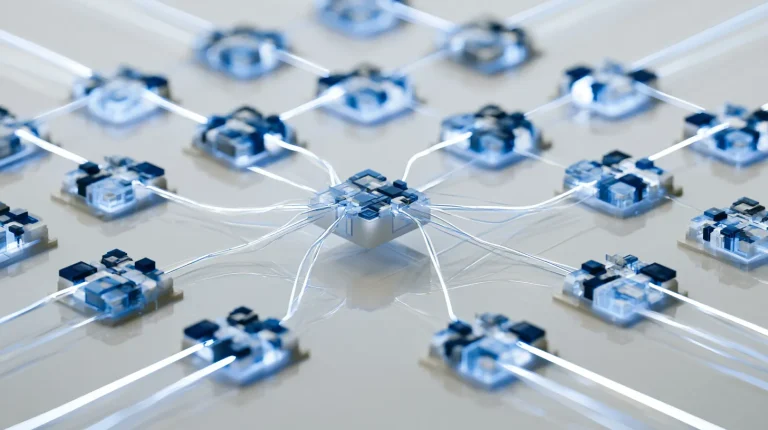
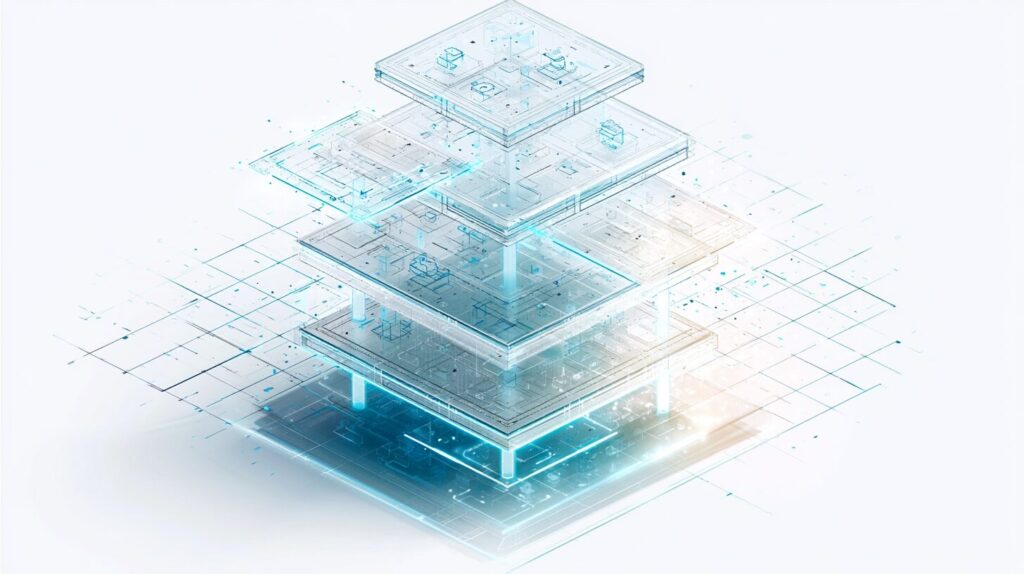
Modern IoT systems follow a layered architecture that separates concerns and enables independent scaling of each layer.
Device Layer
The device layer includes sensors, actuators and embedded processors. Choose microcontrollers (ESP32, STM32, nRF52) for simple, low-power devices or single-board computers (Raspberry Pi, Jetson Nano) for edge computing. Hardware costs range from $2-$5 for basic sensors to $50-$200 for edge computing devices. Firmware development costs $20,000-$100,000 per device type.
Connectivity Layer
Protocol selection depends on range, bandwidth and power requirements. Wi-Fi provides high bandwidth (up to 1 Gbps) but high power consumption. BLE offers low power with short range (50-100m). LoRaWAN delivers long range (2-15km) with very low power but limited bandwidth (0.3-50 kbps). Cellular (LTE-M, NB-IoT) provides wide-area coverage with moderate power and costs $1-$5/month per device. 5G enables high-bandwidth, low-latency IoT for industrial and vehicle applications.
Edge Layer
Edge computing processes data close to the source, reducing latency, bandwidth costs and cloud dependency. According to Gartner, 75% of enterprise data will be processed at the edge by 2027, up from 10% in 2022. Edge gateways aggregate device data, run local analytics and forward filtered results to the cloud. AWS IoT Greengrass, Azure IoT Edge and Google Cloud IoT Edge are the leading platforms.
Cloud Layer
The cloud layer handles data storage, analytics, device management and application hosting. Use time-series databases (InfluxDB, TimescaleDB) for sensor data at $200-$2,000/month. Implement device twin/shadow patterns for state synchronization. Build dashboards and APIs for end-user applications.
Communication Protocols
Choosing the right protocol is critical for IoT system performance and reliability.
MQTT. The de facto standard for IoT messaging. Lightweight publish/subscribe protocol ideal for constrained devices. QoS levels (0, 1, 2) balance reliability and bandwidth. Mosquitto (open-source) or cloud-hosted brokers (AWS IoT Core, HiveMQ) handle millions of concurrent connections. Best for: telemetry, monitoring, remote control.
CoAP. REST-like protocol designed for constrained devices. UDP-based with lower overhead than HTTP. Supports observe pattern for real-time updates. Best for: sensor networks, resource-constrained devices, RESTful IoT APIs.
AMQP. Enterprise-grade messaging with guaranteed delivery, message queuing and complex routing. Higher overhead than MQTT but more features. Best for: enterprise integration, complex event processing, systems requiring guaranteed message delivery.
WebSocket. Bidirectional communication over TCP. Best for: browser-based IoT dashboards, real-time control panels and applications requiring persistent connections.
IoT Cloud Platforms Comparison
Major cloud providers offer comprehensive IoT platforms that reduce custom development by 40-60%.
AWS IoT. The most feature-complete IoT platform with IoT Core (device connectivity), Greengrass (edge), SiteWise (industrial), FleetWise (automotive) and TwinMaker (digital twins). Pricing starts at $0.08 per million messages. Market leader with 32% IoT platform share according to IoT Analytics.
Azure IoT. Strong enterprise integration with IoT Hub, IoT Central (low-code), Digital Twins and Azure Sphere (security). Best for Microsoft-ecosystem organizations. Pricing starts at $0.05 per million messages for basic tier.
Google Cloud IoT. Cloud IoT Core was deprecated in 2023, but Google offers Pub/Sub, Dataflow and BigQuery for IoT data pipelines. Strongest for AI/ML analytics on IoT data with Vertex AI integration. Best for organizations already invested in GCP.

IoT Security Best Practices
IoT security is critical - compromised devices can serve as entry points to corporate networks and cause physical harm.
Device identity. Every device must have a unique, cryptographically strong identity. Use X.509 certificates or hardware security modules (HSMs) for device authentication. Cost: $0.50-$5.00 per device for hardware-based security. According to NIST, 70% of IoT security incidents involve devices with default or weak credentials.
Secure communication. Encrypt all data in transit using TLS 1.3 for MQTT/HTTPS or DTLS for CoAP. Implement mutual authentication between devices and cloud. Use certificate rotation and revocation lists.
Firmware updates. Implement OTA (Over-The-Air) update capability with code signing, rollback mechanisms and staged rollouts. Budget $10,000-$30,000 for a robust OTA system. Devices that cannot be updated securely will become vulnerable within 12-18 months.
Network segmentation. Isolate IoT devices on separate network segments from corporate IT infrastructure. Use firewalls and intrusion detection between segments. According to Palo Alto Networks, 98% of IoT traffic is unencrypted when internal network segmentation is absent.
IoT Development Cost Planning
IoT projects have unique cost structures that differ significantly from pure software projects.
Prototype (3-6 months). Hardware prototyping: $10,000-$30,000. Firmware development: $20,000-$50,000. Cloud infrastructure and basic application: $15,000-$40,000. Total: $45,000-$120,000.
Pilot (6-12 months). Hardware refinement and small batch: $30,000-$100,000. Full firmware and connectivity stack: $50,000-$150,000. Cloud platform and analytics: $30,000-$100,000. Total: $110,000-$350,000.
Production (12-24 months). Hardware certification (FCC, CE): $20,000-$50,000. Manufacturing setup: $50,000-$200,000. Scaled cloud infrastructure: $100,000-$300,000. Total additional: $170,000-$550,000.
Key Takeaways
- 18.8 billion devices by 2026. IoT continues rapid growth but 75% of projects fail due to architecture mistakes and underestimated complexity according to Cisco.
- MQTT is the standard protocol. Lightweight, reliable and supported by all major IoT platforms. Use QoS levels to balance reliability and bandwidth for your specific use case.
- Edge computing is essential. 75% of enterprise data will be processed at the edge by 2027. Implement edge gateways to reduce latency, bandwidth costs and cloud dependency.
- Security starts at the hardware. Every device needs unique cryptographic identity. 70% of IoT security incidents involve default or weak credentials according to NIST.
- Budget $45K-$120K for prototype. IoT development from prototype through pilot costs $150,000-$470,000. Add $170,000-$550,000 for production readiness including certification.
FAQ
Common questions about IoT development and implementation.
Type to filter questions and answers. Use Topic to narrow the list.
Showing all 5
No matches
Try a different keyword, change the topic or clear filters
-
An IoT prototype costs $45,000-$120,000 over 3-6 months. A full pilot runs $110,000-$350,000 over 6-12 months.
Production readiness including certification adds $170,000-$550,000. Total from concept to production: $300,000-$1,000,000+.
-
AWS IoT has the broadest feature set with 32% market share. Azure IoT offers the best Microsoft ecosystem integration.
Choose based on your existing cloud investment and specific needs like industrial IoT (AWS SiteWise) or low-code development (Azure IoT Central).
-
The top risks are default/weak device credentials (70% of incidents per NIST), unencrypted communication (98% of IoT traffic is unencrypted internally), inability to update firmware and poor network segmentation. Address all four from the design phase.
-
Wi-Fi for indoor, high-bandwidth devices. BLE for short-range, low-power applications. LoRaWAN for long-range (2-15km), low-bandwidth sensors. LTE-M/NB-IoT for wide-area coverage at $1-$5/month per device. 5G for high-bandwidth industrial applications.
IoT development glossary 5
- MQTT
- A lightweight publish/subscribe messaging protocol that is the de facto standard for IoT, supporting QoS levels 0, 1 and 2 for reliability tuning.
- LoRaWAN
- A low-power wide-area network protocol delivering 2-15 km range with very limited bandwidth of 0.3-50 kbps, suited to battery-constrained IoT sensors.
- OTA (Over-The-Air)
- A firmware update mechanism delivered wirelessly to deployed devices, requiring code signing, rollback support and typically $10,000-$30,000 to implement robustly.
- CoAP
- A UDP-based REST-like protocol designed for constrained IoT devices, offering lower overhead than HTTP and an observe pattern for real-time updates.
- Edge computing
- Processing IoT data close to its source using gateways or local hardware to reduce latency, cut bandwidth costs and lower cloud dependency.

I work with startup founders who need a dedicated software development team but don’t want to gamble on hiring, random outsourcing, or opaque delivery.
Most founders face the same problem sooner or later.
Early technical and team decisions lock the product into tech debt, slow delivery, missed milestones and constant re-hiring. By the time this becomes visible, fixing it is already expensive.As a CTO and software architect, I help founders design, build and run dedicated development teams that work as a true extension of the startup. Not as a black-box vendor.
My focus is on complex products where mistakes are costly:
- Web3 and blockchain platforms
- FinTech and regulated products
- High-load startup systems
- MVP → scale transitions
We don’t do body-shopping.
We don’t sell generic outsourcing.Instead, we help founders:
- build the right team structure from day one
- keep technical ownership and transparency
- scale delivery without losing control
- avoid vendor lock-in and hidden risks
Teams are aligned with the product roadmap, business goals and long-term architecture. Not just short-term velocity.