Restaurant Software Development in 2026: Types, Cost and Build Guide
Restaurant software development in 2026: POS, online ordering, reservations, KDS and delivery types, build vs buy, costs and timelines by scope.
 Updated
7 min read
341 views
Updated
7 min read
341 views
Key takeaways: restaurant software development in 2026 5
The main system types, build vs buy and the real cost ranges by scope.
- Name the type first POS, online ordering, reservations, KDS or back-office - each is a different build and budget.
- Payments + delivery are the cost Payment handling and aggregator integration are the fiddly, high-value glue that drives the budget.
- Cost by scope $40K-$120K a module, $120K-$400K a platform, $400K-$1.5M and up a multi-location suite.
- POS must work offline A POS that needs the internet dies at dinner rush - design offline-capable and resilient.
- AI targets waste and margin Forecasting, dynamic pricing and AI ordering hit the thin margins and high waste of the industry.
"Restaurant software" runs from a single online-ordering page to a full operating system for a multi-location chain - POS, kitchen screens, delivery, reservations, inventory and loyalty all in one - so the cost and the build swing widely with what you are actually making. The job is to name the system you need - a POS, an online-ordering and delivery app, a reservation system, a back-office platform - then decide whether to buy, customize or build it. This guide explains restaurant software development in 2026: the main types, build versus buy, what drives the cost and the honest ranges, before you scope a project with a food and restaurant software development partner.
In short: restaurant software spans point of sale (POS), online ordering and delivery, reservations and table management, kitchen display systems (KDS), and back-office management with loyalty and CRM. A single custom module or MVP - an ordering app, a reservation system, a lightweight POS - costs roughly $40,000 to $120,000 over 3 to 6 months. A mid-size platform - a POS with online ordering, back-office and integrations - runs $120,000 to $400,000 over 6 to 12 months. An enterprise multi-location suite with KDS, delivery, loyalty and AI reaches $400,000 to $1.5M and up over 12 to 24 months. Off-the-shelf platforms like Toast, Square and Lightspeed start fast but charge per location and per transaction and lock you in. Custom wins when your operation, your guest experience or your margins at scale make the platform fees hurt. Payments and delivery-aggregator integration are what make restaurant builds trickier than a typical app.
What restaurant software is, and its main types
Restaurant software runs ordering, payment, the kitchen, the floor and the back office, tying the guest, the staff and the operation together. It is not one product but a family of systems, and most projects are one or two of them rather than all at once. The main types are point of sale (taking orders and payment), online ordering and delivery (digital and off-premise sales), reservations and table management (the floor and the guest), kitchen display systems (routing orders to the kitchen), and back-office management (inventory, staff, menus, reporting and loyalty). Naming which of these you need is the single most important scoping decision, because a single ordering app and a multi-location POS suite are different worlds of cost.
The core systems explained
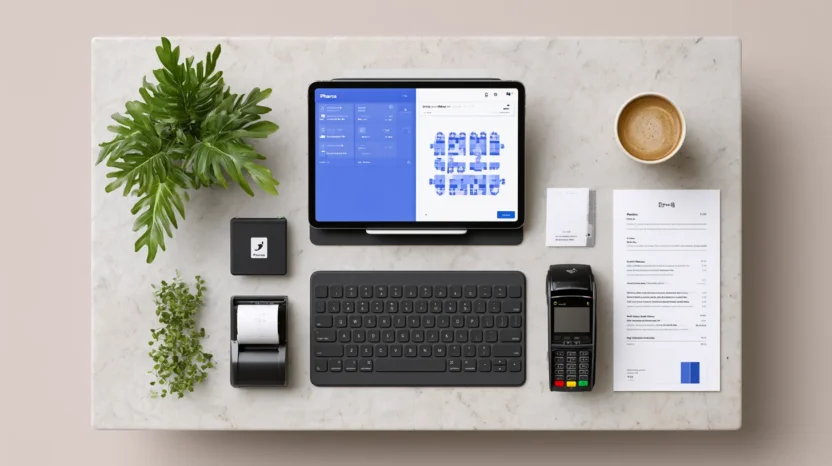
POS (point of sale): the heart of the restaurant - taking orders, splitting checks, processing payment, applying discounts and syncing everything else. Usually on tablets or terminals, increasingly cloud-based.
Online ordering and delivery: the web and app channels for pickup, delivery and dine-in ordering, with menus, carts, payment and either your own delivery or aggregator handoff.
Building this channel well often means treating it as part of a wider on-demand economy, and the same dispatch, tracking and payment patterns that power software for on-demand delivery platforms apply directly to a restaurant's own ordering and courier flow.
Reservations and table management: bookings, waitlists, table status and guest profiles that run the floor and improve seating and turn times.
Kitchen display system (KDS): the screens that replace paper tickets, routing and timing orders across kitchen stations so food goes out accurately and on time.
Back-office management: inventory and food cost, staff scheduling and payroll, menu management, reporting, and loyalty and CRM - the systems that keep the business profitable. Food-safety monitoring and temperature logs usually sit in that same back office, and what a compliant system needs is set out in our HACCP software requirements guide.
Build, buy or customize
The first cost decision is build versus buy. Off-the-shelf platforms - Toast, Square, Lightspeed, Olo for ordering - cover standard restaurant operations and start fast, but you pay per location, per terminal and per transaction, and you fit your operation to their model and lock into their hardware and data. Custom software is the right call when your concept or operation is unusual, when platform fees become painful at many locations or high volume, when you want to own the guest relationship and data instead of renting it, or when you are building a product to sell to other restaurants. Many operators run a hybrid: an off-the-shelf POS for the basics with a custom ordering app, loyalty layer or analytics built around it. The custom layer is usually where the brand experience and the margin sit.
What drives restaurant software cost
Within any type, the same factors drive restaurant software cost. Scope - one ordering app versus a full multi-location suite. Payments - in-person and online payment, tipping, split checks and PCI scope add real work. Delivery and aggregators - integrating UberEats, DoorDash and others, or building your own delivery and dispatch, is a large piece. Hardware - POS terminals, receipt and kitchen printers, KDS screens and card readers add device integration. Real-time and reliability - a POS cannot go down at dinner rush, so offline-capable, resilient design matters. And multi-location - more sites, menus, taxes and roles multiply the effort. AI adds forecasting and personalization on top.
Restaurant software cost and timeline in 2026
Ranges track scope and integration depth more than anything else.
Single module / MVP: $40,000 to $120,000, 3 to 6 months. One focused system - an online-ordering app, a reservation system or a lightweight POS - with payment and one or two integrations.
Mid-size platform: $120,000 to $400,000, 6 to 12 months. A POS with online ordering, back-office, payments, delivery and KDS, with dashboards and reporting.
Enterprise platform: $400,000 to $1.5M and up, 12 to 24 months. A multi-location suite with KDS, delivery, loyalty, AI and multi-brand, multi-region rollout.
On top of build cost, budget 15 to 20 percent of it per year for maintenance, plus payment processing, infrastructure that scales with orders and locations, and new integrations as aggregators and hardware change. For a wider view of lifetime cost, see our custom software TCO report.
Integrations that matter
Restaurant software lives or dies on its integrations, because it sits between guests, money, the kitchen and partners. The usual set is payment and POS hardware, delivery aggregators (UberEats, DoorDash, Deliveroo) and your own delivery dispatch, accounting and payroll, kitchen and receipt printers and KDS screens, loyalty and marketing, and reservation and review platforms. Payments in particular carry PCI scope and tipping and split-check complexity, which we cover in our payment gateway integration cost guide, and the online-ordering side leans on solid commerce engineering covered in our headless commerce guide.
AI in restaurant software in 2026
The clearest returns in modern restaurant tech come from AI. Demand and sales forecasting cuts food waste and sharpens staffing. Dynamic menus and pricing lift margin at peak times. AI voice and chat ordering takes phone and drive-thru orders without staff. Inventory and waste prediction trims the biggest controllable cost. Personalization drives loyalty and repeat orders. These add cost, but they target the thin margins and high waste that define the industry. We cover the economics in our guides to machine learning for business and, for the guest-facing apps, mobile app development cost.
Common mistakes
The expensive restaurant software mistakes repeat. Underestimating payments and delivery-aggregator integration - the fiddly, high-value glue of restaurant tech. Designing a POS that needs the internet, then watching it die when the connection drops at peak service. Renting everything from a closed platform and losing your guest data and margin to fees. Bolting on AI without the clean sales and inventory data to make forecasts reliable. And building for one location when multi-location, multi-brand growth is on the roadmap, then re-architecting under load.
How to decide
To decide, start by naming the restaurant system you actually need - a POS, an online-ordering and delivery app, a reservation system, a KDS or a back-office platform - because that, plus your integration depth, sets the band more than anything else. If standard operations will do, an off-the-shelf platform gets you running fast. If your concept, guest experience or margins at scale justify it, build the custom layer that makes them an advantage, and design the POS to work offline. Most operators land on a hybrid and invest the custom budget where the differentiation is. If you are scoping a restaurant build, our food and restaurant software development team can map the type, payments and delivery integrations, cost and timeline with you, from a single ordering app to a multi-location platform.
FAQ
Quick answers to common questions about custom software development, pricing, process and technology.
Type to filter questions and answers. Use Topic to narrow the list.
Showing all 8
No matches
Try a different keyword, change the topic or clear filters
-
How much does restaurant software development cost?
A single custom module or MVP - an online-ordering app, a reservation system or a lightweight POS - costs roughly $40,000 to $120,000 over 3 to 6 months. A mid-size POS with online ordering, back-office and integrations runs $120,000 to $400,000 over 6 to 12 months. An enterprise multi-location suite with KDS, delivery, loyalty and AI reaches $400,000 to $1.5M and up over 12 to 24 months.
-
Should you build custom restaurant software or buy off-the-shelf?
Buy off-the-shelf (Toast, Square, Lightspeed, Olo) when your operation is standard and speed matters - you start fast but pay per location, terminal and transaction and lock into their hardware and data. Build custom when your concept is unusual, platform fees hurt at scale, you want to own the guest relationship and data or you are building a product to sell. Many run a hybrid: an off-the-shelf POS with a custom ordering or loyalty layer around it.
-
What is a POS and a KDS?
A POS (point of sale) takes orders and payment, splits checks and syncs the rest of the system - the heart of the restaurant. A KDS (kitchen display system) is the screens that replace paper tickets, routing and timing orders across kitchen stations. The POS captures the order; the KDS gets it made accurately and on time. Most full builds include both.
-
How long does it take to build restaurant software?
A single module or MVP ships in 3 to 6 months, a mid-size POS-plus-ordering platform in 6 to 12 months and a multi-location enterprise suite in 12 to 24 months or more. Payment and delivery-aggregator integration, hardware and offline-capable reliability usually set the schedule more than the core application.
-
What integrations does restaurant software need?
The usual set is payment and POS hardware, delivery aggregators (UberEats, DoorDash, Deliveroo) plus your own delivery dispatch, accounting and payroll, kitchen and receipt printers and KDS screens, loyalty and marketing and reservation and review platforms. Payments carry PCI scope and tipping and split-check complexity; aggregator integration is fiddly but high-value glue.
-
How is AI used in restaurant software in 2026?
The clearest uses are demand and sales forecasting (cutting food waste and sharpening staffing), dynamic menus and pricing (lifting margin at peak), AI voice and chat ordering (taking phone and drive-thru orders without staff), inventory and waste prediction and personalization for loyalty. AI targets the thin margins and high waste that define the industry, which is why it pays off.
-
Should you integrate with UberEats and DoorDash or build direct ordering?
Usually both. Aggregators bring reach and demand but charge high commissions and own the customer, so integrate them so their orders flow into your POS and kitchen. At the same time, build your own direct online ordering to capture commission-free orders and the guest relationship and data. The mix shifts as your brand and volume grow.
-
What are the ongoing costs of restaurant software?
Budget 15 to 20 percent of the build cost per year for maintenance, plus payment processing, infrastructure that scales with orders and locations and new integrations as aggregators and hardware change. Off-the-shelf platforms add per-location, per-terminal and per-transaction fees on top, which is part of why custom can win at scale.
Restaurant software glossary 8
- POS (point of sale)
- The system that takes orders and payment, splits checks, applies discounts and syncs the rest of the stack. The heart of a restaurant, usually on tablets or terminals and increasingly cloud-based.
- KDS (kitchen display system)
- Screens that replace paper tickets, routing and timing orders across kitchen stations so food is prepared accurately and on time.
- Online ordering
- Web and app channels for pickup, delivery and dine-in ordering, with menus, carts and payment, fulfilled by your own delivery or handed off to an aggregator.
- Delivery aggregator integration
- Connecting to UberEats, DoorDash, Deliveroo and similar so their orders flow into your POS and kitchen instead of a separate tablet per platform. Fiddly but high-value glue.
- Table / reservation management
- Bookings, waitlists, table status and guest profiles that run the floor and improve seating, turn times and the guest experience.
- Loyalty / CRM
- Tracking guests and rewarding repeat visits with points, offers and personalization - a way to own the guest relationship and data rather than renting it from a platform.
- Ghost kitchen
- A delivery-only kitchen with no dine-in, often running several virtual brands from one location, which leans heavily on online ordering and aggregator integration.

I work with startup founders who need a dedicated software development team but don’t want to gamble on hiring, random outsourcing, or opaque delivery.
Most founders face the same problem sooner or later.
Early technical and team decisions lock the product into tech debt, slow delivery, missed milestones and constant re-hiring. By the time this becomes visible, fixing it is already expensive.As a CTO and software architect, I help founders design, build and run dedicated development teams that work as a true extension of the startup. Not as a black-box vendor.
My focus is on complex products where mistakes are costly:
- Web3 and blockchain platforms
- FinTech and regulated products
- High-load startup systems
- MVP → scale transitions
We don’t do body-shopping.
We don’t sell generic outsourcing.Instead, we help founders:
- build the right team structure from day one
- keep technical ownership and transparency
- scale delivery without losing control
- avoid vendor lock-in and hidden risks
Teams are aligned with the product roadmap, business goals and long-term architecture. Not just short-term velocity.