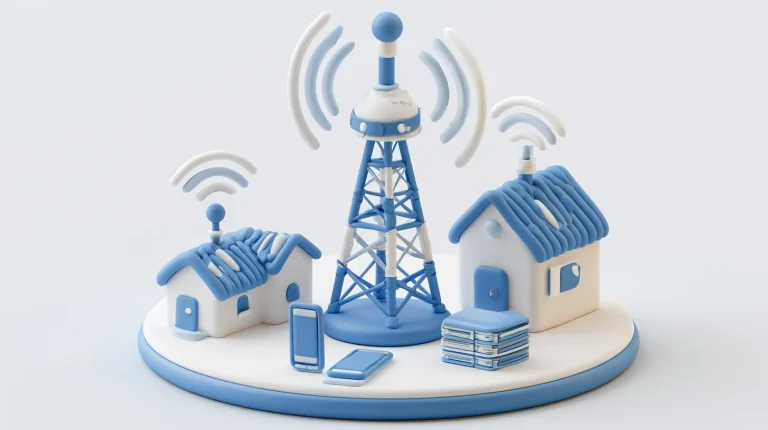
Real Estate Software Development in 2026: PropTech Types, Cost and Build Guide
Real estate software development in 2026: PropTech types from property management to MLS marketplaces and smart buildings, build vs buy, costs and timelines.
 Updated
7 min read
335 views
Updated
7 min read
335 views

Key takeaways: real estate software development in 2026 5
The main PropTech types, build vs buy and the real cost ranges by scope.
- Name the type first PMS, CRM, marketplace, smart building or transaction tool - each is a different build and budget.
- Build, buy or hybrid Off-the-shelf covers standard workflows from day one. Go custom when your workflow or data is the advantage - most teams land on a hybrid.
- Cost by scope $50K-$150K a module, $150K-$450K a platform, $450K-$1.5M and up an enterprise PropTech build.
- MLS/IDX is the hard part Listing feeds vary by region and carry strict display rules - a real share of any portal build.
- AI and IoT differentiate AVM valuations, lead scoring and smart buildings are where the savings and the edge increasingly are.
"Real estate software" stretches from a simple listing portal to a multi-market PropTech platform with smart-building sensors and AI valuations, so the cost and the build swing widely with what you are actually making. The job is to name the type you need - a property management system, a real estate CRM, a listing marketplace, a smart-building layer - then decide whether to buy, customize or build it. This guide explains real estate software development in 2026: the main PropTech types, build versus buy, what drives the cost and the honest ranges, before you scope a project with a real estate software development partner.
In short: real estate (PropTech) software spans property management (PMS), real estate CRM, listing and MLS marketplace portals, smart-building and IoT, and mortgage, valuation and transaction tools. A single custom module or MVP costs roughly $50,000 to $150,000 over 3 to 6 months. A mid-size platform - a PMS or marketplace with MLS/IDX, CRM, payments and e-signature - runs $150,000 to $450,000 over 6 to 12 months. An enterprise multi-module PropTech platform with IoT smart buildings, AI valuations and multi-market rollout reaches $450,000 to $1.5M and up over 12 to 24 months. Off-the-shelf suites like Yardi, AppFolio or Salesforce start fast but cost more to license and bend to your model; custom wins when your workflow or data is the differentiator.
What real estate software is, and its main types
Real estate software, often called PropTech, digitizes how property is listed, bought, sold, managed and operated. It is not one product but a family of systems, and most projects are one or two of them rather than all at once. The main types are property management (running buildings and tenancies), real estate CRM (managing leads, agents and deals), listing and MLS marketplaces (search and discovery portals), smart buildings and IoT (sensors and automation in the physical asset), and mortgage, valuation and transaction tools (financing and closing). Naming which of these you need is the single most important scoping decision, because each is a different build.
The core systems explained
Property management system (PMS): runs the day-to-day of owning and operating property - leases, tenants, rent and payments, maintenance requests, accounting and owner reporting. The operational backbone for landlords, property managers and REITs.
Real estate CRM: manages leads, contacts, agents, listings and the deal pipeline, with automation for follow-up and nurturing. Often the first system a brokerage builds or customizes.
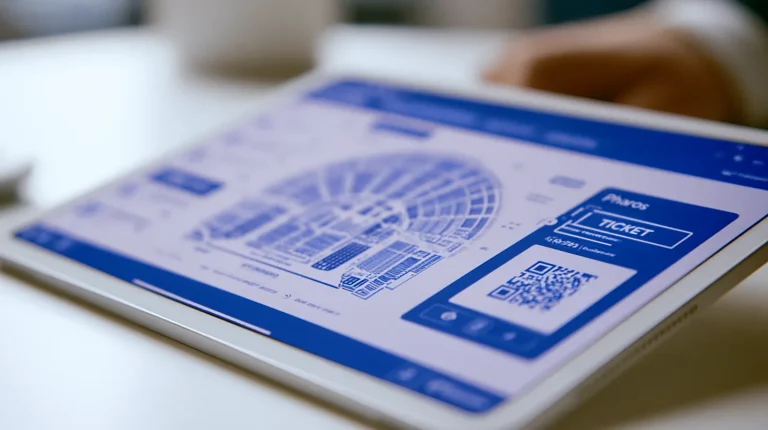
Listing and MLS marketplace: a search-and-discovery portal for buyers, renters and investors, fed by MLS/IDX data or direct listings, with maps, filters, saved searches and lead capture.
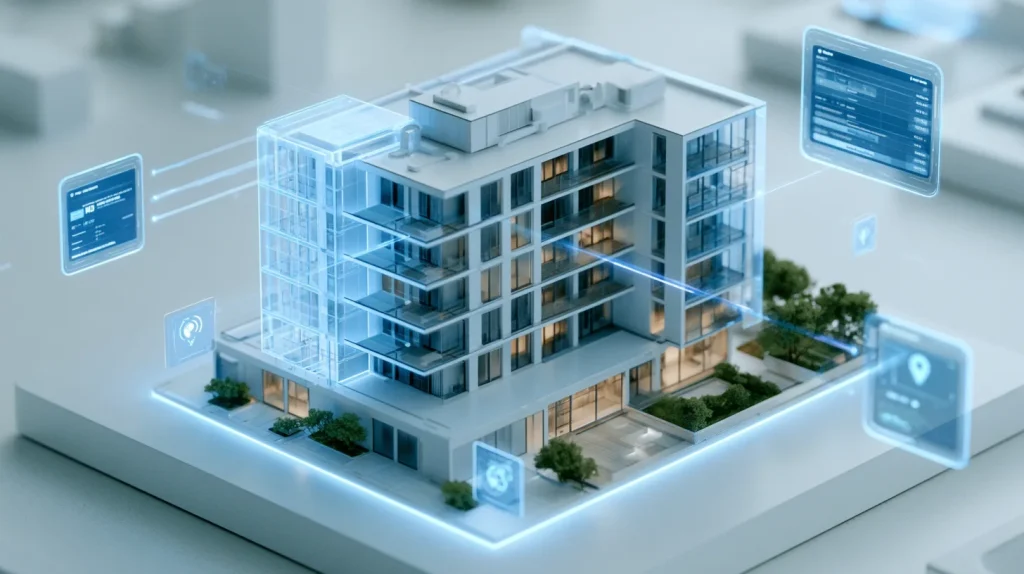
Smart buildings and IoT: sensors and controls for access, energy, HVAC and occupancy, feeding a building management dashboard. Where real estate meets the physical internet of things.
Mortgage, valuation and transaction tools: financing, automated valuation, document workflow and digital closing with e-signature, moving the paperwork-heavy transaction online.
The same physical-layer discipline continues once a property moves from planning into the build phase, where construction software development takes over site management, equipment tracking and contractor coordination before the smart-building layer above ever goes live.
Build, buy or customize
The first cost decision is build versus buy. Off-the-shelf platforms - Yardi, AppFolio, MRI for management, Salesforce or a vertical CRM for sales - cover standard processes and start fast, but you pay ongoing license fees and you bend your operation to fit the software, and heavy customization of a big suite can cost as much as a custom build anyway. Custom software is the right call when your workflow, your data or your customer experience is the competitive advantage, when you need integrations the suites do not support, or when per-unit or per-seat pricing stops making sense at your scale. Many operators run a hybrid: an off-the-shelf core with custom apps - a branded marketplace, a tenant app, an analytics layer - built around it. The custom layer is usually where the differentiation and the value sit.
What drives real estate software cost
Within any type, the same factors move the number. Scope - one module versus a multi-system platform. Integrations - MLS/IDX feeds, CRM, payment and accounting, e-signature, maps and mortgage or credit APIs, each a build and a test surface. Data - listing, geospatial and market data ingestion and normalization is heavier than it looks. Real-time and IoT - smart-building sensors and live dashboards need event-driven architecture and device integration. Multi-tenancy and scale - serving many brokerages, landlords or markets from one platform adds architecture work. And AI - automated valuation, lead scoring and virtual tours add model, data and evaluation work on top of the application.
Real estate software cost and timeline in 2026
Ranges track scope and integration depth more than anything else.
Single module / MVP: $50,000 to $150,000, 3 to 6 months. One focused system - a listing portal, a tenant app or a lightweight CRM - with core integrations.
Mid-size platform: $150,000 to $450,000, 6 to 12 months. A full PMS or marketplace with MLS/IDX, CRM, payments, e-signature, dashboards and reporting.
Enterprise platform: $450,000 to $1.5M and up, 12 to 24 months. IoT smart buildings, AI valuation and analytics, multiple modules and multi-market, multi-currency rollout.
On top of build cost, budget 15 to 20 percent of it per year for maintenance, plus data and API fees (MLS, maps, valuation), infrastructure that scales with users and listings, and new integrations as partners change. For a wider view of lifetime cost, see our custom software TCO report.
Integrations that matter
Real estate software lives or dies on its integrations, because it connects listings, money, documents and physical assets. The usual set is MLS and IDX feeds for listing data, a CRM for leads and deals, payment and accounting for rent and fees, e-signature and document services for closings, maps and geospatial for search, and mortgage, credit and valuation APIs for financing. Smart-building products add IoT and building-management integrations on top. MLS/IDX in particular is fiddly - feeds vary by region and carry strict display rules - and supporting it cleanly is a real share of the budget. The RESO Web API standard is reducing some of that variance by giving MLS data a common data model and a standardized query interface, though implementing it is its own integration project, covered in our RESO Web API integration guide. Keeping listing, pricing and availability data consistent across all these systems is the hardest ongoing job in any real estate build.
AI and IoT in real estate in 2026
The clearest returns in modern PropTech come from AI and IoT. Automated valuation models (AVMs) price properties from market and property data; AI lead scoring tells agents which prospects to chase; and generative tools power virtual staging, tours and listing copy. On the physical side, IoT in smart buildings cuts energy cost and enables predictive maintenance and access control. These add cost, but they are increasingly where the differentiation and the savings are. We cover the economics in our guides to IoT development and mobile app development cost, since tenant and agent apps are usually part of the picture.
Common mistakes
The expensive errors repeat. Buying a heavyweight suite and customizing it so far that it costs more than a custom build would have. Underestimating MLS/IDX and data integration, and watching the timeline slip on display rules and feed quirks. Treating the CRM as an afterthought when leads and follow-up are the revenue engine. Bolting on IoT and real-time dashboards late, when they need event-driven architecture from the start. And building for one market or one brokerage when multi-market and multi-tenant are on the roadmap, then re-architecting under load.
How to decide
Start by naming the system you actually need - a PMS, a CRM, a marketplace, a smart-building layer or a transaction tool - because that, plus your integration depth, sets the band more than anything else. If a standard process will do, an off-the-shelf core gets you moving fast; if your workflow, data or experience is the advantage, build the custom layer that makes it one. A focused MVP that proves the model with real users beats a gold-plated v1, and you scale the spend once the market answers. If you are scoping a real estate build, our real estate software development team can map the type, integrations, cost and timeline with you, including the real estate CRM that usually sits at the center of the deal pipeline.
FAQ
Quick answers to common questions about custom software development, pricing, process and technology.
Type to filter questions and answers. Use Topic to narrow the list.
Showing all 8
No matches
Try a different keyword, change the topic or clear filters
-
How much does real estate software development cost?
A single custom module or MVP - a listing portal, a tenant app or a lightweight CRM - costs roughly $50,000 to $150,000 over 3 to 6 months. A mid-size PMS or marketplace with MLS/IDX, CRM, payments and e-signature runs $150,000 to $450,000 over 6 to 12 months. An enterprise multi-module PropTech platform with IoT smart buildings, AI valuations and multi-market rollout reaches $450,000 to $1.5M and up over 12 to 24 months.
-
Should you build custom real estate software or buy off-the-shelf?
Buy off-the-shelf (Yardi, AppFolio, MRI for management; Salesforce or a vertical CRM for sales) when your processes are standard and speed matters - you start fast but pay ongoing license fees and bend your operation to the software. Build custom when your workflow, data or customer experience is the advantage, or the suites cannot support your integrations.
Many operators run a hybrid: an off-the-shelf core with custom apps around it, investing the custom budget where the differentiation is.
-
What types of real estate software are there?
The main types are property management systems (PMS) for running buildings and tenancies, real estate CRM for leads and deals, listing and MLS marketplaces for search and discovery, smart-building and IoT for the physical asset, and mortgage, valuation and transaction tools for financing and closing. Most projects build one or two of these, not all at once.
-
How long does it take to build real estate software?
A single module or MVP ships in 3 to 6 months, a mid-size PMS or marketplace in 6 to 12 months and an enterprise multi-module platform in 12 to 24 months or more. Data and integrations - especially MLS/IDX feeds with their display rules - and IoT or real-time features usually set the schedule more than the core application.
-
What integrations does real estate software need?
The usual set is MLS and IDX feeds for listing data, a CRM for leads and deals, payment and accounting for rent and fees, e-signature and document services for closings, maps and geospatial for search, and mortgage, credit and valuation APIs for financing. Smart-building products add IoT and building-management integrations.
MLS/IDX is the fiddliest - feeds vary by region and carry strict display rules.
-
How is AI used in real estate software in 2026?
The clearest uses are automated valuation models (AVMs) that price properties from data, AI lead scoring that tells agents which prospects to chase and generative tools for virtual staging, tours and listing copy. On the physical side, IoT and AI in smart buildings cut energy cost and enable predictive maintenance.
AI adds cost but is increasingly where the differentiation sits.
-
What is MLS/IDX integration?
MLS is the shared database of property listings; IDX is the feed and rules that let your website display those listings. Integrating it means ingesting region-specific feeds, mapping their data and following strict display and refresh rules.
It is unglamorous but unavoidable for any listing portal, and a real share of the budget.
-
What are the ongoing costs of real estate software?
Budget 15 to 20 percent of the build cost per year for maintenance, plus data and API fees (MLS, maps, valuation), infrastructure that scales with users and listings and new integrations as partners change. Off-the-shelf suites add per-unit or per-seat license fees on top, which is part of why custom can win at scale.
Real estate software glossary 8
- PropTech
- Property technology - software and hardware that digitizes how property is listed, bought, sold, managed and operated, from marketplaces to smart-building IoT.
- Property management system (PMS)
- Software that runs the day-to-day of owning and operating property - leases, tenants, rent and payments, maintenance, accounting and owner reporting. The operational backbone for landlords and property managers.
- MLS / IDX
- The Multiple Listing Service is the shared database of property listings; IDX (Internet Data Exchange) is the feed and rules that let a website display MLS listings. Integrating it cleanly is a real share of any portal build.
- AVM (automated valuation model)
- A model that estimates a property value from market, location and property data, used for pricing, lending and investment analysis instead of a manual appraisal.
- Real estate CRM
- A system that manages leads, contacts, agents, listings and the deal pipeline with follow-up automation. Often the first system a brokerage builds or customizes, since leads are the revenue engine.
- Smart building / BMS
- A building fitted with IoT sensors and controls for access, energy, HVAC and occupancy, managed through a building management system (BMS) dashboard that cuts cost and enables predictive maintenance.
- E-signature / digital closing
- Tools that move the paperwork-heavy property transaction online - legally binding electronic signatures and document workflow for offers, leases and closings.
- Listing portal / marketplace
- A search-and-discovery website for buyers, renters and investors, fed by MLS/IDX or direct listings, with maps, filters, saved searches and lead capture.

I work with startup founders who need a dedicated software development team but don’t want to gamble on hiring, random outsourcing, or opaque delivery.
Most founders face the same problem sooner or later.
Early technical and team decisions lock the product into tech debt, slow delivery, missed milestones and constant re-hiring. By the time this becomes visible, fixing it is already expensive.As a CTO and software architect, I help founders design, build and run dedicated development teams that work as a true extension of the startup. Not as a black-box vendor.
My focus is on complex products where mistakes are costly:
- Web3 and blockchain platforms
- FinTech and regulated products
- High-load startup systems
- MVP → scale transitions
We don’t do body-shopping.
We don’t sell generic outsourcing.Instead, we help founders:
- build the right team structure from day one
- keep technical ownership and transparency
- scale delivery without losing control
- avoid vendor lock-in and hidden risks
Teams are aligned with the product roadmap, business goals and long-term architecture. Not just short-term velocity.