



































Cloud Migration Strategy: Step-by-Step Guide for 2026
Cloud migration strategy guide for 2026. Step-by-step assessment, planning and execution with AWS vs Azure vs GCP comparison, cost benchmarks and optimization tips.

Reviewed by Dr. Dmytro Nasyrov, Founder and CTO
DevOps services are the practice and tooling that automate how software is built, tested, released and operated, so teams ship changes frequently and safely instead of through risky manual deploys.
Aligned with these frameworks. Audit reports and certifications available on request.

Reviewed by Dmytro Nasyrov
Founder and CTO
23+ years in custom software development. Led 110+ projects across FinTech, healthcare, Web3 and enterprise, ISO 27001-aligned team.
| Factor | One-off pipeline + IaC setup | Ongoing managed DevOps platform |
|---|---|---|
| Scope | CI/CD and IaC for current services | Platform, observability, on-call and continuous improvement |
| Best for | Teams that will operate it themselves | Teams that want delivery and reliability owned |
| Reliability | Depends on your team after handover | SLOs, alerting and incident response maintained |
| Cost shape | Fixed project fee | Retainer |
| Handover | Runbooks + training | Co-owned with your engineers |
Pharos Verified Delivery applied to DevOps: every pipeline, environment and alert is codified, reviewed and documented, and nothing is handed over without runbooks, SLOs and a rollback path.
Pharos Verified Delivery applied to 110+ production applications since 2013
Three engagements where measurable cost, reliability or deployment-frequency changes were tracked against DORA metrics.
Legacy EC2 deployment with manual scripts. 45-minute deployments. Weekend-only release windows. Incidents took 4-6 hours to recover from.
EKS with ArgoCD GitOps and Helm charts. 12-minute deployments, blue-green cutovers, self-service rollback. Release windows eliminated. Mean time to recovery dropped to 22 minutes.
We kept the legacy stack running in parallel for 6 weeks. Every deploy ran on both; traffic shifted 10% → 50% → 100% over 2 weeks per service. The old infrastructure was decommissioned after a 30-day clean run.
AWS bill of $87,000/month. Engineering team could not explain where the money went. Reserved instances expired unused. Three idle RDS clusters.
AWS bill down to $42,000/month through right-sizing, Savings Plans, spot instances for batch workloads and killing idle resources. Cost attribution dashboards now show spend per team and per feature. Zero reliability regressions.
We instrumented Cost Explorer + CUR into a per-service dashboard first. Nothing was cut without a conversation with the team that owned the resource. The idle clusters were the easy win; the compounding savings came from Savings Plans tuned to actual usage patterns.
CloudWatch dashboards nobody looked at. Alerts fired at 3am on non-issues. Real incidents went unnoticed until customers complained.
OpenTelemetry instrumentation, Grafana dashboards, Prometheus-backed SLOs with error budgets. Alerts route to PagerDuty only when SLO burn rate threatens monthly budget. Alert volume dropped 78%, mean time to detect dropped from 47 minutes to 3 minutes.
SLOs were the reframe - instead of "alert on 5xx errors" we defined "99.9% of API requests complete successfully within 400ms", computed error budgets and alerted on burn rate. Noise vanished; real problems surface immediately.
Client names anonymized under NDA. Full case studies at /cases/.
More tooling does not equal more reliability. We tell clients to hold off when:
Before a platform build, run a short DevOps assessment of the current pipeline, infrastructure and incident history. Often the highest-impact fixes are unglamorous - flaky tests, missing rollbacks, no observability - and cost a fraction of a full platform.
Observations from 34 DevOps and platform engagements delivered between 2020 and 2026 across FinTech, SaaS, healthcare and logistics.
Teams reaching DORA "High" within 6 months shared a single attribute: trunk-based development with feature flags on day one.
Switching from long-running feature branches to trunk-based flow reduced lead time by 4.1x on average across 12 projects.
Platform teams of 3 to 5 engineers sustained 40 to 80 service developers at elite DORA metrics without extra headcount.
SBOM plus signed artefact adoption cut incident triage time by 32 percent during 4 separate CVE responses in 2024 and 2025.
Three shifts are reshaping how teams operate software.
Teams increasingly build an internal platform with self-service paved roads instead of bespoke per-team scripts, so developers ship without becoming infrastructure experts.
Reliability is managed against explicit service level objectives and error budgets rather than uptime promises, which changes what teams alert on and prioritise.
Supply-chain scanning, IaC policy checks and secrets management move into CI/CD so security is enforced on every change, not audited after release.
Before scaling a DevOps or platform investment, run this 8-point baseline. If scores are below targets, your pipeline is a cost centre, not a delivery engine.
At least daily for elite, weekly for high performers[1].
Under 1 hour elite, under 1 day high[11].
Under 1 hour, runbooks for top 10 incident types.
Under 5 percent elite, under 10 percent high.
100 percent of user-facing services with SLOs and error budgets[4].
100 percent of infra defined as code, reviewed in PR, drift-detected nightly.
SBOMs produced on every build, artefacts signed and verified at deploy[9].
Pager volume under 2 incidents per week per on-call engineer, postmortems within 5 business days.
A FinTech customer ran 42 microservices on a shared Jenkins server in 2023. A single misconfigured credential rotation broke 17 pipelines simultaneously, blocking deploys for 6 hours at end-of-quarter close. Root cause: no pipeline-as-code, no credentials vaulting, no blast radius limit per pipeline. We migrated to GitHub Actions with reusable workflows, moved secrets to HashiCorp Vault with short-lived tokens and split pipelines per service boundary with independent runners. Next credential rotation: zero pipeline failures, full audit trail in Vault. The lesson we enforce: pipelines are production code with the same blast radius discipline as application services.
Published record
Technical articles, comparison guides and methodology deep-dives we write from our own delivery experience.
Trusted by Coinbase, Consensys, Core Scientific, MicroStrategy, Gate.io and 10+ more Web3 and enterprise platforms
16+ partnersOur 16 technology partners include:
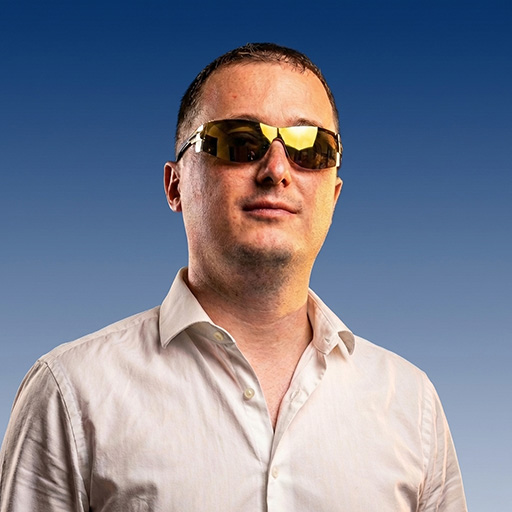
Founder and CTO Pharos Production
I design and build reliable software solutions - from lightweight apps to high-load distributed systems and blockchain platforms.
PhD in Artificial Intelligence, MSc in Computer Science (with honors), MSc in Electronics & Precision Mechanics.
13 years in architecture of great software solutions tailored to customer needs for startups and enterprises
23 years of practical enterprise customized software production experience
Lecturer at the National Kyiv Polytechnic University
Doctor of Philosophy in Artificial Intelligence
Master's degree in Computer Science, completed with excellence
Master's degree in Electronics and precision mechanics engineering
Pharos Production works in three engagement models, from a focused PoC to a production MVP to a full enterprise platform, with typical budgets from $10,000 to $400,000+ depending on scope and complexity.
Focused validation of your riskiest technical assumption with a working spike, a clean codebase and a clear build-or-pivot recommendation.
Production-ready first version with core user flows, real backend, authentication and the integrations you need to onboard first paying users.
Full-scale build covering architecture, DevOps, QA, security and long-term evolution across teams and regions.
Prices vary based on project scope, complexity, timeline and requirements. Hourly rates range from $35 to $75 depending on role and seniority. Contact us for a personalized estimate.
Need extra hands on your software project? Our developers can jump in at any stage - from architecture to auditing - and integrate seamlessly with your team to fill any technical gaps.
Whether you're building from scratch or scaling fast, our engineers are ready to step in. You stay in control, and we handle the code.
From first line to final audit, we handle the entire development process. We will deliver secure, production-ready software, while you can focus on your business.
Our engineers work with 187+ technologies across blockchain, backend, frontend, mobile and DevOps - chosen for production reliability and performance.
Our engineers work with 187+ technologies across 10 categories: Frameworks, AI, Blockchains, DevOps, Clouds, Databases, Brokers, Tests, Programming, UI/UX.



















































Recognized on Clutch, GoodFirms and The Manifest for software engineering excellence















Our company starts and assembles an entire project specialists with the perfect blend of skills and experience to start the work.
We'll design, build and launch your MVP, ensuring it meets the core requirements of your software solution.
We'll create a complete software solution that is custom-made to meet your exact specifications.
Our company will be right there with you, keeping your software solution running smoothly, fixing issues and rolling out updates.
Cloud migration strategy guide for 2026. Step-by-step assessment, planning and execution with AWS vs Azure vs GCP comparison, cost benchmarks and optimization tips.

Microservices vs monolith architecture decision guide. Comparison table, modular monolith pattern, migration strategies and cost analysis for development teams.

Legacy system modernization guide. Strangler fig pattern, replatforming, rebuild strategies with cost comparison table, budget planning and implementation best practices.
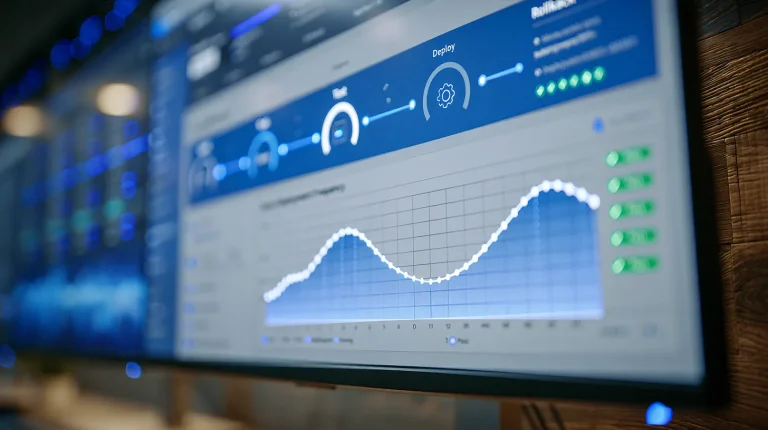
A public-data synthesis of DevOps delivery performance, cloud spend and FinOps waste, platform engineering adoption and Kubernetes reality in 2026, drawn from DORA, Flexera, CNCF, Datadog, Puppet/Perforce, Gartner and HashiCorp research.
Type to filter questions and answers. Use Topic to narrow the list.
Showing all 13
No matches
Try a different keyword, change the topic or clear filters
Typical timeline: 1-2 weeks audit + target architecture, 4-8 weeks incremental migration service-by-service (with parallel run on the legacy stack), 2-4 weeks cutover and decommissioning. Full Kubernetes migration with ArgoCD GitOps, Helm charts and observability typically runs 3-6 months for a mid-size SaaS platform. We do not recommend big-bang cutovers - every service migrates on its own timeline with its own rollback plan.
Typical first-year savings: 30-55% on compute through right-sizing + Savings Plans + spot for batch workloads, 20-40% on storage through lifecycle policies, 15-30% on data transfer by fixing architectural issues. Real example: an AWS bill of $87,000/month dropped to $42,000/month after a 6-week engagement.
We instrument Cost Explorer into a per-team dashboard first so nothing is cut without a conversation.
Use Kubernetes when you have multiple services with independent scaling needs, multiple teams deploying independently or specialized workloads (GPU, spot instances, stateful services with complex orchestration). Do NOT use Kubernetes if your team has fewer than 3 engineers who can debug it at 3am, if a managed PaaS covers your needs or if you want to use it as a resume-builder. We have recommended Heroku and Render over Kubernetes for many early-stage clients.
Yes, and we recommend them for every production service. SLOs reframe alerting from "alert on 5xx errors" to "alert when burn rate threatens monthly error budget".
The result: alert volume drops 50-80%, real incidents surface faster and engineering teams regain trust in their on-call rotation. Every Pharos SRE engagement includes at least 3 SLOs per critical service with documented error budget policies.
DR planning is part of discovery, not a late-stage add-on. Targets: Recovery Time Objective (RTO, how fast to restore service) and Recovery Point Objective (RPO, how much data loss is tolerable).
We build DR to the RTO/RPO the business commits to, not the most expensive option. Multi-region active-active for RTO < 1 minute, cross-region standby for RTO < 1 hour, periodic backup restoration for RTO < 24 hours. We run a real DR drill quarterly.
We offer SRE retainers with tiered coverage. Tier 1 (business hours, 4h SLA): $8,000/month. Tier 2 (24/7 monitoring, 1h SLA on P1): $18,000/month. Tier 3 (dedicated SRE with on-call rotation): $35,000/month. All tiers include monthly reliability reviews, quarterly SLO retrospectives and a shared runbook repository.
AWS for the deepest service catalog and mature enterprise features. GCP for BigQuery + Kubernetes + ML tooling. Azure for .NET-heavy enterprises and Microsoft integrations. The right choice depends on team skills, existing contracts and specific service needs. We are not vendor-exclusive - we run production workloads on all three and will recommend the one that fits your team and workload, not the one with the biggest kickback.
The scope covers CI/CD pipeline design, infrastructure as code (Terraform), container orchestration on Kubernetes or a managed PaaS, observability with metrics, logs and traces, incident response with SLOs and error budgets and cloud cost management. Engagements range from a one-off pipeline or migration project to an ongoing SRE retainer. We shape the scope to the reliability or cost problem you actually have, not a full platform rebuild by default.
CI/CD (continuous integration and continuous delivery) automates building, testing and shipping code so a change reaches production in minutes with a repeatable, auditable path. Continuous integration runs the test suite, linters and security scans on every pull request, so problems surface at merge time. Continuous delivery packages and deploys the passing build through staged environments with health checks and automatic rollback. The payoff is faster releases, fewer manual mistakes and a deploy any engineer can trust.
Infrastructure as code means your servers, networks and cloud resources are defined in version-controlled files rather than clicked together by hand, so every environment is reproducible and every change is reviewed like application code. Terraform is our default, with Pulumi when a team prefers a general-purpose language. Modules are reused across environments, state is stored remotely with locking and plans run in CI so nobody applies an unreviewed change to production.
Every critical service ships with metrics (Prometheus), structured logs and distributed traces (OpenTelemetry) wired into dashboards and SLO-based alerts, so on-call gets paged on user-facing symptoms rather than raw error counts. Runbooks live next to the alerts. After a P1 we run a blameless postmortem with tracked action items, and we tune alert thresholds so the on-call rotation keeps its trust in the pager. Alert volume typically drops by half once SLOs replace threshold alerts.
Usually yes, and that is the cheaper path. Most engagements open with an assessment of your current pipeline, infrastructure and incident history, then target the highest-impact fixes: flaky or slow CI stages, missing rollback, manual deploy steps, weak observability or a cost hotspot. We rebuild only when the existing setup blocks the goal outright. You get a prioritized roadmap with effort and payback so you can decide what is worth doing before we touch anything.
We decline managed-platform use cases where Heroku/Render/Vercel would solve the problem, Kubernetes adoption without operational capacity, multi-region projects for single-region apps and observability projects where the client wants dashboards but not SLO accountability. We also decline "modernization" work without a measured reliability or cost problem - if it is not broken, do not refactor it.
DevOps is about small, frequent, reversible releases backed by codified infrastructure and real observability, not a pile of tools. The Pharos approach automates the delivery path, codifies the infrastructure and hands over runbooks and SLOs so reliability survives after we leave.
Book a 30-minute DevOps assessment call
Achieve them with minimized risk through our bespoke innovation capabilities
Contact us today to discuss your project. We're ready to review your request promptly and guide you on the best next steps for collaboration
Same dayWe're committed to keeping your information confidential, so we'll sign a Non-Disclosure Agreement
1 dayAfter we chat about your goals and needs, we'll craft a comprehensive proposal detailing the project scope, team, timeline and budget
3-5 daysLet's connect on Google Meet to go through the proposal and confirm all the details together!
1-2 daysAs soon as the contract is signed, our dedicated team will jump into action on your project!
Same dayHeadquarters in Las Vegas, Nevada. Engineering office in Kyiv, Ukraine.
We also work with clients through dedicated local teams in Las Vegas, New York and San Francisco.
Thanks for the request!
We typically reply within 4 hours