
Reviewed by Dr. Dmytro Nasyrov, Founder and CTO
Computer Vision Development Services
Pharos Production builds custom Computer Vision (CV) systems that extract actionable information from images, video streams and documents.
- 25+ AI projects delivered
- 90+ engineers
- 90+ Clutch reviews




Aligned with these frameworks. Audit reports and certifications available on request.
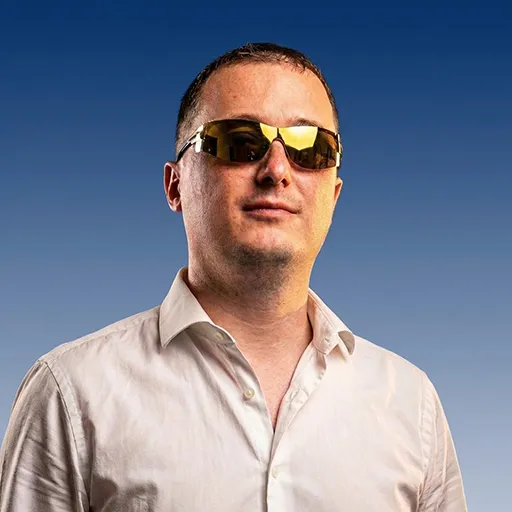
Reviewed by Dmytro Nasyrov
Founder and CTO
23+ years in custom software development. Led 70+ projects across FinTech, healthcare, Web3 and enterprise. aligned with ISO 27001 team.
What is computer vision development?
Authoritative citations 12 sources
-
Stanford AI Index
The Stanford AI Index tracks multi-year movement on ML benchmarks, training compute, responsible AI metrics and enterprise adoption across industries, making it the most cited yearly reference for grounding ML investment cases.
aiindex.stanford.edu
-
Papers With Code
Papers With Code maintains live state-of-the-art leaderboards for ML tasks across image classification, object detection, NLP and tabular prediction, which we use to pick baselines before committing to a model family.
paperswithcode.com
-
arXiv, Chen and Guestrin 2016
The XGBoost paper by Chen and Guestrin remains the most cited gradient boosting reference and underpins tabular ML baselines we still ship in FinTech and logistics systems a decade after publication.
arxiv.org
-
arXiv, LightGBM
Microsoft Research LightGBM introduced leaf-wise tree growth and histogram-based splits, giving lower latency and memory footprint than XGBoost on wide tabular data, which is why our fraud detection stack defaults to it.
-
McKinsey State of AI
McKinsey documents annual enterprise ML adoption across functions like marketing, service operations and supply chain, and consistently reports that scaled ML correlates with higher EBIT contribution versus pilot-only organizations.
mckinsey.com
-
Gartner AI Hype Cycle
Gartner maps enterprise ML techniques across the hype cycle phases, flagging which capabilities are production-ready for mid-market adoption versus still speculative, which we cross-check before recommending a build path.
gartner.com
-
IDC Worldwide AI Spending Guide
IDC publishes the worldwide AI spending guide with multi-year forecasts by industry, use case and geography, which we reference when sizing three-year total cost of ownership for ML platform engagements.
idc.com
-
NIST AI Risk Management Framework
The NIST AI RMF defines a govern, map, measure and manage lifecycle for AI systems that we apply to production ML including model cards, bias testing and incident response procedures for regulated deployments.
nist.gov
-
OWASP ML Security Top 10
OWASP maintains a ranked list of the top machine learning security risks including input manipulation, training data poisoning, model theft and adversarial attacks, which we use as a threat model checklist before exposing any ML endpoint.
owasp.org
-
O'Reilly AI Adoption in the Enterprise
The O'Reilly AI adoption survey tracks ML maturity stages across enterprises, reporting on deployment percentages, skills gaps and the most common production blockers which consistently include data quality and monitoring rather than model choice.
oreilly.com 2022
-
Google Cloud MLOps Architecture
Google Research published the canonical MLOps continuous delivery reference describing three maturity levels from manual to fully automated pipelines, which we use as the template for client MLOps roadmaps and capability gap assessments.
cloud.google.com
-
PyTorch Blog
The PyTorch engineering blog tracks the 2.x production tooling surface including torch.compile, TorchServe updates and quantization workflows, which shape our default serving stack for sub-50ms p99 inference on GPU and CPU targets.
pytorch.org
- Projects without a labeled test set to measure accuracy
- Use cases where an off-the-shelf cloud vision API (AWS Rekognition, Google Vision, Azure CV) would cover 90% of needs at lower cost
- Training from scratch when a pre-trained foundation model would outperform it
- Real-time systems without a clear latency budget and hardware target
Computer vision development at Pharos Production at a glance
- CV systems shipped: 10+ production CV systems since 2020 (document verification, product recognition, defect detection, medical imaging, retail analytics)
- Stack: PyTorch, torchvision, Hugging Face Transformers, Ultralytics YOLO, Segment Anything, CLIP, DETR, timm, albumentations
- Deployment: Cloud (AWS SageMaker, Vertex AI), edge (NVIDIA Jetson, Coral TPU, mobile NNAPI), on-prem GPU clusters
- Foundation models: CLIP, SAM, Florence, DINOv2, BLIP - reduce labeled data needs by 10-50x vs training from scratch
- Pricing: CV MVP $40,000-$100,000; production system $100,000-$300,000+; edge deployment adds $20,000-$80,000
- Timeline: Discovery 2-4 weeks; MVP 8-14 weeks; production with MLOps 4-9 months
- Labeling: Active learning to minimize labeling cost; typical budget 2,000-10,000 labeled examples for foundation-model fine-tuning
- Honest scope: We recommend cloud CV APIs when they fit and decline projects without a labeled test set
From labeling to edge inference
Computer vision projects follow Pharos Verified Delivery with CV-specific gates: discovery defines the prediction task, labeling strategy and eval metric; build trains and evaluates against a held-out test set with documented data augmentation; production readiness covers inference serving (cloud or edge), monitoring, drift detection and retraining cadence; support includes monthly eval refresh and model version rollback.
-
Phase 01 / 04 Paid Discovery
2-4 weeks- Technical validation
- Architecture proposal
- Scope refined estimate
-
Phase 02 / 04 Iterative Build
2-week sprints- Working demos every sprint
- CTO review at milestones
- ADRs documented
-
Phase 03 / 04 Production Readiness
- Monitoring and alerting
- Security audit Pen test
- Runbooks and rollback
-
Phase 04 / 04 Support
Ongoing- Security patches
- Performance tuning
- 4h SLA response
Pharos Verified Delivery applied to 70+ production applications since 2013
Computer vision systems in production
Three CV engagements across document processing, retail and industrial inspection with the foundation model choice that reduced labeling work.
Claims processors reviewed scanned documents by hand. Extraction accuracy 78% due to fatigue. 22-minute average review time per claim.
CV pipeline with AWS Textract + custom extraction model for line items. 99.2% extraction accuracy after human review layer. Processing time down to 35 seconds per claim. Processors redeployed to flagged cases.
The key was combining OCR (Textract) with a custom Layout Parser model for the specific form layouts. Pure OCR was 78% accurate; layered with form-specific layout model it reached 99.2% with a 6% human-review queue for low-confidence cases.
Sellers manually tagged products with categories and attributes. 18% error rate due to mis-categorization. Visual search did not work.
CLIP-based visual embedding system with fine-tuned classifier. Category accuracy 96%, attribute extraction 91%, visual search "find similar" launched. Seller onboarding time cut 54%.
We started with pre-trained CLIP for general visual understanding, then fine-tuned a small classification head on the client taxonomy. This foundation-model approach needed ~2,000 labeled examples per category instead of the 20,000+ a from-scratch model would require.
Quality inspectors manually examined finished products on a production line. 12% miss rate on small defects. Inspection throughput limited by operator count.
Edge-deployed CV system on industrial cameras using a fine-tuned YOLOv8. 0.8% miss rate. Throughput increased 4x. Inspectors redeployed to exception review and root-cause analysis.
Edge deployment was non-negotiable - the production line cannot tolerate cloud latency or network outages. We fine-tuned YOLOv8 on 8,000 labeled defect images, quantized the model to INT8 for Jetson edge devices, and shipped inference latency under 28ms per frame.
Client names anonymized under NDA. Full case studies at /cases/.
When custom computer vision is not the answer
We decline roughly 30% of RFPs we receive. Forcing a bad fit costs both sides 3-6 months and damages outcomes. Here is how we think about scope:
- Use cases where AWS Rekognition, Google Vision or Azure CV covers 90% of needs
- Projects without a labeled test set to measure accuracy
- Training from scratch when a pre-trained foundation model would outperform
- Real-time systems without a defined hardware target
- "We want AI on images" projects with no measurable business metric
For standard tasks (face detection, object detection, OCR, text in images, basic categorization), cloud CV APIs deliver 90% of value at 10% of the cost of building custom. Custom CV makes sense when: you have a narrow domain with specialized objects or defects, you need edge deployment for latency or data residency, you need accuracy ceilings above what cloud APIs deliver, or you have proprietary training data that becomes a moat. We have recommended AWS Rekognition over custom on many engagements.
AI cost and architecture reading
State of AI Development Costs 2026 Pharos research on AI project costs including computer vision, with cost crossover analysis for custom vs cloud API vs foundation model approaches. Continue readingPharos computer vision portfolio
Pharos computer vision delivery portfolio observations, 2020-2026
Ranges we consistently see across 15+ computer vision engagements.
-
82-94% mAP on domain-specific tasks after 6-10 weeks of data pipeline and model iteration; below 80% triggers redesign review.
-
Edge inference on mid-tier hardware runs 40-75% cheaper than cloud at steady state above 1M daily inferences[12].
-
10-18 weeks for production CV system including data pipeline, model training, edge deployment and monitoring.
-
$3k-$25k per use case for annotation when active learning applied; 2-5x higher on label-everything workflows.
-
New deployment site validation runs 2-5 days; cross-site parity checks monthly once deployed.
Computer vision outlook 2026-2027
Three shifts are reshaping production computer vision delivery.
-
VLMs (GPT-4V, Claude, Gemini vision) reach good-enough quality on many classification, captioning and routine detection tasks[1]. Classical CV retains edge for real-time and high-precision work.
-
On-device inference on mobile, drones and IoT reaches practical quality for 60-80% of use cases[12]. Teams still cloud-only pay 5-10x cost premium.
-
Self-supervised pre-training plus active-learning annotation cuts labeled-data needs 4-8x. Teams on "label everything" models fall behind on time-to-production[2].
Our four-dimension computer vision evaluation template
Every computer vision system we ship runs against the same four-dimension readiness evaluation before handover.
Production post-mortem
When a lighting change dropped detection to 58%
A retail shelf-monitoring CV system deployed in late 2024 performed well on store-A but dropped to 58% detection accuracy when store-B installed LED strip lighting in August 2025. Root cause: training data collected only under store-A fluorescent lighting. Drift detection flagged output distribution change but not before 3 weeks of misreported inventory.
Deployment site acceptance test now includes lighting-condition coverage. Cross-site validation mandatory before new-site rollout. Visual quality drift monitor added to production pipeline with 48-hour alert SLA.
Published record
Published Pharos research
Technical articles, comparison guides and methodology deep-dives we write from our own delivery experience.
- State of AI Development Costs 2026
- AI Agent Frameworks Comparison 2026
- Build vs Buy AI Agent: 2026 Decision Framework
- RAG vs Fine-Tuning: When to Use Each Approach
- How to Choose an AI Development Company
- State of Smart Contract Audits 2026
- State of Production AI Engineering 2026
- State of FinTech Compliance Cost 2026
- State of Custom Software TCO 2026
- State of AppSec 2026
- State of Tech Due Diligence 2026
- How to Choose a Blockchain Development Company
- How to Choose a FinTech Development Company
- FinTech Compliance Checklist 2026: PCI DSS, SOC 2, GDPR and Beyond
- AI in FinTech: Transforming Financial Services in 2026
- Software Development Cost Guide: What to Expect in 2026
- How to Choose a Software Development Company in 2026
- Cybersecurity Essentials for Startups and SMBs in 2026
- FinTech Trends 2026: How Top FinTech Trends are Shaping Digital Banking
Platforms We Work With
Trusted by Coinbase, Consensys, Core Scientific, MicroStrategy, Gate.io and 10+ more Web3 and enterprise platforms
16+ partnersOur 16 technology partners include:
- Consensys
- Gate Io
- Coinbase
- Ludo
- Core Scientific
- Debut Infotech
- Axoni
- Alchemy
- Starkware
- Mara Holdings
- Microstrategy
- Nubank
- Okx
- Uniswap
- Riot
- Leeway Hertz
-
 Consensys
-
 Gate Io
-
 Coinbase
-
 Ludo
Ludo
-
 Core Scientific
-
 Debut Infotech
-
 Axoni
Axoni
-
 Alchemy
-
 Starkware
-
 Mara Holdings
-
 Microstrategy
-
 Nubank
-
 Okx
Okx
-
 Uniswap
-
 Riot
Riot
-
 Leeway Hertz
About Founder and CTO
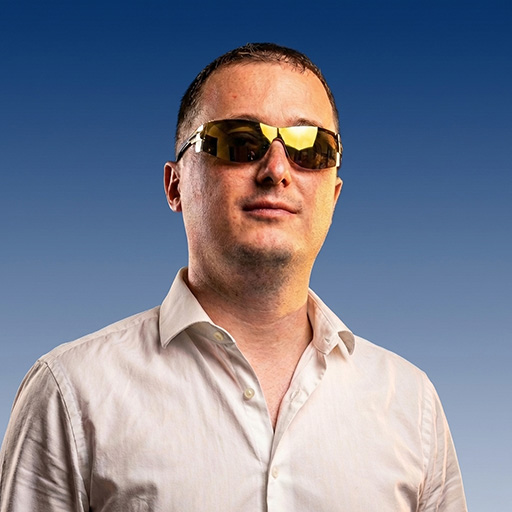
Founder and CTO Pharos Production
I design and build reliable software solutions – from lightweight apps to high-load distributed systems and blockchain platforms.
PhD in Artificial Intelligence, MSc in Computer Science (with honors), MSc in Electronics & Precision Mechanics.
-
13 years in architecture of great software solutions tailored to customer needs for startups and enterprises
-
23 years of practical enterprise customized software production experience
-
Lecturer at the National Kyiv Polytechnic University
-
Doctor of Philosophy in Artificial Intelligence
-
Master’s degree in Computer Science, completed with excellence
-
Master’s degree in Electronics and precision mechanics engineering
Choose your cooperation model
Feasibility study, prototype on your data and integration roadmap in four to eight weeks.
Full model development, API layer, cloud deployment and MLOps with monitoring.
Multi-model architecture, custom data infrastructure, compliance and hybrid or on-prem delivery.
Prices vary based on project scope, complexity, timeline and requirements. Contact us for a personalized estimate.
Or select the appropriate interaction model
Request staff augmentation
Need extra hands on your software project? Our developers can jump in at any stage – from architecture to auditing – and integrate seamlessly with your team to fill any technical gaps.
Hire dedicated experts
Whether you’re building from scratch or scaling fast, our engineers are ready to step in. You stay in control, and we handle the code.
Outsource your project
From first line to final audit, we handle the entire development process. We will deliver secure, production-ready software, while you can focus on your business.
Technologies, tools and frameworks we use
Our engineers work with 45+ ai technologies - chosen for production reliability and performance.
AI and Machine Learning
LLM Providers 8
AI Frameworks 15
Vector Databases 7
MLOps and Infrastructure 11
AI Agent Tools 4
Partnerships & Awards
Recognized on Clutch, GoodFirms and The Manifest for software engineering excellence












An approach to the development cycle
-
Team Assembly
Our company starts and assembles an entire project specialists with the perfect blend of skills and experience to start the work.
-
MVP
We’ll design, build, and launch your MVP, ensuring it meets the core requirements of your software solution.
-
Production
We’ll create a complete software solution that is custom-made to meet your exact specifications.
-
Ongoing
Continuous Support
Our company will be right there with you, keeping your software solution running smoothly, fixing issues, and rolling out updates.
FAQ
Quick answers to common questions about custom software development, pricing, process and technology.
Type to filter questions and answers. Use Topic to narrow the list.
Showing all 8
No matches
Try a different keyword, change the topic, or clear filters
-
Start with cloud APIs (AWS Rekognition, Google Vision, Azure CV) for standard tasks - face detection, OCR, object detection, basic categorization. They deliver 90% of value at 10% of the cost.
Build custom when: you have a specialized domain (industrial defects, medical imaging, domain-specific documents), you need edge deployment for latency or data residency, you need accuracy above cloud API ceiling, or your volume makes per-call pricing dominate. We have migrated clients both ways depending on actual needs.
-
With pre-trained foundation models (CLIP, SAM, DINOv2, Florence) and fine-tuning, a narrow task typically needs 2,000-10,000 labeled examples. From-scratch training needs 20,000-100,000+ labeled examples per category.
Active learning further reduces labeling cost by selecting the most informative samples to label next. Labeling budget is often the biggest project cost; we scope it carefully during discovery.
-
Yes. NVIDIA Jetson (industrial, robotics), Google Coral TPU (low-power), mobile NNAPI and Core ML (on-device inference), Intel Movidius (embedded).
Edge deployment requires model quantization (INT8 or FP16), architecture selection for the target hardware (EfficientNet, MobileNet, YOLOv8-nano), and over-the-air update infrastructure. Typical latency targets: sub-30ms per frame on Jetson Nano, sub-15ms on Jetson Xavier, sub-100ms on mobile SoCs.
-
Depends on the task. Object detection: YOLOv8 for real-time, DETR for higher accuracy at lower speed.
Segmentation: Segment Anything (SAM) for interactive, Mask R-CNN for production pipelines. Classification: EfficientNet, ViT, or CLIP-based for zero-shot. OCR: Textract + custom layout parser, or Donut for end-to-end. We pick based on accuracy target, latency budget, hardware and labeled data availability.
-
Instrument feature distributions (image stats, prediction confidence) and prediction distributions on every inference. Compare week-over-week to baseline and alert when KL divergence exceeds threshold.
For supervised systems where ground truth is delayed, track accuracy on the lag. Automated retraining on a monthly schedule by default; more frequent for fast-moving domains like retail or fashion.
-
Yes, with appropriate compliance. All processing in the client VPC or on-prem, no data leaves.
HIPAA BAA with the compute provider. Audit logs for every inference. We do NOT provide medical diagnosis or FDA clearance - those require regulatory approval beyond Pharos. Typical engagements: radiology triage, pathology annotation assistance, medical document extraction. We work with clinical teams on validation datasets.
-
CV MVP $40,000-$100,000: 2-4 weeks discovery + data exploration + labeling strategy, 4-6 weeks model development and evaluation, 2-4 weeks production serving. Production CV system with full MLOps and monitoring: $100,000-$300,000+.
Edge deployment adds $20,000-$80,000 depending on hardware and quantization complexity. Labeling budget separate, typically $5,000-$50,000 depending on complexity and volume.
-
We decline use cases where cloud APIs cover 90% of needs, projects without a labeled test set to measure accuracy, training from scratch when foundation models would outperform, real-time systems without a hardware target, and “let us add AI to images” projects with no measurable business metric. We also decline regulatory-sensitive work (medical diagnosis, legal evidence) where Pharos cannot provide the required clinical validation or regulatory certification.
The Pharos takeaway on computer vision
Computer vision rewards teams that design for deployment site variance, data pipeline quality and drift detection from the start[8]. VLM versus classical CV selection, edge inference and active-learning annotation are the three areas that separate CV systems that scale cleanly from pilots that stall.
Book a 30-minute computer vision readiness call
Your business results matter
Achieve them with minimized risk through our bespoke innovation capabilities
What happens next?
-
Contact us
Contact us today to discuss your project. We’re ready to review your request promptly and guide you on the best next steps for collaboration
Same day -
NDA
We’re committed to keeping your information confidential, so we’ll sign a Non-Disclosure Agreement
1 day -
Plan the Goals
After we chat about your goals and needs, we’ll craft a comprehensive proposal detailing the project scope, team, timeline and budget
3-5 days -
Finalize the Details
Let’s connect on Google Meet to go through the proposal and confirm all the details together!
1-2 days -
Sign the Contract
As soon as the contract is signed, our dedicated team will jump into action on your project!
Same day
Our offices
Headquarters in Las Vegas, Nevada. Engineering office in Kyiv, Ukraine.