
AI Solutions for Food Industry
- 90+ engineers
- 13+ years in business
- 70+ apps delivered




Aligned with these frameworks. Audit reports and certifications available on request.
What is AI for the food industry?
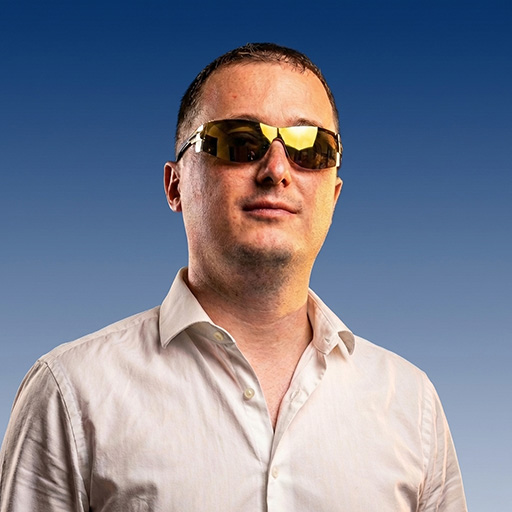
Reviewed by Dmytro Nasyrov
Founder and CTO
23+ years in software development. PhD in AI. Led AI projects for restaurant chains, food delivery platforms and CPG companies. aligned with ISO 27001.
Custom AI for food industry vs vendor AI platforms
| Factor | Custom AI (Pharos Production) | Vendor Platforms (Afresh, BlueCart, etc.) |
|---|---|---|
| Demand forecasting | Models trained on your menu, location mix, customer base and local events | Generic restaurant forecasting across aggregated data |
| Pricing optimization | Custom elasticity models per item category and customer segment | Standard dynamic pricing with limited menu-level control |
| Inventory integration | Deep integration with your POS, inventory, supplier and kitchen systems | Pre-built connectors for supported POS platforms only |
| Delivery optimization | Custom routing for your delivery zones, driver fleet and service promises | Generic last-mile optimization, limited constraint modeling |
| Food safety AI | Computer vision trained on your kitchen environments and compliance requirements | Standard food safety checklists, limited visual inspection |
| Cost structure | One-time development + self-hosted optimization engine | Per-location or per-order pricing that scales with volume |
| Data ownership | All sales, inventory and customer data stays in your infrastructure | Data processed on vendor servers, aggregated across clients |
Pharos Production recommends custom food industry AI for chains with 20+ locations, delivery platforms processing 10K+ daily orders or CPG companies managing perishable supply chains. Vendor platforms work for single-location restaurants needing basic inventory management.
How to choose an AI development company for the food industry
Reviews
Independent reviews from Clutch, GoodFirms and Google - verified client feedback on our software projects
Based on 8 verified client reviews
Measurable results
AI for Food Industry Benchmark 2026
Proprietary research based on AI-powered food industry projects delivered by Pharos Production. Dataset covers demand forecasting, dynamic pricing and delivery optimization deployments. Methodology (Pharos Verified Delivery): aggregated delivery metrics with production monitoring data. Full report available on request.
AI Solutions for Food Industry trends shaping 2026
Key technology shifts that impact how Pharos Production architects ai solutions for food industry software for clients.
Agentic AI for Restaurant Operations
Autonomous AI agents manage end-to-end restaurant workflows - from automated supplier ordering based on demand forecasts to kitchen prep scheduling, staff allocation and customer communication. Pharos Production builds restaurant operation agents with human-in-the-loop controls for procurement above threshold amounts.
Computer Vision for Food Quality Control
AI-powered camera systems inspect food preparation, plating consistency and storage compliance in real time. Models detect contamination risks, temperature violations and portioning errors before food reaches customers. Pharos Production deploys kitchen vision systems integrated with HACCP compliance workflows.
Personalized Menu Recommendations
ML models analyze order history, dietary preferences, time-of-day patterns and basket composition to suggest menu items that maximize both customer satisfaction and average order value. Pharos Production builds recommendation engines integrated with POS and mobile ordering platforms.
AI-Powered Ghost Kitchen Optimization
Multi-brand ghost kitchens use AI to optimize menu overlap, ingredient sharing and kitchen station allocation across virtual brands. Demand forecasting per brand reduces waste while maximizing kitchen throughput. Pharos Production builds ghost kitchen management AI with real-time order routing and prep scheduling.
Predictive Maintenance for Kitchen Equipment
IoT sensors and ML models predict commercial kitchen equipment failures (ovens, refrigeration, HVAC) 2-4 weeks before breakdown. Proactive maintenance prevents costly service disruptions during peak hours. Pharos Production builds equipment monitoring systems integrated with service provider dispatch.
AI-Driven Sustainability and Waste Tracking
ML models track food waste by source (overproduction, spoilage, customer returns), identify waste reduction opportunities and generate sustainability reports for ESG compliance. Pharos Production builds waste analytics platforms with automated donation routing for surplus food.
- AI for the food industry requires ML engineering combined with deep understanding of perishable supply chains, food safety regulations and restaurant operations.
- The global AI in food and beverage market is projected to reach $43.4 billion by 2029 at 45.2% CAGR. 55% of restaurant chains are investing in AI for demand forecasting and waste reduction.
- Custom AI enables demand models trained on your menu and locations, pricing optimization per customer segment and delivery routing for your specific zones and constraints.
- A demand forecasting MVP starts from $40,000-$100,000 and takes 10 weeks. Full FoodTech AI platforms with pricing and delivery optimization range from $150,000 to $350,000+.
- Every Pharos Verified Delivery food industry AI sprint includes waste reduction benchmarking, POS integration testing and A/B testing framework setup for pricing experiments.
- Demand forecasting for perishable inventory needs 6-12 months of POS data to capture seasonal patterns, holiday effects and local event impacts. New locations start with chain-level averages until sufficient local history accumulates.
- Dynamic pricing sensitivity varies by market and customer segment. Price-conscious markets reject visible menu price changes. A/B testing is mandatory before full rollout to measure elasticity without damaging brand perception.
- Computer vision food safety inspection requires controlled lighting and camera placement in kitchen environments. Retrofit installations in existing kitchens add hardware costs and may require kitchen workflow adjustments.
- Delivery route optimization depends on real-time driver location and traffic data. Markets with poor GPS coverage or limited traffic data reduce optimization accuracy by 10-15% compared to well-mapped urban areas.
Choose your cooperation model
Feasibility study, prototype on your data and integration roadmap in four to eight weeks.
Full model development, API layer, cloud deployment and MLOps with monitoring.
Multi-model architecture, custom data infrastructure, compliance and hybrid or on-prem delivery.
Prices vary based on project scope, complexity, timeline and requirements. Contact us for a personalized estimate.
Or select the appropriate interaction model
Request staff augmentation
Need extra hands on your software project? Our developers can jump in at any stage – from architecture to auditing – and integrate seamlessly with your team to fill any technical gaps.
Hire dedicated experts
Whether you’re building from scratch or scaling fast, our engineers are ready to step in. You stay in control, and we handle the code.
Outsource your project
From first line to final audit, we handle the entire development process. We will deliver secure, production-ready software, while you can focus on your business.
| Model | Best for | Team setup | Budget range |
|---|---|---|---|
| Staff Augmentation | Existing teams needing extra engineers at any project stage | 1-2 weeks | From $5,000/month |
| Dedicated Team Popular | Long-term projects requiring full ownership and control | 2-4 weeks | From $15,000/month |
| Project Outsourcing | Full-cycle development from idea to production launch | 1-2 weeks | $10,000-$80,000+ |
An approach to the development cycle
-
Team Assembly
Our company starts and assembles an entire project specialists with the perfect blend of skills and experience to start the work.
-
MVP
We’ll design, build, and launch your MVP, ensuring it meets the core requirements of your software solution.
-
Production
We’ll create a complete software solution that is custom-made to meet your exact specifications.
-
Ongoing
Continuous Support
Our company will be right there with you, keeping your software solution running smoothly, fixing issues, and rolling out updates.
Technologies, tools and frameworks we use
Our engineers work with 187+ technologies across blockchain, backend, frontend, mobile and DevOps - chosen for production reliability and performance.









AI and Machine Learning
LLM Providers 8
AI Frameworks 15
Vector Databases 7
MLOps and Infrastructure 11
AI Agent Tools 4
Blockchains
Private and Public Blockchains 33
















Cloud Blockchain Solutions 4



DevOps
DevOps Tools 15




Clouds
Clouds 6

Databases
Databases 15






Brokers
Event and Message Brokers 7



Tests
Test Automation Tools 6









UI/UX
UI/UX Design Tools 12









Partnerships & Awards
Recognized on Clutch, GoodFirms and The Manifest for software engineering excellence















FAQ
Quick answers to common questions about custom software development, pricing, process and technology.
Type to filter questions and answers. Use Topic to narrow the list.
Showing all 14
No matches
Try a different keyword, change the topic, or clear filters
-
Pharos Production has been in business since 2013, with over 13 years of experience in custom software development. During this time, we have delivered over 70 applications for 200+ clients across 18 industries, including FinTech, healthcare, crypto and e-commerce. We are rated 5/5 on Clutch based on 73 verified reviews (2026).
-
Pharos Production provides six core service categories: Software Development (mobile apps, web platforms, database design, UI/UX), Blockchain Development (smart contracts, DeFi, tokenization on Ethereum, Solana, TON and other chains), Software Security (code audits, penetration testing, smart contract audits), Software Consulting (architecture design, MVP validation, startup consulting) and Software Testing and QA (manual, automation, performance and regression testing).
-
Pharos Production is headquartered in Las Vegas, Nevada, USA (5348 Vegas Dr, Las Vegas, NV 89108), with an engineering office in Kyiv, Ukraine (44-B Eugene Konovalets Str. Suite 201, Kyiv 01133). We work with clients worldwide and provide remote collaboration across all time zones. Visit our contact page for directions and scheduling options.
-
Pharos Production has a team of 90+ engineers, including software developers, blockchain specialists, QA engineers, DevOps experts, UI/UX designers, project managers and solution architects. Our founder, Dr. Dmytro Nasyrov, holds a PhD in Artificial Intelligence and leads the technical direction of all projects.
-
We serve a wide range of clients, from startups and product companies to mid-sized enterprises and large institutions. Our clients include crypto exchanges, FinTech providers (like Pleenk), healthcare organizations, sportsbook operators (like Pro Gambling), e-commerce platforms and SaaS companies. Pharos Production has worked with 200+ clients across 18 industries since 2013, adapting engagement models to match each client’s stage, whether it is MVP validation for a startup or enterprise-scale development for an established business.
-
A custom software development company is a firm that designs, builds and maintains software tailored to a specific business’s needs, as opposed to off-the-shelf products. Custom software addresses unique workflows, integrations and scalability requirements that generic tools cannot. According to Grand View Research (2024), the global custom software development market is valued at over $35 billion and is projected to grow at a 22.3% CAGR through 2030. Pharos Production is a custom software development company founded in 2013, with a team of 90+ engineers delivering solutions across blockchain, FinTech, healthcare and 15 other industries.
-
Custom software development costs vary based on project scope and complexity. At Pharos Production, typical project ranges are: MVP development ($10,000-$25,000), suitable for startups validating a product idea; full-fledged production ($25,000-$50,000), for established businesses scaling a proven concept; and full-cycle development ($50,000-$80,000+), for complex enterprise-grade systems. These ranges include architecture design, development, QA testing and deployment. Final pricing depends on technology stack, number of integrations and engagement model (staff augmentation, dedicated team or project outsourcing).
-
Development timelines depend on scope and complexity. At Pharos Production, a typical MVP takes 2-4 months, a production-ready application takes 4-8 months and a complex enterprise system can take 8-12+ months. We use an agile methodology with 2-week sprints, delivering working increments after each sprint. Every sprint includes a retrospective, progress report and planning session for the next iteration. This approach ensures transparency and allows businesses to launch faster by prioritizing high-impact features first. Get a timeline estimate for your project.
-
Pharos Production serves 18 industries: Crypto, Web3 and Blockchain (Kimlic, GridTradeX, NextCheck), Sports and Sportsbooks, Casino and Gambling (Gambit Stream, Lucky Bets), FinTech, Healthcare, E-Commerce, Insurance, Energy and Utilities, Education, Telecom, Media and Entertainment, Logistics and Transportation (Taxi Aggregator), Marketing, Banking, Construction and Real Estate, Agriculture and Travel. Our deepest expertise is in FinTech, blockchain and healthcare, where we have delivered compliance-ready platforms (HIPAA, PCI DSS, GDPR) and high-load systems handling thousands of concurrent users. For the latest industry insights, read our guides on FinTech trends in 2026 and the Web3 technology stack.
-
Hiring a software development company offers faster time-to-market, lower upfront costs and access to specialized expertise without long-term employment commitments. According to Deloitte’s 2024 Global Outsourcing Survey, 57% of companies outsource software development to access skills they cannot hire internally.
Factor In-house team Software development company Time to assemble 3-6 months (recruiting + onboarding) 1-2 weeks Upfront cost High (salaries, benefits, equipment) Lower (project-based pricing) Specialized expertise Limited to who you can hire locally Access to 90+ engineers across blockchain, AI, FinTech Scalability Slow (each new hire takes months) Fast (scale up or down per sprint) Long-term commitment Full-time employment contracts Flexible engagement models Risk High if key engineers leave Company ensures continuity and knowledge transfer For businesses that need blockchain, AI or high-load architecture expertise, outsourcing to a specialized firm like Pharos Production reduces risk and accelerates delivery.
-
Pharos Production focuses on mid-to-large custom software projects with budgets starting at $10,000. We do not take on template-based websites, WordPress theme customization, or short-term contracts under one month. We also do not provide non-technical staffing (marketing, sales or design-only roles). Our strongest fit is blockchain, FinTech and healthcare projects where security, compliance and high-load architecture are critical. For smaller projects or MVPs under $10,000, we recommend exploring freelance platforms or no-code tools as a more cost-effective starting point.
-
We use agile with 2-week sprints because it reduces the risk of building features that miss the mark. Each sprint ends with a working demo, a retrospective and a plan for the next iteration.
This means clients see progress every 14 days and can adjust priorities based on real results, not assumptions. According to the Standish Group CHAOS Report (2024), agile projects are 3x more likely to succeed than waterfall projects. We chose this approach after years of experience showing that rigid, fixed-scope contracts lead to scope creep, missed deadlines and products that do not match market needs by launch day.
-
Custom development is not the right choice in every situation. You should not hire a custom software company if: your problem is fully solved by an existing SaaS product (e.g. Shopify for e-commerce, Salesforce for CRM); your budget is under $10,000 and timeline is under 4 weeks; you need a simple landing page or marketing website (WordPress or Webflow is faster and cheaper); or you are still validating the idea and have not spoken to potential users yet.
In these cases, off-the-shelf tools or no-code platforms offer better ROI. Custom development makes sense when you need unique workflows, regulatory compliance, high-load architecture or competitive differentiation that packaged software cannot provide.
-
Here are three anonymized examples from our recent delivery history:
FinTech startup - payment platform (MVP)
Scope: mobile app + backend API with bank-grade encryption. Team: 4 engineers, 1 QA. Timeline: 10 weeks. Budget: $38,000. Result: launched on schedule, processed $2M+ in transactions within the first quarter.Healthcare provider - patient portal (Full product)
Scope: HIPAA-aligned web platform with EHR integration, appointment scheduling and telemedicine. Team: 6 engineers, 1 DevOps, 2 QA. Timeline: 6 months. Budget: $120,000. Result: 15,000+ active patients, zero compliance violations in two annual audits.Crypto exchange - trading engine (Complex)
Scope: high-load matching engine handling 50,000+ orders per second, multi-chain wallet infrastructure on Ethereum and Solana. Team: 8 engineers, 2 QA, 1 security auditor. Timeline: 11 months. Budget: $340,000. Result: 99.97% uptime, passed three independent security audits.See more projects: NoMoreBets, Pulse, Sagas, Gambit Stream and Pleenk. For the full portfolio, visit our case studies. Learn more about the technology behind these projects in our guide to stablecoins and crypto infrastructure.
Build your AI Solutions for Food Industry platform
90+ engineers ready to deliver your AI Solutions for Food Industry project on time and within budget
What happens next?
-
Contact us
Contact us today to discuss your project. We’re ready to review your request promptly and guide you on the best next steps for collaboration
Same day -
NDA
We’re committed to keeping your information confidential, so we’ll sign a Non-Disclosure Agreement
1 day -
Plan the Goals
After we chat about your goals and needs, we’ll craft a comprehensive proposal detailing the project scope, team, timeline and budget
3-5 days -
Finalize the Details
Let’s connect on Google Meet to go through the proposal and confirm all the details together!
1-2 days -
Sign the Contract
As soon as the contract is signed, our dedicated team will jump into action on your project!
Same day
Our offices
Headquarters in Las Vegas, Nevada. Engineering office in Kyiv, Ukraine.