

Last reviewed
Case StudyLudera.io. MiCA Compliance Operations Layer
Pharos Production built Ludera.io, a compliance orchestration layer that turns fragmented MiCA, AML and market-integrity signals into one auditable operational process for crypto exchanges, FinTech platforms and Web3 companies.
- 2025 Client since
- MiCA Compliance Industry
- European Union Region
Overview of the Project
-
What Ludera.io is
Ludera.io is a compliance orchestration layer for MiCA-era exchanges. It works on top of the compliance, risk, security and market-intelligence tools a crypto business already uses and unifies them into one managed process. It does not replace specialised data providers – it connects them, normalises their signals, adds workflow logic, computes risk, creates cases and incidents, assigns ownership, runs escalations and preserves a full audit trail behind every action. The result is MiCA compliance software that turns reports and alerts into a structured operational process.
-
Who it is for
Ludera.io is built for crypto exchanges, FinTech platforms, Web3 companies and other crypto-asset service providers that must manage compliance under MiCA. For their compliance teams it means less manual aggregation, less lost context between tools, clearer ownership and readiness for supervisory review.
The Challenge
-
Fragmented signals, no shared context
Exchanges and FinTech companies already run many separate compliance tools: MiCA compliance checks, AML screening, KYT and on-chain monitoring, adverse media, security scans, market-integrity monitoring, social signals and smart contract risk analysis. Each tool generates reports, alerts or risk signals in its own format. The signals exist, but a single context often does not. Analysts manually correlate data, work out the real risk, assign owners, run internal checks and assemble evidence by hand.
-
The gap between detection and defensible action
An alert by itself is not an action. In practice this means slower decisions, risk scoring that can be inconsistent, escalations that depend on individual staff, and a full decision history that is hard to reconstruct for an audit or a regulatory request. Ludera.io closes exactly this operational gap between risk detection and defensible action.
The Solution
-
A neutral orchestration layer
Ludera.io sits as a neutral layer over your existing point solutions. The company keeps the compliance stack it already uses, and gains one operational layer to coordinate signals, decisions, teams and reporting. The presentation logic connects providers across categories such as on-chain analytics, KYT, KYC and KYB, adverse media, sanctions screening, research and market intelligence, smart contract risk, trading-abuse signals and social monitoring.
-
From reports to one managed process
Ludera.io turns compliance from a set of disconnected reports and alerts into a structured process where every decision has context, an owner, an action history, an evidence base and a clear status. It connects risk detection, internal checks, workflow, ownership, escalation, decision-making, reporting and audit trail into a single system.
Key Features
-
Continuous MiCA monitoring
Ludera.io helps firms continuously monitor listed assets across regulatory, technical, reputational and market parameters. Under MiCA, compliance does not end at the initial asset check, so the platform supports ongoing oversight after listing: changes in disclosure, tokenomics, smart contract risk, market conduct, social-manipulation signals, reputational deterioration and regulatory exposure, across onboarding, listing, monitoring, reassessment, enhanced review and restriction or delisting evaluation.
-
Aggregation and risk scoring
The platform aggregates data from different sources into a single compliance context, so teams see the overall risk picture for an asset, project or incident instead of isolated alerts. A configurable risk engine computes risk from rules, company policy, data sources, asset type and internal procedures, which standardises assessment and makes each decision transparent for internal control and external audit.
-
Case and incident management
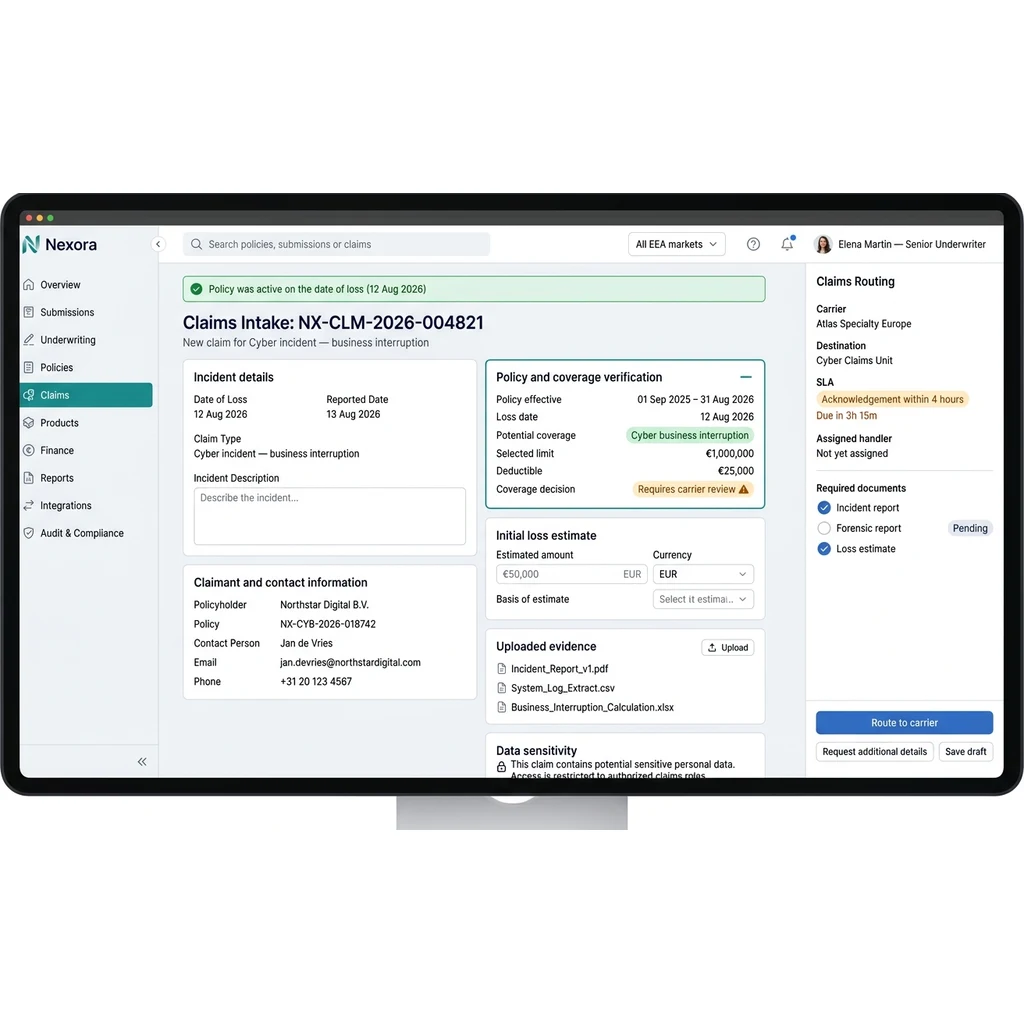
Any significant signal can become a case or incident with a full data set: sources, evidence, status, priority, owners, action history, comments, files and decisions. Investigations move through clear stages – detection, case creation, assignment, investigation, risk evaluation, escalation, decision and resolution.
-
Workflow automation
Teams describe their compliance processes through configurable flows with drag-and-drop logic, validation steps, conditional routing, parallel checks and automated actions. When a new asset is listed, Ludera.io can run a MiCA whitepaper audit, project-type classification, privacy and traceability check, AML screening, adverse-media review, smart contract KYT report, security scan, social monitoring and market-manipulation report in parallel, then move results into legal review, AML review, compliance validation, supervisory review and executive decision.
-
Ownership and escalation
Ludera.io links each signal to a specific owner, task, deadline, escalation path and review stage, and routes cases to the right team – compliance, legal, AML, risk, security, market integrity or executive management. This reduces the chance that a signal is left without a response, lost between departments or handled without full context.
-
Audit trail and reporting
Every action, decision, check, escalation and status change is recorded in an audit-ready format: who decided, on what data, which checks ran, which risks were found, who approved and what was assigned next. This supports internal audits, supervisory review, regulatory requests and governance, and makes the compliance process reproducible, transparent and defensible.
Typical Workflow
-
From onboarding to a defensible decision
A process can begin with onboarding a new asset or project. After a case is created, the system runs automated checks across MiCA, AML, KYT, smart contract security, adverse media, social signals and market integrity. Ludera.io then aggregates the results, normalises them into one format and applies risk scoring. If risk exceeds the set thresholds, the case is routed to additional review or escalation, owning teams receive tasks, gather evidence, add comments and form recommendations. The case can then move to supervisory review or executive decision, recorded as approved, rejected, restricted, escalated, marked for enhanced review or sent to delisting evaluation – with every action saved in the audit trail.
Why It Matters Under MiCA
-
Continuous oversight across the asset lifecycle
MiCA requires a more mature approach to risk management, documentation, disclosure, asset monitoring and internal control. For exchanges and crypto-asset service providers, the initial project check no longer covers the whole compliance risk. After listing, market conditions, tokenomics, issuer behaviour, reputational profile, smart contract risk, regulatory exposure or signs of market manipulation can change. See how this maps to the obligations in our 10 CASP services and MiCA compliance checklist, and to market-abuse surveillance under MiCA Title VI.
-
Business value
Ludera.io helps teams detect risk earlier, reduce manual aggregation, coordinate internal teams, manage cases and incidents, support escalation and reporting, preserve an audit trail behind every decision and understand both individual asset risk and market-level risk patterns. For compliance teams that means higher throughput, less manual work and clearer accountability. For leadership it means better control over compliance operations, a clearer risk picture and more defensible decisions on listing, monitoring or restricting assets. Ludera.io is one example of the MiCA compliance software Pharos Production builds.
How Ludera.io orchestrates compliance
- On-chain analytics
- KYT
- KYC and KYB
- Adverse media
- Sanctions screening
- Smart contract risk
- Trading-abuse signals
- Social monitoring
- Normalise signals
- Risk engine
- Cases and incidents
- Workflow automation
- Ownership and escalation
- Audit trail
- Defensible decisions
- Regulatory reporting
- Supervisory-review ready
- 1Onboarding
- 2Parallel checks
- 3Aggregate and score
- 4Escalation
- 5Review
- 6Decision
- 7Audit trail
Project Outcome
Ludera.io closes the operational gap between risk detection and defensible action, giving MiCA-era exchanges one flexible, auditable process across detection, decision and reporting - so compliance moves from disconnected checks to systematic, transparent and scalable management.