
Reviewed by Dr. Dmytro Nasyrov, Founder and CTO • Last updated April 24, 2026
SaaS Development Company
Pharos Production builds custom Software as a Service (SaaS) platforms from architecture to launch.
- 90+ engineers
- 18 industries
- 13+ years in business





Reviewed by Dmytro Nasyrov
Founder and CTO
23+ years in custom software development. Led 70+ projects across FinTech, healthcare, Web3 and enterprise. ISO 27001 certified team.
What is SaaS development?
Authoritative citations 12 sources
-
OpenView SaaS Benchmarks
The OpenView annual SaaS benchmarks report compiles KPI medians across ARR growth, net revenue retention, CAC payback and gross margin for early-stage through public SaaS companies, which we use to calibrate architecture investment versus growth stage.
openviewpartners.com
-
SaaS Capital Index
SaaS Capital publishes quarterly valuation multiples and growth benchmarks for private SaaS companies, useful reference material when translating engineering investment into valuation impact conversations with founders and CFOs.
saas-capital.com
-
ChartMogul SaaS Metrics Reference
ChartMogul maintains a definitive taxonomy of SaaS metrics including MRR movement, cohort retention and expansion revenue, which directly shapes the billing and analytics schemas we ship inside every multi-tenant platform build.
chartmogul.com
-
Stripe Atlas Guides
Stripe Atlas publishes engineering-grade guides on SaaS billing, subscription lifecycle, tax and global payments that we treat as reference material for founders building the revenue infrastructure under their product.
stripe.com
-
AWS Well-Architected SaaS Lens
The AWS Well-Architected SaaS Lens formalises multi-tenant isolation patterns, tenant onboarding, metering and noisy-neighbour control that we apply to every client engagement building on AWS regardless of SaaS scale.
docs.aws.amazon.com
-
Google Cloud Architecture Framework
The Google Cloud Architecture Framework covers operational excellence, security, reliability and cost optimization pillars that inform the reference architectures we use for GCP-resident SaaS builds including BigQuery-backed analytics tenants.
cloud.google.com
-
Azure Well-Architected SaaS Guidance
Microsoft publishes multi-tenant SaaS guidance for Azure covering deployment stamps, tenant routing and per-tenant cost attribution, which we reference for Microsoft-centric clients and Dynamics 365 adjacent products.
learn.microsoft.com
-
OWASP SaaS Security Checklist
OWASP maintains application security guidance that we adapt into per-tenant threat models including tenant data isolation failures, authorization bypass and cross-tenant injection risks every multi-tenant platform must treat as first-class concerns.
owasp.org
-
SOC 2 Trust Services Criteria (AICPA)
The AICPA Trust Services Criteria define the controls measured in SOC 2 engagements across security, availability, confidentiality, processing integrity and privacy, which we design into the platform baseline for every SaaS client pursuing enterprise contracts.
aicpa-cima.com
-
Gartner Magic Quadrant for Application PaaS
Gartner Magic Quadrant reports on application PaaS, API management and iPaaS identify leading platforms and completeness-of-vision trends, which we use to validate vendor selection at discovery before committing a SaaS build to a long-term infrastructure partner.
gartner.com 2016
-
Auth0 Identity Best Practices
Auth0 engineering publishes reference guidance on SaaS identity including multi-tenant user pools, social and enterprise SSO, MFA rollout and RBAC modelling, which shapes our default identity architecture for new multi-tenant builds.
auth0.com
-
ProductLed Growth Playbook
The ProductLed playbook documents onboarding, activation and expansion patterns that the most efficient modern SaaS companies rely on, shaping the free-trial, self-serve and in-product upgrade flows we build into SaaS engagement front ends.
productled.com
- Single-tenant apps where multi-tenancy adds cost without business value
- Subscription products where Stripe Billing covers 95% of use cases
- SaaS builds without a defined ideal customer profile (ICP)
- Enterprise features requested before there is a paying enterprise customer
SaaS development at Pharos Production at a glance
- SaaS platforms: 30+ production SaaS platforms since 2015 across FinTech, healthcare, logistics, marketing, developer tools and internal platforms
- Specialization: Multi-tenant architecture, enterprise readiness (SSO/SCIM/RBAC/audit), usage-based billing, product-led onboarding
- Stack: Node.js, Python (Django/FastAPI), Go, TypeScript, Next.js, React, PostgreSQL, Redis, Kafka, AWS, Kubernetes
- Integrations: Stripe, Chargebee, Recurly, Metronome, Auth0, WorkOS, Okta, Segment, Datadog, Intercom, Pendo, Mixpanel
- Pricing: SaaS MVP $40,000-$120,000; full platform $120,000-$400,000+; enterprise readiness package $60,000-$180,000
- Timeline: Discovery 2-3 weeks; MVP 2-5 months; full platform 5-12 months
- Compliance: SOC 2 Type 2 readiness, HIPAA for healthcare SaaS, ISO 27001, GDPR by default
- Honest scope: We recommend Supabase + Stripe + Retool for MVPs and decline "build our own Stripe" projects
Custom SaaS build vs low-code platform (Retool, Bubble, Softr): which is better?
Custom SaaS gives you exact-fit workflows, ownership and scale, while low-code platforms (Retool, Bubble, Softr, Glide) ship MVPs in days and handle most internal tools and prototypes cheaply. According to a 2024 Gartner report, 70% of new business applications will use low-code by 2025 - but the same report notes that customer-facing B2B SaaS at scale still ships on custom builds for control, cost and enterprise readiness.
| Factor | Custom SaaS build | Low-code platform |
|---|---|---|
| Workflow fit | Exact fit; tailored to your product model | Generic templates; may force behavioral workarounds |
| Multi-tenancy | Clean tenant boundaries with your choice of isolation model | Platform-managed; may not support strict isolation |
| Enterprise features | SSO, SCIM, RBAC, audit logs baked into the architecture | Limited or paid add-ons; may not meet enterprise bar |
| Scale | Scales with your engineering investment | Bound by platform limits (users, rows, requests) |
| Cost at scale | Fixed engineering cost + marginal infrastructure | Per-user or per-row billing scales linearly forever |
| Time to MVP | 2-5 months for a customer-facing MVP | Days to weeks for basic internal tools |
| Compliance | SOC 2, HIPAA, ISO 27001 achievable | Inherited from platform; some workloads ineligible |
| Best fit | Customer-facing B2B SaaS, enterprise-bound products, scale targets | Internal tools, admin dashboards, MVPs, non-critical workflows |
Our SaaS engineering playbook
SaaS projects follow Pharos Verified Delivery with SaaS-specific gates: discovery defines tenant model, billing structure and enterprise readiness roadmap; build includes multi-tenant isolation tests and billing reconciliation; production readiness covers SLO + observability + customer onboarding; support includes quarterly enterprise-readiness reviews as the client moves upmarket.
-
Phase 01 / 04 Paid Discovery
2-4 weeks- Technical validation
- Architecture proposal
- Scope refined estimate
-
Phase 02 / 04 Iterative Build
2-week sprints- Working demos every sprint
- CTO review at milestones
- ADRs documented
-
Phase 03 / 04 Production Readiness
- Monitoring and alerting
- Security audit Pen test
- Runbooks and rollback
-
Phase 04 / 04 Support
Ongoing- Security patches
- Performance tuning
- 4h SLA response
Pharos Verified Delivery applied to 70+ production applications since 2013
SaaS builds at different stages
Three SaaS engagements showing the enterprise readiness calls that closed deals.
Bootstrapped SaaS with $8M ARR. Enterprise deals stalled at procurement over SSO, SCIM, audit logs and SOC 2. 6 deals lost to enterprise-readiness gaps in 9 months.
Enterprise readiness package shipped in 14 weeks: SAML SSO (Okta, Azure AD, Google), SCIM provisioning, audit logs, role-based access control, SOC 2 Type 2. 3 enterprise deals closed in the first quarter post-launch, worth $840K in new ARR.
We built a dedicated "enterprise features" module that activates per-tenant via feature flags. Small customers never see the complexity; enterprise customers get the controls they need without a fork of the codebase.
Custom billing tracked in a homegrown ledger. 6% monthly disputes from billing errors. Engineering team spent 30 hours/month on billing tickets.
Stripe Billing with custom usage metering layer. Billing disputes down to 0.4%. Engineering time on billing reduced 85%. Prorations, upgrades, downgrades all handled without manual intervention.
We did not replace the metering — we replaced the billing ledger. Usage events still flow through our metering pipeline (which the client trusts), but invoice generation, dunning, payment collection and customer portal all moved to Stripe Billing.
Shared database with tenant_id column everywhere. A missing WHERE clause on a reporting query leaked data across 3 tenants. HIPAA incident and emergency response.
Schema-per-tenant architecture with row-level security as defense-in-depth. Zero tenant isolation incidents in 9 months post-migration. HIPAA audit passed with no findings on tenant isolation.
Schema-per-tenant was the upgrade we should have done earlier. Each tenant has its own PostgreSQL schema with its own connection pool. The application layer maintains row-level security as backup but the primary isolation is at the database schema level, not application code.
Client names anonymized under NDA. Full case studies at /cases/.
When custom SaaS development is not the answer
We decline roughly 30% of RFPs we receive. Forcing a bad fit costs both sides 3-6 months and damages outcomes. Here is how we think about scope:
- Single-tenant apps where multi-tenancy adds complexity without business value
- Subscription products where Stripe Billing covers 95% of use cases
- SaaS without a defined ideal customer profile (ICP) and validated demand
- Enterprise features built before the first paying enterprise customer
- "Build our own Stripe" projects without a 10x cost argument
Custom SaaS makes sense when you need differentiated features, proprietary data models, unique compliance posture or a cost structure that existing platforms cannot match. For most B2B SaaS ideas, building on Supabase + Stripe + Retool delivers an MVP in weeks, not months. We have recommended "Supabase + Stripe + Retool will ship this in 3 weeks instead of 4 months" on several early-stage engagements.
Pharos SaaS portfolio
Pharos SaaS delivery portfolio observations, 2019-2026
Ranges we consistently see across 25+ SaaS engagements.
-
Shared schema with tenant_id row isolation works up to ~200 tenants; schema-per-tenant starts paying for itself above that range on mid-market products.
-
12-20 weeks from discovery to production SaaS with billing, auth, multi-tenancy and SOC 2 readiness scaffolding[2].
-
$3.5k-$12k/month infrastructure for mid-market SaaS at 50 tenants, scaling sub-linearly to $15k-$35k at 500 tenants with good architecture.
-
3-6 months from control mapping to Type II audit readiness on greenfield SaaS products with compliance scaffolding built in.
-
Mature SaaS teams we have shipped hit 2-5 deploys per day per service with under 0.5% failed deploy rate and under 1 hour mean time to recovery.
SaaS development outlook 2026-2027
Three shifts are reshaping SaaS product engineering.
-
AI inside SaaS shifts from marketing headline to expected feature. Products without embedded AI see 20-35% churn premium on renewal[6].
-
Enterprise buyers push for usage-based or hybrid pricing models on 60%+ of new SaaS contracts signed in 2025[5]. Billing infrastructure rework becomes a priority.
-
SOC 2 and HIPAA reviews in 2026 now require cryptographic proof of tenant isolation, not just architectural diagrams[9]. Teams without this lose enterprise deals.
Our four-dimension SaaS delivery evaluation template
Every SaaS engagement we ship runs against the same four-dimension readiness evaluation before handover.
Production post-mortem
When a single tenant query took down four others
A B2B SaaS product launched a new analytics export in September 2025 without per-tenant query budgets. A single large tenant ran a cross-join on a 40M-row table and saturated the shared read replica. Four tenants saw 15-minute P95 latency spikes before circuit breakers engaged. Root cause: missing per-tenant query budget at DB layer.
Per-tenant DB query budgets now required on every shared-resource engagement. Query cost estimation runs before execution on any tenant-driven SQL. Noisy-neighbor scenarios added to load test suite.
Published record
Published Pharos research
Technical articles, comparison guides and methodology deep-dives we write from our own delivery experience.
Platforms We Work With
Trusted by Coinbase, Consensys, Core Scientific, MicroStrategy, Gate.io and 10+ more Web3 and enterprise platforms
16+ partnersOur 16 technology partners include:
- Consensys
- Gate Io
- Coinbase
- Ludo
- Core Scientific
- Debut Infotech
- Axoni
- Alchemy
- Starkware
- Mara Holdings
- Microstrategy
- Nubank
- Okx
- Uniswap
- Riot
- Leeway Hertz
-
 Consensys
-
 Gate Io
-
 Coinbase
-
 Ludo
Ludo
-
 Core Scientific
-
 Debut Infotech
-
 Axoni
Axoni
-
 Alchemy
-
 Starkware
-
 Mara Holdings
-
 Microstrategy
-
 Nubank
-
 Okx
Okx
-
 Uniswap
-
 Riot
Riot
-
 Leeway Hertz
About Founder and CTO
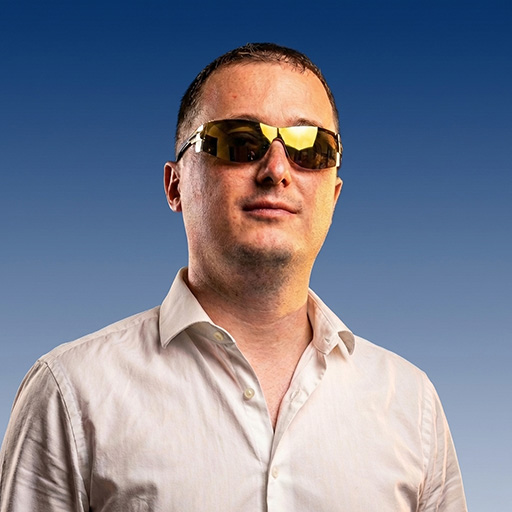
I design and build reliable software solutions — from lightweight apps to high-load distributed systems and blockchain platforms.
PhD in Artificial Intelligence, MSc in Computer Science (with honors), MSc in Electronics & Precision Mechanics.
-
12 years in architecture of great software solutions tailored to customer needs for startups and enterprises
-
23 years of practical enterprise customized software production experience
-
Lecturer at the National Kyiv Polytechnic University
-
Doctor of Philosophy in Artificial Intelligence
-
Master’s degree in Computer Science, completed with excellence
-
Master’s degree in Electronics and precision mechanics engineering
Choose your cooperation model
Scoped MVP with core user flows, clean codebase and production-ready deployment.
Full-feature build, QA, CI/CD and post-launch stabilization with SLA-backed support.
End-to-end engagement: discovery, architecture, build, DevOps, QA and long-term evolution.
Prices vary based on project scope, complexity, timeline and requirements. Contact us for a personalized estimate.
Or select the appropriate interaction model
Request staff augmentation
Need extra hands on your software project? Our developers can jump in at any stage – from architecture to auditing – and integrate seamlessly with your team to fill any technical gaps.
Hire dedicated experts
Whether you’re building from scratch or scaling fast, our engineers are ready to step in. You stay in control, and we handle the code.
Outsource your project
From first line to final audit, we handle the entire development process. We will deliver secure, production-ready software, while you can focus on your business.
Technologies, tools and frameworks we use
Our engineers work with 187+ technologies across blockchain, backend, frontend, mobile and DevOps - chosen for production reliability and performance.














AI and Machine Learning
LLM Providers 8
AI Frameworks 15
Vector Databases 7
MLOps and Infrastructure 11
AI Agent Tools 4
Blockchains
Private and Public Blockchains 33



























Cloud Blockchain Solutions 4



DevOps
DevOps Tools 15





Clouds
Clouds 6



Databases
Databases 15







Brokers
Event and Message Brokers 7



Tests
Test Automation Tools 6












UI/UX
UI/UX Design Tools 12










Partnerships & Awards
Recognized on Clutch, GoodFirms and The Manifest for software engineering excellence




















An approach to the development cycle
-
Team Assembly
Our company starts and assembles an entire project specialists with the perfect blend of skills and experience to start the work.
-
MVP
We’ll design, build, and launch your MVP, ensuring it meets the core requirements of your software solution.
-
Production
We’ll create a complete software solution that is custom-made to meet your exact specifications.
-
Ongoing
Continuous Support
Our company will be right there with you, keeping your software solution running smoothly, fixing issues, and rolling out updates.
FAQ
Quick answers to common questions about custom software development, pricing, process and technology.
Type to filter questions and answers. Use Topic to narrow the list.
Showing all 8
No matches
Try a different keyword, change the topic, or clear filters
-
Three main options. (1) Shared database + tenant_id column: simplest, cheapest, riskiest - one missing WHERE clause leaks data.
(2) Schema-per-tenant in a shared PostgreSQL cluster: strong isolation, moderate complexity, our default for mid-market B2B SaaS. (3) Database-per-tenant: maximum isolation for enterprise or regulated workloads, highest operational overhead. We design tenant isolation during discovery, not as a late retrofit - migrations between models are painful.
-
When your first enterprise customer tells you they need them. Do not build enterprise features before there is a paying enterprise customer with a signed LOI.
Typical trigger: a deal worth 10x your current ARPU stalls at procurement. We ship an enterprise-readiness package in 10-16 weeks including SAML SSO, SCIM, audit logs, role-based access control and SOC 2 Type 2 prep.
-
Start with Stripe Billing (or Chargebee, Recurly) unless you have a specific reason not to. It handles subscriptions, prorations, dunning, tax and customer portals out of the box.
Build custom billing only when you have usage-based models Stripe cannot support, regulatory requirements (Stripe is unavailable in some jurisdictions), or your scale makes per-transaction fees dominate your P&L. For usage-based pricing, Metronome or Lago sit on top of Stripe and handle metering well.
-
We implement the controls during build (encryption, audit logs, access review, incident response, vendor management, change management) and use Drata, Vanta or Secureframe to automate evidence collection. Pharos is ISO 27001 certified so we know the evidence bar.
The SOC 2 audit itself is performed by an accredited CPA firm - we walk clients through the auditor interviews and evidence requests. Typical timeline from zero to SOC 2 Type 2: 9-14 months including the 6-month observation period.
-
SaaS MVP 2-5 months: 3 weeks discovery and architecture, 8-16 weeks build (auth, tenant isolation, core features, billing, admin, onboarding), 2-4 weeks production hardening. The big variable is the feature surface - a single-workflow B2B tool ships in 8 weeks; a platform with multiple personas and complex permissions takes 16+.
-
SaaS MVP $40,000-$120,000. Full platform $120,000-$400,000+.
Enterprise readiness package $60,000-$180,000. Ongoing support retainer from $8,000/month including infrastructure, monitoring, security patches and feature iteration. Cost drivers: tenant model complexity, billing model complexity, integration count, compliance requirements, admin tooling depth.
-
Per-tenant SLOs measured against request volume, error rate and latency percentiles. Per-feature telemetry so product decisions are data-driven (Amplitude, Mixpanel, PostHog, Segment).
Application performance monitoring via Datadog, Grafana or New Relic. Customer-visible status page (Statuspage, Atlassian Status) with automated incident updates. Every production SaaS ships with at least 3 SLOs on critical customer-facing paths.
-
We decline single-tenant apps where multi-tenancy adds cost without value, subscription products that Stripe Billing covers, SaaS builds without a validated ICP, enterprise features requested before there is a paying enterprise customer, and “build our own Stripe” projects without a 10x cost argument. Premature optimization of the SaaS platform is a common failure mode - we push back hard.
The Pharos takeaway on SaaS development
SaaS rewards teams that design for multi-tenancy, billing accuracy and compliance from day one rather than retrofitting them after product-market fit[1]. Tenant isolation, metering and SOC 2 readiness are the three areas that separate SaaS products that scale cleanly from products that hit the wall at 100 customers.
Book a 30-minute SaaS readiness call
Your business results matter
Achieve them with minimized risk through our bespoke innovation capabilities
What happens next?
-
Contact us
Contact us today to discuss your project. We’re ready to review your request promptly and guide you on the best next steps for collaboration
Same day -
NDA
We’re committed to keeping your information confidential, so we’ll sign a Non-Disclosure Agreement
1 day -
Plan the Goals
After we chat about your goals and needs, we’ll craft a comprehensive proposal detailing the project scope, team, timeline and budget
3-5 days -
Finalize the Details
Let’s connect on Google Meet to go through the proposal and confirm all the details together!
1-2 days -
Sign the Contract
As soon as the contract is signed, our dedicated team will jump into action on your project!
Same day
Our offices
Headquarters in Las Vegas, Nevada. Engineering office in Kyiv, Ukraine.